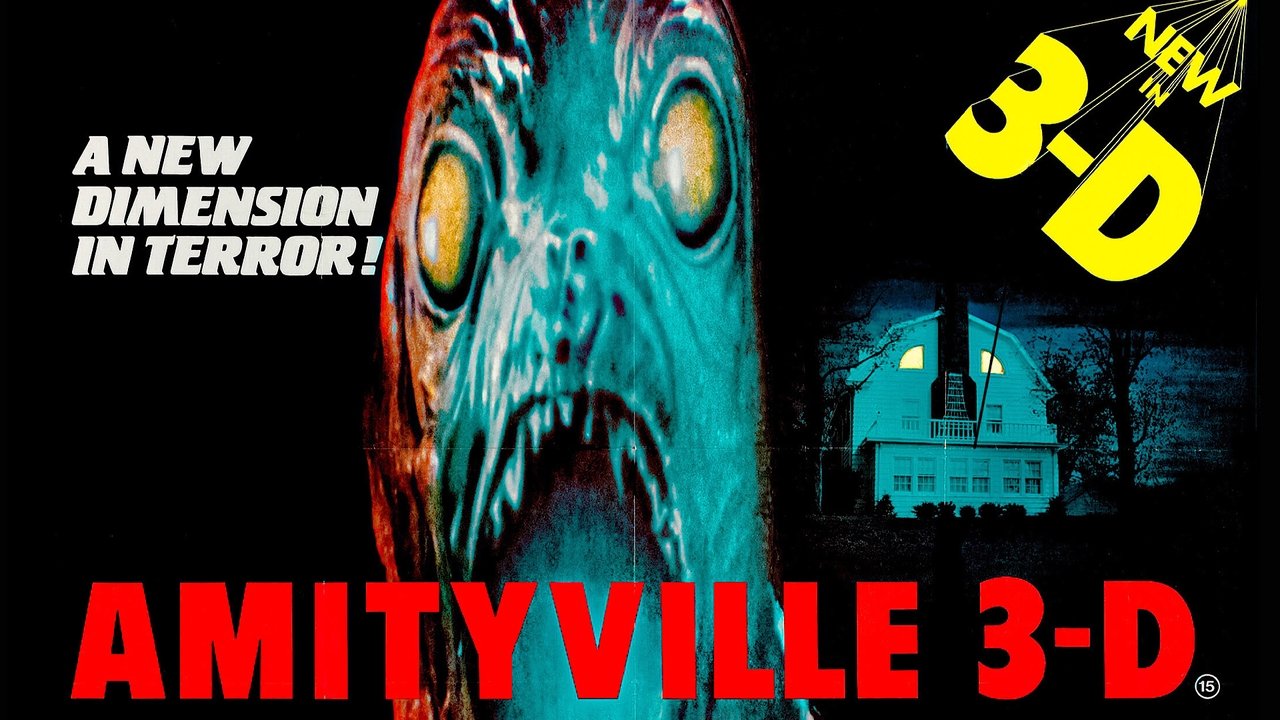
It arrives not with a whisper of dread, but with something poking you squarely in the eye. 1983’s Amityville 3-D (or Amityville III: The Demon outside the US) wasn’t content with merely revisiting the infamous Long Island house of horrors; it had to thrust its demonic phenomena directly into your lap, riding the wave of that short-lived, glorious, and often goofy early 80s 3-D revival. Forget subtle chills; this was horror designed to make you duck in your cinema seat, or later, squint at a blurry mess on your CRT unless you managed to snag a pair of those flimsy red-and-blue glasses with your video rental.
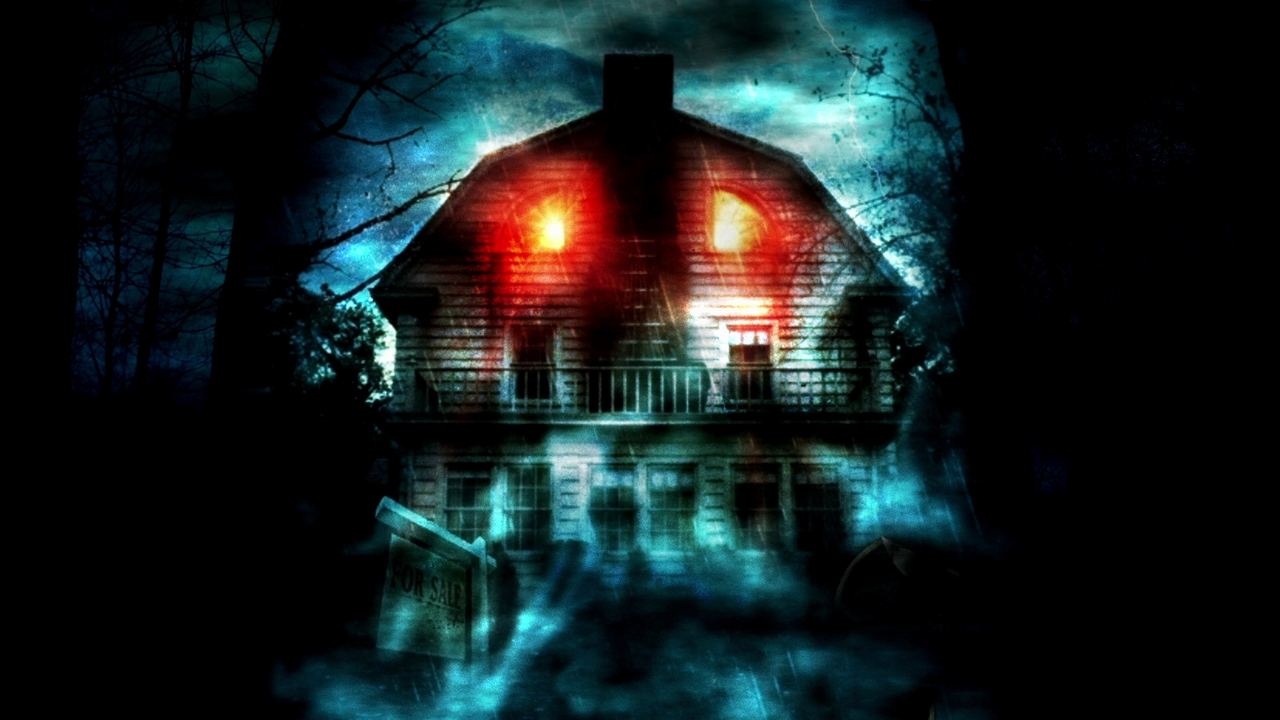
Beyond the Veil, Into Your Face
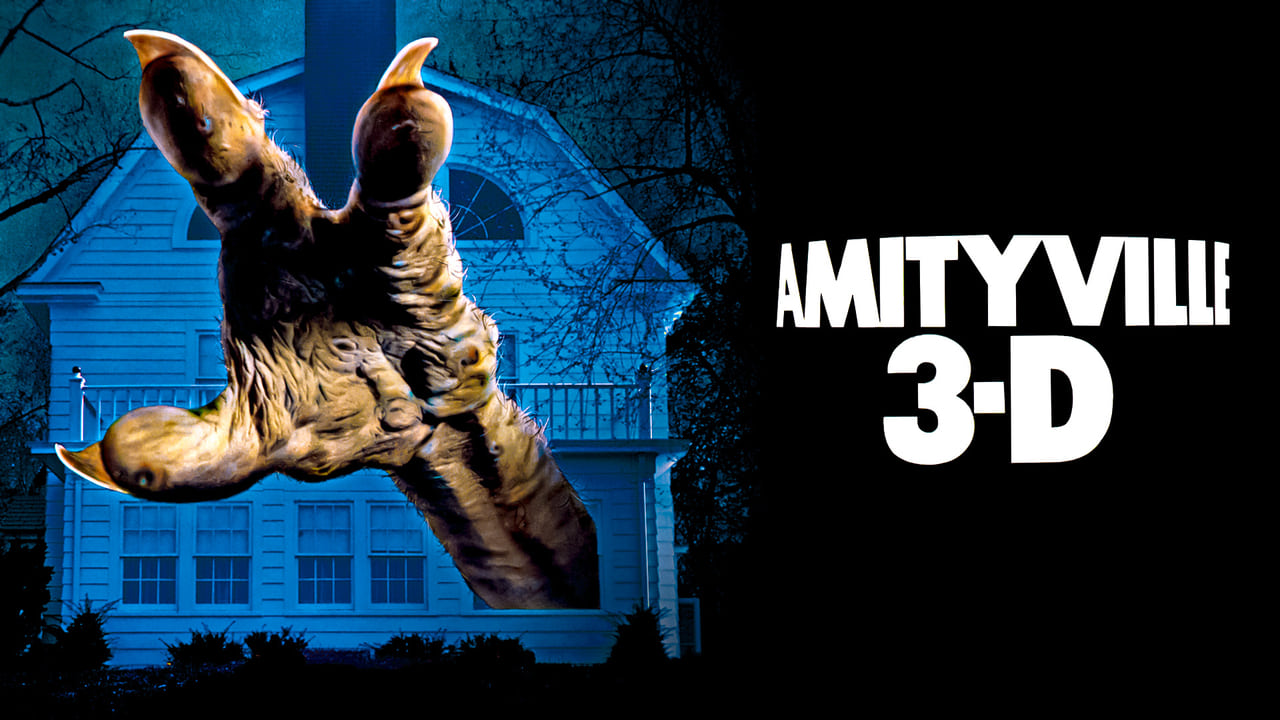
The premise itself feels like a deliberate counterpoint to the films that came before. Journalist John Baxter (Tony Roberts, bringing a weary skepticism likely familiar to anyone who followed the real-life Amityville saga) moves into 112 Ocean Avenue precisely because he thinks the stories are bunk, cooked up by charlatans. He aims to debunk the legend, bringing his estranged wife Nancy (Tess Harper) and daughter Susan (Lori Loughlin, yes, that Lori Loughlin, years before Full House) into the orbit of the cursed property. Naturally, the house doesn't take kindly to non-believers. What follows is less a slow burn of supernatural dread and more a series of spectral intrusions explicitly designed for the ArriVision 3D process – poles jutting out, frisbees flying, demonic arms reaching, and, most notoriously, a swarm of flies buzzing off the screen.
Directed by Richard Fleischer, a filmmaker with genuine classics like 20,000 Leagues Under the Sea (1954) and the chillingly dystopian Soylent Green (1973) under his belt, Amityville 3-D feels like an assignment taken rather than a passion project. You can occasionally glimpse Fleischer's professional competence in framing or pacing, but it's constantly battling the mandate to deliver 3-D "money shots." The technology itself, while ambitious for the time, often results in murky compositions and effects that, stripped of their intended dimensionality on VHS, range from mildly confusing to downright comical. Remember trying to watch this tape without the glasses? That specific kind of headache is pure 80s home video nostalgia.
The House Always Wins (Sort Of)
What makes Amityville 3-D particularly fascinating is its bizarre relationship to the franchise. Due to ongoing legal battles involving the Lutz family and the rights to their specific story, this film couldn't legally be a direct sequel continuing their narrative. Instead, it functions as a weird, unofficial third entry, using the famous house and the general concept of its haunting but populated with entirely new characters and a standalone plot. It's a strange footnote, a film leveraging the Amityville name recognition while simultaneously distancing itself from the established lore.
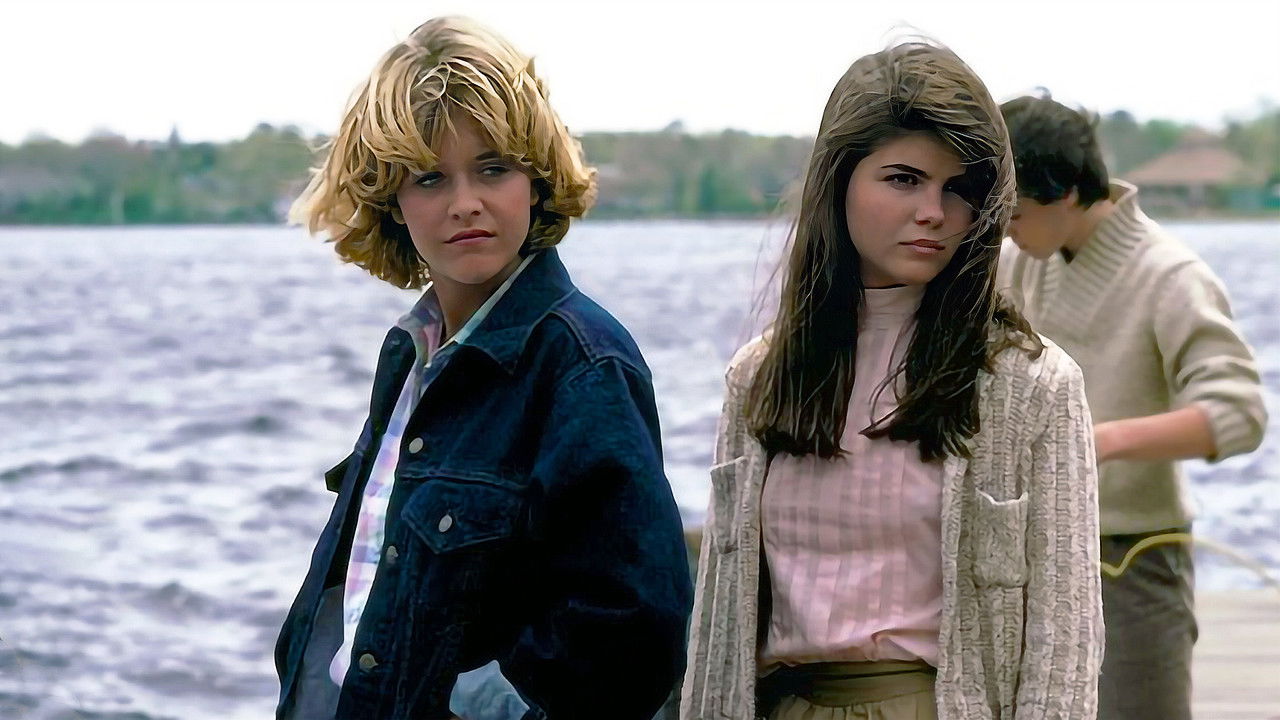
The cast does what they can. Tony Roberts plays the rational man pushed to the brink with believable exasperation. Tess Harper brings a quiet vulnerability as the concerned mother figure. And keep your eyes peeled for a very young Meg Ryan in one of her earliest screen roles as Susan's friend Lisa, tragically meeting a watery doom that, even amidst the 3-D silliness, lands with a slightly unsettling thud. The standout, however, might be Robert Joy as fellow paranormal investigator Elliot West, whose descent into obsessive terror culminates in one of the film's most memorable (and admittedly effective, even in 2D) sequences involving a melting, demonic visage in the basement well. That effect, achieved practically, still carries a certain grotesque power that the more overt 3-D gags lack.
When Gimmicks Trump Ghosts
Let's be honest: the success of Amityville 3-D hinges entirely on its gimmick. The scares are often less about atmosphere and more about startling the audience with objects lunging towards the camera. A disembodied arm here, a sudden explosion there – it feels like a haunted house ride committed to film. The budget was reportedly around $6 million, but it only scraped back about $6.3 million at the US box office, suggesting audiences were perhaps already tiring of the 3-D fad exploited by films like Friday the 13th Part III (1982) and Jaws 3-D (1983) released the same year. Critically, it was largely dismissed, seen as a cheap cash-in further diluting the Amityville name.
Yet, there's an undeniable charm to its clumsiness. Watching it now, especially if you recall the VHS experience, is like digging up a time capsule. It’s a testament to a specific moment in horror history when studios threw everything, quite literally, at the screen to lure audiences. Does it capture the suffocating dread of the original Amityville Horror (1979)? Not even close. Does it offer the unsettling family drama of Amityville II: The Possession (1982)? Definitely not. But does it provide a uniquely bizarre, effects-driven slice of 80s franchise filmmaking? Absolutely. I distinctly remember renting this one, hoping for genuine terror and mostly getting moments that made me chuckle at the sheer audacity of the effects.
Rating: 4/10
Amityville 3-D earns its points almost entirely as a historical curiosity and an artifact of the 80s 3-D boom. The plot is thin, the genuine scares are few, and the reliance on often laughable dimensional effects neuters much potential tension. However, Tony Roberts gives a committed performance, the "unofficial sequel" backstory is interesting trivia, and seeing future stars Lori Loughlin and Meg Ryan is a retro kick. It’s undeniably clunky and rarely frightening, but its commitment to its central gimmick makes it a strangely watchable piece of horror history, especially for those who remember squinting at the screen, glasses or no glasses.
It’s less a haunting cinematic experience and more like finding that dusty pair of red-and-blue glasses at the bottom of a box – a flimsy, slightly silly, but undeniably nostalgic reminder of a very specific era.