Some houses just feel wrong. Long before the first shadow flickers unnaturally or a door slams shut on its own, a certain chill permeates the air, settling deep in your bones. That unsettling weight hangs heavy over every frame of Gus Trikonis’s 1978 supernatural potboiler, The Evil. Forget elaborate twists; this is a film that locks you inside its decaying walls and dares you to witness what lurks beneath the floorboards. It’s the kind of straightforward spook-house yarn that felt tailor-made for late-night VHS rentals, the grainy picture somehow enhancing the grime and menace.
A House with History (and Horror)
The setup is classic haunted house fare: psychologist C.J. Arnold, played with reliable gravitas by the great Richard Crenna (just a few years before he’d become Colonel Trautman in First Blood), snaps up a bargain – a massive, crumbling mansion perched ominously on a hill. His plan? Convert it into a cutting-edge drug rehabilitation center. He brings his wife, fellow doctor Caroline (Joanna Pettet, perhaps familiar from 1967's Casino Royale), along with a motley crew of colleagues and patients to begin the Herculean task of restoration. But this isn't just any fixer-upper. This house has a past, whispered in hushed tones by the unnerved caretaker, a past involving demonic forces and something unholy sealed away deep in the basement.
The real star, arguably, is the location itself. Filmed at the imposing Stimson House in Los Angeles – a genuine architectural landmark known for its Romanesque and Richardsonian features – the building exudes a personality all its own. Its dark wood interiors, labyrinthine corridors, and sheer, oppressive scale contribute immensely to the film's atmosphere. You can almost feel the dust motes dancing in the slivers of light piercing the gloom. There are even local legends about the Stimson House being genuinely haunted, a delicious bit of meta-textual creepiness that Trikonis (who also co-wrote the script) leverages effectively. This wasn’t just a set; it felt like a place where bad things could happen.

Opening the Pit
Of course, good intentions pave the road to… well, in this case, a literal pit sealed by a cross-emblazoned stone slab in the basement. Curiosity, as it often does in horror, gets the better of our protagonists. Once that seal is broken, all hell – quite literally – breaks loose. The Evil doesn't waste too much time on subtlety once the entity is unleashed. What follows is a gauntlet of supernatural assaults, a relentless barrage clearly aiming to give audiences their money's worth in scares, 70s style.
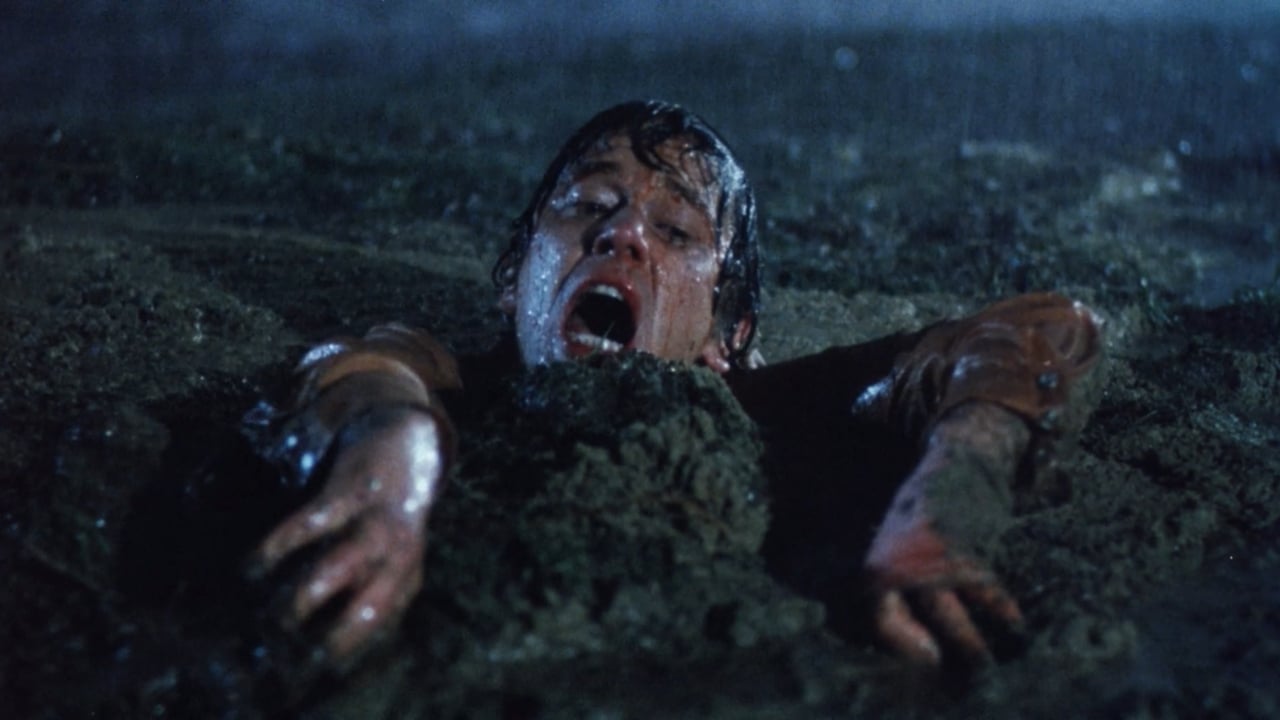
Distributed by Roger Corman's legendary New World Pictures, known for getting maximum bang for their B-movie buck (reports peg the budget around a lean $750,000), the film delivers a pleasing array of practical effects. Remember the unnerving glow emanating from possessed eyes? The spectral figures manifesting in doorways? The surprisingly nasty dog attack? Or the memorably gooey fate of one unfortunate character? These effects, while perhaps showing their age now, had a tangible, almost grimy reality on VHS that CGI often lacks. They felt crafted, physical threats within the environment. Doesn't that shot of the pit, emanating malevolent energy, still carry a certain unsettling power? It’s a testament to the low-budget ingenuity of the era.
Faces in the Darkness
Richard Crenna anchors the film admirably, lending a weight and believability that elevates the material. He plays C.J. not as a fool, but as a rational man desperately trying to comprehend and combat an irrational force. Joanna Pettet provides the necessary emotional counterpoint, her fear feeling palpable. And then there’s genre stalwart Andrew Prine (Grizzly, Simon, King of the Witches) adding his signature intensity as fellow paranormal investigator Raymond. Perhaps the most memorable piece of casting, though, is the booming presence of Victor Buono (forever etched in memory as King Tut from the '66 Batman series) in a devilishly fitting cameo. His appearance is brief but leaves a distinct impression, adding a touch of grand guignol theatricality to the proceedings.
Interestingly, the film cycled through a couple of titles during production, including House of Evil and Cry Demon, before landing on the stark simplicity of The Evil. That final title perfectly captures its direct, unpretentious approach. It’s not trying to reinvent the wheel; it’s here to deliver solid, old-school haunted house chills, complete with electrical disturbances, ghostly assaults, and the dawning horror that they are well and truly trapped. The tagline "It Waits In The Dark... In The Shut Down Place... At The Top Of The Stairs!" perfectly encapsulated that lurking dread.
Still Worth Unsealing?
The Evil isn't a lost masterpiece, nor is it trying to be. It's a workmanlike, effective supernatural horror film from an era before jump scares became the default. Its strength lies in its oppressive atmosphere, its fantastic central location, Crenna's committed performance, and its earnest deployment of practical scares. Sure, some moments feel dated, and the plot follows a familiar path, but there’s an undeniable charm to its straightforward commitment to spooking the audience. It doesn’t overstay its welcome and focuses squarely on the escalating terror within the mansion's walls. For fans who remember discovering these kinds of eerie gems on dusty video store shelves, it remains a satisfying slice of 70s horror. Did it leave you checking under the bed back then? Maybe just double-checking the locks.
Rating: 7/10
Justification: The Evil earns a solid 7 for its incredibly effective use of location, strong central performance from Richard Crenna, genuinely creepy atmosphere, and memorable practical effects sequences (especially for its budget). While the plot is somewhat standard haunted house fare and some elements haven't aged perfectly, its commitment to sustained dread and its status as a prime example of late-70s B-movie horror craft make it a rewarding watch for retro fans.
Final Thought: It’s a potent reminder that sometimes the most effective horror isn’t about what jumps out, but about the unshakable feeling that you’re trapped somewhere you should never have entered in the first place.