There are certain tapes you stumble upon in the back aisles of the video store, perhaps tucked away in the 'Foreign Films' section or simply misfiled under 'Drama', whose stark cover art whispers of something intense, something challenging. Aurelio Grimaldi's 1997 film Il Macellaio (The Butcher), based on the controversial French novel Le Boucher by Alina Reyes, was often one such discovery. It wasn't a film you rented casually; its premise promised a dive into the deep, often unsettling, waters of human desire and obsession. It’s a film that stays with you, less for comfort and more for the stark questions it poses about the boundaries we draw around passion.
A Heat Haze of Desire
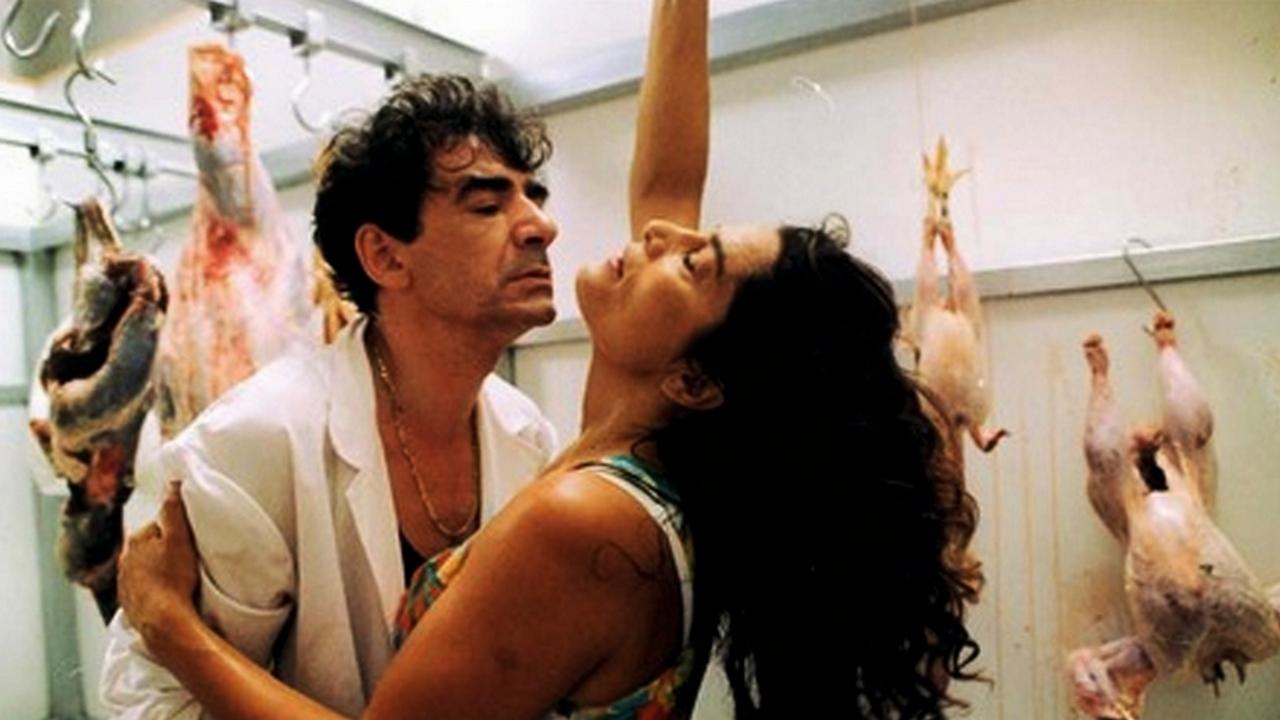
The film immediately plunges the viewer into an almost palpable atmosphere of simmering heat and unspoken tension. Set in a sun-drenched, sleepy town (likely reflecting director Grimaldi's Sicilian roots, though unspecified), the narrative centers on Alina (Alba Parietti), a concert pianist trapped in a passionless marriage. Her husband is frequently absent, leaving her isolated in their opulent but sterile home. This setup, almost archetypal, becomes fertile ground for the film's exploration of repressed longing. The turning point arrives with the arrival of the local butcher, played with brooding intensity by the formidable Serbian actor Miki Manojlović (familiar to many from Emir Kusturica films like Underground). Their connection isn't built on witty dialogue or conventional courtship; it ignites through charged glances, the symbolic weight of his profession, and the raw, almost primal energy that crackles between them.
Performances Forged in Silence
What truly elevates The Butcher beyond potential melodrama is the power of its central performances, particularly their reliance on non-verbal communication. Alba Parietti, known primarily in Italy as a television personality and glamorous icon at the time, takes on a role that demands vulnerability and a shedding of that public image. She conveys Alina's loneliness and burgeoning desire through subtle shifts in expression, the hesitant movements of her hands, the longing gaze held a second too long. It was a brave choice for her, stepping into territory far removed from mainstream entertainment.
Opposite her, Miki Manojlović is a force of nature. His butcher is a figure of few words, embodying a raw, almost dangerous masculinity. There's an earthiness to him, a connection to the visceral reality of flesh and blood that stands in stark contrast to Alina's refined, perhaps overly cerebral, existence. His performance is magnetic, drawing the eye even in stillness. The chemistry between Parietti and Manojlović is undeniable, rooted not in affection but in a powerful, almost frightening, mutual recognition of unmet needs. Their interactions often unfold in near silence, forcing the audience to read the emotions simmering beneath the surface – a testament to both the actors' skill and Grimaldi's directorial confidence.
Grimaldi's Unflinching Gaze
Director Aurelio Grimaldi, who also adapted the screenplay, was no stranger to controversial subject matter, having previously directed films like Le buttane (The Whores, 1994). In The Butcher, he crafts a deliberate, almost suffocating mood. The pacing is measured, allowing tension to build slowly, mirroring the slow burn of Alina's awakening desire. The cinematography often lingers on textures – the cool marble of Alina’s home, the rough wood of the butcher shop, the sweat glistening on skin – grounding the psychological drama in a tangible, sensual world. The film doesn't shy away from the explicitness inherent in its themes, which undoubtedly contributed to its controversial reception upon release in Italy and limited exposure internationally. It demands a certain tolerance from the viewer, asking us to confront uncomfortable truths about the sometimes destructive power of unchecked passion.
Retro Fun Facts: Adapting Provocation
Bringing Alina Reyes' intensely psychological and explicit 1988 novella to the screen was always going to be a challenge. The book itself caused a stir in France for its frank depiction of female desire and transgression. Grimaldi had to navigate translating this internal, often abstract, narrative into visual terms, relying heavily on atmosphere and the physicality of his leads. While specific budget figures are hard to pin down for this European co-production, it certainly wasn't a blockbuster affair, likely operating with the kind of constraints that often force creative solutions in independent filmmaking. Its subsequent life on VHS and DVD, particularly outside Italy, cemented its status as a cult object – a film sought out by those looking for cinema that pushes boundaries, rather than one stumbled upon during prime-time viewing.
Beyond the Shock Value
Is The Butcher merely provocative for provocation's sake? It's a fair question, and viewers will likely be divided. Some might find its explicitness gratuitous, its pacing too languid. Yet, beneath the surface, there’s a compelling exploration of themes that resonate: the stifling nature of societal expectations, the chasm between physical intimacy and emotional connection, and the ways desire can manifest as both creation and destruction. The film doesn't offer easy answers or moral judgments. Instead, it presents a stark portrait of two individuals drawn together by forces they barely understand, let alone control. What happens when primal urges disrupt a carefully constructed life? The film dares to look, unflinchingly.
Final Reflections
Watching The Butcher again after all these years, likely far removed from the grainy intimacy of a CRT screen fed by a humming VCR, its power remains undimmed, though perhaps appreciated differently. It’s not a comfortable film, nor is it meant to be. It’s the kind of challenging European cinema that occasionally found its way onto video store shelves, offering a stark alternative to Hollywood fare. It’s a film that demands attention, patience, and a willingness to engage with difficult subject matter.
Rating: 6.5/10
The score reflects a film that is undeniably potent in its atmosphere and features strong, committed performances, particularly from Manojlović. However, its challenging and explicit nature, deliberate pacing, and relatively thin narrative (by design, focusing on mood over plot) make it a film that won't resonate with everyone. It achieves its specific, unsettling goals effectively but exists within a niche.
It lingers not as a story easily recounted, but as a mood, a feeling – the oppressive heat, the weight of unspoken words, the uneasy recognition of desire’s darker currents. It’s a stark reminder that sometimes, the most profound connections are forged not in light, but in shadow.