It’s hard to forget the stir Barry Levinson’s Disclosure caused when it hit video store shelves back in 1994. Fresh off the success of his novel, Michael Crichton (who also co-wrote the screenplay with Paul Attanasio) presented a corporate thriller wrapped around a highly provocative core: a male executive accusing his female boss of sexual harassment. In an era still grappling with the reverberations of the Anita Hill hearings, the film didn't just entertain; it ignited debate, tapping into anxieties about shifting power dynamics in the workplace and the weaponization of sex and gender politics. Watching it again now, decades removed, feels like opening a time capsule – not just of 90s corporate aesthetics, but of the complex, often uncomfortable conversations that defined the era.
### Power Plays in the Emerald City
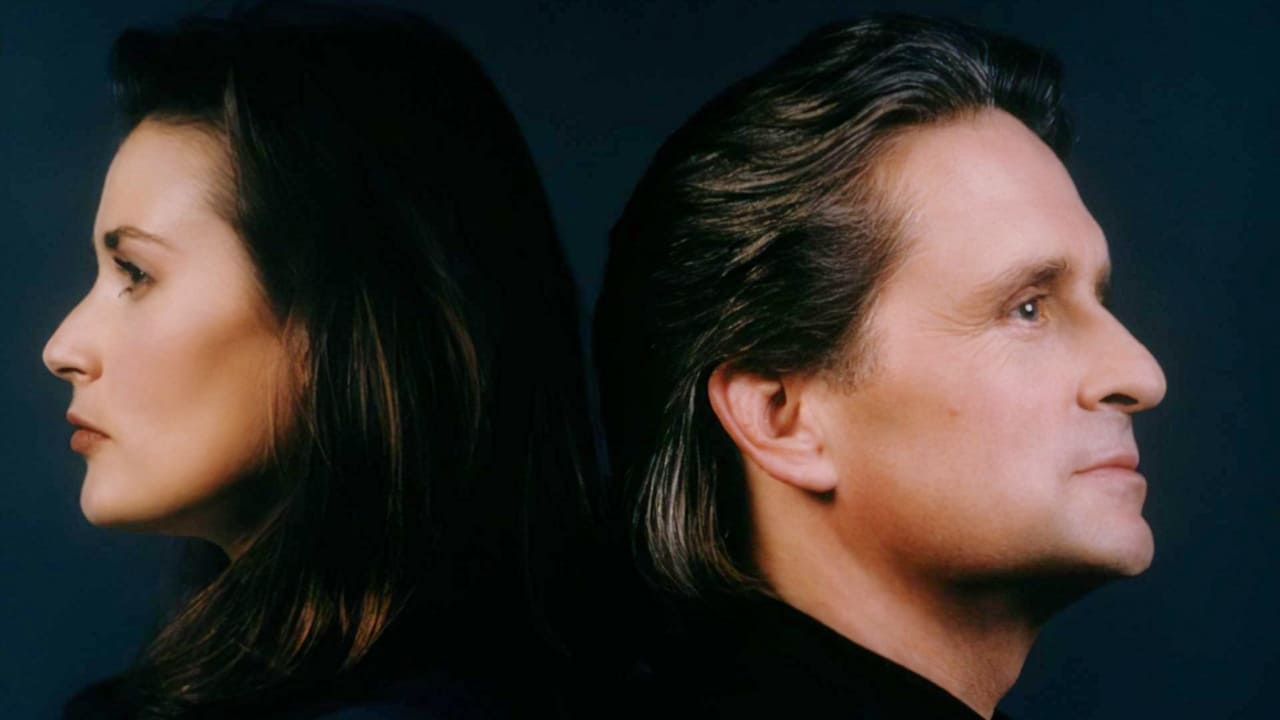
Set against the backdrop of Seattle's booming tech industry – specifically the fictional DigiCom, a company poised on the brink of a lucrative merger – Disclosure introduces us to Tom Sanders (Michael Douglas). He’s an experienced exec expecting a big promotion, juggling work pressures with family life. Instead, the job goes to Meredith Johnson (Demi Moore), a former flame with a reputation for aggressive ambition arriving from the corporate mothership. The sleek, glass-and-steel offices of DigiCom feel both futuristic and vaguely sterile, a perfect stage for the cold calculations and hidden agendas about to unfold. Levinson, known more for character-driven pieces like Diner (1982) or Rain Man (1988), crafts a surprisingly tense atmosphere here, letting the corporate environment itself feel like a character – watchful, imposing, and full of reflective surfaces where nothing is quite as it seems.
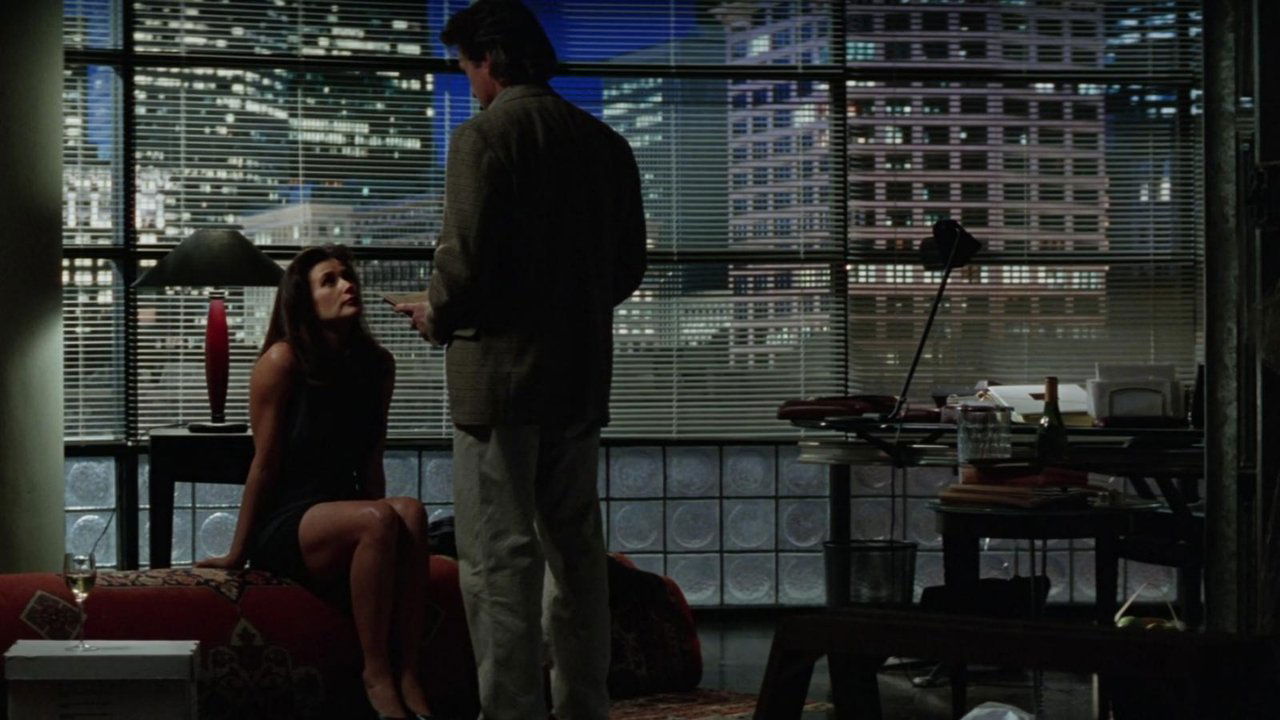
The narrative hinges on a late-night meeting between Tom and Meredith, ostensibly to discuss the upcoming merger. What transpires is an aggressive sexual advance by Meredith, which Tom rejects. The next morning, Tom finds himself accused of harassing her, a move that threatens his career, his marriage, and his financial future. This inversion of the typical harassment narrative was, and remains, the film's most discussed element. It forces the audience, and Tom, into a precarious position, navigating a corporate minefield where allies are few and motives are constantly suspect. Donald Sutherland adds his signature gravitas as the company's founder, Bob Garvin, a figure whose avuncular charm masks a ruthless pragmatism – a performance that reminds you how effectively Sutherland could steal scenes with just a look or a carefully chosen word.

### Douglas & Moore: A Charged Dynamic
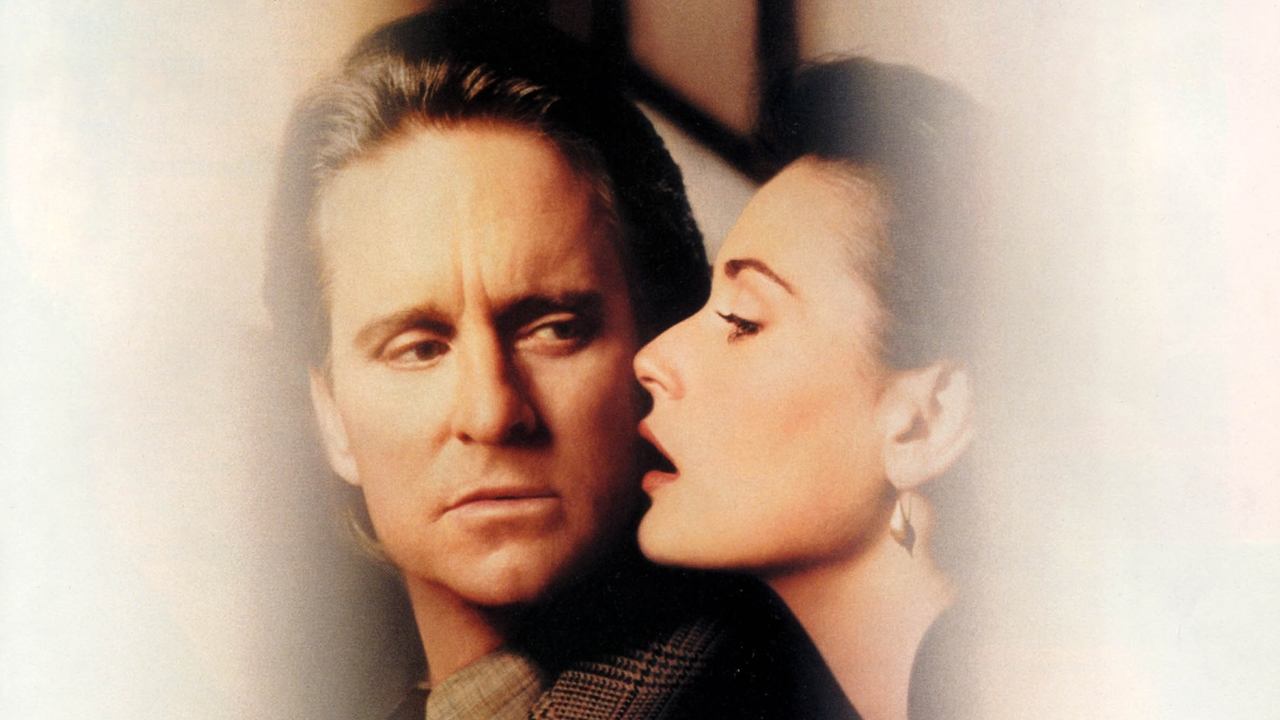
Michael Douglas was certainly no stranger to roles involving fraught sexual dynamics, having navigated similar perilous waters in Fatal Attraction (1987) and Basic Instinct (1992). Here, he effectively channels Tom’s mounting panic and desperation. It’s a performance built on reaction – the disbelief, the simmering anger, the dawning horror as he realizes the system is closing ranks against him. Douglas makes Tom’s vulnerability feel palpable, a man stripped of his perceived power and forced to fight back from a position of weakness, something audiences weren’t accustomed to seeing from his alpha-male screen persona.
Demi Moore, meanwhile, had the challenging task of embodying Meredith Johnson. Is she purely a predator, a calculating careerist leveraging sexuality as a tool? Or is there more beneath the surface? Moore plays her with an icy confidence that borders on reptilian, making Meredith a formidable antagonist. It’s a deliberately provocative portrayal. It's worth remembering that Annette Bening was originally cast but had to withdraw due to pregnancy, paving the way for Moore to take on this complex and controversial role. While some critics at the time felt the character lacked nuance, Moore's performance undeniably commands attention, creating a magnetic, if unsettling, presence at the film's center. The chemistry, or perhaps more accurately, the anti-chemistry between Douglas and Moore fuels the film’s central conflict effectively.
### Welcome to the Virtual Corridor
One of the most striking – and now, perhaps, endearingly dated – aspects of Disclosure is its depiction of virtual reality. Tom’s climactic dive into the company’s digital archives involves navigating a wireframe, neon-lit virtual corridor using a headset and data glove setup that screamed "cutting edge" in 1994. It was Crichton’s trademark fascination with emerging technology brought to visual life. Filming these sequences reportedly involved considerable effort to make the abstract concept of database navigation visually dynamic. While the blocky graphics and simplistic interface might elicit a chuckle today, especially compared to the VR landscapes we see now, it captured a genuine excitement about the possibilities of cyberspace. It also serves the plot, transforming the search for digital evidence into a tense, almost physical confrontation within a virtual space. The sequence remains a fascinating snapshot of how Hollywood envisioned the digital frontier just as the World Wide Web was starting to enter mainstream consciousness. Adding to the atmosphere is a subtly effective score by the legendary Ennio Morricone, which underscores the corporate intrigue without overwhelming it.
### Echoes in the Present
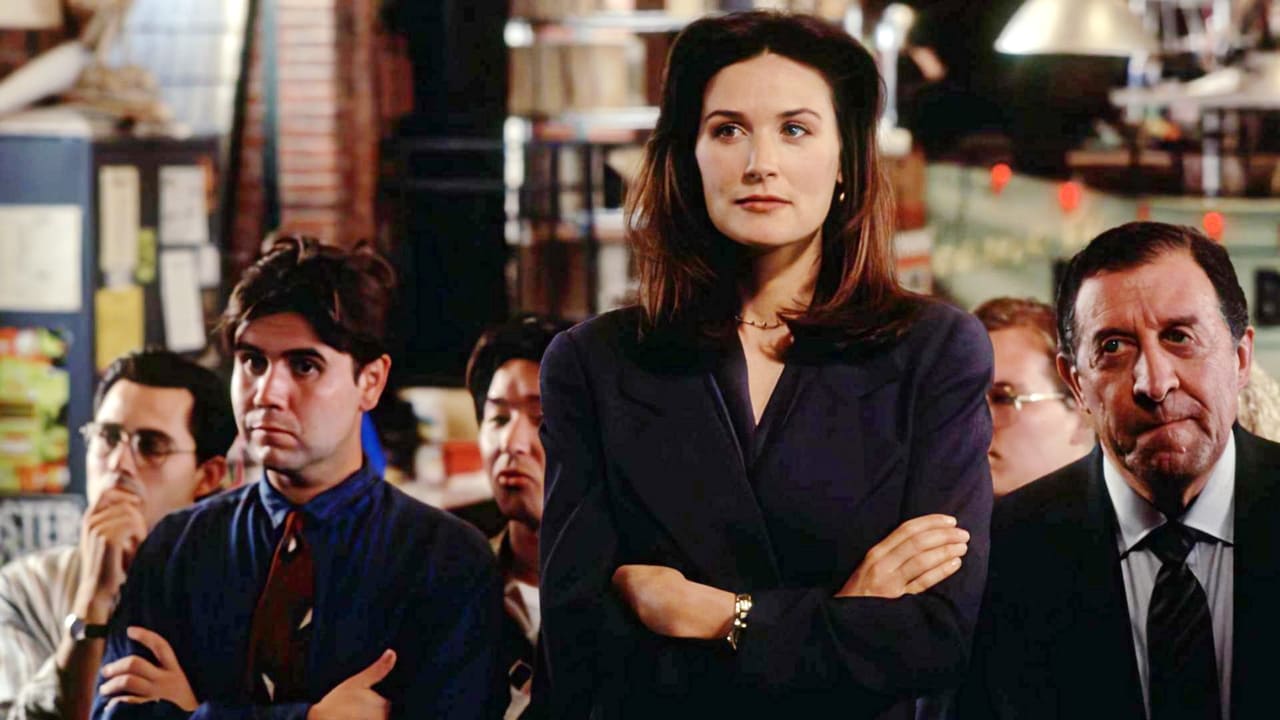
Revisiting Disclosure, it's impossible not to consider its legacy. While a significant box office success (pulling in over $214 million worldwide against an $83 million budget), its handling of sexual harassment remains contentious. Did it offer a nuanced exploration of power dynamics, or did it risk muddying the waters by focusing on a statistically less common scenario? Perhaps the answer lies somewhere in between. The film certainly sparked conversations, forcing viewers to confront uncomfortable questions about consent, ambition, and the often-blurry lines in professional relationships. The core themes of corporate backstabbing, the vulnerability of individuals against powerful institutions, and the pervasive influence of technology feel surprisingly relevant even now. The specific tech may look archaic, but the underlying anxieties about digital trails and information control linger.
Rating: 7/10
Disclosure stands as a slick, well-acted, and undeniably provocative 90s thriller. The central performances from Michael Douglas and Demi Moore are compelling, capturing the high-stakes tension of the corporate power struggle. Barry Levinson delivers a polished production, and the film effectively taps into contemporary anxieties about technology and workplace politics. Its value lies not just in its suspenseful plot but also in its function as a cultural artifact, reflecting the specific debates and technological fascinations of its time. While the VR looks quaint and its central premise invited controversy that still echoes, it remains an engaging watch, a glossy slice of 90s paranoia with Crichton's signature techno-thriller DNA. It’s one of those VHS tapes that, once watched, definitely fueled water-cooler conversations the next day – a testament to its ability to push buttons and make you think, long after the credits rolled.