It begins not with innocence, but with its calculated destruction. A therapist's office, a confession whispered with unsettling relish – this is our entry point into the venomously seductive world of Cruel Intentions (1999). Forget the sun-drenched hallways of most teen dramas; this film plunges us headfirst into the shadows lurking beneath the gleaming surface of Manhattan's elite youth, forcing us to question just how deep depravity can run when boredom and privilege intertwine.
### A Dangerous Game, Reimagined
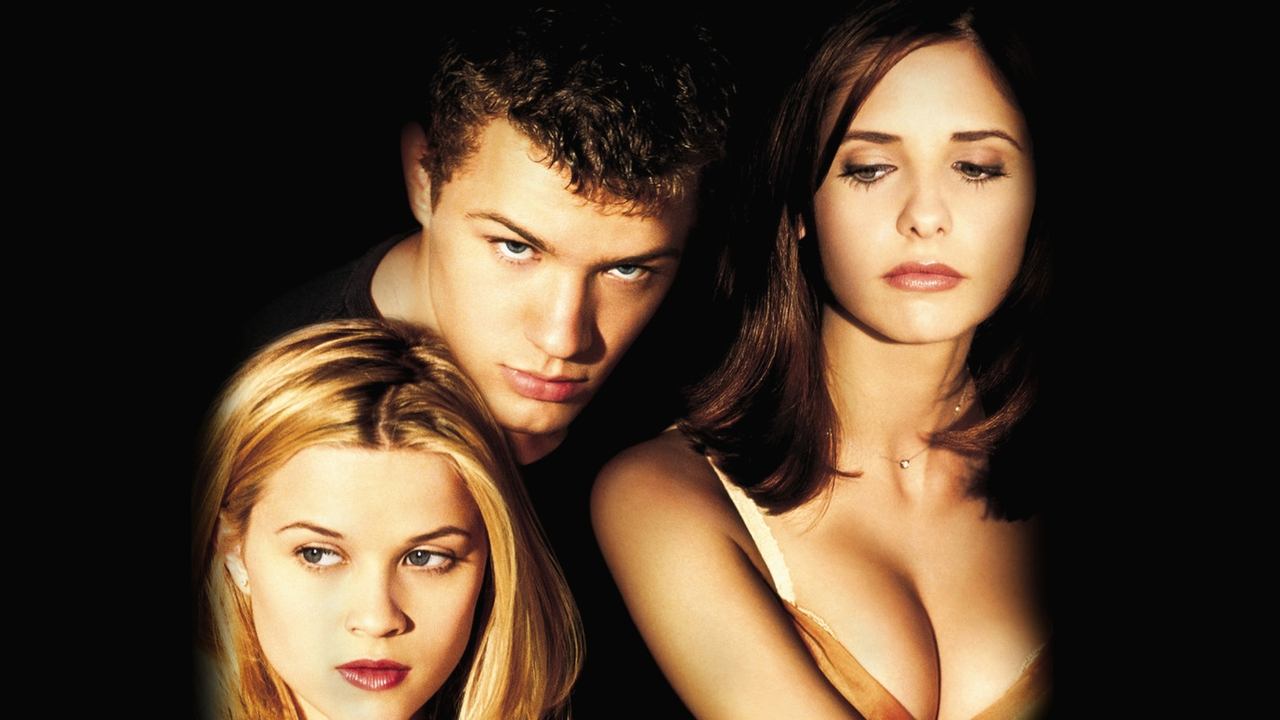
Adapting Choderlos de Laclos's 18th-century epistolary novel Les Liaisons dangereuses is ambitious territory, especially transplanting its intricate web of aristocratic French intrigue to the world of spoiled Upper East Side teenagers. Yet, writer-director Roger Kumble pulls off this transition with a surprising degree of sharp wit and stylish menace. The powdered wigs and quill pens are replaced by designer clothes and dial-up modems, but the core currency remains the same: reputation, manipulation, and the thrill of ruining others for sport. The plot centers on step-siblings Kathryn Merteuil and Sebastian Valmont, bored predators circling their prey. Their wager – Sebastian must seduce the virtuous headmaster's daughter, Annette Hargrove, while Kathryn seeks revenge on a naive classmate, Cecile Caldwell – feels both timeless in its cruelty and distinctly late-90s in its execution. I remember renting this tape, perhaps slightly underage, drawn in by the promise of something darker and more adult than the usual teen fare flooding the shelves. It didn't disappoint on that front.
### Portraits in Poison and Purity

What elevates Cruel Intentions beyond mere scandalous premise are the performances, particularly from its core trio. Sarah Michelle Gellar, stepping definitively away from her heroic Buffy Summers persona, is a revelation as Kathryn. She embodies the character's public facade of perfection while letting glimpses of the chilling emptiness and calculated malice seep through the cracks. It's a performance of controlled fury, punctuated by moments – like that infamous cocaine-fueled tirade hidden within her crucifix – that are both terrifying and darkly compelling. You understand why people are drawn to her, even as you see the strings she pulls.
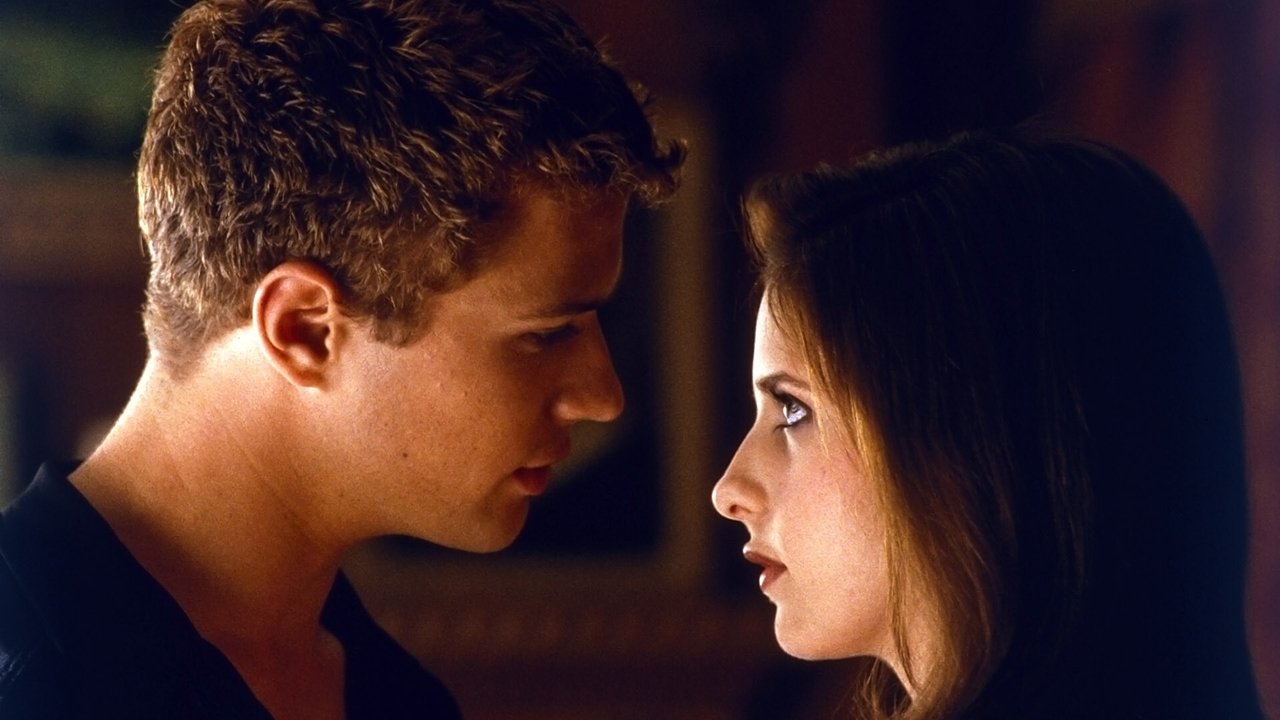
Ryan Phillippe tackles the complex role of Sebastian, the Valmont analogue whose practiced cynicism begins to falter. He nails the swagger and the predatory charm, but crucially, allows flickers of vulnerability to emerge as he finds himself genuinely drawn to Annette. Does his transformation feel entirely earned? Perhaps not completely, but Phillippe sells the internal conflict well enough to make the stakes feel real. It’s fascinating to note that Phillippe and Reese Witherspoon began their real-life relationship during or shortly after filming; whether that adds an extra layer to their undeniable on-screen chemistry is debatable, but the sparks are certainly visible.
And then there's Reese Witherspoon as Annette Hargrove, the embodiment of perceived purity targeted by Sebastian. Witherspoon brings a crucial intelligence and quiet strength to the role. Annette isn't merely a passive victim; she has agency, principles, and a self-awareness that makes Sebastian's game far more challenging – and ultimately, more transformative for him – than he anticipates. Her performance grounds the film, offering a necessary counterpoint to Kathryn's venom and Sebastian's jadedness. Supporting players like Selma Blair (giving a memorably awkward and funny turn as Cecile) and Joshua Jackson (as Blaine, Kathryn's flamboyant confidante) add welcome texture to this viper's nest.

### Style, Sound, and Seduction
Roger Kumble, directing his feature debut (remarkably, he reportedly wrote the script in under two weeks based on his earlier stage play adaptation), crafts a film that looks and feels impeccably late 90s, but with a timeless sense of unease. The opulent apartments, exclusive prep schools, and lush estates create a visual language of extreme privilege, a gilded cage where boredom festers into cruelty. This wasn't just another teen movie; it felt slicker, more dangerous. Kumble initially envisioned the film as a smaller, independent piece, but Sony Pictures saw its potential and gave it a modest $10.5 million budget – a gamble that paid off handsomely with a $76.3 million worldwide gross, cementing its place as a defining film of the era.
But perhaps nothing captures the film's mood quite like its soundtrack. Oh, that soundtrack! It was practically ubiquitous at the time. From the haunting strains of Placebo's "Every You Every Me" opening the film to Fatboy Slim's "Praise You" providing a moment of unexpected joy, and culminating, of course, in the iconic use of The Verve's "Bittersweet Symphony" during the film's devastating climax – the music wasn't just accompaniment; it was an integral part of the film's identity, perfectly reflecting the angst, cynicism, and fleeting moments of beauty within the narrative. Remember hearing those opening orchestral swells of "Bittersweet Symphony" and just knowing something significant, probably heartbreaking, was about to unfold?
### More Than Just Teen Angst
Beneath the scandalous behavior and quotable lines ("Everybody loves me, and I intend to keep it that way"), Cruel Intentions touches on potent themes: the corrosive nature of reputation in a closed society, the weaponization of sexuality, the hypocrisy often lurking beneath pious exteriors, and the painful transition from innocence to experience. It dared to portray teenage characters engaging in behavior far more complex and morally ambiguous than typically seen on screen at the time, leading to inevitable battles with the MPAA to secure its R-rating. While some elements might feel dated now (those chunky monitors!), the core questions about manipulation and the masks people wear still resonate. The film's success spawned a couple of direct-to-video follow-ups of dubious quality, but the original remains a distinct and potent entry in the teen movie canon.

Rating: 8/10
Cruel Intentions earns this rating for its sharp script, unforgettable performances (especially Gellar's chilling Kathryn), killer soundtrack, and its daring transposition of a classic tale into a specific, memorable late-90s milieu. It successfully blends dark themes with stylish execution, creating a teen drama with actual bite and lingering impact. While perhaps not achieving the profound depth of its source material, it stands as a witty, wicked, and surprisingly thoughtful exploration of youthful corruption that still holds a magnetic pull.
It leaves you pondering the seductive nature of power and the ease with which cruelty can masquerade as sophistication. What lingers most isn't just the shock value, but the unsettling recognition of the darkness that can hide in plain sight, even amidst the sun-dappled lawns of the elite.