Remember that feeling? Settling down, maybe with a rented tape (remember rewinding?), the opening chords promising something special? For many of us growing up in the 90s, the first notes of Jo Jeeta Wohi Sikandar (1992) instantly transport us back to a world of sun-drenched school rivalries, fluttering first loves, and the sheer thrill of the underdog rising. It wasn't just a movie; it was a feeling, an anthem for anyone who ever felt like the scrappy hopeful facing off against the polished elite.

Directed by Mansoor Khan, who had already shaken up Bollywood with the youthful romance Qayamat Se Qayamat Tak (1988), Jo Jeeta Wohi Sikandar felt different. It traded grand melodrama for something more grounded, more relatable. Written by Mansoor Khan and his father, the legendary Nasir Hussain (whose signature blend of romance, music, and family drama is subtly present), the film paints a vivid picture of life in a picturesque (though unnamed) hill station, sharply divided between the affluent kids of Rajput College and the more middle-class students of Model School.
Clash of Colleges, Clash of Hearts
At the heart of it all is Sanjaylal Sharma, or Sanju, played with infectious, slacker charm by a young Aamir Khan. He’s more interested in chasing girls and goofing off with his friends Ghanshu and Maksood than living up to the legacy of his serious, athletic older brother, Ratan (Mamik Singh), the cycling champion of Model. Ratan’s life revolves around training for the prestigious Inter-College championship, a race dominated year after year by the arrogant Shekhar Malhotra (Deepak Tijori) of Rajput College.
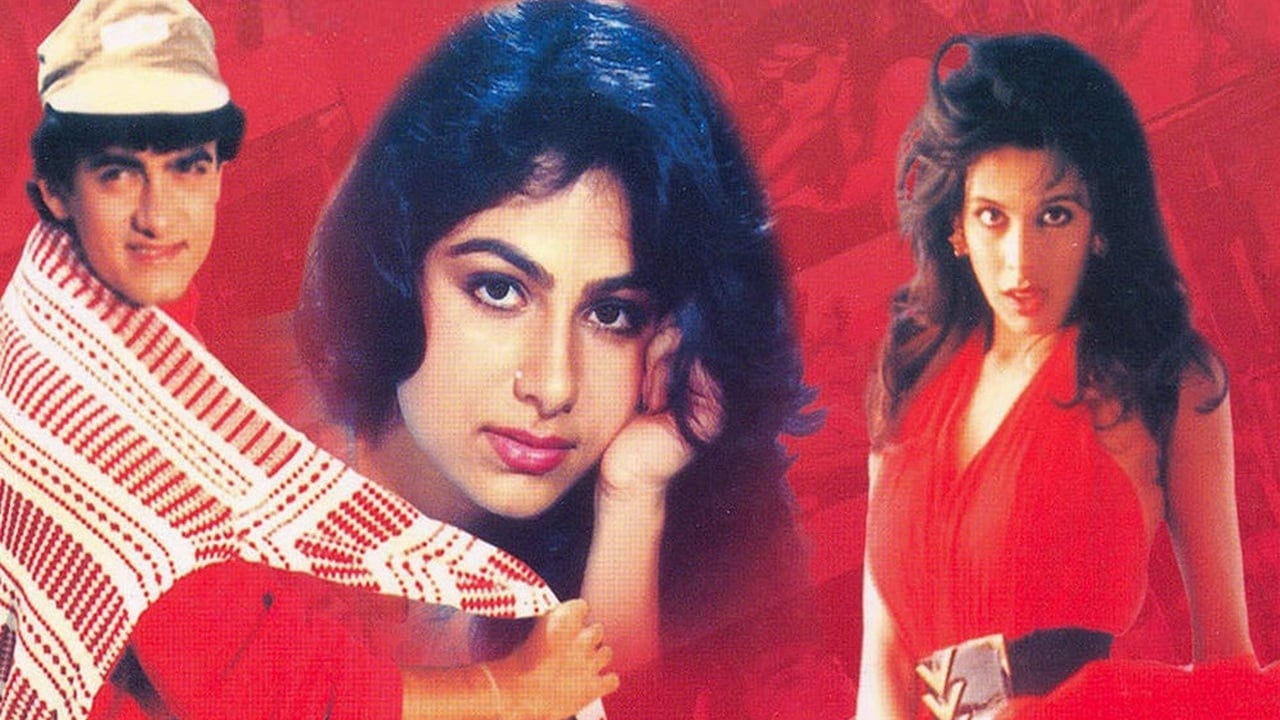
The dynamic between the brothers – one dedicated, one adrift – forms the emotional core. Sanju’s journey from irresponsible prankster to someone who understands sacrifice and responsibility is the film's backbone. His world is further complicated by two very different girls: the sophisticated Devika (Pooja Bedi), the object of his infatuation from the rival college, and his childhood best friend Anjali (Ayesha Jhulka), the dependable tomboy next door who secretly carries a torch for him. This love triangle feels refreshingly real for its time, capturing the confusion and awkwardness of young love with nuance. Ayesha Jhulka, in particular, shines as Anjali, embodying a strength and loyalty that makes her instantly rootable. We all knew an Anjali, didn't we? Or perhaps we were Anjali.
More Than Just a Race
While the climactic cycle race is the film's showpiece event, Jo Jeeta Wohi Sikandar is so much more than a sports movie. It’s a quintessential coming-of-age story, exploring themes of friendship, family expectations, class differences, and finding your own identity. Mansoor Khan masterfully balances the lighthearted school antics – the bunking classes, the cafeteria fights, the dances – with moments of genuine emotional weight. The scene where Sanju finally understands the sacrifices his father and brother have made still hits hard.

The film’s production itself is a story worth telling. It famously took a long time to complete, facing several hurdles. Did you know that model Milind Soman was initially cast as Shekhar Malhotra? He even shot some portions before being replaced by Deepak Tijori, who perfectly captured Shekhar's entitled smugness. These behind-the-scenes struggles perhaps mirror the film's own underdog theme – a project that took effort and perseverance to cross the finish line. Filmed beautifully on location in Kodaikanal and Ooty, the visuals perfectly capture the idyllic yet competitive atmosphere of the setting. The film reportedly cost around ₹2.5 crore back then, a respectable budget, and while it wasn't an instant monstrous hit, its popularity grew steadily through word-of-mouth and, crucially for us VHS fans, through repeated rentals and television screenings, cementing its place as a beloved classic.
An Unforgettable Soundtrack
You simply cannot talk about Jo Jeeta Wohi Sikandar without raving about its music. The soundtrack by Jatin-Lalit was a phenomenon, a career-defining moment for the composer duo. Every single song was a chartbuster, echoing from radios and tape decks across the country. Pehla Nasha, picturised dreamily in slow-motion (a technique beautifully choreographed by a then-newcomer Farah Khan), became the definitive anthem for first love, its melody instantly evoking butterflies and rose-tinted memories. Then there's the energetic Yahan Ke Hum Sikandar, the defiant Rooth Ke Humse Kabhi, and the mischievous Shehar Ki Pariyon. Majrooh Sultanpuri's lyrics perfectly captured the youthful spirit and emotional landscape of the film. I bet many of us wore out our cassette tapes playing these songs on repeat!
Legacy of a Champion
Decades later, Jo Jeeta Wohi Sikandar still feels fresh and relevant. Its influence on subsequent Bollywood campus dramas is undeniable. While comparisons to the American film Breaking Away (1979) have often been made due to the cycling theme and class conflict, JJWS carves its own distinct identity, deeply rooted in Indian sensibilities and relationships. It gave Aamir Khan one of his most defining early roles, showcasing his versatility beyond the romantic hero mould he established in QSQT. The film even went on to win the Filmfare Award for Best Film, a testament to its quality and impact.
It’s a film that reminds us of simpler times, perhaps, but its themes resonate universally. It celebrates perseverance, the power of friendship, and the idea that true victory comes not just from winning, but from discovering your own strength and fighting for what matters. It captures that specific blend of teenage angst, boundless optimism, and the slightly chaotic energy of figuring things out, all wrapped up in a genuinely entertaining and heartwarming package.
Rating: 9/10
This film is pure nostalgic comfort food, expertly crafted and performed. The characters feel real, the music is legendary, and the story, while familiar, is told with such sincerity and charm that it remains captivating. It perfectly balances youthful energy with emotional depth, making it a standout coming-of-age classic from the 90s Bollywood era. Minor pacing quibbles aside, its heart is undeniably in the right place, earning its high score through sheer enduring appeal and quality filmmaking.
So, dust off that imaginary VHS tape in your mind, press play, and let Jo Jeeta Wohi Sikandar remind you that sometimes, the greatest victories are the ones won against the odds, fueled by friendship, love, and a whole lot of heart. It truly is a race worth watching, again and again.