There's a certain quiet desperation that hangs heavy in the air of some high schools, isn't there? A feeling familiar to anyone who ever felt unseen, unheard, or just plain fed up. Watching Foxfire (1996) again after all these years, that’s the feeling that settles back in first – the simmering resentment just below the surface of Maddy Wirtz's (Hedy Burress) ordinary teenage life in suburban Oregon. It's a quiet pierced, suddenly and irrevocably, by the arrival of a force of nature named Legs Sadovsky.
A Spark in the Tinderbox
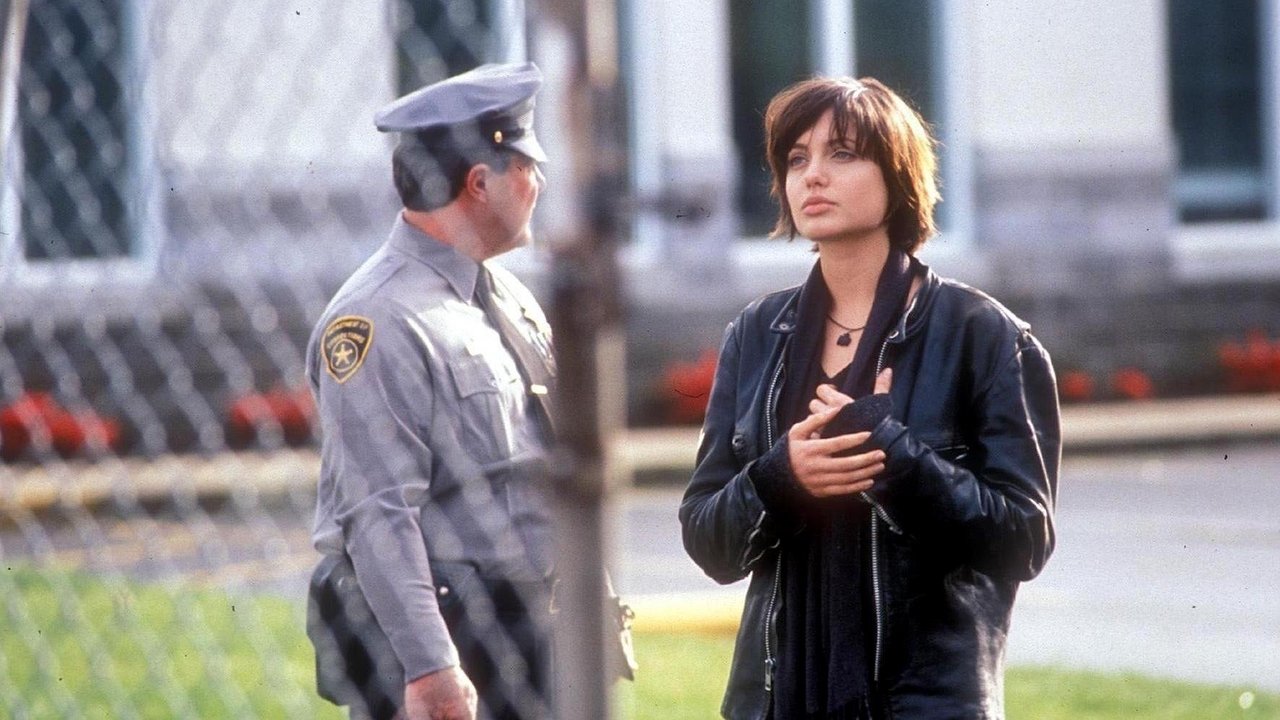
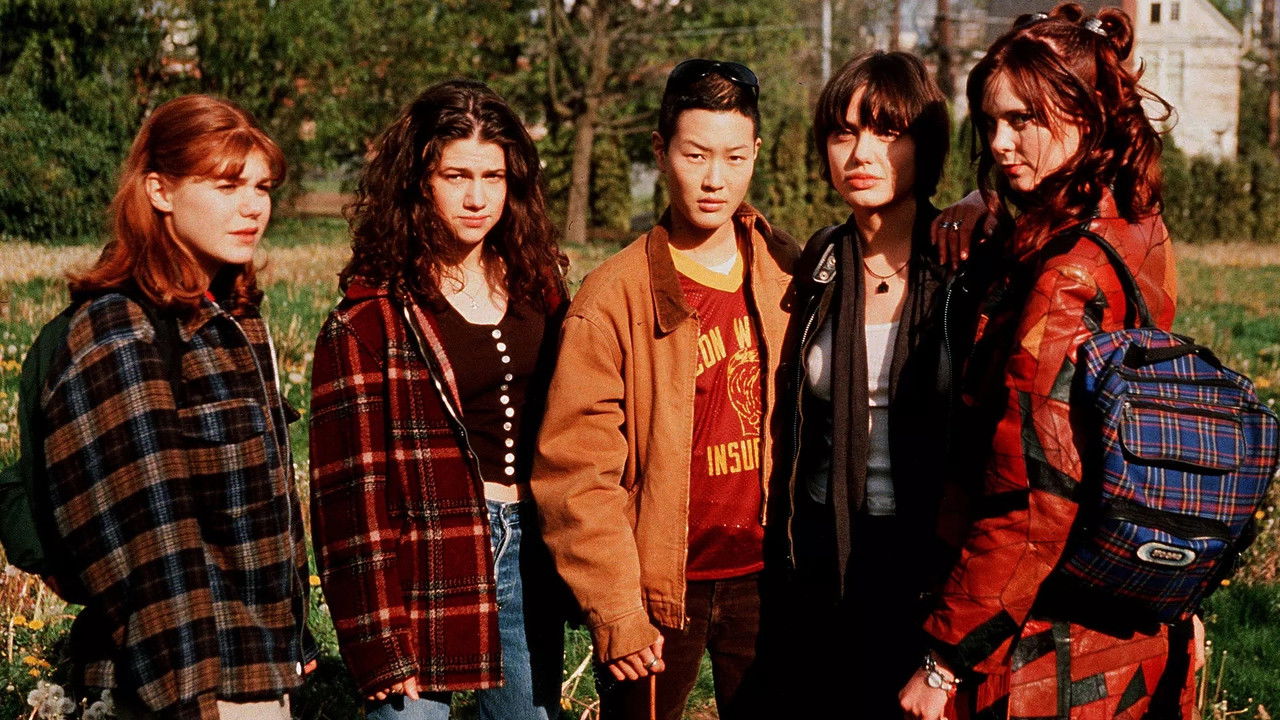
The plot, loosely wrenched from Joyce Carol Oates' powerful 1993 novel of the same name (though transplanted decades forward from the 50s setting of the book), finds Maddy and her friends – the observant Rita (Jenny Lewis, years before her Rilo Kiley fame would cement her indie icon status), the vulnerable Violet (Sarah Rosenberg), and the tough Goldie (Jenny Shimizu) – enduring the casual cruelties and outright aggressions of high school life. The catalyst for change arrives in the form of Legs, played by a young Angelina Jolie with a magnetism that practically burns through the screen. Legs is drifting, mysterious, fiercely self-possessed, and utterly unafraid. When a predatory teacher pushes things too far, it's Legs who sparks the confrontation, uniting the girls in an act of impulsive, righteous defiance.
Jolie’s performance here is truly something to behold. It’s raw, yes, but it’s also incredibly controlled. She embodies Legs not just as a rebel, but as someone carrying deep wounds and an almost unnerving certainty. You see flashes of the commanding screen presence that would define her career, already fully formed. It's easy to see why the other girls, particularly Maddy, are drawn into her orbit. Hedy Burress, as our narrator Maddy, provides the crucial emotional anchor. Her portrayal of quiet longing, blossoming confidence, and eventual dawning horror is the relatable heart of the film. We experience the intoxicating thrill and the subsequent terrifying consequences through her eyes.
Forged in Fire, Tested by Flame
What starts as righteous anger and newfound solidarity – the girls tattooing themselves with the symbolic flame, forming the "Foxfire" gang – quickly escalates. Director Annette Haywood-Carter, working with a relatively modest budget (reportedly around $3 million), crafts a palpable sense of atmosphere. The Pacific Northwest setting, all damp concrete and overcast skies, perfectly mirrors the often-gloomy internal landscape of adolescence. The initial acts of rebellion feel cathartic: confronting the teacher, reclaiming their space, finding strength in their unity. Remember that feeling of invincibility when you were young and finally stood up for yourself? Foxfire captures that intoxicating rush.
The soundtrack, pulsing with mid-90s alternative rock, further grounds the film in its era. Tracks from artists like Mazzy Star underscore the moody introspection, while heavier sounds punctuate the moments of defiance. It feels authentic to the time, part of the film's specific texture – something that resonates deeply if you were immersed in that scene back then. This conscious shift from Oates' original 1950s setting was a significant choice, aiming to connect the themes of female rage and empowerment directly with a contemporary grunge-era audience. Did it entirely succeed? Debatable, but it certainly gave the film its distinctive, edgy identity.
When Empowerment Curdles
But Foxfire isn't just a simple tale of girl power triumph. It bravely, perhaps messily, delves into the darker side of rebellion. The lines blur. Taking back power twists into taking advantage. Protecting each other escalates into dangerous recklessness, culminating in a desperate kidnapping plot that spirals tragically out of control. Does the film handle this descent perfectly? The pacing can sometimes feel uneven, and certain plot points might stretch credulity. Yet, it dares to ask uncomfortable questions: Where does righteous anger end and destructive rage begin? What responsibility comes with newfound power? The bond between the girls, initially their greatest strength, becomes tested in ways that feel painfully real. The performances of Lewis, Shimizu, and Rosenberg effectively convey the complex dynamics within the group – the loyalty, the fear, the shifting allegiances.
A Cult Flame That Still Burns
Foxfire wasn't a box office smash, nor was it universally acclaimed upon release. Yet, it endures as a potent cult favorite, particularly for those of us who discovered it stacked on a video store shelf. Why? Perhaps it’s Jolie’s unforgettable performance, a lightning-in-a-bottle moment captured on film. Maybe it’s the film’s unflinching, if sometimes imperfect, exploration of female friendship, anger, and the messy consequences of fighting back. It taps into something visceral about the teenage experience – the yearning for connection, the frustration with injustice, the terrifying potential found in breaking the rules.
I remember renting this tape, drawn in by the cover and the promise of something intense. It delivered, though perhaps not in the ways I expected. It wasn't just a "teen movie"; it felt heavier, riskier. It lingered. Even with its flaws, there’s an honesty to its portrayal of youthful fire – both its warmth and its destructive capacity.
Rating: 7/10
This rating reflects Foxfire's undeniable power, driven by a captivating early performance from Angelina Jolie and its willingness to explore the complexities of female rage and solidarity, even if the narrative sometimes stumbles. The mid-90s atmosphere is thick and authentic, and the core themes resonate. It's not a perfect film, with some tonal inconsistencies and plot contrivances holding it back from true greatness, but its raw energy and cult status are well-earned.
Foxfire remains a fascinating snapshot of its time and a potent reminder that finding your voice is crucial, but learning how to wield it wisely might be the hardest part of growing up. It's a film that burns brightly, flaws and all, in the memory.