## The Weight of Unexpected Grace: Remembering The Legend of the Holy Drinker
We knew him best, perhaps, stalking rain-slicked Los Angeles rooftops or battling medieval curses. Rutger Hauer, an actor whose intensity often felt like coiled physical power, became synonymous with a certain kind of 80s genre electricity. But then there was The Legend of the Holy Drinker (1988), a film that arrived like a quiet prayer amidst the cinematic noise of the era. Watching it again, decades later, feels less like revisiting a movie and more like encountering a gentle, persistent ghost. It doesn't shout; it whispers, asking profound questions about fate, obligation, and the strange, often illogical nature of grace. Can a man truly find redemption when his very nature seems determined to lead him astray?
Paris Through a Glass, Darkly
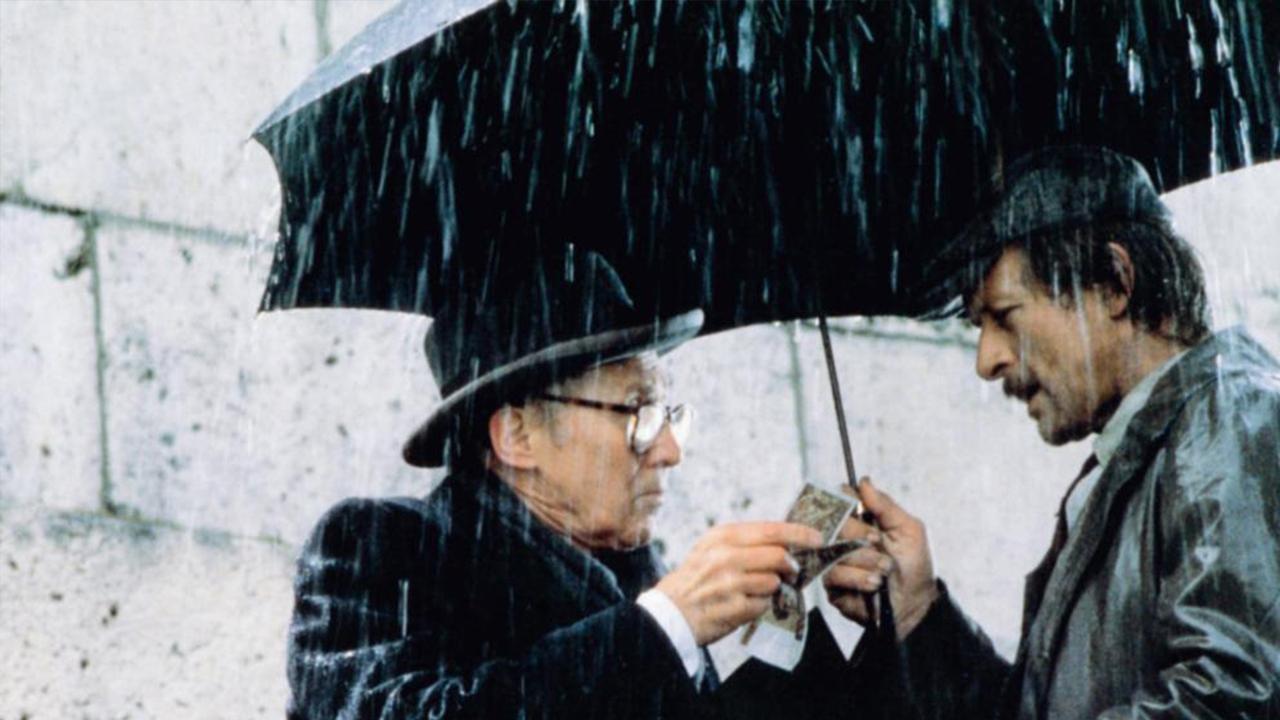
Directed by the masterful Italian filmmaker Ermanno Olmi, known for his patient, deeply humanist works like the Palme d'Or winner The Tree of Wooden Clogs (1978), this film feels steeped in a specific kind of melancholy beauty. Olmi, alongside co-writer Tullio Kezich, adapts Joseph Roth's 1939 novella with a reverence that permeates every frame. We follow Andreas Kartak (Rutger Hauer), a homeless Polish man living under the bridges of Paris. His existence is one of quiet desperation until a well-dressed stranger (Anthony Quayle) inexplicably gives him 200 francs. The condition? Repay the sum, when he can, to the statue of Saint Thérèse of Lisieux in a local church. This simple act sets Andreas on a cyclical journey of intention and interruption, a path paved with fleeting moments of luck, temptation, and encounters that feel both random and fated.
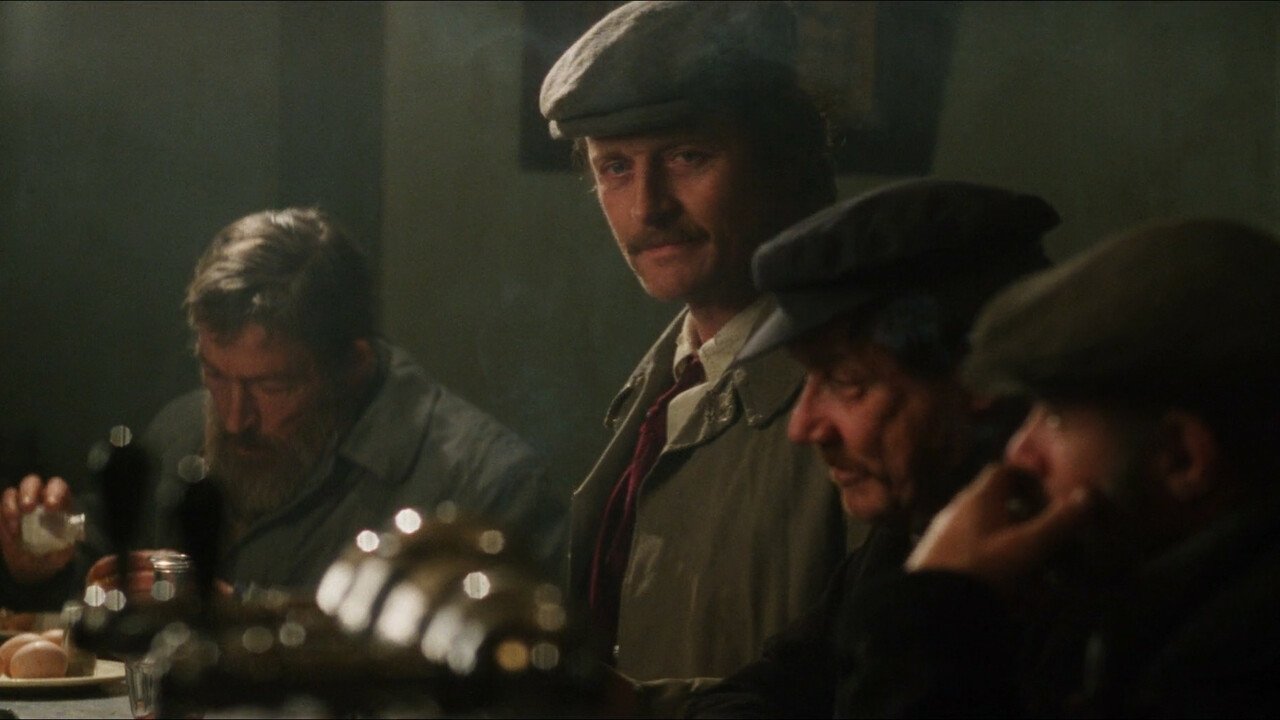
Olmi's Paris isn't the sparkling city of postcards. It's a place of shadows and damp cobblestones, of muted cafes and the lonely interiors of cheap hotel rooms. The cinematography captures this perfectly, often holding shots longer than we expect, allowing the weight of Andreas's solitude and the city's indifference to settle in. There's a dreamlike quality to his wanderings; people drift into his orbit – old flames, former colleagues, figures who seem to embody temptation or reminders of past failures – and then vanish just as quickly. The narrative avoids conventional structure, mirroring the unpredictable flow of Andreas's life, where every intention to fulfill his promise is waylaid by the immediate allure of drink, companionship, or simply the momentary relief from his existential burden.
A Soul Laid Bare
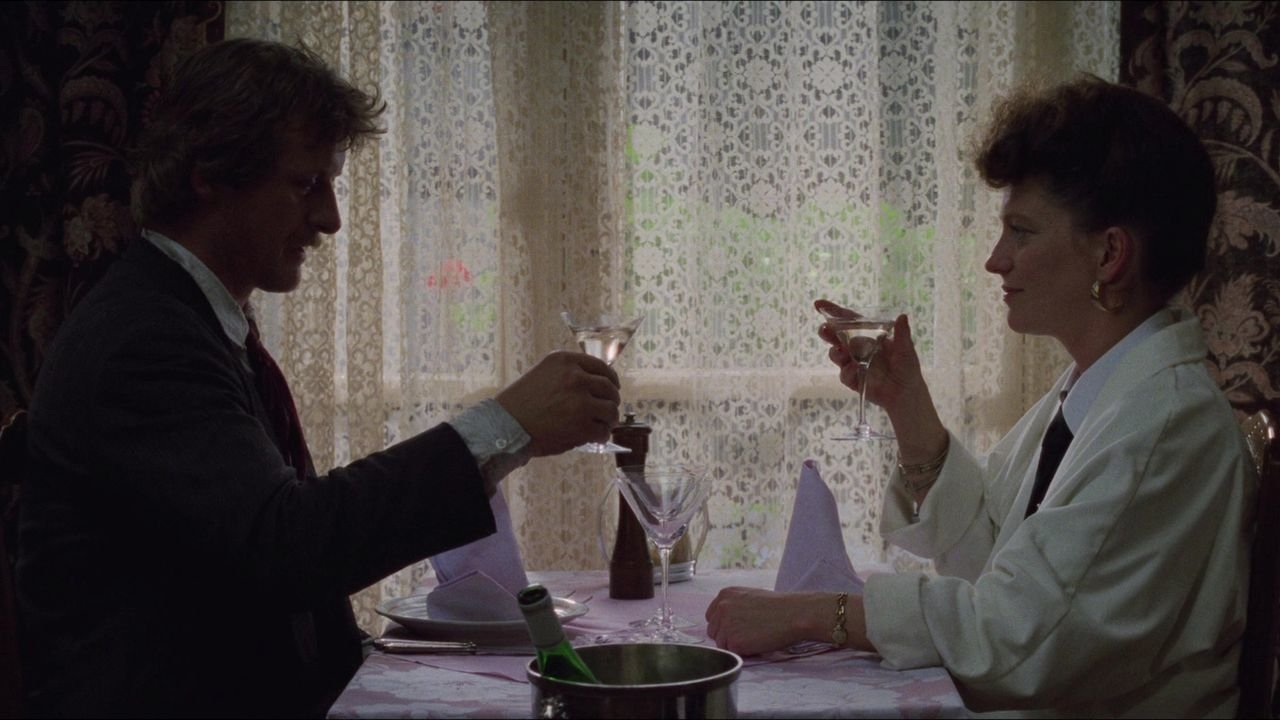
The absolute core of the film is Rutger Hauer's astonishing performance. Stripped of the bravado and physical menace that defined so many of his iconic roles (Blade Runner (1982), Ladyhawke (1985)), Hauer finds something deeply vulnerable and achingly human in Andreas. It’s a performance built on subtle shifts in expression, the weariness in his eyes, the flicker of hope that ignites when fortune briefly smiles, and the resigned acceptance when it inevitably turns away. He embodies the 'holy drinker' – a man whose addiction is inseparable from his being, yet who retains an innate dignity, a sense of honour bound up in this strange debt. There's no grandstanding, no overt melodrama; just the quiet portrayal of a man wrestling with his own frailties under the gaze of what might be Providence, or perhaps just blind chance. Supporting players like the ever-reliable Anthony Quayle lend a gentle gravity to their scenes, while Sandrine Dumas brings a poignant fragility to her appearances as women from Andreas's past.
Miracles Behind the Camera
Finding The Legend of the Holy Drinker on a video store shelf back in the day might have felt like discovering a hidden channel. Tucked between the action blockbusters and sci-fi epics, its unassuming cover art promised something different, something quieter. And the story behind it holds its own quiet magic. For Ermanno Olmi, a director rooted in Italian neorealism, tackling this story was a deeply personal project. The film itself was a modest Italian-French co-production, lacking the budget of Hauer’s Hollywood ventures, yet it achieved something far more prestigious: the Golden Lion award at the 1988 Venice Film Festival. It’s a testament to the power of its deceptively simple story and the profound empathy of its execution.
Joseph Roth's novella itself carries a tragic weight, written shortly before his own death in Paris from alcoholism, mirroring the fate of his protagonist. Olmi captures this beautifully, not by romanticizing Andreas's condition, but by presenting it with unflinching honesty and compassion. Hauer reportedly embraced the role wholeheartedly, drawn to the challenge of portraying such profound interiority. You can feel that commitment; it’s a performance devoid of vanity, focused entirely on inhabiting the character's weary soul. The subtle, melancholic score by Franco Piersanti perfectly complements the visuals, enhancing the contemplative, almost meditative atmosphere.
The Lingering Question of Grace
What stays with you long after the credits roll isn't necessarily the plot, but the feeling. It's the film's gentle rhythm, its acceptance of ambiguity, and its profound sense of compassion for its flawed protagonist. Does Andreas ever truly repay his debt? The film offers its own enigmatic answer, leaving us to ponder the nature of miracles. Are they grand interventions, or are they found in the small, unexpected kindnesses, the fleeting moments of connection, the very persistence of hope in a seemingly hopeless situation? The Legend of the Holy Drinker doesn’t offer easy answers, but invites quiet contemplation. It suggests that perhaps honour and dignity can coexist with human frailty, and that grace might find us even under the darkest bridges. It remains a unique and moving piece of cinema, a far cry from the usual VHS fare but richly rewarding for those willing to slow down and listen to its whispered truths.
Rating: 9/10
This near-perfect score reflects the film's masterful direction, Hauer's career-best (and tragically underseen) performance, its profound thematic depth, and its beautifully sustained melancholic atmosphere. It achieves exactly what it sets out to do with quiet power and artistry.
It's a film that reminds us that sometimes the most resonant stories aren't the loudest, but the ones that explore the delicate, often contradictory, landscape of the human heart.