There are films that entertain, films that thrill, and then there are films that grab you by the collar and demand you confront the uncomfortable truths of power, ideology, and the messy, often brutal, collision between the two. Andrzej Wajda's 1983 historical drama Danton is firmly in the latter category. Watching it again after all these years, pulling that well-worn tape from its sleeve, feels less like revisiting a movie and more like unearthing a potent political statement, one whose echoes feel startlingly relevant even now. It doesn’t offer easy answers; instead, it leaves you wrestling with the shades of grey that define revolutionary fervor and its inevitable, often tragic, consequences.
The Shadow of the Guillotine
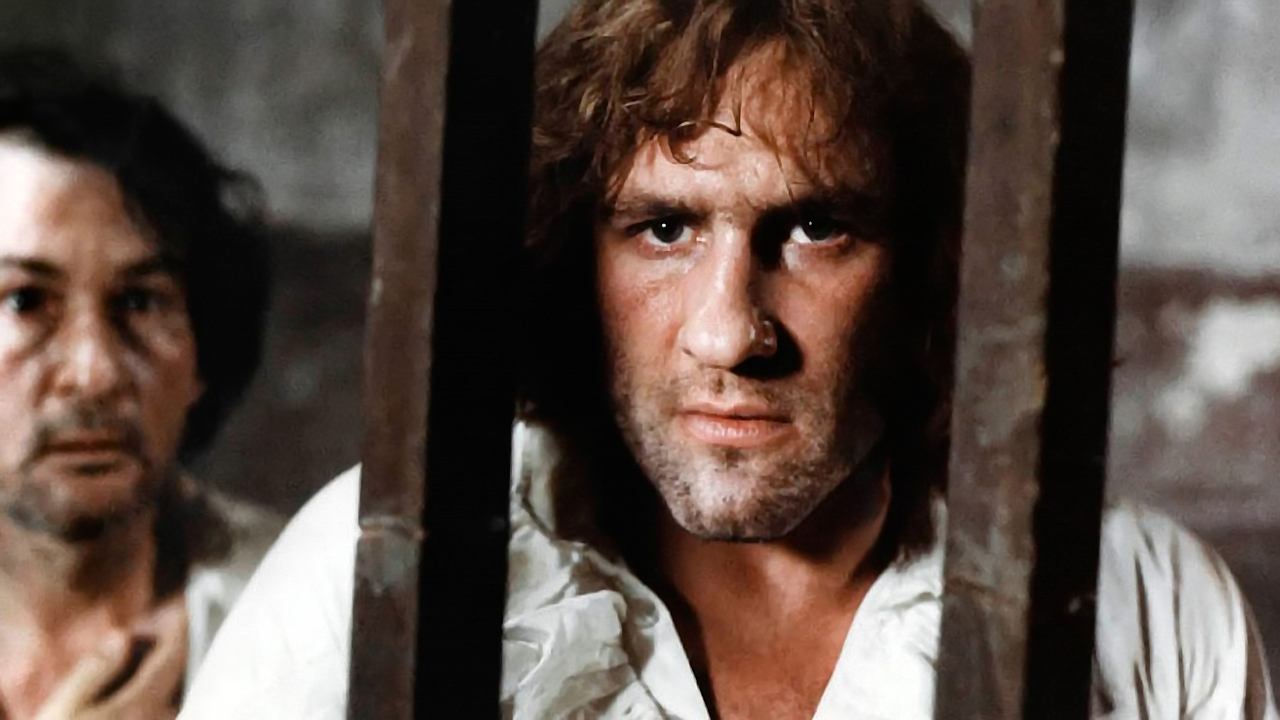
The film plunges us headfirst into Paris, 1794. The initial promise of the French Revolution has curdled into the Reign of Terror. The air itself feels thick with suspicion and fear. Into this cauldron steps Georges Danton (Gérard Depardieu), the charismatic, life-loving tribune of the people, returning to challenge the increasingly autocratic rule of Maximilien Robespierre (Wojciech Pszoniak) and the Committee of Public Safety. What follows is not a sprawling historical epic, but an intense, claustrophobic chamber piece focused on the psychological and ideological battle between these two former allies turned mortal enemies.
A Duel of Presence and Principle
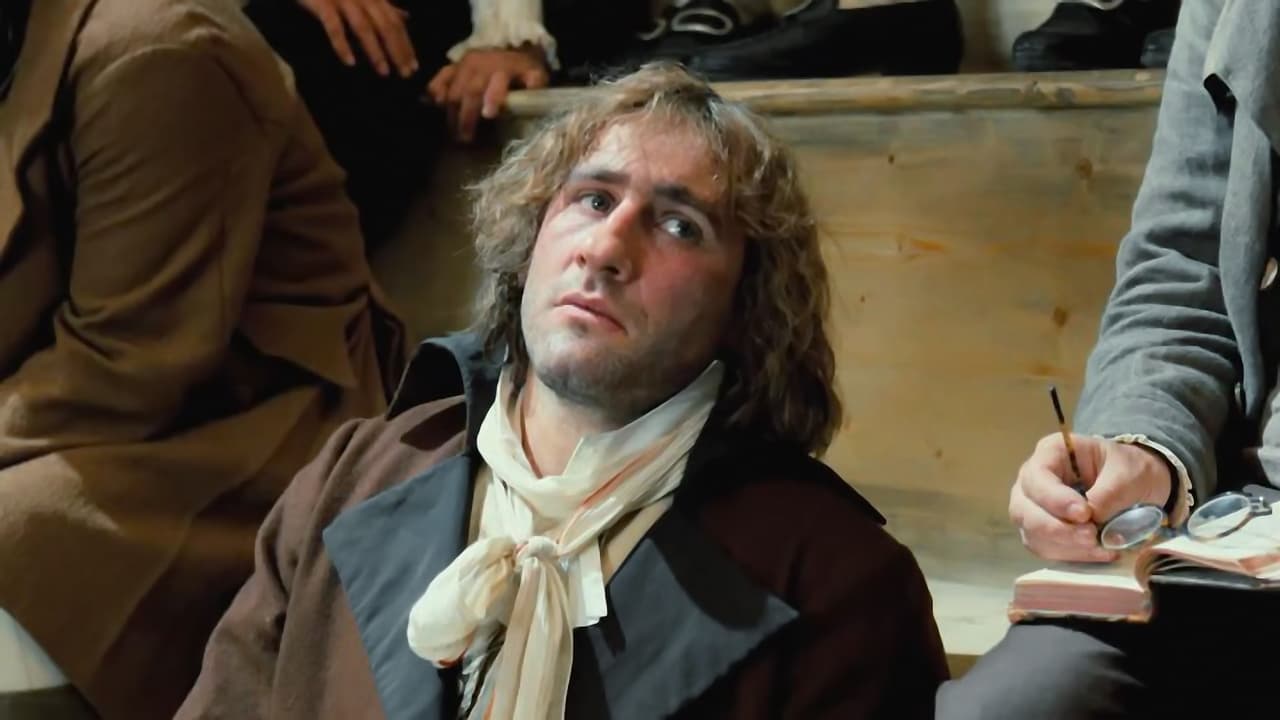
At the heart of Danton's enduring power are the towering performances of its two leads. Depardieu, in a role that feels tailor-made for his larger-than-life presence (known then for films like The Last Metro), embodies Danton as a force of nature – messy, passionate, pragmatic, perhaps corruptible, but undeniably human. He fills every frame he occupies, arguing, cajoling, sweating, seemingly drawing strength from the very crowds Robespierre fears. You understand instantly why people would follow him, why his very existence is a threat to the controlled, austere vision of the Republic championed by his rival.
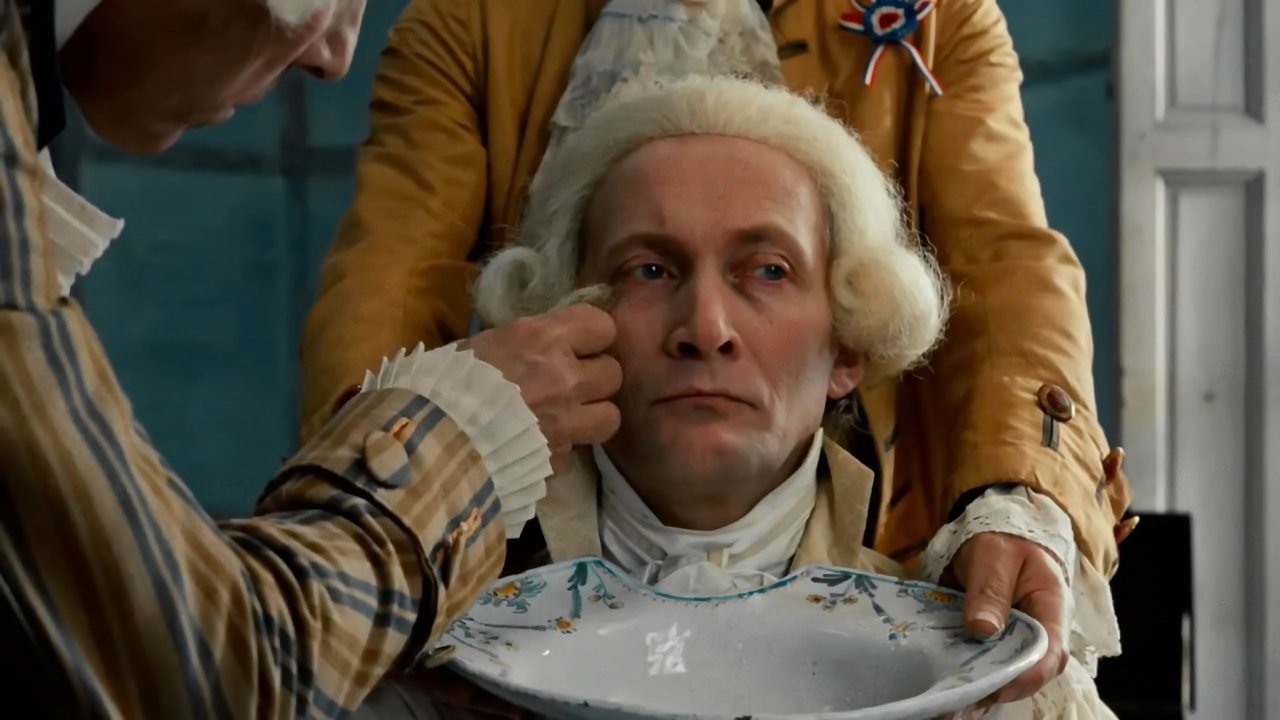
Opposite him, Wojciech Pszoniak delivers a performance of chilling restraint as Robespierre. He’s physically smaller, meticulously controlled, his idealism calcified into dogma. Pszoniak portrays him not as a simple villain, but as a man utterly convinced of his own righteousness, terrified of chaos, and willing to sacrifice humanity itself on the altar of abstract principle. His quiet intensity, the subtle flicker of doubt or perhaps fear in his eyes, makes Robespierre a figure both terrifying and strangely pitiable. The scenes where these two men confront each other are electric, less a debate of policy than a clash of fundamental worldviews.
Echoes of Solidarity
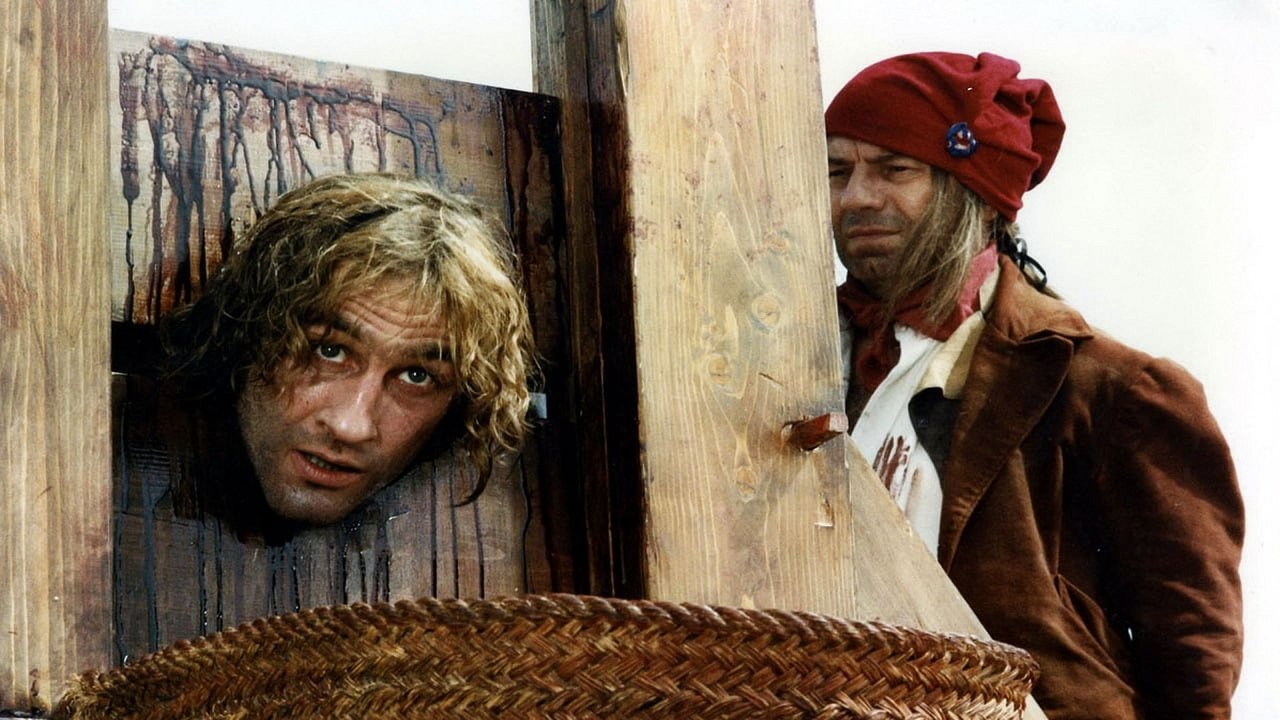
It's impossible to fully appreciate Danton without understanding the context of its creation. Andrzej Wajda, one of Poland's most celebrated filmmakers (later known for Katyn), made this film shortly after martial law was declared in Poland to crush the Solidarity movement. The parallels are unmistakable and deliberate. Danton's popular appeal and challenge to entrenched power resonated strongly with Lech Wałęsa and Solidarity, while Robespierre's Committee reflected the repressive Communist regime. This wasn't just history; for Wajda, it was the present playing out under a historical guise.
This context adds layers to the casting itself. Depardieu, the French star, representing the 'people's man', facing off against a Polish actor, Pszoniak, as the rigid ideologue – a subtle commentary in itself. Reportedly, Wajda directed Pszoniak in Polish and Depardieu largely through translators, adding another layer of separation that mirrors the characters' inability to truly connect. This wasn't just a film about revolution; it felt like an act of revolution, smuggled onto screens under the guise of historical drama. Its production, costing a reported $4.8 million (a considerable sum then, perhaps around $14 million today), was a significant Franco-Polish undertaking during a tense political period.
The Weight of Ideas
Wajda, working from a script co-written with Jean-Claude Carrière (a frequent collaborator of Luis Buñuel) based on Stanisława Przybyszewska's 1929 play The Danton Case, isn't interested in action sequences or battlefield heroics. The film is dialogue-heavy, staged almost like a play, focusing on faces, arguments, and the oppressive atmosphere within closed rooms. The drab colours, the stark lighting, the sense of surveillance – it all contributes to a feeling of encroaching doom.
What does it mean when a revolution begins to devour its own? Can noble ideals survive the compromises necessary to hold power? These are the questions Danton forces us to ponder. There's a profound sadness permeating the film, a sense of tragic inevitability. We see the mechanisms of state terror grinding forward – the show trials, the manipulation of opinion, the fear that silences dissent. Does Danton's pragmatism offer a necessary corrective, or is it merely an excuse for indulgence and a betrayal of the revolutionary cause? Does Robespierre's unwavering virtue mask a monstrous ego and a terrifying lack of empathy? Wajda refuses to paint either man in simple strokes.
Lingering Resonance
While firmly rooted in its historical and political context, Danton remains a powerful study of political conflict. The clash between charismatic populism and rigid ideology, the tension between individual liberty and state control, the way fear can be weaponized – these themes haven't aged a day. It’s a film that rewards patience, demanding attention rather than offering easy spectacle. I remember first encountering it on a slightly fuzzy VHS copy, perhaps rented from one of those smaller independent video stores that always had the more interesting foreign films tucked away on a back shelf. Even then, the intensity of the performances cut through the lower resolution.
The film swept the Césars (French Oscars) in 1984, winning Best Film and Best Director for Wajda, and also picked up a BAFTA for Best Foreign Film. It wasn't a box office smash in the way of 80s blockbusters, but its critical acclaim and political weight cemented its place as a significant work of its era.
---
Rating: 9/10
Danton is a masterclass in political drama, anchored by two phenomenal central performances and infused with the urgency of its director's own experiences. It avoids simplistic portrayals, forcing the viewer to grapple with complex questions about power, principle, and the human cost of revolution. Its deliberate pacing and dialogue-heavy nature might not appeal to everyone seeking action, but for those willing to engage with its ideas, it offers a profound and chillingly relevant experience. It's a stark reminder that the struggles for freedom and the perils of unchecked power are timeless. What lingers most is the chilling question: in the pursuit of a better world, how much humanity are we willing to sacrifice?