Here we go, another trip down the aisles of memory, past the action heroes and screaming queens, towards something... else. Remember finding those tapes with slightly more austere covers, maybe a foreign name in the director's slot, promising a different kind of journey? That's where Federico Fellini's 1983 voyage, And the Ship Sails On (original title: E la nave va), often resided. Not your typical Friday night rental, perhaps, but a film that, once watched, tends to bob gently in the sea of your cinematic recollections.
### A Voyage into Artifice
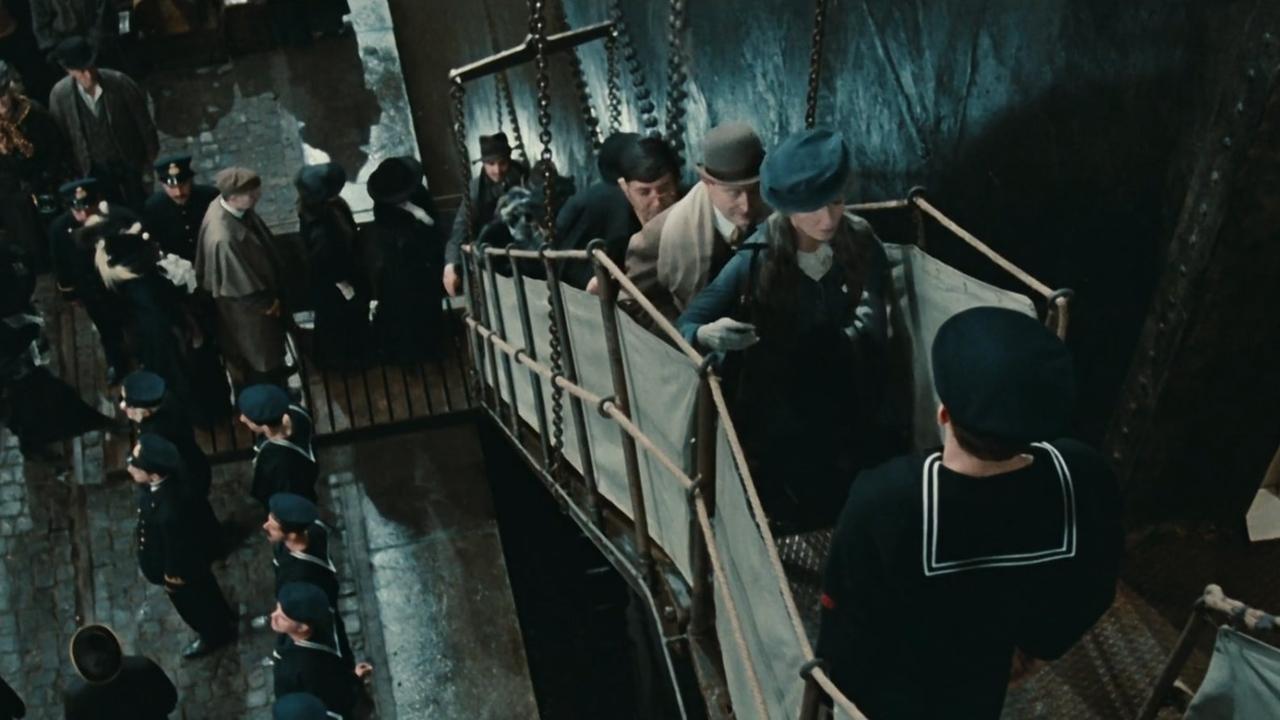
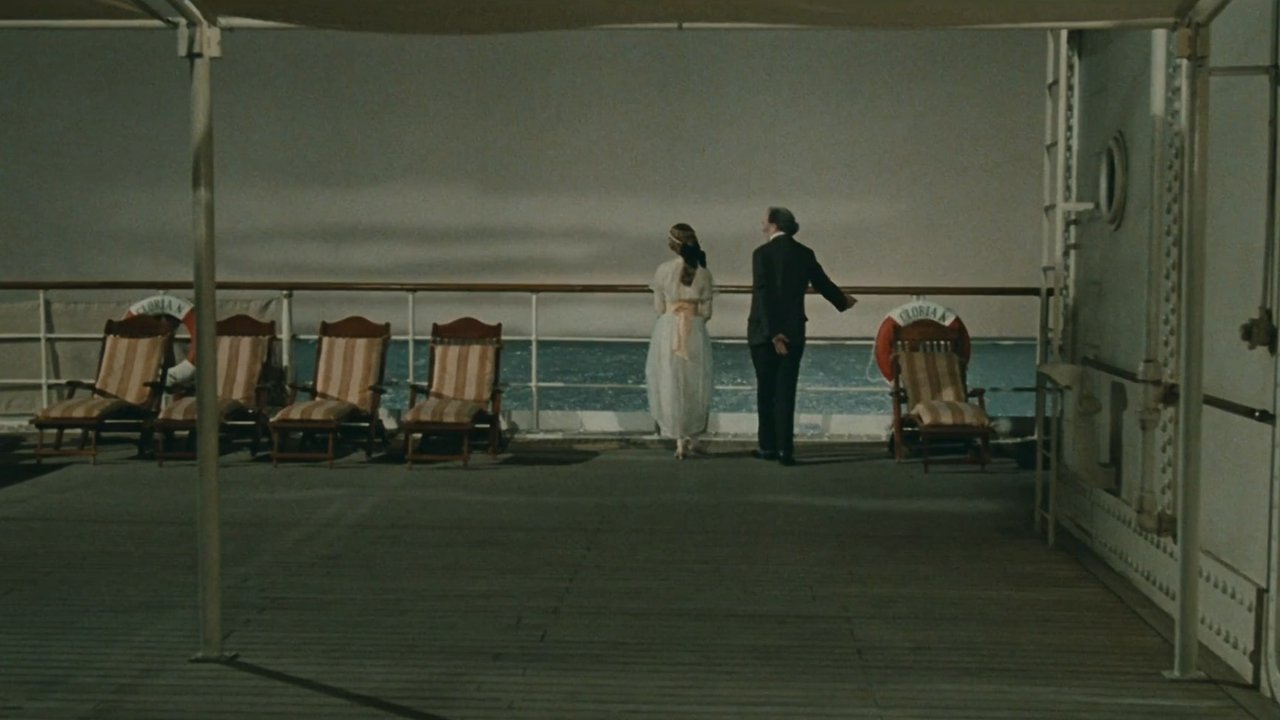
What strikes you first, and lingers longest, is the sheer, unapologetic fakeness of it all. We board the luxury liner Gloria N. in 1914, ostensibly to scatter the ashes of the beloved opera diva Edmea Tetua near her native island. But the sky? Clearly painted. The ocean? Undulating sheets of shimmering plastic, cellophane waves caught in studio light. This isn't just a stylistic choice; it feels like the very substance of the film. Fellini, working again with longtime collaborator screenwriter Tonino Guerra (Amarcord, Blow-Up), isn't trying to fool us. He’s inviting us into the mechanics of illusion, laying bare the filmmaking process itself, much like the characters on board are performing their own lives. It’s a bold move, one that immediately sets this apart from anything else you might have pulled off the shelf that week. I recall popping this tape in, expecting a period drama, and being confronted with this gorgeous, deliberate unreality – it was both baffling and utterly captivating.
### Our Man on Deck: Orlando

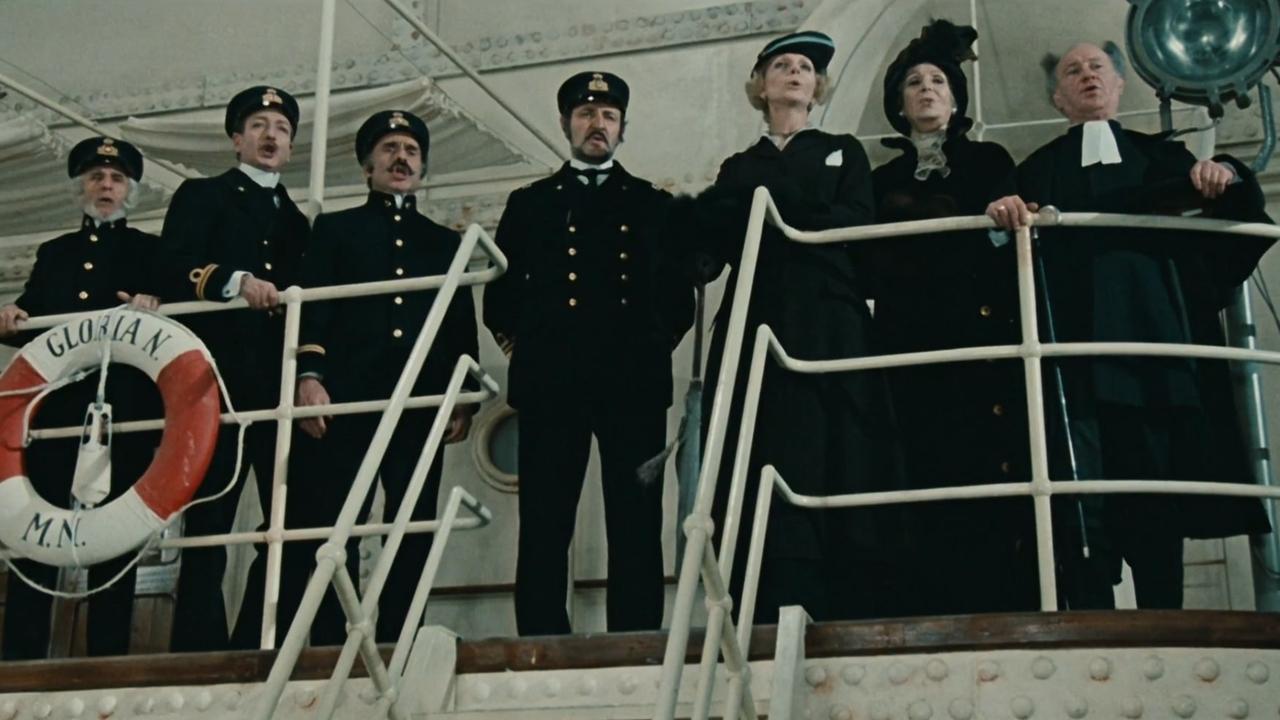
Guiding us through this floating world of singers, aristocrats, mystics, and even a bewildered rhinoceros, is the journalist Orlando, played with wonderful observational warmth by British actor Freddie Jones (Dune, The Elephant Man). He speaks directly to us, the audience, sometimes peering right into the camera lens, bridging the gap between the fabricated world on screen and our reality on the couch. His presence anchors the film’s whimsical, often chaotic energy. Jones provides a relatable entry point into Fellini’s typically eccentric ensemble – a veritable menagerie of human vanities, passions, and absurdities crammed together as the world outside edges towards catastrophe. Watching him navigate this sea of egos and operatic emotion is one of the film's quiet delights.
### Echoes in the Hallways (and the Cellophane Sea)
The production itself was a testament to Fellini's singular vision. Built entirely within the legendary Cinecittà studios in Rome, the Gloria N. became its own self-contained universe. That famous cellophane sea? Reportedly, it required immense effort to light and film convincingly as artificial, a fascinating technical challenge embracing the unreal. Fellini even begins the film in a tinted, sepia-toned silent movie style, gradually bleeding into full, rich color as the ship "sets sail," further emphasizing the journey into cinematic illusion. It’s a subtle trick, easily missed on a worn VHS copy perhaps, but indicative of the layers at play. While Nino Rota, Fellini's iconic composer, had sadly passed away a few years prior, the film throbs with music – existing opera pieces woven together with a score by Gianfranco Plenizio that perfectly complements the blend of grandeur and melancholy.
The budget was significant for an Italian film at the time, around $7 million (roughly $21 million today), allowing Fellini the freedom to construct his elaborate floating world. Though not a massive box office smash internationally, it garnered acclaim, winning several David di Donatello awards (Italy's Oscars) and reminding audiences of Fellini's enduring, unique magic, even in his later career.
### Art Against the Apocalypse
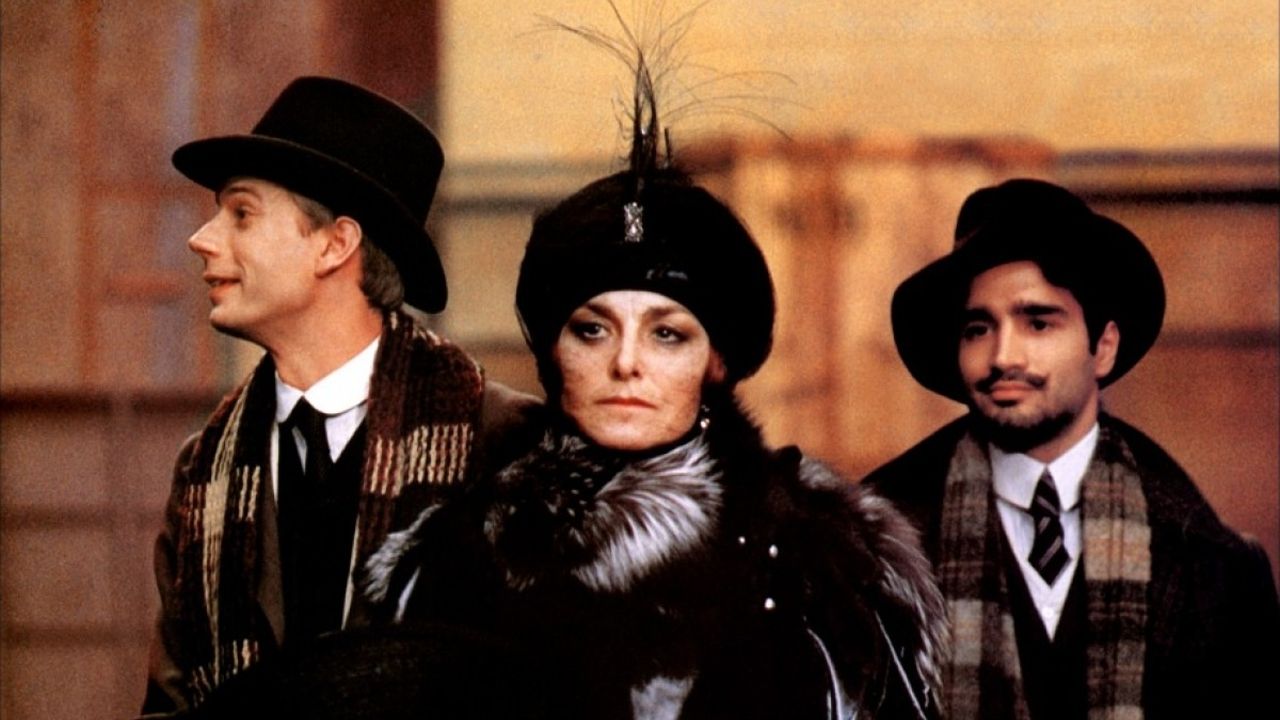
Beneath the surface sparkle and the charmingly dated special effects (that rhino!), And the Ship Sails On carries a profound weight. The year is 1914. While these characters indulge in artistic debates, petty jealousies, and elaborate meals (that kitchen scene!), the Archduke Franz Ferdinand has been assassinated, and the rumblings of World War I are beginning to shake the world. The arrival of Serbian refugees, rescued at sea, brings the harshness of reality crashing into their insulated bubble. How does this microcosm of European high society react? Largely, by trying to incorporate the disaster into their own ongoing performance.
It raises questions that feel surprisingly resonant, doesn't it? In the face of overwhelming global crises, how much do we retreat into our own preoccupations, our own forms of "art" or entertainment? Is culture a shield, a comfort, or merely a distraction from the inevitable? Fellini doesn't offer easy answers, presenting the situation with a mix of satire and deep-seated empathy. The film becomes an elegy not just for a lost era – the opulent twilight of the Belle Époque – but perhaps for the limits of art itself in the face of brutal history.
### Lasting Impressions from a Strange Voyage
Finding And the Ship Sails On felt like uncovering a secret compartment in the video store. It wasn't the adrenaline rush of RoboCop or the easy laughs of Ghostbusters. It was something stranger, more contemplative, demanding a different kind of attention. Its deliberate pace and blatant artifice might not click with everyone expecting straightforward narrative. But for those willing to surrender to its peculiar rhythms, it offers a visually stunning, intellectually stimulating, and surprisingly moving experience. It’s a film about film, about memory, about the grand, often ridiculous, opera of human existence played out against a backdrop we know is tragically finite.
Rating: 8/10
Justification: While its unique, highly stylized approach makes it less universally accessible than some classics, And the Ship Sails On is a masterfully crafted piece of cinema from one of the greats. Its visual inventiveness, thematic depth, Freddie Jones's anchoring performance, and its haunting blend of whimsy and melancholy earn it high marks. It loses a couple of points simply because its specific artistic frequency won't resonate with all viewers seeking typical narrative comfort, especially those browsing the VHS Heaven aisles for more conventional genre fare.
Final Thought: What lingers most is that final, haunting image – a testament to survival and storytelling against the odds, leaving you adrift in thought long after the tape clicked off. It’s a film that reminds us that sometimes the most profound truths are found in the most beautifully constructed illusions.