There's a certain kind of discomfort that settles in when rewatching some films from the 80s, a feeling distinct from spotting dated hairstyles or clunky tech. It’s the discomfort of confronting themes handled with a bluntness, perhaps even a recklessness, that feels almost alien today. Lewis John Carlino’s Class (1983) plunges straight into that feeling, wrapping a potentially scandalous premise within the glossy veneer of a prep school drama-comedy. It forces you to ask: was this daring, naive, or just a product of its time?
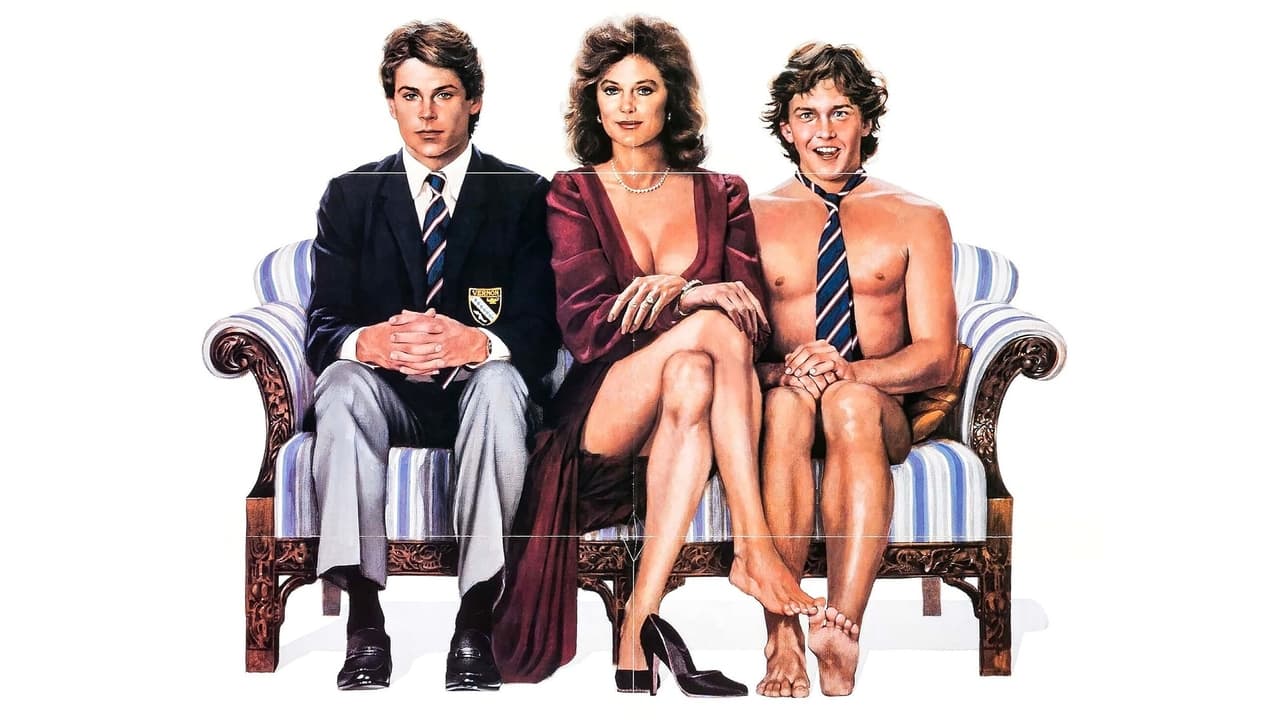
Welcome to Prep School Purgatory
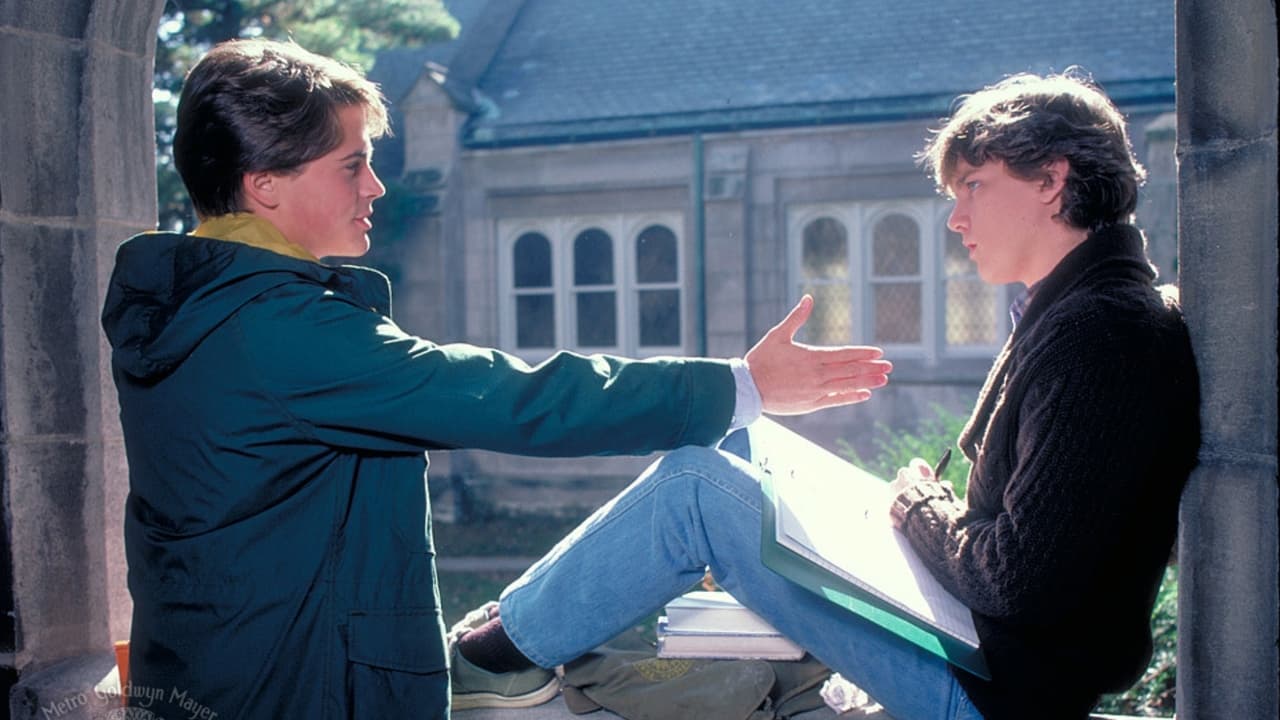
The setup is classic fish-out-of-water. Jonathan Ogner (Andrew McCarthy, radiating earnest awkwardness) arrives at the exclusive Vernon Academy, utterly unprepared for its currents of privilege and debauchery. He’s quickly taken under the wing of the effortlessly charming, devastatingly handsome roommate, Franklin "Skip" Burroughs IV (Rob Lowe, already deploying the megawatt charisma that would define his early career). Their friendship forms the initial, often comedic, spine of the film – Skip schooling Jonathan in the ways of the world, from cheating exams to talking to girls. It's a dynamic familiar to anyone who navigated the treacherous social hierarchies of adolescence, albeit one amplified by extreme wealth and entitlement.
The atmosphere Carlino creates is thick with the peculiar blend of innocence and world-weariness common to elite boarding schools depicted on film. The hallowed halls, the sprawling lawns, the casual attitude towards rule-bending – it all feels like a bubble, deliberately separate from the mundane realities most of us knew. The initial tone leans towards lighthearted hijinks, a sort of Porky's Goes Patrician, but a darker undercurrent begins to swirl almost immediately.
An Affair to Forget?
(Mild Spoilers Ahead!)
The film pivots dramatically when Jonathan, seeking worldly experience during a trip to Chicago, has a whirlwind affair with an older, sophisticated woman named Ellen (Jacqueline Bisset). She’s alluring, mysterious, and seemingly detached. McCarthy plays Jonathan’s smitten disbelief perfectly; he’s a kid playing at being a man, suddenly finding himself in over his head. The scenes between them have a charged, slightly dangerous energy, largely thanks to Bisset’s captivating presence. Already a major star (Bullitt (1968), The Deep (1977)), she lends the role a gravitas it desperately needs, portraying Ellen not merely as a predator, but as a complex woman wrestling with her own unhappiness and making profoundly poor choices.
Of course, the devastating reveal comes when Jonathan proudly brings his new 'conquest' home for Thanksgiving break, only to discover Ellen is none other than Skip’s mother. The film shifts gears abruptly, plunging into a tense, often excruciating exploration of betrayal, guilt, and the shattering of illusions. The easy camaraderie between Jonathan and Skip evaporates, replaced by suspicion and unspoken accusations. It’s here that the film truly grapples with its central, uncomfortable conceit. How does one navigate the impossible situation of having slept with your best friend’s mother?
Navigating the Fallout
What makes Class linger, despite its tonal inconsistencies and occasional lapses into melodrama, are the performances navigating this minefield. McCarthy excels at conveying Jonathan's mounting panic and shame. You see the weight of the secret crushing his initial wide-eyed optimism. Lowe, tasked with portraying the betrayed son, manages moments of genuine hurt beneath the polished surface, hinting at the vulnerability hidden by the prep school swagger. And Bisset remains the enigmatic center, her motivations complex and her ultimate fate tinged with sadness. Her performance feels grounded in a way that elevates the sometimes-heightened reality around her.
It’s fascinating to watch Lowe and McCarthy here, just before the term "Brat Pack" would explode following St. Elmo's Fire (1985). You can see the raw materials of their later screen personas already firmly in place. Class also features early appearances by John Cusack and Virginia Madsen, making it a veritable time capsule of future stars.
Retro Fun Facts & Flawed Reflections
Digging into the making of Class reveals some telling details. Writers Jim Kouf (who'd later pen hits like Stakeout and Rush Hour) and David Greenwalt (future showrunner for Angel) were crafting a story that pushed boundaries for teen-centric films of the era. Filmed primarily at the picturesque Lake Forest Academy outside Chicago, the setting itself becomes a character, embodying the gilded cage these characters inhabit.
Interestingly, the film reportedly underwent significant changes after test screenings. The original ending was apparently much darker, leading to reshoots for the more conventionally resolved (though still messy) conclusion we see today. One can only speculate how that initial vision might have altered the film's reception, which was decent commercially (making nearly $22 million on a $7 million budget) but met with mixed reviews often critical of its tonal shifts and handling of the central affair. It certainly courted controversy, earning its R-rating in an era where studios were often pushing for broader PG appeal in teen films.
Does the film fully succeed in exploring its complex themes of class disparity, sexual ethics, and the painful transition to adulthood? Perhaps not entirely. The shifts between broad comedy and intense drama can be jarring, and some character motivations feel underdeveloped. Yet, there's an undeniable honesty, however uncomfortable, in its depiction of youthful mistakes colliding with adult desperation. I remember renting this on VHS, probably drawn in by the promise of teen comedy and maybe Rob Lowe's face on the cover, and being genuinely sideswiped by the darker turns it took. It wasn't quite what was advertised, and maybe that's why it sticks.
Rating: 6/10
Class is a fascinating, flawed artifact of early 80s cinema. It boasts strong performances from its leads, particularly a magnetic Jacqueline Bisset, and captures a specific moment in time for both teen movies and the careers of its young stars. Its ambition to blend comedy with serious, uncomfortable drama isn't always successful, leading to tonal whiplash. However, its willingness to tackle a tricky subject, even imperfectly, and its snapshot of future stars make it a compelling watch for VHS Heaven dwellers. It’s a reminder that sometimes, the films that make us squirm a little are the ones that prompt the most reflection.
What lingers most isn't the laughter or the shock, but the lingering question of consequence – how one reckless moment can irrevocably alter the course of young lives.