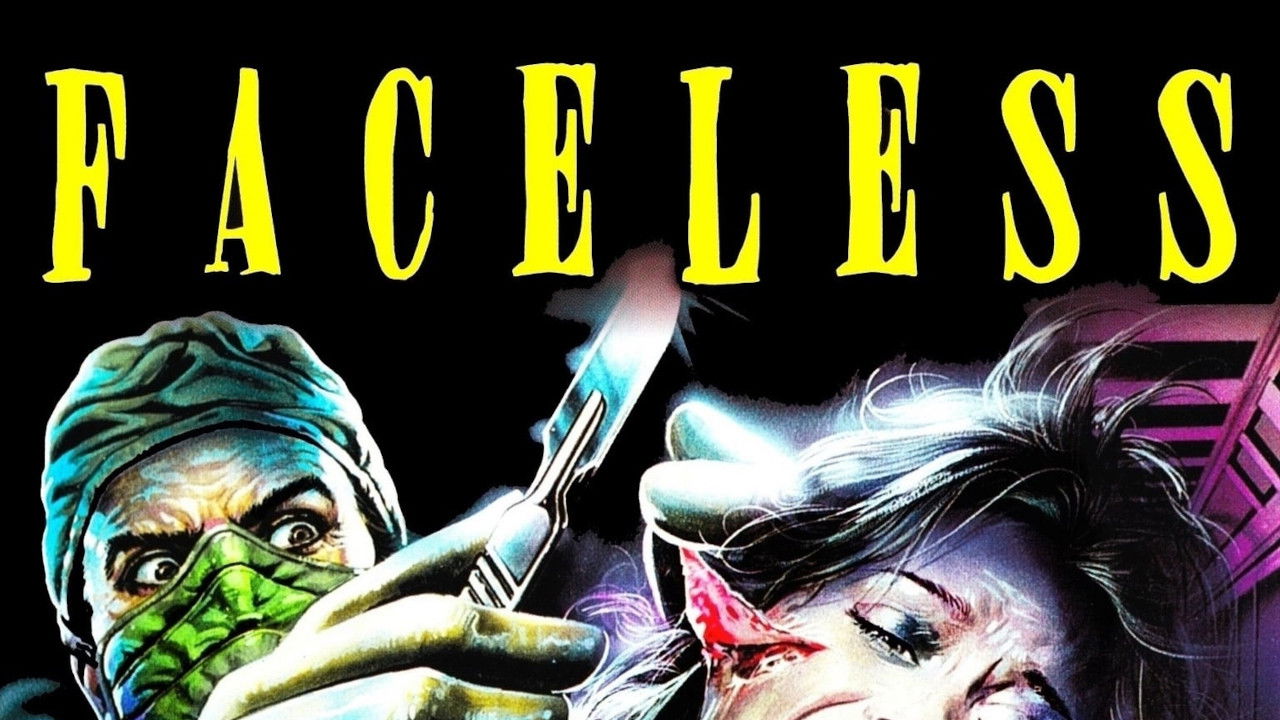
The flickering static clears, revealing the rain-slicked streets of Paris, but this isn't the city of romance. This is a grimy, neon-lit labyrinth where desperation claws at the edges of glamour. This is the world of Jess Franco's Faceless (1988), a film that plunges headfirst into the abyss of obsession and surgical steel, leaving a trail of viscera and unease that lingers like cheap perfume in a dimly lit alley. It’s the kind of Euro-horror nightmare fuel that felt uniquely dangerous peeking out from a worn VHS sleeve in the darker corners of the rental store.
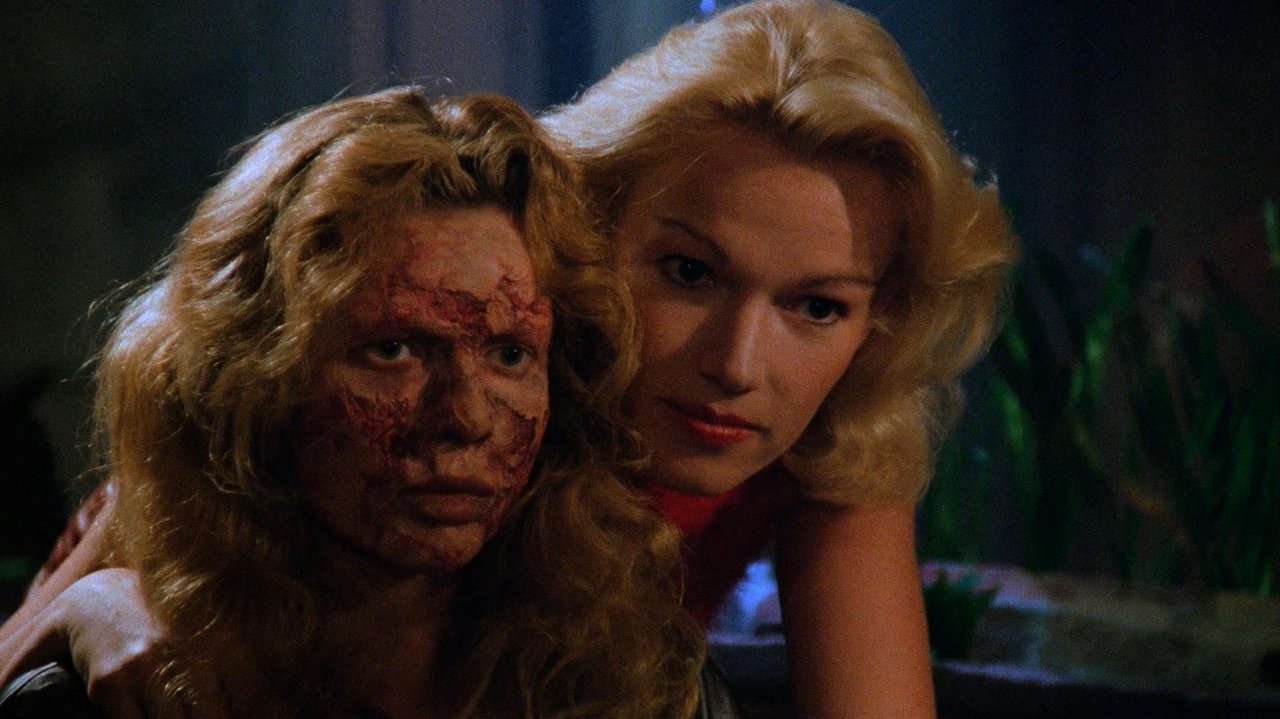
A Parisian Nightmare Unveiled
At its heart, Faceless is a twisted riff on a familiar horror trope, echoing Georges Franju's haunting Eyes Without a Face (1960), but filtered through Franco's distinctively lurid and unrestrained lens. Dr. Frank Flamand (Helmut Berger), a brilliant plastic surgeon, sees his world shatter when a vengeful former patient scars his sister Ingrid (Christiane Jean) with acid. Consumed by guilt and a chillingly detached sense of purpose, Flamand descends into a hellish quest: kidnapping beautiful young women to harvest their facial features, hoping to restore his sister's beauty, one gruesome procedure at a time. It's a premise drenched in potential for exploitation, and Franco, never one to shy away, dives right in. The result is a film that walks a razor's edge between stylish continental thriller and outright splatterfest.
The Franco Atmosphere: Sleaze and Dread
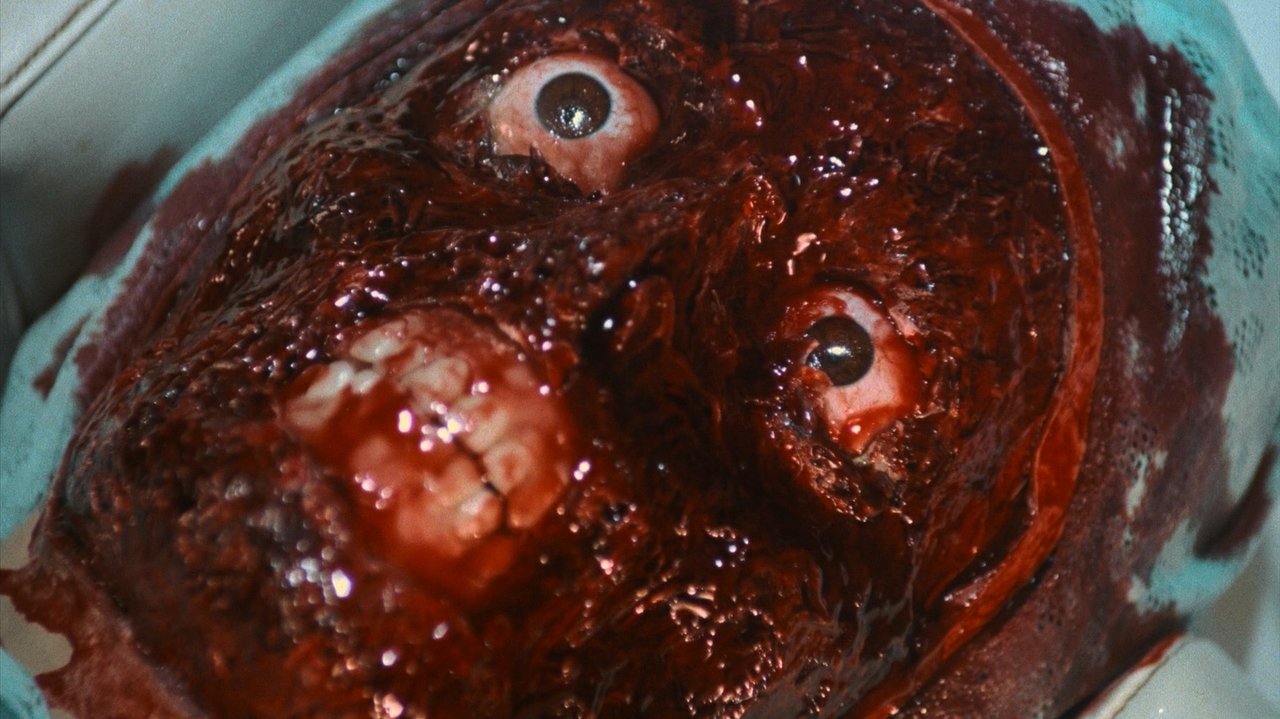
Forget subtlety. Jess Franco, a notoriously prolific director with hundreds of credits often blurring the lines between horror, erotica, and arthouse experimentation, crafts an atmosphere here that’s thick with a particular kind of late-80s European grime. The cinematography often employs those signature Franco zooms and lingering takes, sometimes feeling languid, other times jarringly invasive, especially during the film’s more brutal sequences. The score pulsates with a synth-heavy beat that underscores both the intended sophistication of Flamand's world and the inherent seediness bubbling beneath. It’s less about jump scares and more about a pervasive sense of dread, a feeling that something awful is always lurking just off-screen, or about to be displayed in unflinching detail. Filmed on location in Paris, Franco captures a city far removed from tourist postcards – a place of shadowy clinics, decadent apartments hiding monstrous secrets, and morally ambiguous characters navigating a landscape of perversion and violence.
Unflinching Gore and Practical Nastiness
Let's be frank: Faceless is infamous for its gore. The surgical scenes are staged with a graphic intensity that likely pushed the boundaries of what was acceptable even in the less-censored European markets of the time. Remember watching sequences like this on a grainy VHS tape, perhaps late at night, the sheer audacity of the practical effects feeling disturbingly real? The peeling skin, the exposed tissue, the crimson spray – it was designed to shock, and it succeeds. These moments aren't just gore for gore's sake; they represent the horrifying dehumanization at the core of Flamand's obsession. The contrast between the sterile, high-tech operating theatre and the barbaric acts performed within it creates a dissonance that’s genuinely unsettling. While some effects might look a little rubbery to modern eyes, their sheer graphic intent retains a potent power to disturb. It's a testament to the era's commitment to practical nastiness.
A Curious Cast of Characters
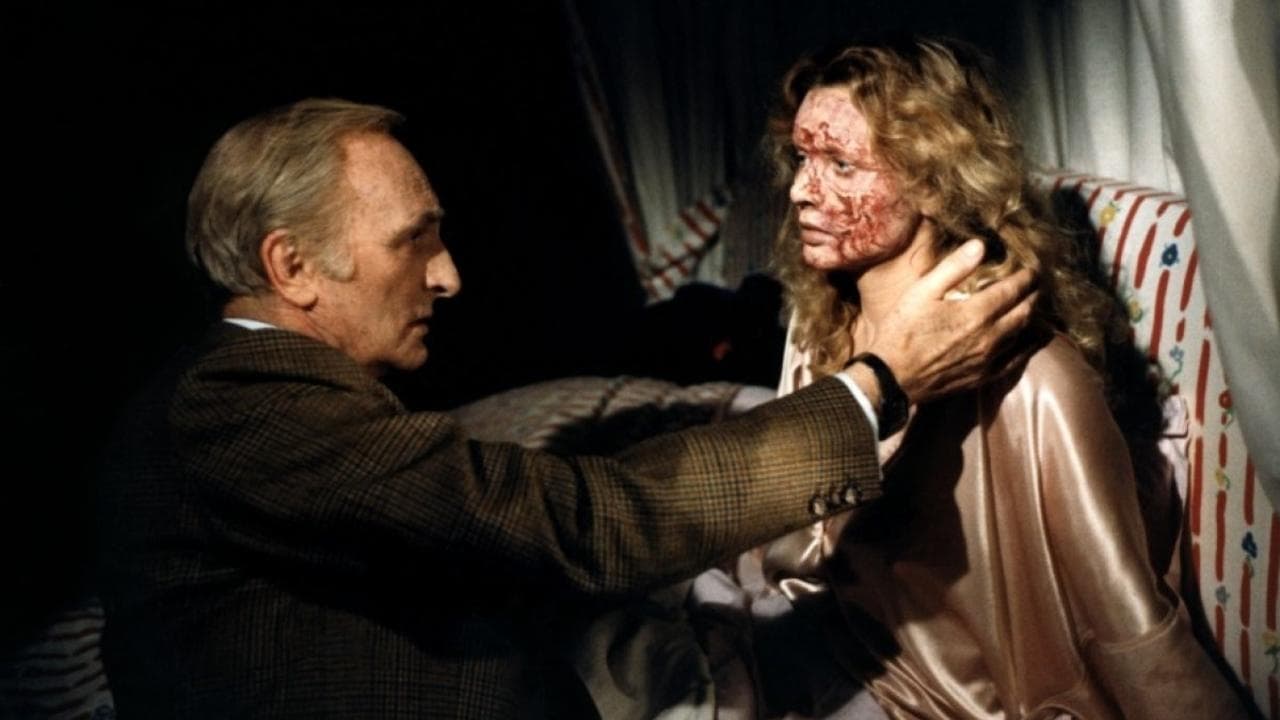
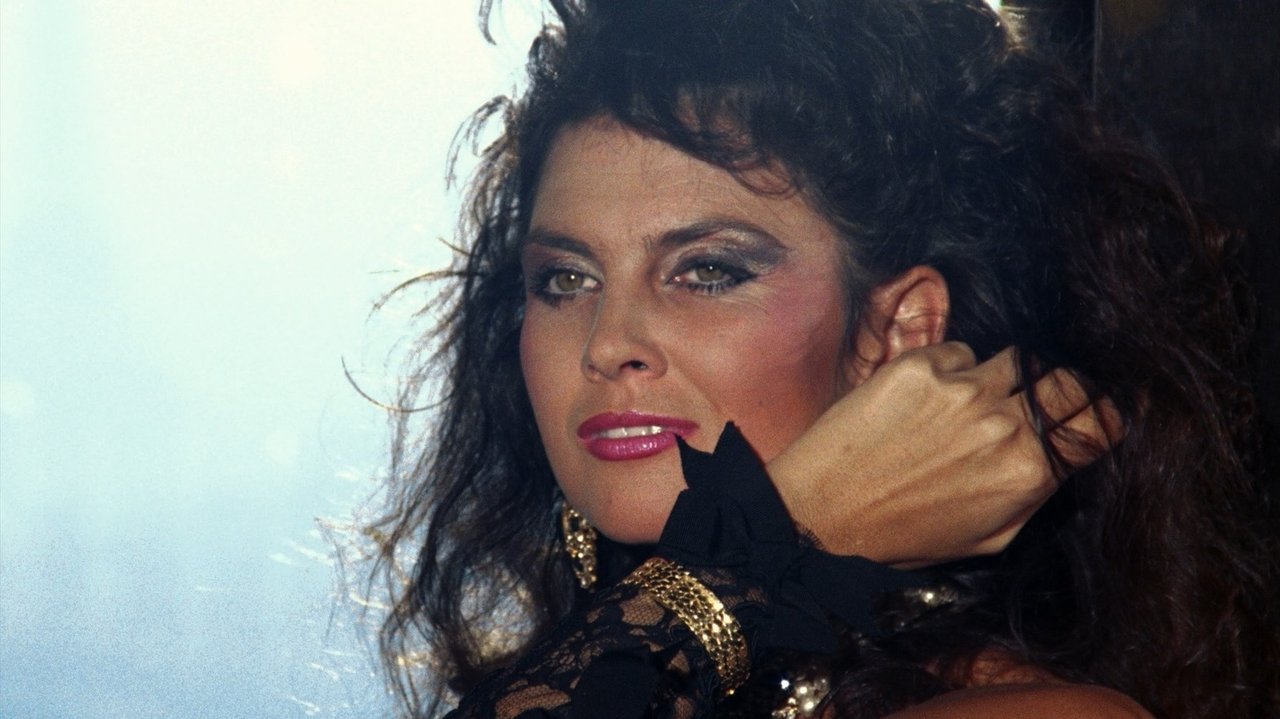
The international cast assembled for Faceless is one of its most fascinating, and sometimes bewildering, aspects. Helmut Berger, known for his intense roles, particularly with Luchino Visconti, brings a tormented gravitas to Dr. Flamand. He portrays the surgeon not as a cackling madman, but as a tragically broken individual, driven by a chillingly rationalized madness. Opposite him, French cult icon and former adult film star Brigitte Lahaie smolders as Flamand's loyal, leather-clad assistant, Nathalie, a figure embodying the film's blend of sensuality and menace.
And then there's Telly Savalas. Appearing as Ingrid's concerned father, Mr. Sherman, the Kojak star lends his familiar gravelly presence, though one can't shake the feeling he might be phoning it in slightly – a common occurrence in some of his later European ventures, often taken seemingly for a quick paycheck and a European vacation. His scenes provide a touch of grizzled noir, albeit feeling somewhat disconnected from the main horror plot. Add in Chris Mitchum (son of Robert) as the investigating detective, plus appearances by genre favorites like Caroline Munro (The Spy Who Loved Me, Maniac) and the elegant Stéphane Audran (Babette's Feast, The Discreet Charm of the Bourgeoisie), and you have a truly eclectic ensemble that adds to the film's strange, almost dreamlike quality. Reportedly, Franco's rapid shooting style and multilingual sets often led to chaotic but memorable filming experiences for the actors involved.
Retro Fun Facts: Scalpels and Censors
- Faceless wears its Eyes Without a Face influence on its sleeve, almost acting as an unofficial, hyper-violent 80s update.
- The film’s graphic content inevitably led to censorship issues in various countries, often released in heavily cut versions that likely diluted Franco's intended shock value. Finding a fully uncut version back in the VHS days was part of the thrill for hardcore horror hounds.
- Despite the notable cast, Faceless was still a relatively low-budget affair by international standards, forcing Franco and his team to rely on ingenuity (and perhaps a high tolerance for cinematic grue) to achieve the desired effects.
- The script, credited to four writers including Franco himself, might explain some of the film's occasionally disjointed narrative threads, mixing the core surgical horror with elements of a detective story and underworld dealings.
Enduring Unease or Dated Exploitation?
Watching Faceless today is a fascinating experience. It's undeniably a product of its time – the fashion, the music, the specific brand of European horror filmmaking that Franco championed. The sleaze factor is high, and some viewers might find it more off-putting than scary. Yet, there's an undeniable power in its grim atmosphere and its refusal to flinch from the horror of its premise. It’s not a sophisticated film, nor is it trying to be. It aims for visceral reaction, for that late-night chill, and on that level, it often succeeds. It remains a standout example of late-period Jess Franco, showcasing his unique ability to blend artiness, exploitation, and genuine shocks into a singularly unsettling concoction. Did that final reveal about the sister's fate genuinely land with the intended tragic irony for you, or did the preceding chaos numb the impact?
---
Rating: 6/10
Justification: Faceless earns its score through sheer audacity, memorable practical gore effects that were shocking for their time, a potent atmosphere of Parisian dread, and a fascinatingly eclectic cast led by an intense Helmut Berger. However, it's held back by Jess Franco's typically uneven pacing, a sometimes disjointed script, and performances (like Savalas') that occasionally feel perfunctory. It’s a film whose graphic content and sleazy vibe won't be for everyone, but for fans of uncompromising Euro-horror and Franco's unique brand of filmmaking, it delivers a specific, unsettling experience.
Final Thought: Faceless isn't just a horror movie; it's a grimy time capsule, a slice of late-80s Euro-sleaze that feels both dated and disturbingly potent. It’s the kind of film that reminds you why the deepest corners of the video store horror section held such a dark allure – promising transgression, shocks, and images you wouldn't easily forget.