Some films don't just linger in the mind; they stain it. Joe D'Amato's 1979 Buio Omega, often found lurking on VHS shelves under the title Beyond the Darkness, is one such indelible mark. It doesn't creep up on you; it grabs you by the throat from the outset, presenting a vision of obsessive love so twisted, so viscerally wrong, that it feels less like a story and more like a fever dream dredged from the most unsettling corners of the subconscious. This isn't a film you casually recommend; it's a shared secret among those who've braved its depths, a notorious artifact from the golden, gory age of Italian horror.

A Love That Will Not Die (Literally)
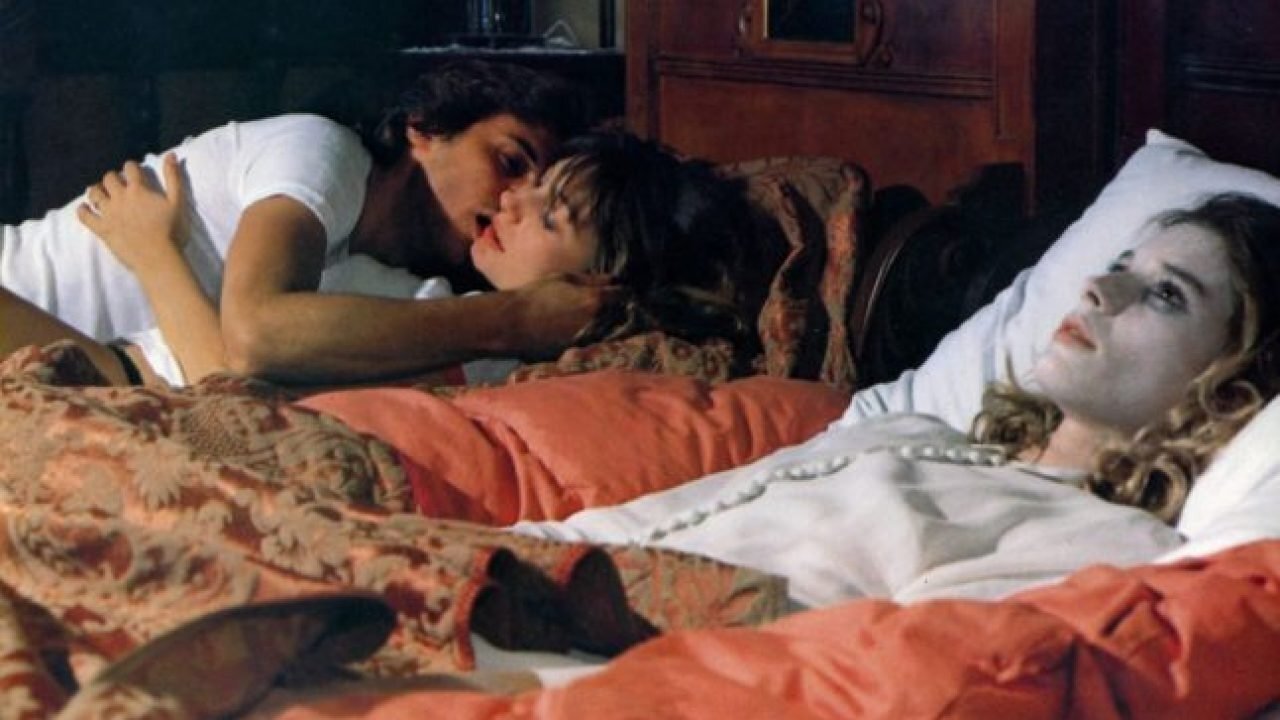
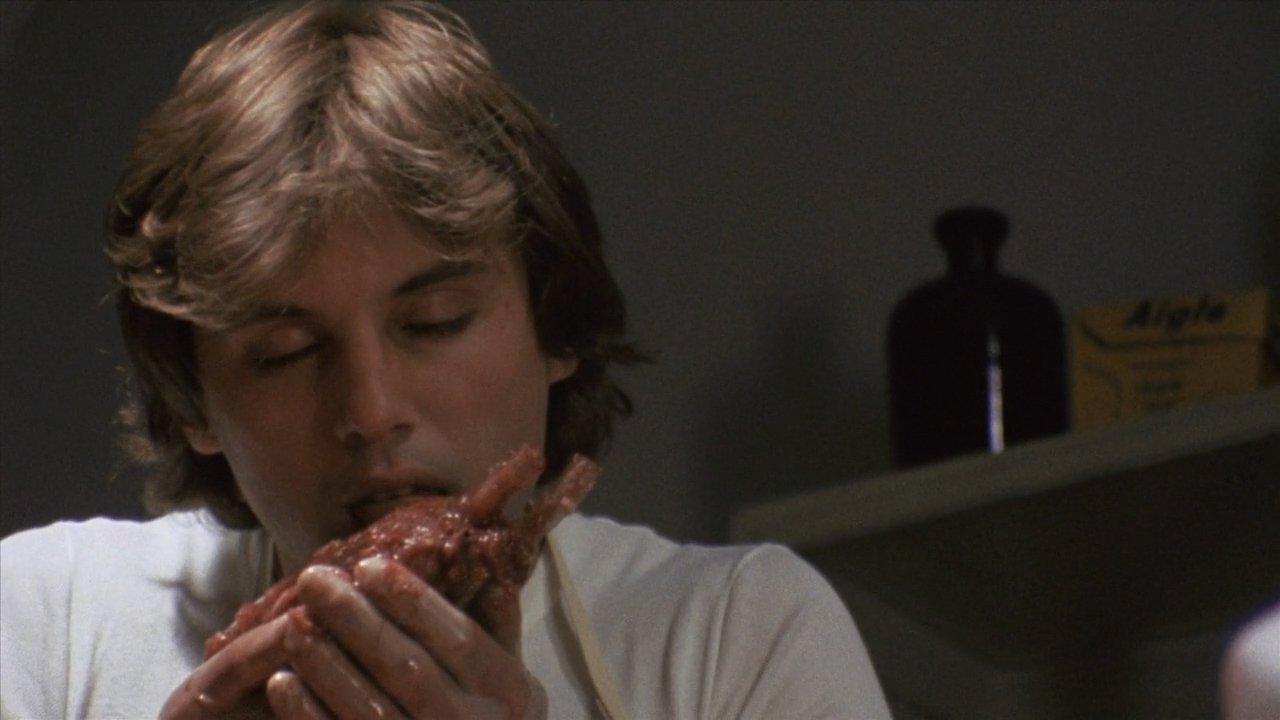
The premise is deceptively simple, bordering on the gothic: Frank (a brooding Kieran Canter), a wealthy young taxidermist, is pathologically devoted to his fiancée, Anna (Cinzia Monreale). When Anna dies suddenly (under circumstances involving voodoo invoked by Frank's fiercely jealous and deeply sinister housekeeper, Iris), Frank's grief curdles into something monstrous. He exhumes Anna's corpse, spirits it back to his sprawling, isolated villa, and employs his professional skills to preserve her, ensuring she'll never leave him again. What follows is a descent into necrophiliac madness, punctuated by outbursts of shocking violence as Frank tries desperately to maintain his ghastly secret, all under the watchful, manipulative eye of Iris (Franca Stoppi, in a truly chilling performance).
Forget jump scares. Beyond the Darkness operates on a different level of dread. The horror here is sticky, visceral, and deeply psychological. D'Amato, never one to shy away from exploitation's raw edges (this is the man who would later give us Anthropophagus, after all), pushes boundaries with a grim determination. The infamous embalming sequence remains a stomach-churning benchmark in practical gore effects. It’s unflinching, meticulously detailed, and feels disturbingly real, a testament to the morbid artistry of the effects team working with what was likely a modest budget. I distinctly remember the first time seeing this on a murky VHS transfer late one night – that scene alone felt like discovering forbidden knowledge, something you weren’t supposed to see. Didn't that level of graphic detail feel utterly unprecedented back then?
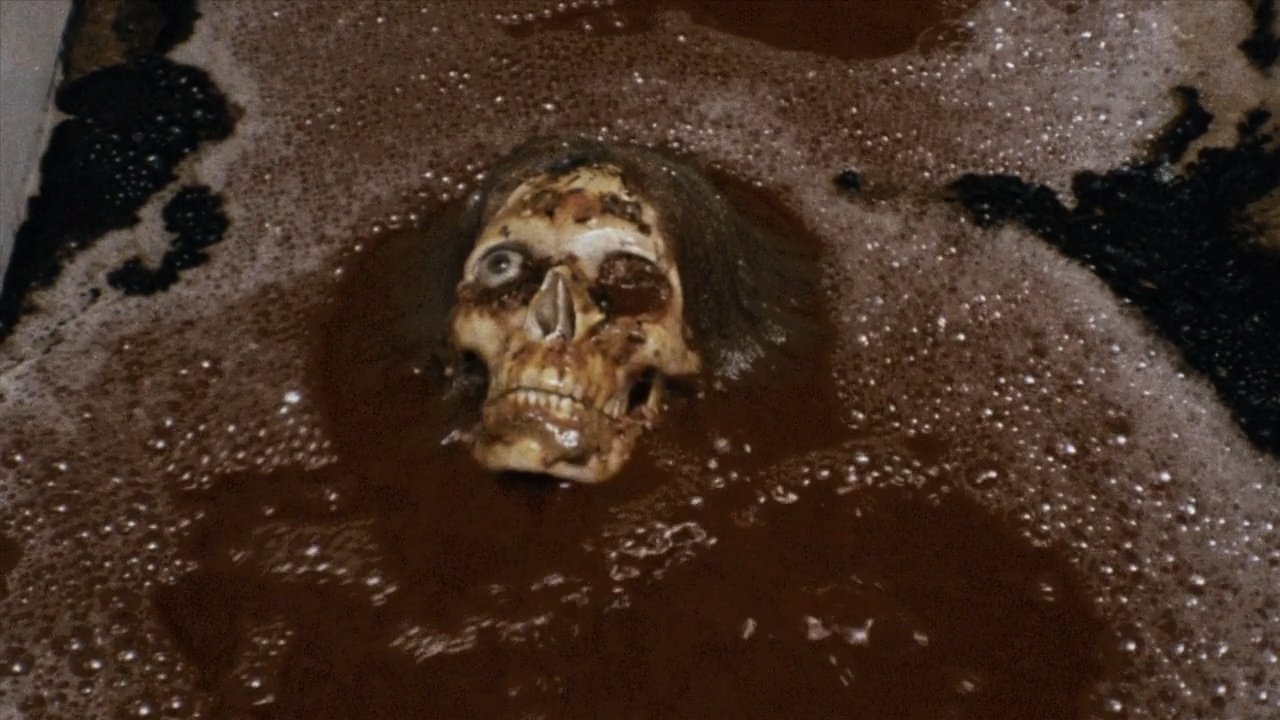
The Grim Craftsmanship of Decay
While the gore is unforgettable, it's the pervasive atmosphere of decay and obsession that truly chills. Frank's villa isn't just a setting; it's a mausoleum of his fractured psyche. The production design emphasizes claustrophobia and morbid beauty, filled with stuffed animals (the non-cuddly kind) that seem to watch Frank's descent with glassy eyes. Adding immeasurably to this oppressive mood is the soundtrack. While often credited solely to Goblin, the score is actually a compilation, heavily featuring cues the legendary band composed for other projects, brilliantly repurposed by D'Amato to create a pulsating soundscape of dread and melancholy romance (in its most twisted form). The main theme, in particular, is hauntingly effective, lending a strange, tragic grandeur to Frank's horrific acts.
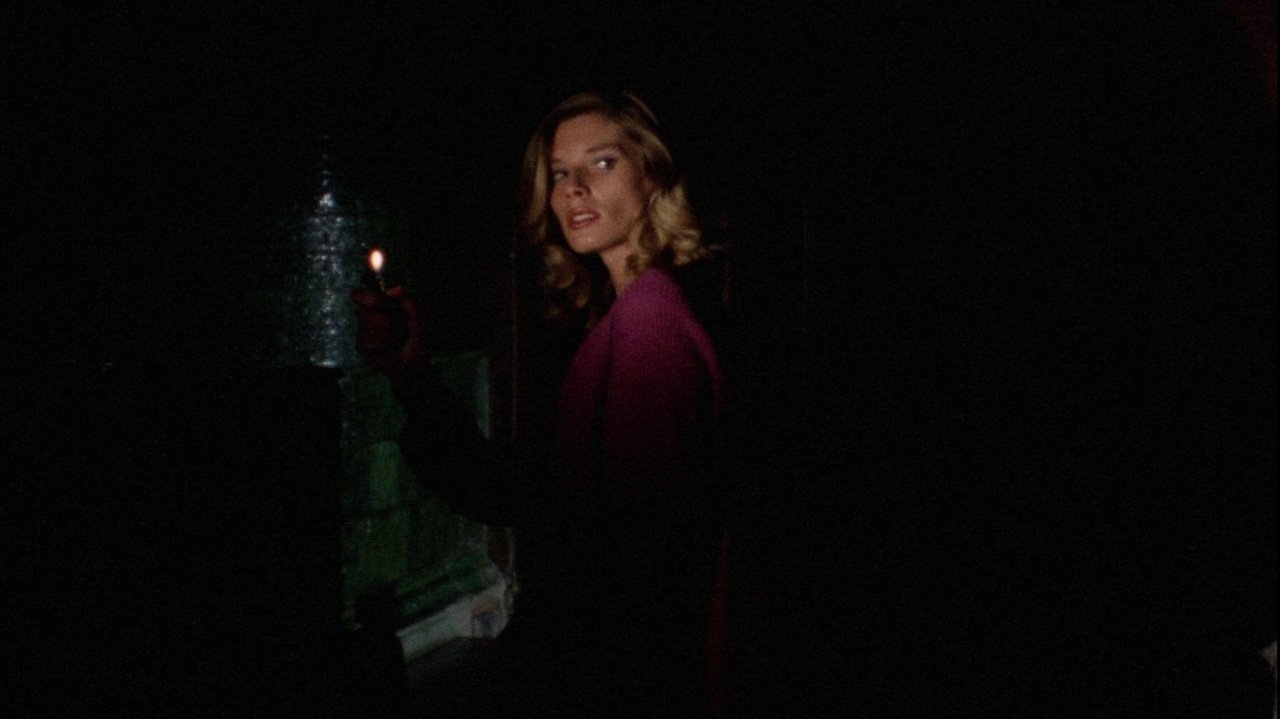
The performances are pitched perfectly for the material. Canter portrays Frank not as a raving lunatic, but as a man lost in a profound, albeit nightmarish, form of love. His quiet intensity makes the eventual explosions of violence all the more jarring. Monreale has the difficult task of playing both the deceased Anna and, later, a woman who bears a striking resemblance, embodying both idealized memory and potential escape. But it's Franca Stoppi as Iris who steals every scene she’s in. Her housekeeper is a figure of pure, possessive malice, manipulating Frank's pathology for her own disturbing ends. Her simmering resentment and eventual complicity are genuinely unsettling. There's a dark legend that Stoppi fully embraced the grim nature of the role, finding a sinister satisfaction in portraying such an unapologetically evil character.
Beyond the Pale: Trivia and Transgression
Beyond the Darkness wasn't just shocking; it was controversial. Naturally, it ran afoul of censors worldwide, often released in heavily cut versions that likely diluted its suffocating power. Rumor has it D'Amato himself considered it something of a dark love story, a notion that seems almost absurd given the on-screen depravity, but perhaps speaks to the director's unique perspective on transgression. The film’s original Italian title, Buio Omega ("Dark Omega"), feels more poetic, hinting at an ultimate darkness, the endpoint of obsessive desire. Made for a relatively low budget (exact figures are murky, as often with Italian exploitation cinema of the era, but estimates place it well under $1 million USD), its impact far outweighed its cost, cementing its place in the cult horror pantheon. The sheer audacity of committing such taboo-breaking scenes to film, using incredibly convincing (for the time) practical effects, is part of what makes it such a morbidly fascinating watch, even now.
Lasting Stain
Beyond the Darkness is not for everyone. Let's be clear about that. It's extreme, graphic, and explores deeply uncomfortable themes with an unflinching gaze. Yet, for dedicated fans of Italian horror and exploitation cinema, it remains a powerful, if deeply unpleasant, landmark. It showcases Joe D'Amato's talent for creating potent atmosphere and delivering shocking, effective gore sequences. The practical effects, the oppressive mood, and Franca Stoppi's terrifying performance are reasons enough to seek it out, if you have the stomach for it. It's a film that embodies the wild, untamed spirit of late-70s European horror filmmaking – raw, transgressive, and utterly unforgettable.
Rating: 7/10
Justification: The score reflects the film's undeniable effectiveness in achieving its grim goals: powerful atmosphere (8/10), benchmark practical gore effects for its time (9/10), and a chillingly memorable villain performance from Stoppi (8/10). However, it loses points for its niche appeal due to extreme content (making it inaccessible for many), a narrative that prioritizes shock over depth (6/10), and pacing that can sometimes drag between the moments of horror (6/10). It's a technically proficient and impactful piece of extreme cinema, but its subject matter inherently limits its broader appeal.
Final Thought: More than just a gore film, Beyond the Darkness is a strangely potent exploration of love curdled into monstrosity, leaving a uniquely unsettling residue long after the static hiss of the tracking adjustment fades. It's a quintessential piece of VHS-era horror that reminds you just how far filmmakers were willing to go back then.