Here we go, another tape slid into the VCR, the whirring mechanism a familiar prelude to the flickering images about to unfold. Tonight, we're opening wide for a film that tapped into a primal, near-universal dread, transforming the sterile white of the dental office into a canvas of crimson horror. Forget masked killers or otherworldly monsters; sometimes, the most unsettling threats wear a crisp smock and wield instruments meant to heal, not harm. Let's talk about 1996's The Dentist.
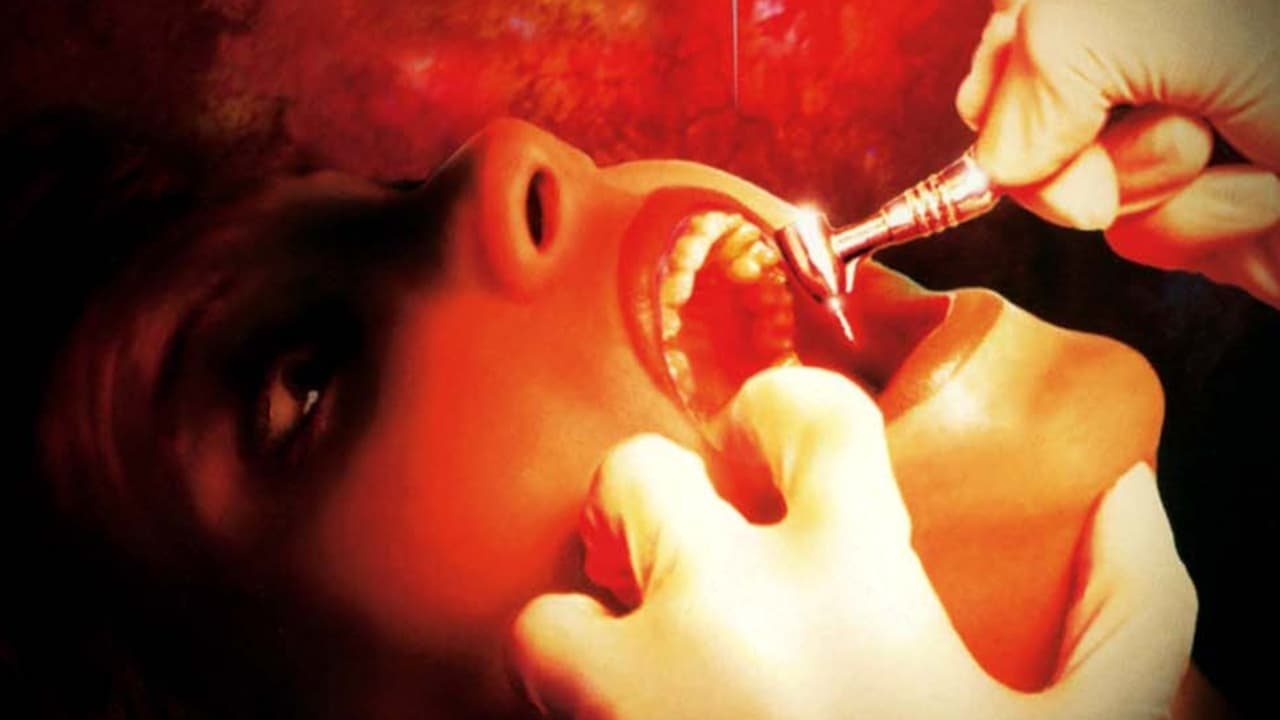
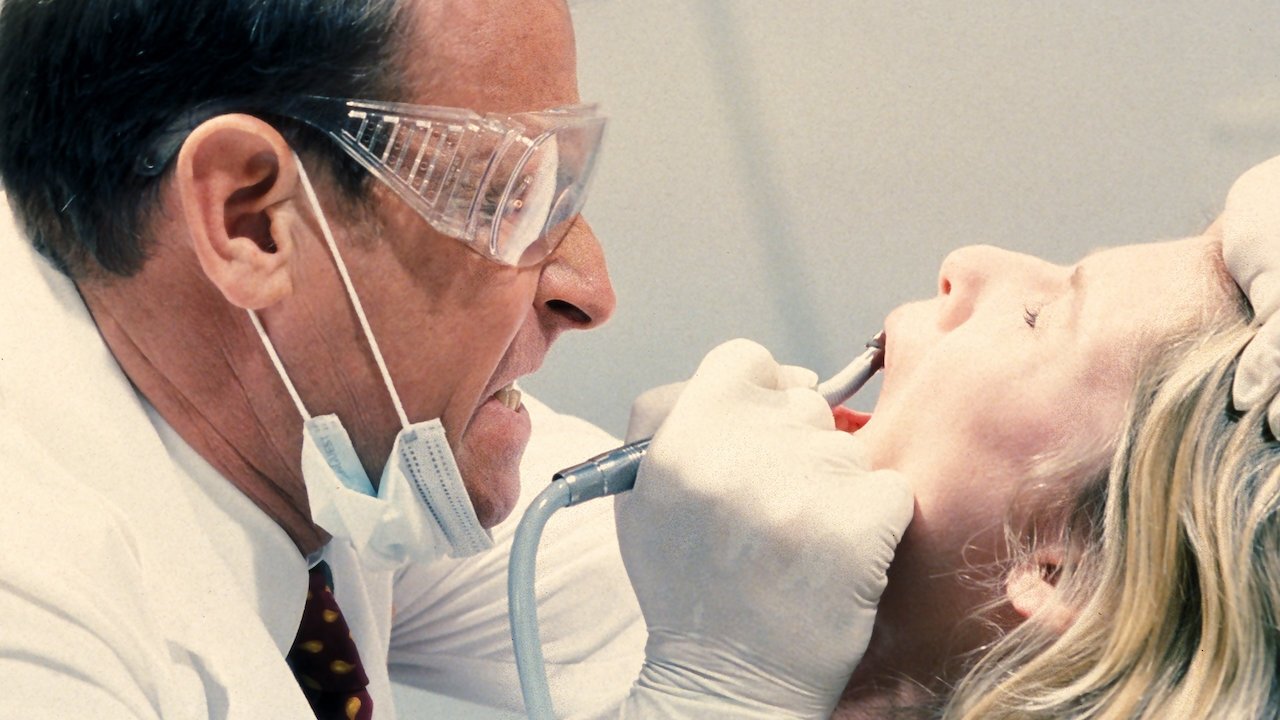
The film wastes little time establishing the opulent, meticulously ordered world of Dr. Alan Feinstone, played with unsettling intensity by Corbin Bernsen. Known primarily for his charming, Emmy-nominated role as Arnie Becker on L.A. Law, Bernsen’s casting here was a stroke of genius, allowing him to weaponize that familiar screen presence. His Feinstone is a man obsessed with perfection, order, and cleanliness – traits that curdle into terrifying psychosis when he discovers his wife Brooke's (Linda Hoffman) infidelity. The pristine surfaces of his mansion and state-of-the-art clinic become ironic backdrops to the decay festering within his mind.
An Appointment with Fear
Director Brian Yuzna, already a cult favourite for producing the splattery delights of Re-Animator and directing the surreal body-horror masterpiece Society, brings his signature penchant for the grotesque to the proceedings. Working from a script co-written by horror maestro Stuart Gordon (the director of Re-Animator and From Beyond), Dennis Paoli, and Charles Finch, Yuzna crafts a narrative that spirals downwards with chilling inevitability. The initial trigger – the affair – merely cracks the dam; Feinstone's inherent obsessive-compulsive disorder and paranoid delusions flood through, turning his patients' chairs into torture devices.
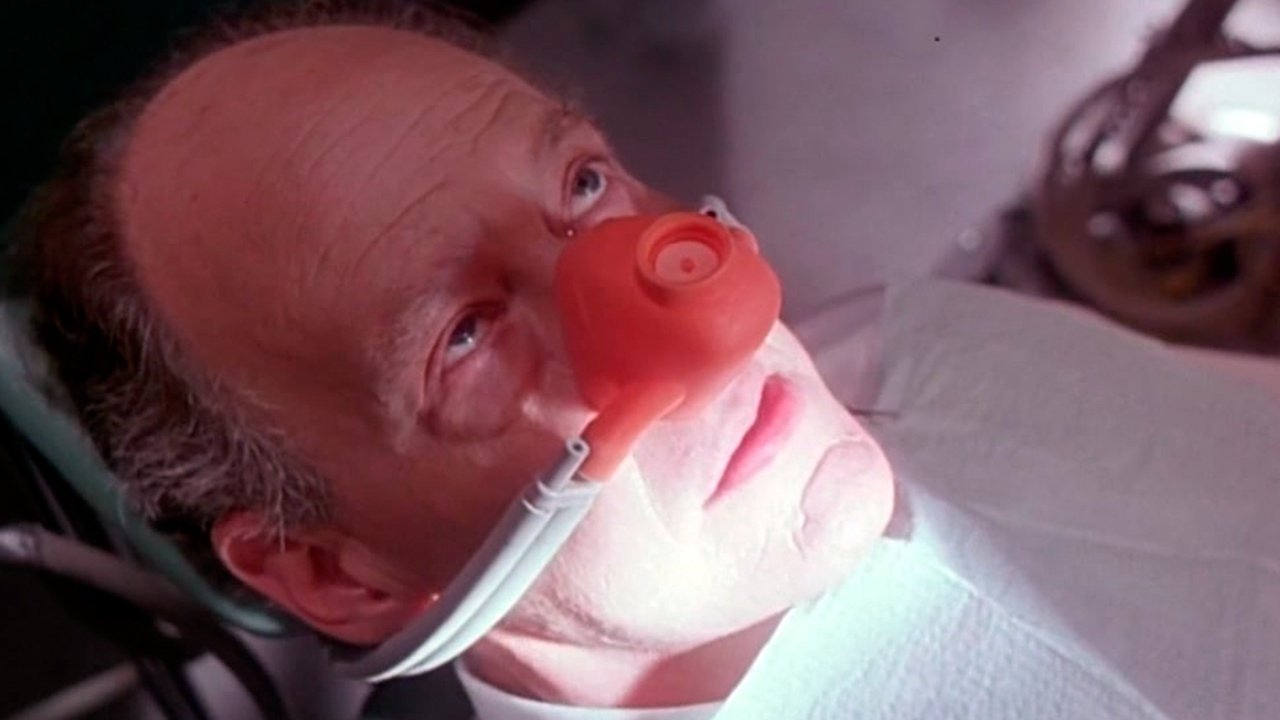
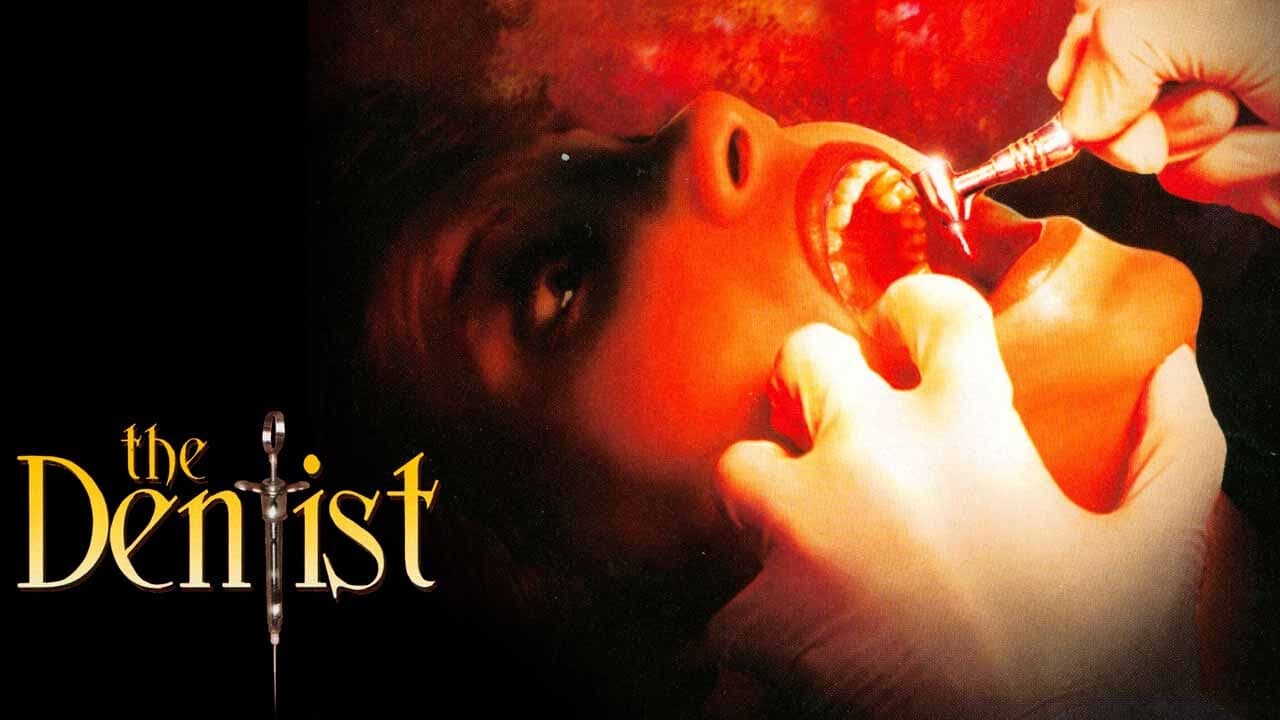
What truly elevates The Dentist beyond typical slasher fare is its grounding in that specific, relatable anxiety. The whir of the drill, the scrape of metal on enamel, the vulnerability of lying back, mouth agape – these are sensations many find inherently uncomfortable. Yuzna expertly exploits this, using POV shots and excruciatingly detailed close-ups of dental procedures gone horribly wrong. It’s not just gore for gore’s sake; it’s psychological warfare waged with probes and anaesthetic. Remember how certain scenes felt almost too real on that slightly fuzzy VHS copy, the low resolution somehow making the implications even grimier?
Drilling Down into Madness
Corbin Bernsen truly anchors the film. He doesn't just play crazy; he portrays a chilling descent. Watch his eyes, the subtle tightening of his jaw, the forced smiles that barely conceal the simmering rage. His Feinstone meticulously rationalizes his horrific actions through the lens of "decay" and "impurity," projecting his own internal corruption onto his victims. His operatic hallucinations, visualizing decay and rot everywhere, are surprisingly effective, externalizing his mental breakdown in nightmarish fashion. Reportedly, Bernsen relished the chance to shatter his clean-cut image, diving headfirst into the character’s depravity. It's a performance that lingers, far more effectively than many conventional movie monsters.
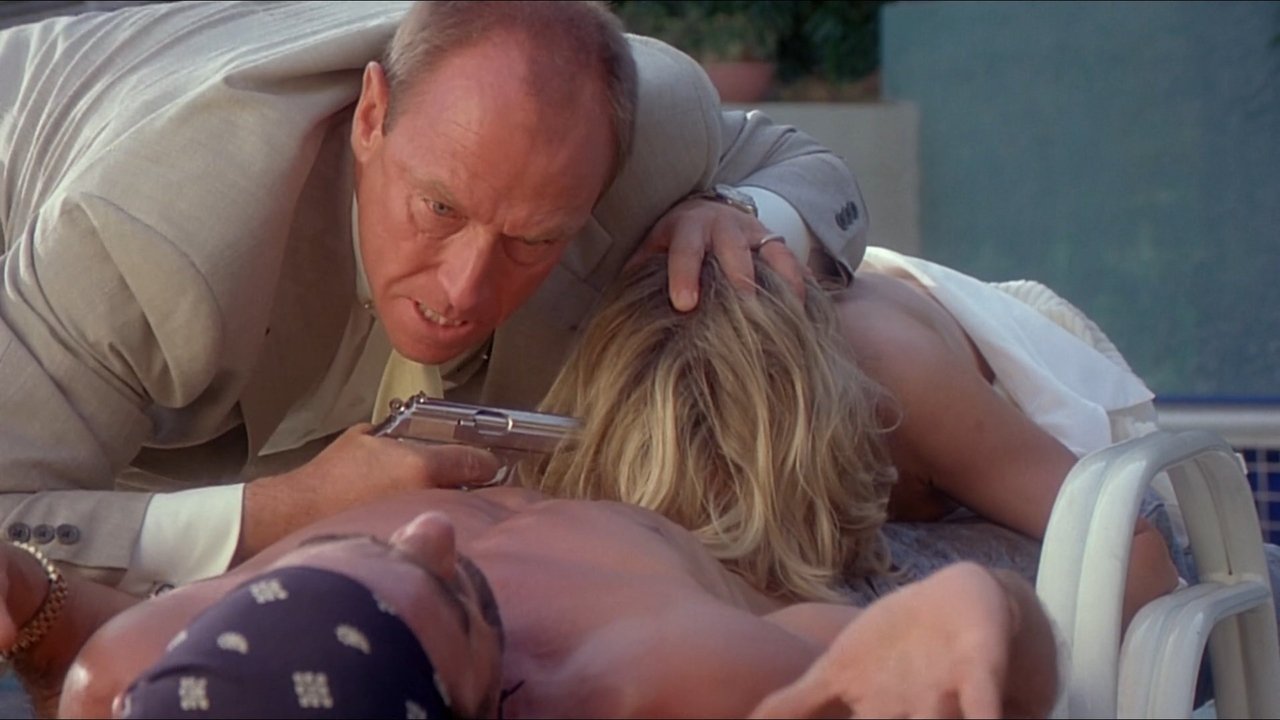
The supporting cast serves primarily as fodder for Feinstone’s rampage, but they fulfill their roles adequately, conveying the necessary terror and pain. From the unfortunate pool boy to the tax auditor with a toothache, each encounter escalates Feinstone’s sadistic creativity.
Grisly Practicalities
Let's talk about those effects. In an era increasingly reliant on CGI, The Dentist stands as a testament to the stomach-churning power of practical gore. The dental torture sequences are the film's gruesome centerpieces, masterminded by effects wizard Anthony C. Ferrante (who would later direct the Sharknado series, believe it or not!). Tongues are mangled, teeth are shattered, gums are ravaged – it’s unflinchingly graphic and designed to make you squirm. Yuzna, never one to shy away, ensures the camera lingers just long enough. It’s said that achieving the realism for some of these scenes, particularly those involving drilling into teeth, required clever use of prosthetics and models, pushing the boundaries of what could be shown on screen, even in an R-rated feature. Made for a modest $850,000 (about $1.6 million today), initially intended for the booming direct-to-video market, Trimark Pictures saw its potential and gave it a limited theatrical release, where it became a minor cult hit, proving audiences still had an appetite for nasty, well-executed horror.
Legacy of the Laughing Gas
The Dentist isn't high art, nor does it pretend to be. The plot is straightforward, essentially a series of escalating vignettes showcasing Feinstone’s breakdown and brutality. Some might find it repetitive, and the final act leans into more traditional horror tropes. Yet, its effectiveness is undeniable. It tapped into a vein of anxiety rarely explored so explicitly in horror, anchored by a genuinely unnerving central performance and unforgettable practical effects. Did it spawn a sequel? You bet – The Dentist 2: Brace Yourself arrived in 1998, continuing Feinstone's reign of terror. While perhaps not as impactful as the original, its existence speaks to the first film’s resonance with horror fans.
This film remains a potent little shocker, a nasty piece of work that understood its premise and executed it with ruthless efficiency. It’s the kind of movie that might have made you think twice about your next check-up back in the day. Watching it now, the 90s production values are apparent, but the core horror – the violation of trust, the pain inflicted in a place meant for care – still hits hard.
VHS Heaven Rating: 7/10
The score reflects its standing as a highly effective, uniquely themed slice of 90s horror. Corbin Bernsen's against-type performance is magnetic, the practical effects are memorably gruesome, and Brian Yuzna delivers exactly the kind of unsettling dread promised by the premise. It’s not perfect – pacing can drag slightly between the "appointments" – but it excels in its specific, cringe-inducing niche.
The Dentist is a reminder that sometimes the most chilling monsters are the ones hidden in plain sight, their madness masked by professionalism until the drill starts spinning. It's a nasty, effective B-movie gem that still holds the power to make you clench your jaw. Maybe keep the lights on for this one.