Okay, pull up a comfy chair, maybe pour yourself something smooth, because we're diving into a curious corner of cinematic meta-commentary today. It's a film that arrived right at the turn of the millennium, Actors (or Les Acteurs, 2000), but feels intrinsically linked to the giants who dominated French screens – and often, our own imported VHS selections – throughout the 80s and 90s. What happens when an entire constellation of cinema legends gathers not just to act, but to play... themselves? Or perhaps, unsettlingly, versions of themselves haunted by the very craft that made them famous?

A Hall of Mirrors in Parisian Rain
Director Bertrand Blier, never one for straightforward narrative (think the provocative tangles of Going Places (1974) or the Oscar-winning Get Out Your Handkerchiefs (1978)), orchestrates less of a plot and more of a waking dream. Actors drifts through vignettes featuring an almost unbelievable roster: Jean-Paul Belmondo, Alain Delon, Gérard Depardieu, Michel Piccoli, Claude Brasseur, Jean-Pierre Marielle, André Dussollier, Jacques Villeret, Josiane Balasko, Sami Frey... the list feels like scrolling through a lifetime's worth of César Award nominations. They wander Paris, frequent restaurants, complain about their agents, muse on mortality, encounter bizarre situations, and grapple with the often-absurd nature of being perpetually watched, perpetually performing. Blier essentially points his camera at the anxieties simmering beneath the surface of stardom, letting these titans voice thoughts that feel both scripted and uncomfortably real.
Legends Playing Legend (Or Complaining About It)
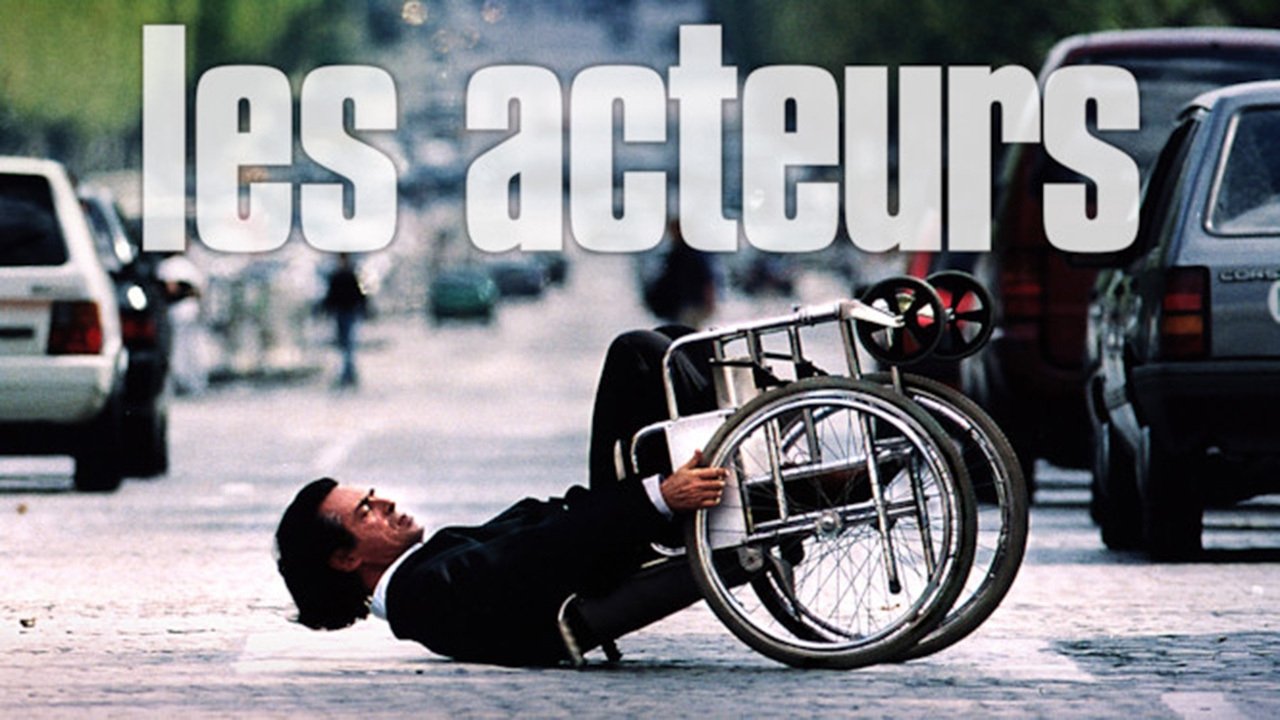
The sheer novelty of seeing these icons interact as themselves (albeit through Blier's absurdist lens) is the film's primary draw. There’s a undeniable thrill, a frisson, watching Belmondo’s familiar, irrepressible energy bounce off Delon’s cool, almost dangerous stillness. Their shared scenes crackle with the weight of their parallel, sometimes intersecting, careers. Jean-Pierre Marielle, magnificent as ever, gets perhaps the most poignant arc, portraying an actor consumed by perceived slights and the nagging feeling of being overshadowed – a performance dripping with a vulnerability that cuts through the meta-textual games. You see glimpses of the personas we know, but refracted, questioned. Is that really Delon, or the idea of Delon? Does Belmondo ever truly switch off? It’s these questions the film implicitly asks, letting the viewer fill in the gaps with their own decades of cinematic baggage associated with these faces.
Blier's Melancholy Carnival
This isn't your typical behind-the-scenes glimpse; it's filtered through Blier's signature blend of melancholy, surrealism, and dark wit. The dialogue often feels like fragments of overheard conversations, philosophical musings bumping against mundane gripes. Characters might suddenly break the fourth wall, or find themselves in situations defying logic – a testament to Blier's playful deconstruction of cinematic convention. The atmosphere is often rain-slicked and nocturnal, lending a dreamlike, sometimes even nightmarish, quality to the proceedings. It asks us to consider: what is the emotional toll of a life lived in the public eye, embodying manufactured emotions for decades?

Retro Fun Facts: Assembling the Pantheon
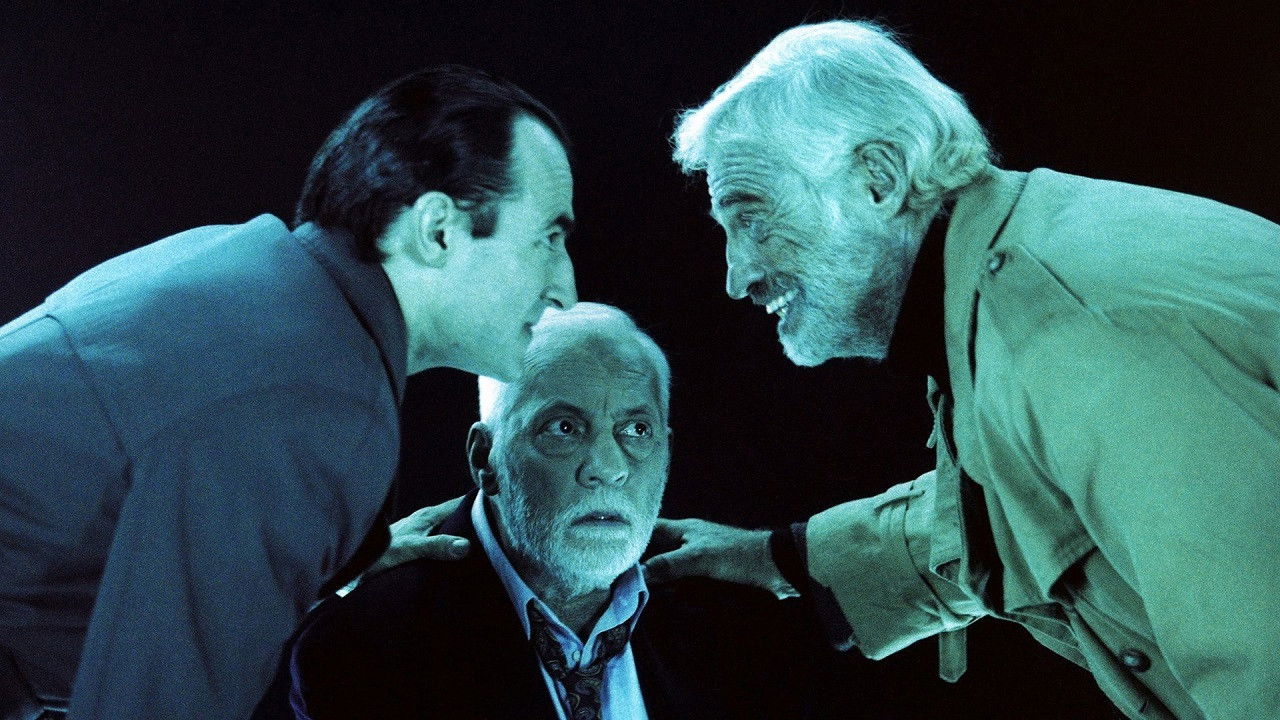
Getting this cast together was, naturally, an event in itself. Persuading giants like Delon and Belmondo, known for their distinct screen personas and perhaps even a touch of professional rivalry, to appear together playing "themselves" in such a self-reflective and often critical piece was a coup only a director with Blier's unique standing could likely achieve. Reportedly, Alain Delon insisted on a scene where his character fires a real gun, blurring the lines between his dangerous screen image and this meta-portrayal even further – a detail that feels perfectly, unsettlingly Delon. The film is also dotted with cameos from other French cinema luminaries, including directors like Claude Lelouch and Bertrand Tavernier, adding another layer to its insular, self-referential world. It wasn't a box office smash, perhaps understandably given its unconventional nature (its French gross was respectable but not huge), and critical reception was decidedly mixed. Some hailed its audacity and insight, while others found it self-indulgent or navel-gazing. But wasn't that often the case with Blier's more challenging work? It certainly wasn't aiming for broad commercial appeal, making its existence feel even more like a rare, perhaps slightly eccentric, gift to cinephiles.
More Than Just a Gimmick?
Does Actors succeed beyond its central conceit? It's debatable. The fragmented structure can feel meandering, and its introspective focus might test the patience of viewers seeking conventional storytelling. Yet, there's a lingering power to its central themes. Watching these titans confront aging, the absurdity of fame, and the ghosts of their own iconic roles feels poignant, especially now, with several of these legends having since passed. It captures a specific moment, a turning point maybe, where the larger-than-life figures of 20th-century French cinema seemed to be collectively taking stock. What remains when the applause fades and the screen goes dark?
***
Rating: 7/10
Actors is undeniably a niche film, a challenging and often bizarre experiment. Its non-linear, vignette structure won't be for everyone, and accusations of self-indulgence aren't entirely unfounded. However, the sheer audacity of the concept, the unforgettable gathering of legendary talent playing with their own images, and Blier's unique directorial signature make it a fascinating watch. The performances, hovering in that strange space between reality and fiction, are mesmerizing. It earns a 7 for its boldness, its melancholic insight into the actor's psyche, and for providing a unique, if strange, final curtain call for several giants within the same frame.
It’s a film that might not have been a staple on the shelves of Blockbuster, perhaps more likely found tucked away in the "Foreign Films" section of a more discerning video store. But for fans who grew up watching these faces, Actors offers a strange, sad, sometimes funny, and ultimately unforgettable look behind the larger-than-life masks. What does it truly mean to be an actor when the lines blur so completely? Blier doesn’t give easy answers, leaving us instead with the haunting echo of legends contemplating their own legends.