Alright, fellow tapeheads, let’s rewind to the mid-90s. Remember scanning those towering shelves at Blockbuster or your local mom-and-pop video store? Sometimes, nestled between the explosive action flicks and the familiar comedies, you’d find something… unexpected. A movie with a title that made you do a double-take. For me, one of those finds was Canadian Bacon (1995), a film that arrived with a strange sort of quietness, despite starring one of the most beloved comedic actors of the era. It’s a curious beast, a political satire wrapped in the guise of a slightly goofy John Candy vehicle, and finding that tape felt like discovering a secret handshake.
### North of the Border Blunder
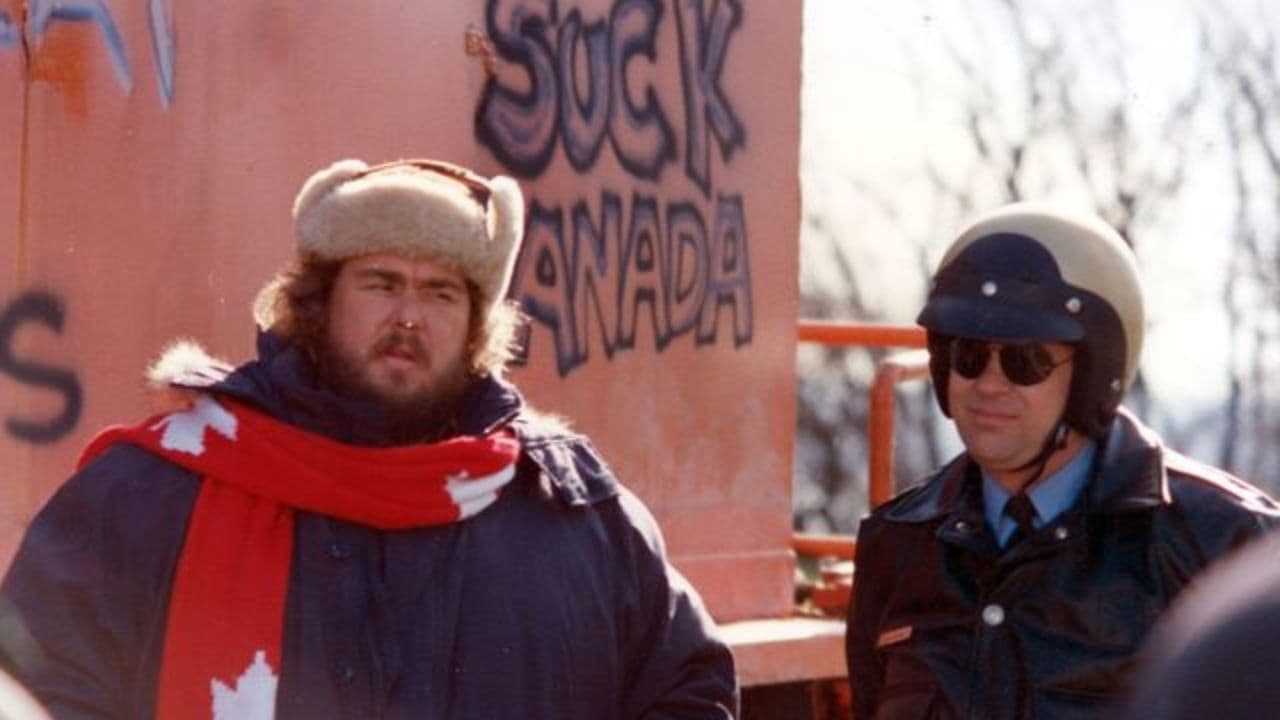
The premise alone is pure 90s high-concept absurdity: with the Cold War over and the US economy tanking, the President (Alan Alda, playing smarm and desperation with practiced ease) needs a new enemy to rally the nation and boost his dismal approval ratings. After dismissing several impractical options (terrorists are deemed too scattered, Russia is too friendly), his advisors land on the perfect, seemingly harmless target: Canada. Yes, that Canada. Our polite, hockey-loving neighbours to the north become the focus of a manufactured conflict, fueled by media hysteria and jingoistic slogans like "Surrender or Die!"
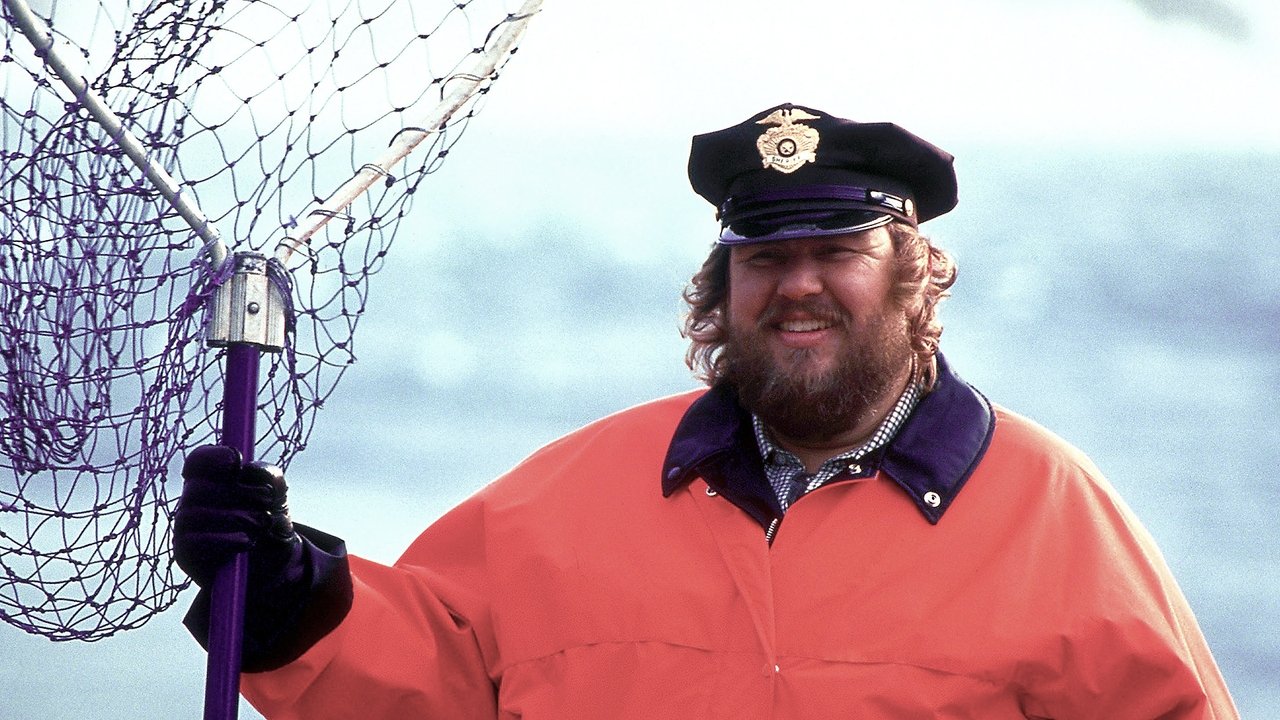
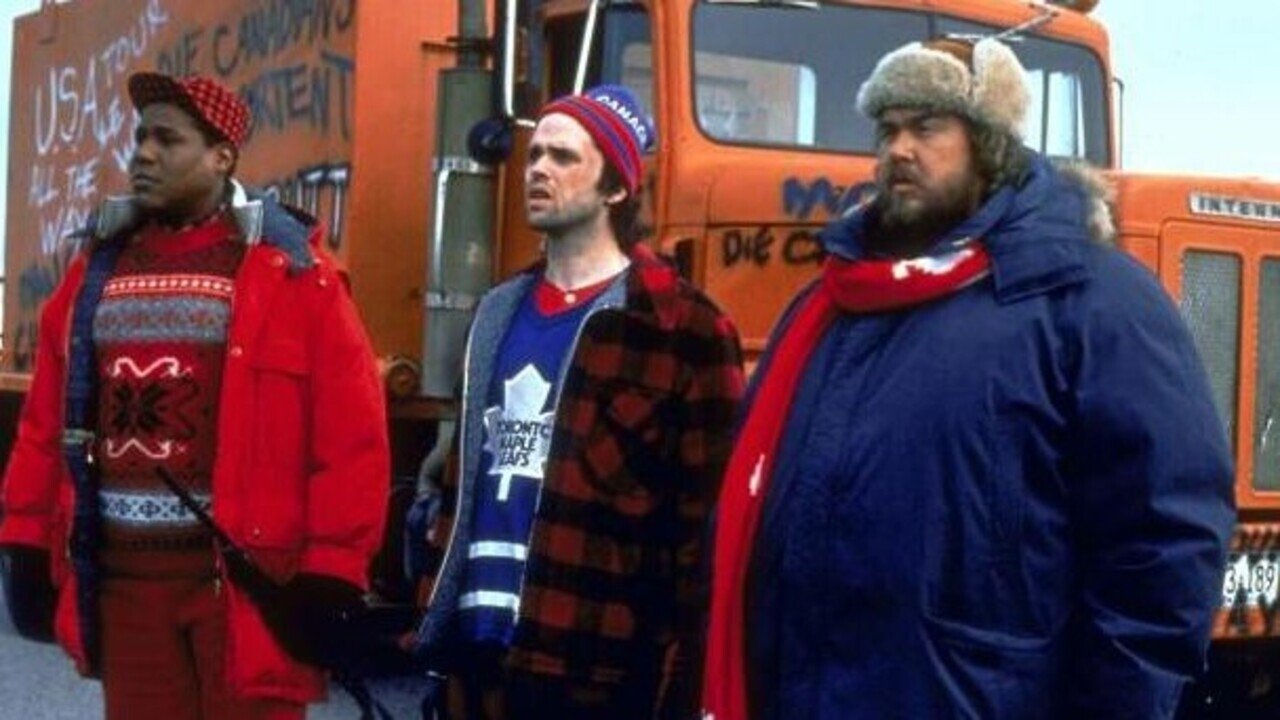
Enter Sheriff Bud Boomer of Niagara Falls, New York, played by the late, great John Candy in his final completed role. Boomer is everything you’d expect from a Candy character – big-hearted, slightly dim, fundamentally decent, but fiercely patriotic in a misguided sort of way. When anti-Canadian sentiment reaches fever pitch (thanks partly to his own clumsy attempt to dispose of trash near the border), Boomer and his trigger-happy deputies, including the ever-reliable Rhea Perlman as Honey and Kevin J. O'Connor as the conspiracy-addled Roy Boy, decide to take matters into their own hands with a preemptive strike. What follows is less Red Dawn and more Keystone Kops Invade Ottawa.
### Candy's Swan Song
Seeing John Candy here is bittersweet. He tragically passed away in March 1994, over a year before the film finally saw release. You can still see flashes of the brilliant physical comedian and the warmth that made him a star in films like Planes, Trains & Automobiles (1987) and Uncle Buck (1989). Boomer isn't his most nuanced character, often serving as the embodiment of the easily manipulated American public the film satirizes, but Candy imbues him with an inherent likability that makes the silliness work. He leans into the absurdity, whether trying to decipher Canadian insults ("Cheese-eating surrender monkeys?" No, wait, that's later...) or leading his motley crew on their ill-fated "invasion." It’s a testament to his talent that even in a film with a somewhat troubled production and delayed release, his presence anchors the comedy.
Retro Fun Fact: The film actually sat on the shelf for a while after John Candy's death, contributing to its somewhat muted arrival in theatres. Distributor MGM reportedly got cold feet about the political satire, perhaps deeming it too edgy or simply not knowing how to market a comedy about picking a fight with Canada, especially without its lead star available for promotion.
### Moore Before the Docs
What makes Canadian Bacon fascinating in retrospect is its director and writer: Michael Moore. Yes, that Michael Moore, before he became the Oscar-winning documentarian known for Bowling for Columbine (2002) and Fahrenheit 9/11 (2004). This was his only fictional feature film, and you can see the seeds of his later work scattered throughout. The targets are familiar: manipulative politicians, a sensationalist media fanning the flames of fear, and a populace easily swayed by patriotic rhetoric.
The satire isn't always subtle – sometimes it wields its points like a cartoon mallet – but it occasionally lands some surprisingly sharp jabs. Alan Alda is particularly good as the President, a man utterly divorced from reality, concerned only with poll numbers and optics. The scenes in the war room, brainstorming enemies and propaganda, feel unnervingly relevant even today. Remember that scene where they try to brainstorm negative Canadian stereotypes? Hilariously clumsy, and yet… pointed. While it lacks the raw, visceral impact of Moore's documentaries, the film’s comedic approach makes its critique palatable, maybe even sneakily effective. It’s less a fiery polemic and more a sustained, incredulous chuckle at the absurdity of manufactured conflict.
Retro Fun Fact: Michael Moore reportedly wrote the initial script back in the late 80s/early 90s, inspired by the end of the Cold War and pondering who America might need as its next "enemy" to justify military spending and political posturing. Canada was chosen precisely for its perceived unlikelihood as a foe.
### That Distinctly 90s Feeling
Watching Canadian Bacon now is like opening a time capsule. The production has that specific mid-90s aesthetic – not quite the neon gloss of the 80s, not yet the slickness of the early 2000s. It feels grounded, almost mundane, which actually helps the satire land. There aren’t huge, explosive action sequences with dazzling practical effects here; the "action" is mostly comedic chaos, like Boomer’s crew accidentally stumbling into a Canadian power plant or trying to navigate Ottawa’s bilingual signage. The humour relies more on situational irony and caricature than intricate stunt work. It feels handmade, a product of its time before CGI smoothed over every rough edge. Much of the film was shot on location in Niagara Falls (both sides!) and Toronto, giving it an authentic, if slightly drab, backdrop for the escalating absurdity.
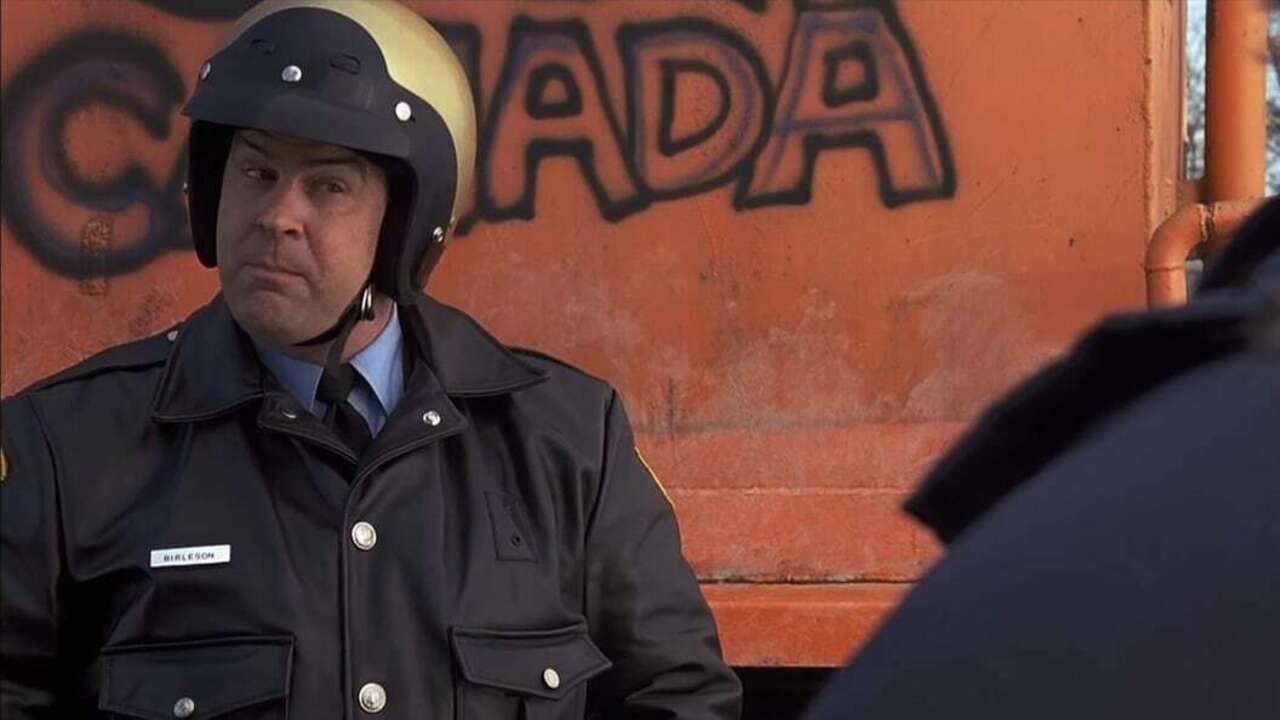
The supporting cast includes cameos that add to the fun, like Dan Aykroyd (uncredited) as an Ontario Provincial Police officer pulling Boomer over, and brief appearances by Bill Nunn and G.D. Spradlin. The score has that slightly jaunty, slightly generic 90s comedy feel, underlining the silliness rather than building tension.
### A Cult Curiosity
Upon its eventual release, Canadian Bacon didn't exactly set the world on fire. Critics were mixed-to-negative, often finding the satire too broad or unsure of its tone, and audiences didn't turn out in droves (it reportedly grossed less than $2 million against an $11 million budget – roughly $23 million today). It seemed destined to be a footnote, remembered mainly as John Candy's last film.
But like so many films from the VHS era, it found a second life on home video and cable. For those of us who stumbled upon it, Canadian Bacon became a quirky little cult favourite – remembered fondly for Candy's charm, Alan Alda's sleazy President, and its sheer, audacious silliness. It’s a film that dared to poke fun at American foreign policy and media manipulation using Canada as the unlikely punching bag, and there's something endearingly odd about that.
Rating: 6.5/10
Justification: While the satire can be uneven and the plot meanders, Canadian Bacon earns points for its audacious premise, Alan Alda's pitch-perfect performance, and its status as John Candy's final bow. It’s a genuinely unique 90s comedy-satire, flawed but fascinating, especially viewed through the lens of Michael Moore's subsequent career. It doesn't always hit the bullseye, but its gentle absurdity and underlying points still resonate.
Final Take: A charmingly clumsy political poke delivered via VHS cassette, Canadian Bacon is a reminder that sometimes the most pointed critiques come wrapped in the silliest packages – worth digging out for a dose of 90s nostalgia and John Candy's enduring warmth. Blame Canada? Nah, maybe just enjoy the goofy ride.