Here we go again, digging through the virtual shelves of memory for another tape... This time, it’s one that always felt a little out of place on the video store racks, nestled perhaps between more straightforward thrillers but radiating a different, cooler energy. I’m talking about Wim Wenders’ The End of Violence (1997), a film that arrived carrying the weight of its director's arthouse prestige (Wenders having given us masterpieces like Paris, Texas (1984) and Wings of Desire (1987)) but landing squarely in the era of burgeoning digital paranoia and Hollywood introspection. Watching it again now, it feels less like a straightforward narrative and more like a question whispered across the screen: in a world saturated with images, mediated experiences, and unseen watchers, where does violence truly begin and end?
### Eyes Everywhere in the City of Angels
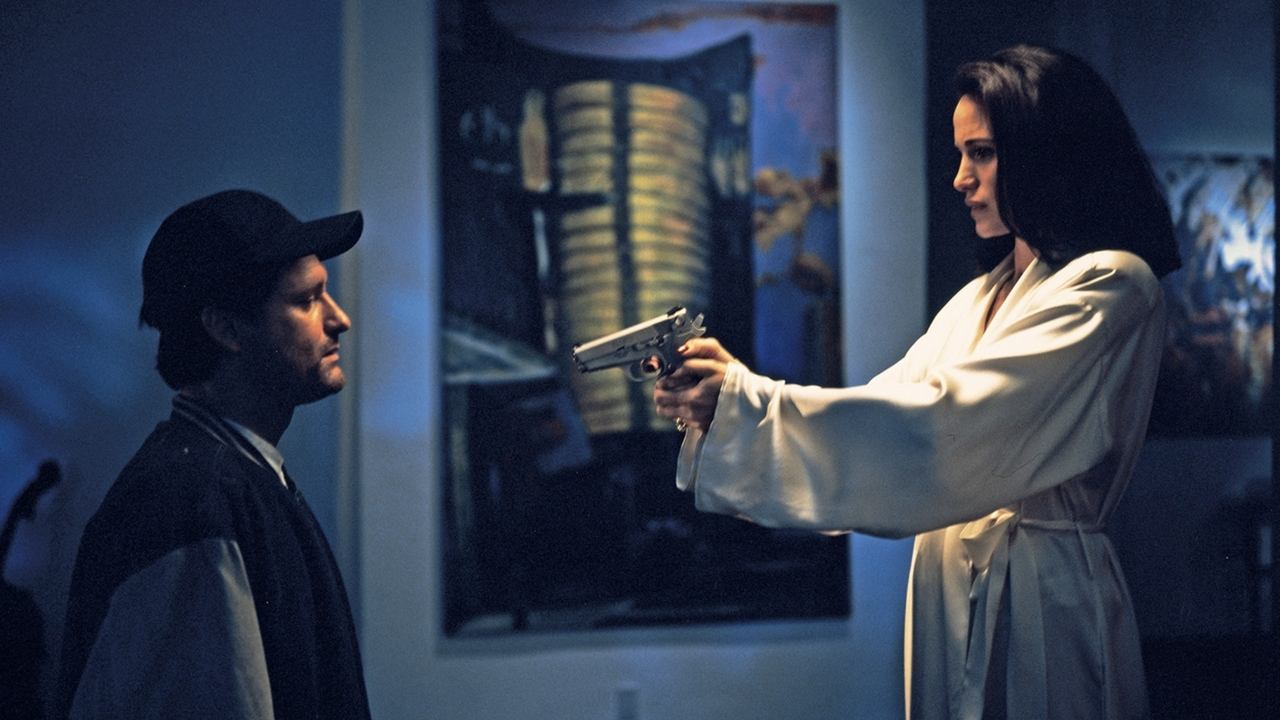
The film immediately throws us into a sun-drenched yet strangely sterile Los Angeles, a landscape Wenders captures with a detached, almost clinical eye. We meet Mike Max (Bill Pullman), a high-flying Hollywood producer swimming in success but drowning in moral ambiguity. He greenlights ultra-violent blockbusters while living a life insulated by wealth and technology. His world is abruptly shattered by a mysterious, failed abduction attempt, forcing him underground and into hiding with a group of Latino gardeners – a stark contrast to his former life.
Intersecting with Mike's story are two other key figures: Paige (Andie MacDowell), a stunt performer working on Mike's latest production, trying to find her footing after a separation; and Ray Bering (Gabriel Byrne), a brilliant but haunted computer scientist working on a top-secret government surveillance project designed, ironically, to eliminate violence by observing everything. These narrative strands slowly converge, weaving a tapestry exploring themes of observation, complicity, and the pervasive nature of violence in modern society.
### Wenders' Cool Gaze
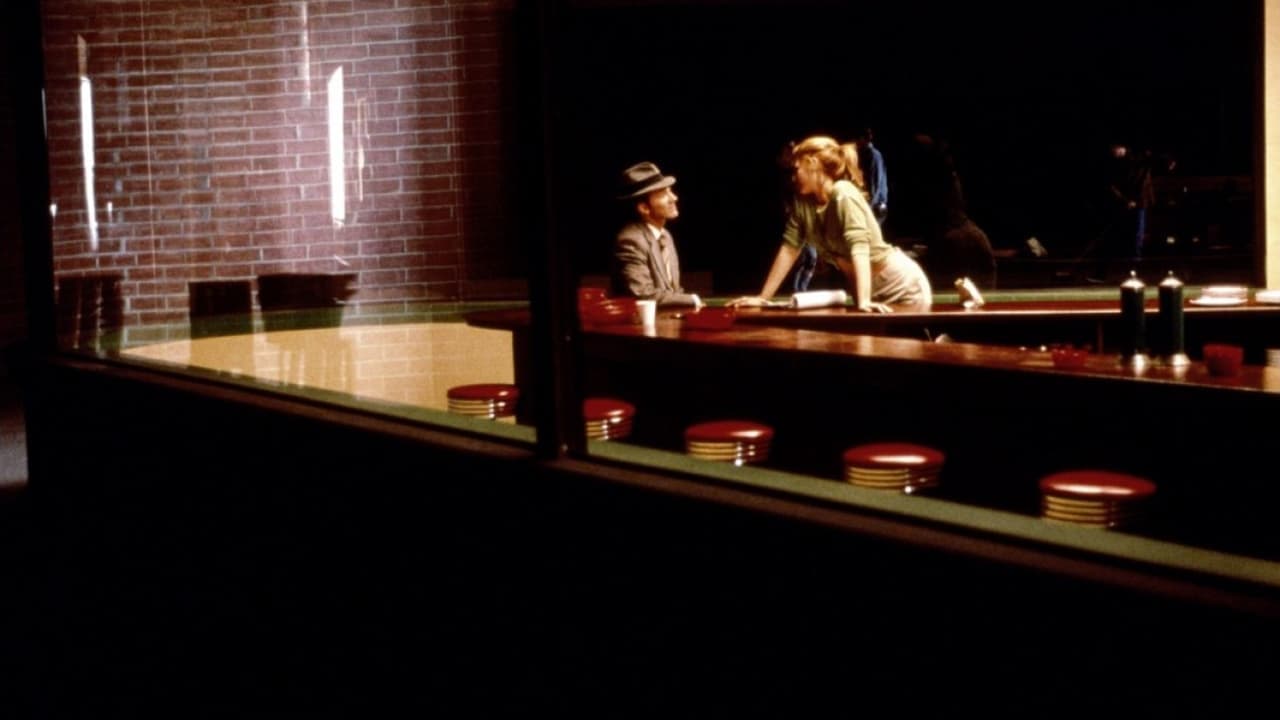
This isn't your typical late-90s thriller. Forget the rapid-fire editing or bombastic action sequences common at the time. Wenders employs a deliberate, almost meditative pace. The camera often lingers, observing characters framed against the vast, impersonal backdrop of LA, emphasizing their isolation even amidst the crowds. Cinematographer Pascal Rabaud creates a look that's bright and clear, yet emotionally cool, mirroring the technological detachment at the film's core. It's a style that might have frustrated some viewers back in '97, expecting something punchier, but it’s central to the film’s reflective mood. It forces you to watch the watchers, to consider the implications rather than just react to plot points.
It’s interesting to note that Wenders, long fascinated by American landscapes and culture, seemed particularly drawn to exploring the intersection of technology and humanity in this period. The End of Violence feels like a companion piece, in some ways, to his earlier exploration of images and reality in Until the End of the World (1991). The technology depicted – clunky laptops, nascent satellite surveillance interfaces – might look dated now, a charming reminder of the dial-up era aesthetic. Yet, the underlying questions about privacy, government overreach, and the ethics of observation feel startlingly relevant, perhaps even more so today than when the film was released just before the true explosion of the internet and social media.
### Performances Under Surveillance
The cast navigates this cool terrain effectively. Bill Pullman, often known for more affable roles (like in While You Were Sleeping (1995) or Independence Day (1996)), embodies Mike Max's initial arrogance and subsequent disorientation with a subtle vulnerability. His journey from untouchable power broker to fugitive hiding in plain sight is the film's narrative anchor.
Andie MacDowell, whose career was soaring after hits like Four Weddings and a Funeral (1994), brings a grounded weariness to Paige. She represents a more human connection amidst the film's technological anxieties, though her storyline occasionally feels somewhat disconnected from the central surveillance plot.
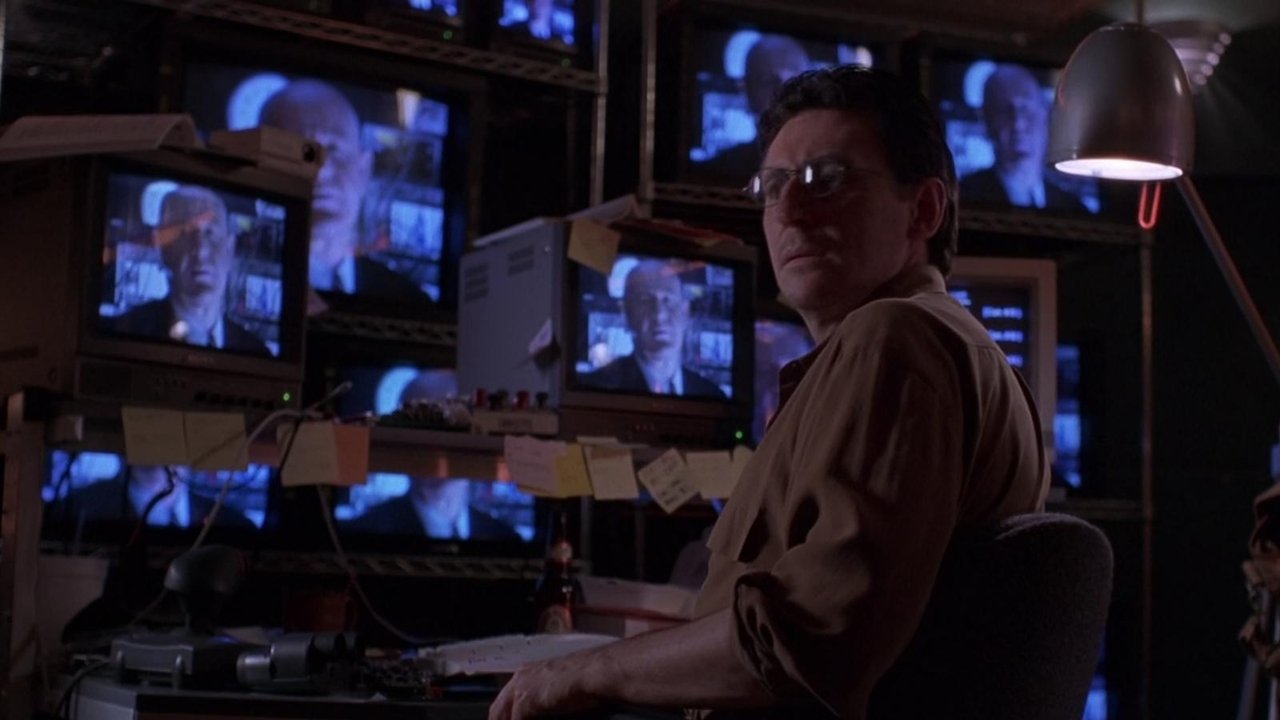
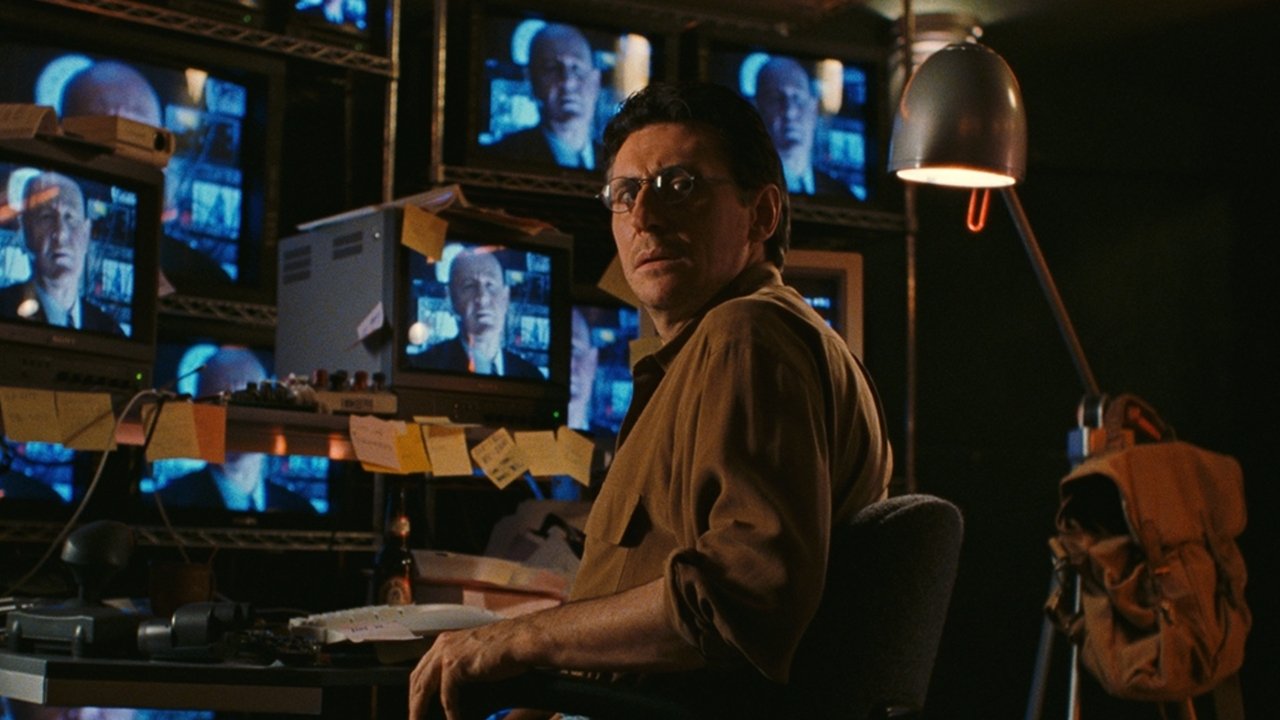
However, it's Gabriel Byrne as Ray Bering who perhaps best captures the film's uneasy heart. Fresh off his memorable role in The Usual Suspects (1995), Byrne portrays Ray with a quiet intensity, a man burdened by the immense power and terrifying potential of the system he's helped create. His ethical struggle provides some of the film’s most compelling moments. Keep an eye out too for Wenders regular Udo Kier in a small but distinct role as Paige's director colleague.
### Retro Fun Facts: Behind the Code
- Prescient Tech?: The film's central concept involves a secret government program using ubiquitous surveillance to predict and prevent violent crime. While the specific tech seems quaint now, the core idea resonates deeply with modern debates about NSA surveillance, predictive policing algorithms, and the erosion of privacy in the digital age. Wenders was definitely tapping into anxieties bubbling just beneath the surface of the late 90s.
- Observatory Centerpiece: Key scenes involving Byrne's character and the surveillance project were filmed at the iconic Griffith Observatory in Los Angeles, its elevated position offering a literal and metaphorical vantage point over the city – a perfect visual metaphor for the film's themes.
- Score by a Legend: The atmospheric, often melancholic score was composed by the legendary Ry Cooder, a frequent Wenders collaborator (most famously on Paris, Texas). His distinctive guitar work perfectly complements the film's mood and visuals.
- Cannes Reception: The End of Violence premiered in competition at the 1997 Cannes Film Festival. Reviews were decidedly mixed, with critics acknowledging its ambition and ideas but often finding the narrative somewhat scattered or emotionally distant.
- Modest Means, Modest Returns: Reportedly made for around $5 million, the film struggled at the box office, earning less than $1 million in the US. It became one of those intriguing VHS discoveries for many, rather than a theatrical hit – a perfect candidate for VHS Heaven!
### Lingering Images
Does The End of Violence fully succeed? Perhaps not entirely. The plot threads don't always mesh perfectly, and the pacing can test patience. It sometimes feels more like an intellectual essay than a fully realized drama. I remember renting this back in the day, probably expecting something closer to Enemy of the State (which would come out the following year), and being slightly bewildered by its quiet contemplation.
Yet, there’s an undeniable power to its atmosphere and its central questions. It’s a film that lingers – the haunting images of surveillance screens, the cool detachment of its characters, the pervasive sense of being watched. It captured a specific late-90s moment of transition, grappling with technologies and anxieties that were about to reshape our world in ways we couldn't fully imagine. It may not have been the pulse-pounding thriller some expected, but as a piece of thoughtful, atmospheric filmmaking exploring themes that have only grown more urgent, it remains a fascinating watch. It’s a reminder that sometimes the most unsettling violence isn't the kind that explodes on screen, but the kind that operates quietly, unseen, in the background.

Rating: 6.5/10
Justification: While ambitious, visually distinct, and thematically resonant (especially in hindsight), the film's narrative cohesion and pacing prevent it from reaching the heights of Wenders' best work. The performances are solid, particularly Byrne's, and the core ideas about surveillance are compelling. However, its coolness sometimes tips into detachment, making it harder to fully engage emotionally. A worthwhile, if flawed, artifact of late-90s cinematic anxiety.
Final Thought: In an era before smartphones put a camera in every pocket, The End of Violence posed questions about observation and control that feel less like science fiction now and more like unnerving reality. What does it mean when the watchers are everywhere?