There's a certain chill that lingers long after the credits roll on Gattaca. It’s not the coldness of space, but the sterile perfection of its near-future world, a place where human potential is measured not by spirit, but by the sequence of Gs, As, Ts, and Cs in one's DNA. Released in 1997, it arrived towards the tail-end of the VHS boom, a thoughtful, visually striking sci-fi film that felt distinctly different from the bombast often dominating the rental shelves. It didn't shout; it whispered warnings about a future meticulously engineered, yet achingly empty.
An Imperfect Man in a Perfect World
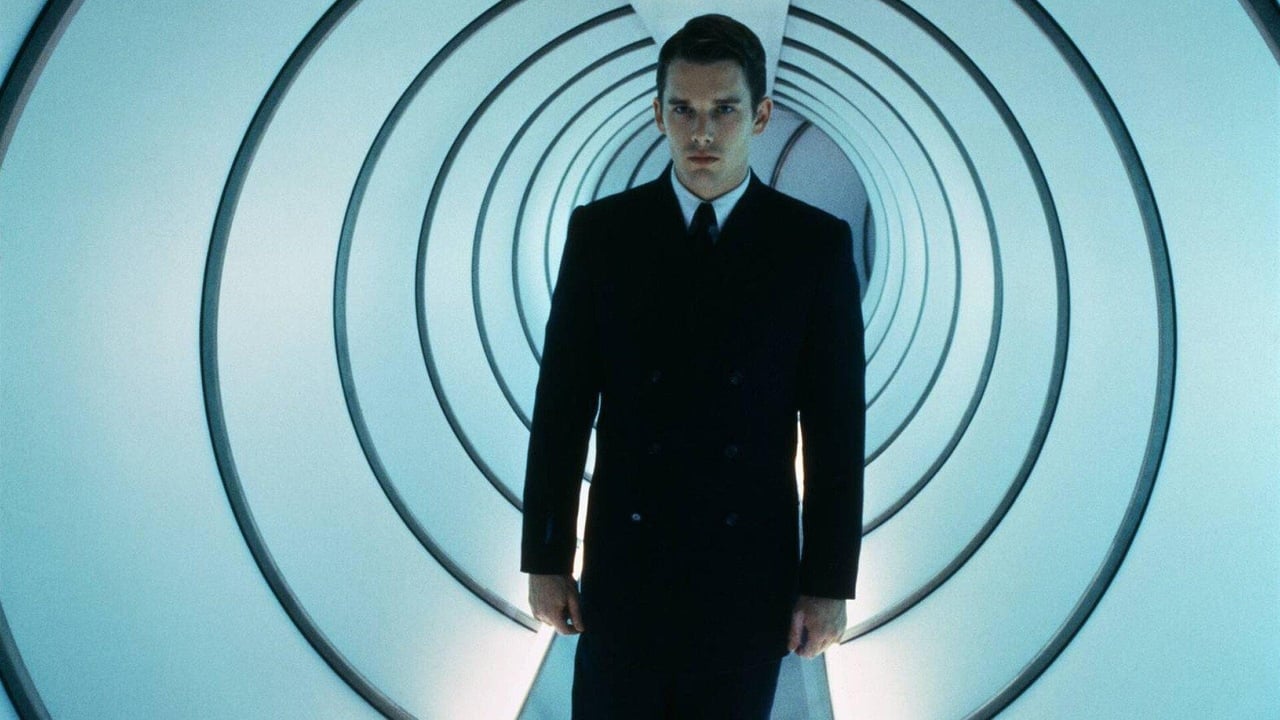
Writer-director Andrew Niccol, in his remarkably assured debut (he'd previously penned the brilliant script for The Truman Show (1998)), crafts a society obsessed with genetic purity. We follow Vincent Freeman (Ethan Hawke), born naturally in an age of designer babies, branded an "Invalid" – destined for menial labor due to his genetic predispositions. Yet, Vincent possesses an "invalid" spirit: an unquantifiable, burning desire to travel to the stars, a dream reserved only for the genetically elite, the "Valids". It’s a simple, powerful setup: can sheer will overcome biological destiny? Hawke embodies Vincent's quiet desperation and fierce determination perfectly; you feel the constant, suffocating weight of his deception, the daily terror of discovery measured in stray hairs and flakes of skin.
The Architecture of Ambition
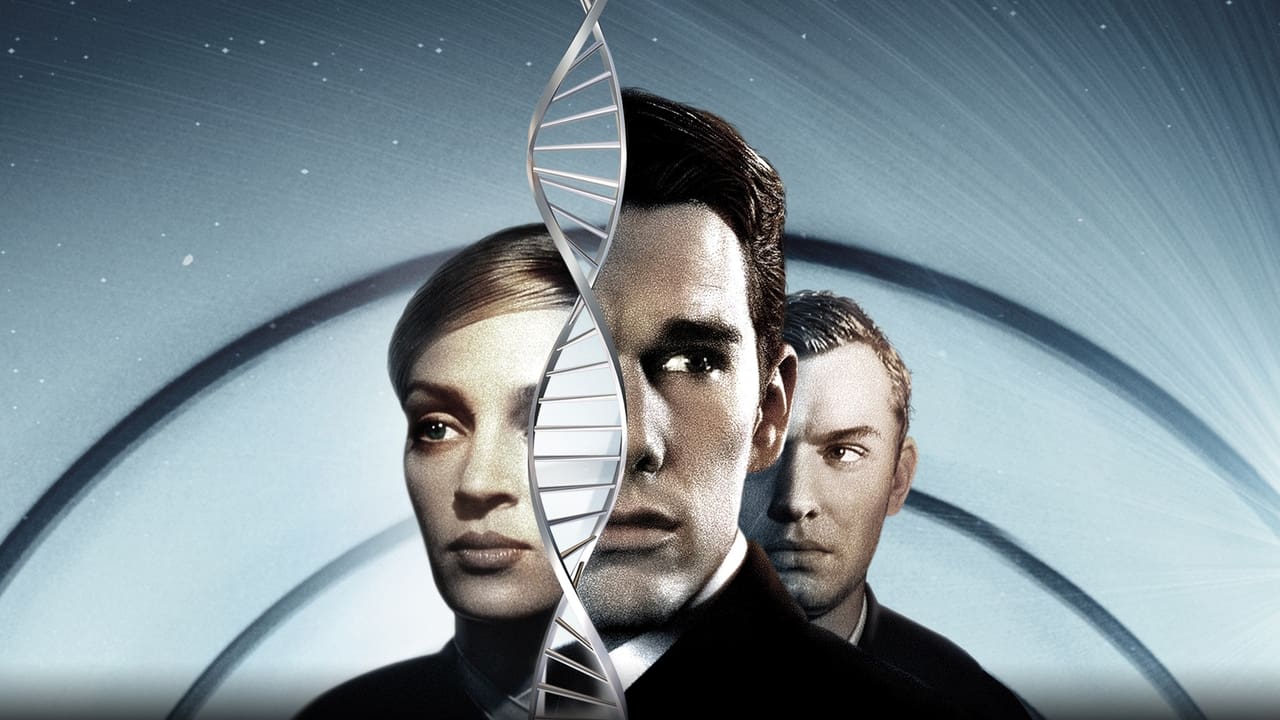
What immediately sets Gattaca apart is its stunning visual language. Niccol deliberately sidesteps typical sci-fi tropes – no flying cars or laser blasters here. Instead, he presents a retro-futuristic aesthetic, all clean lines, muted palettes, and imposing, minimalist structures. Much of this sterile grandeur was achieved using real locations, notably the stark modernism of Frank Lloyd Wright's Marin County Civic Center, lending the world a grounded, yet unsettlingly detached, quality. The cars are classics – Studebakers, Citroëns, Rovers – reinforcing a sense of timelessness, as if this chilling future could be just around the corner, built upon the foundations of our own past. It’s a world polished to a mirror shine, reflecting everything except genuine human warmth. This deliberate design choice underscores the film's themes: a society so obsessed with eliminating flaws, it risks excising humanity itself.
Borrowed Dreams, Shared Burdens
Vincent's only path to the stars is through a "borrowed ladder" – assuming the genetic identity of Jerome Morrow (Jude Law), a genetically perfect Valid crippled by an accident born from his own perceived failure. Law’s performance is simply magnetic. Jerome is bitter, brilliant, cynical, and tragically confined by the very perfection society prizes. The complex symbiosis between Vincent and Jerome forms the emotional core of the film. They are two halves of a whole neither could achieve alone: Vincent provides the relentless drive, Jerome the flawless genetic key. Their shared deception creates moments of intense suspense, but also profound connection. Is Jerome merely selling his identity, or vicariously living the dream he tragically forfeited? It's a question the film allows to resonate, thanks largely to Law’s layered portrayal. It's fascinating to think that Ethan Hawke and Uma Thurman actually met on this set, marrying shortly after – a bit of real-world romance blossoming amidst the film's coolly controlled environment.

The Flaw in the Code
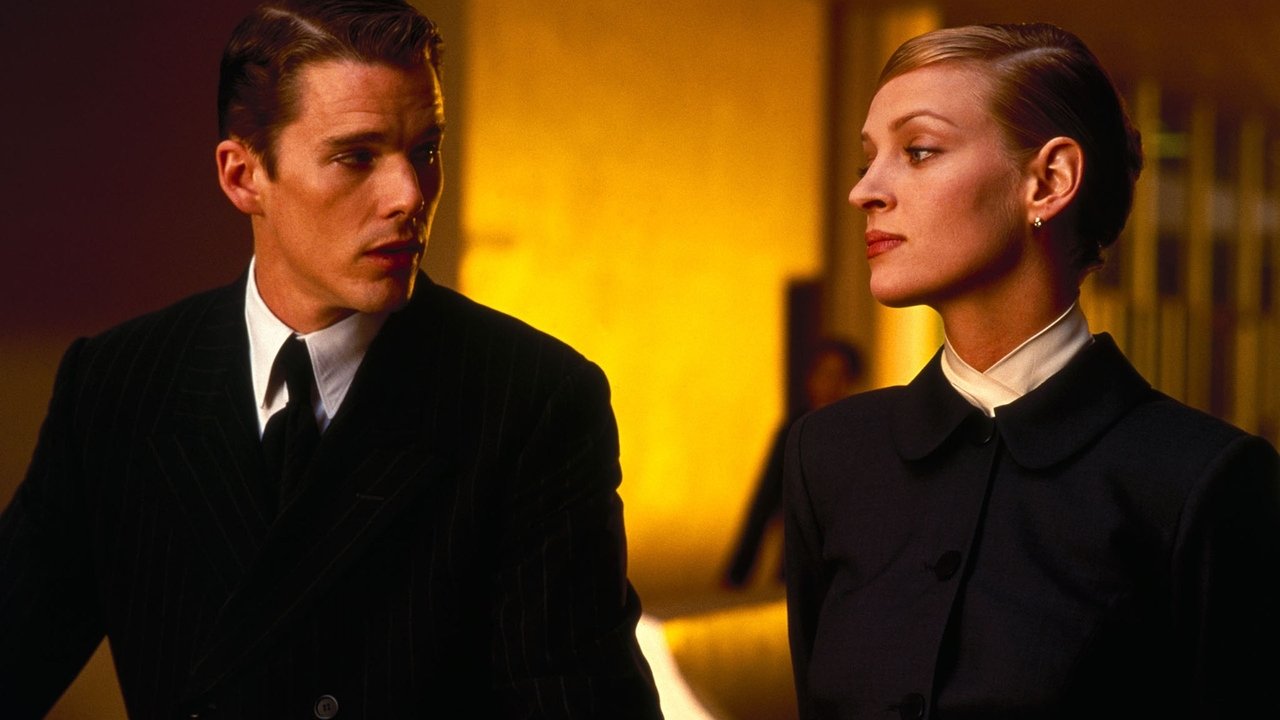
Into this meticulously controlled world steps Irene Cassini (Uma Thurman), a Valid whose own minor heart defect relegates her to a slightly lower tier within the Gattaca Aerospace Corporation. Thurman brings an enigmatic grace to Irene, a woman seemingly resigned to her "almost perfect" status, yet drawn to Vincent's intensity. Their relationship unfolds amidst the constant threat of exposure, adding a layer of noir-ish intrigue. She represents the system Vincent is fighting against, yet harbours her own quiet dissatisfactions. Does she suspect his secret? Her subtle glances and hesitant questions keep the audience guessing, amplifying the tension.
Retro Fun Facts: The Little Film That Could (Eventually)
Gattaca wasn't a box office smash upon release. Made for around $36 million, it barely recouped its budget domestically ($12.5 million). Yet, like many films we now cherish from the era, it found its devoted audience on home video – that trusty VHS tape allowing its quiet power and prescient themes to percolate. The title itself is derived from the four nucleobases of DNA: Guanine, Adenine, Thymine, Cytosine. Even Michael Nyman's haunting, minimalist score feels inseparable from the film's identity, perfectly capturing the melancholic beauty and underlying tension. It’s a testament to Niccol's vision that a film with such challenging ideas and a restrained aesthetic eventually cemented itself as a modern sci-fi classic.
Why It Still Resonates
Watching Gattaca today, perhaps on a format far removed from the worn-out rental tape I first saw it on, its themes feel more relevant than ever. In an age of advancing genetic science, CRISPR technology, and societal pressures towards optimisation, the film's exploration of "genoism" – discrimination based on genetic makeup – feels disturbingly plausible. It forces us to confront uncomfortable questions: What truly defines human worth? Is striving and overcoming imperfection inherently more valuable than manufactured perfection? The film doesn't offer easy answers, preferring instead to linger on the quiet triumph of the human spirit against overwhelming odds. What does it say about us, that we often define ourselves more by our limitations than our potential?
Rating: 9/10
Gattaca earns this high score through its masterful blend of intelligent storytelling, compelling performances (especially from Hawke and Law), haunting atmosphere, and timeless themes. Its deliberate pacing and cool aesthetic might not appeal to everyone, but its intellectual depth and emotional resonance are undeniable. It’s a film that respects its audience, offering a chillingly beautiful vision of the future that serves as a potent reminder of the value found in our inherent imperfections.
It remains a quietly profound piece of science fiction, a film whose polished surface hides a deeply resonant heartbeat – one that celebrates the messy, unpredictable, and ultimately indomitable nature of the human spirit.