The fluorescent lights of the city morgue hum with a particular kind of cold indifference. Down long, sterile corridors, behind heavy steel doors, lies a silence that feels… occupied. It’s this chilling space, the final stop for so many, that forms the unsettling heart of Nightwatch (1997), a film that crawled under the skin of many a late-night VHS watcher back in the day. Do you remember the specific dread of watching a film set almost entirely within those walls, where every shadow seems to deepen, and every distant sound prickles the nerves?
### Corridor of Whispers
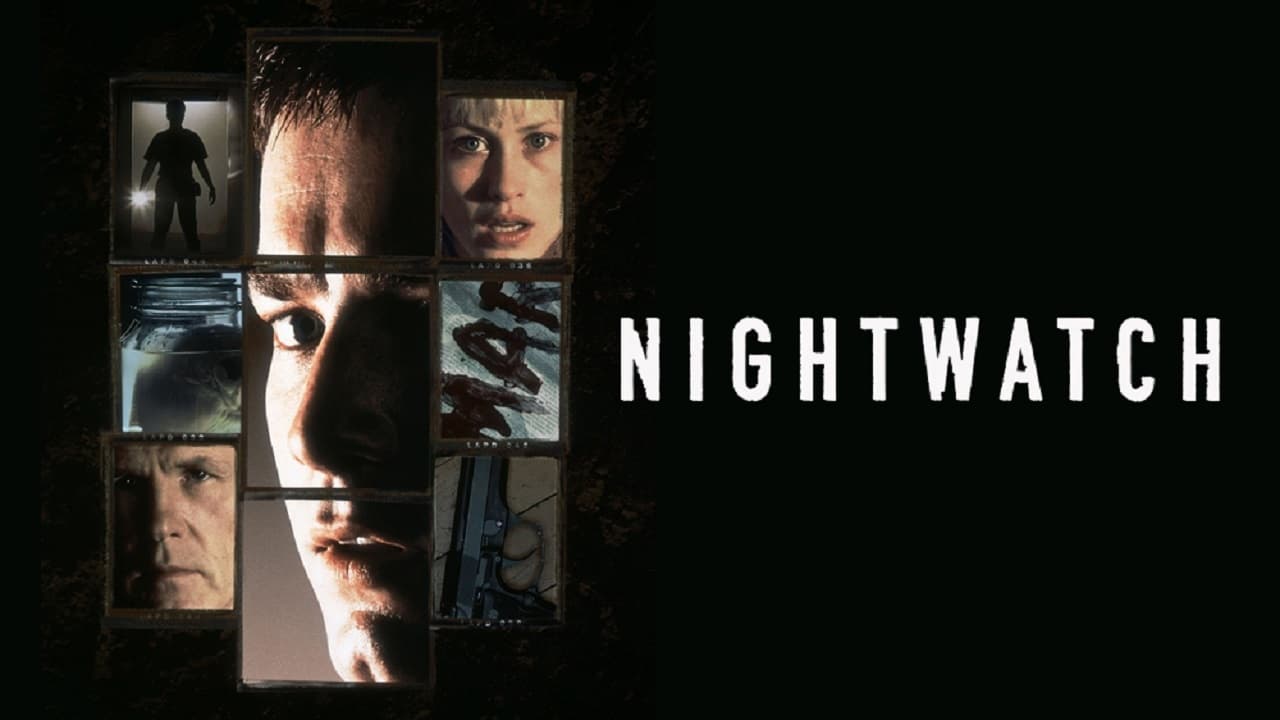
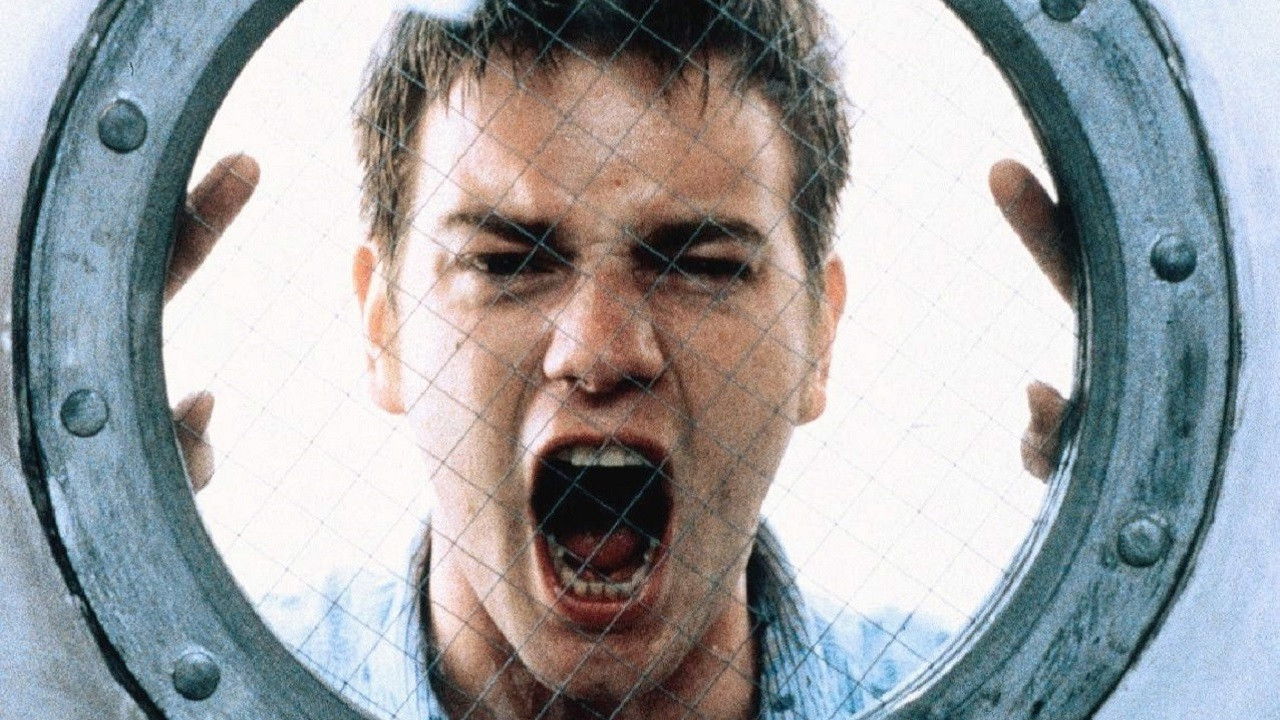
Nightwatch plunges us into the world of Martin Bells (Ewan McGregor, fresh from the kinetic energy of Trainspotting), a law student who takes a job as a night watchman at the Institute of Forensic Medicine to earn some extra cash and find quiet study time. Quiet, however, is the last thing he finds. The job requires him to patrol the deserted building, making rounds through autopsy rooms and cold storage, punching a clock in rooms where the recently deceased lie under sheets. It’s inherently creepy work, playing on primal fears of death and the unknown, but things escalate when a series of gruesome murders targeting prostitutes rocks the city, and strange, unsettling events begin to occur during Martin’s shifts. Evidence seems to inexplicably point towards him, turning his isolated workplace into a potential trap.
This is fertile ground for a thriller, tapping into the claustrophobia and vulnerability of being alone in such a macabre environment. Director Ole Bornedal understands the power of suggestion, using the architecture of the morgue – the echoing hallways, the clinical coldness, the rows of covered bodies – to build a palpable sense of unease. The camera often lingers, forcing us to share Martin’s perspective, scanning the darkness, waiting for something to emerge from the periphery.
### A Tale Twice Told
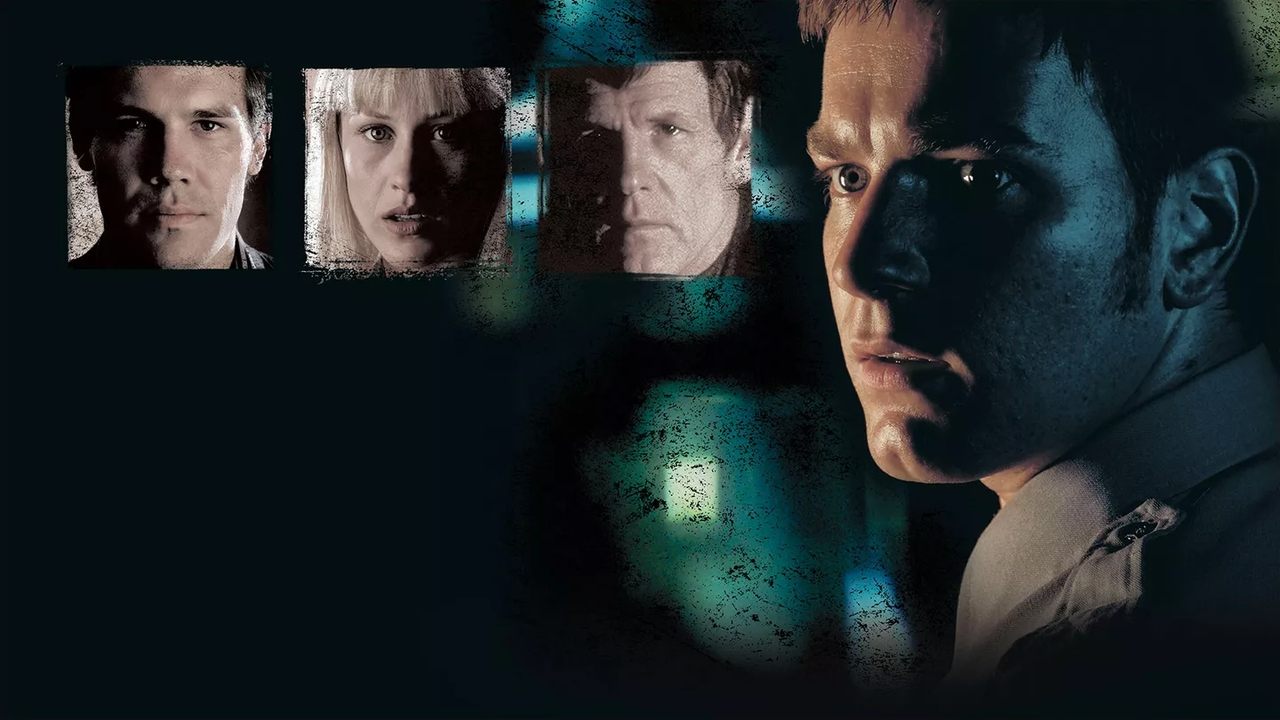
One of the most fascinating pieces of trivia surrounding Nightwatch is that it's an American remake of a 1994 Danish film, Nattevagten, directed by... Ole Bornedal himself. It's a rare instance of a filmmaker getting a Hollywood budget (around $10 million) to essentially remake their own foreign-language hit. The pressure was reportedly immense, and whispers from the time suggest that Steven Soderbergh (years before his mainstream breakout with Out of Sight) was brought in for significant, albeit uncredited, script rewrites and possibly even some directorial input to make it more palatable for US audiences.
Does this Hollywood sheen improve upon the original? Many who’ve seen both argue the Danish version is tighter, rawer, and ultimately more effective. The American Nightwatch feels slightly slicker, perhaps losing some of the original’s rough edges in translation. Yet, Bornedal still crafts some genuinely tense sequences. The initial walkthroughs of the morgue are pure atmospheric dread, and a few key moments, particularly involving the alarm system and Martin's perceived descent into paranoia, land with unnerving precision. Remember the sheer panic of realizing something had moved, something wasn't right, in that sterile, silent space?
### Faces in the Dark
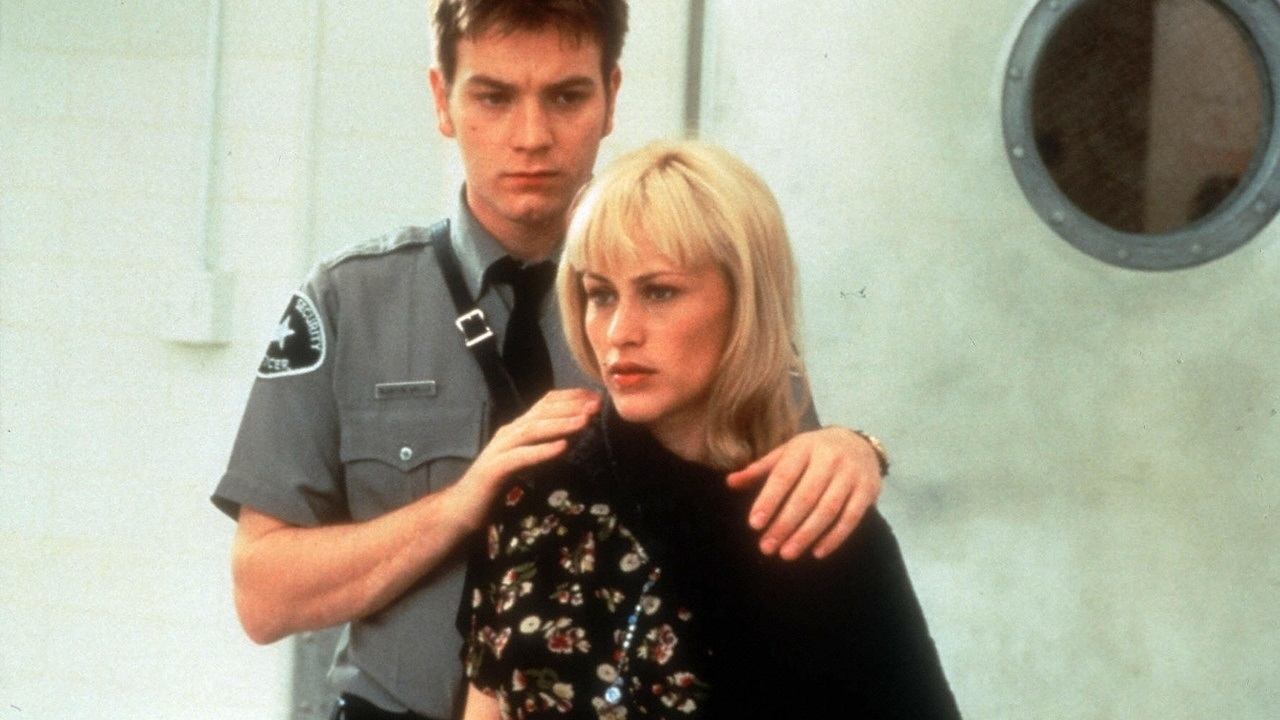
Ewan McGregor carries the film capably, conveying Martin’s mounting fear and desperation as the noose tightens. His youthful looks contrast effectively with the grim surroundings. He’s flanked by a strong supporting cast characteristic of 90s thrillers. Josh Brolin, well before his Thanos days, smarms his way through the role of James, Martin’s manipulative and thrill-seeking best friend, whose dangerous games contribute significantly to the protagonist's predicament. Patricia Arquette, bringing the soulful intensity she showed in films like True Romance, plays Katherine, Martin’s concerned girlfriend caught in the escalating nightmare. And then there’s the reliable gravitas of Nick Nolte as Inspector Cray, the weary detective investigating the murders, whose suspicion falls squarely on the increasingly erratic night watchman. The ensemble works well, adding layers to the central mystery.
While the practical effects are minimal compared to creature features of the era, the production design is key. The morgue set feels chillingly authentic – cold, expansive, and deeply isolating. The score, too, often employs unsettling ambient sounds and sharp stings rather than overpowering melodies, contributing to the film's specific brand of suspense. It aimed for psychological chills over outright gore, though it doesn't shy away from disturbing implications.
### The Verdict After Lights Out
Despite its strong premise, capable cast, and genuinely atmospheric setting, Nightwatch didn’t quite catch fire at the box office, grossing a mere $1.2 million domestically against its $10 million budget. Perhaps audiences found it too slow-burn, or maybe it was overshadowed by louder genre entries of the time. Compared to its Danish progenitor, it often feels like a slightly diluted echo, sanding down some of the original’s more disturbing psychological complexities for Hollywood convention. The plot twists, while present, might not feel quite as shocking today, and some of the character motivations, particularly James's extreme behaviour, can stretch credulity.
Yet, there’s an undeniable pull to Nightwatch. It captures that specific late-90s thriller aesthetic – the muted colour palettes, the focus on psychological games, the pre-ubiquitous-internet isolation. Renting this tape back in the day, maybe on a whim based on the creepy cover art, often led to a surprisingly tense viewing experience. I distinctly remember the feeling of unease settling in as Martin made his rounds, the VCR humming quietly in the dark room. It wasn't perfect, but it worked on that fundamental level of making you check the locks afterwards.
Rating: 6/10
The score reflects a film that succeeds admirably in building atmosphere and features a solid cast, but is ultimately hampered by being a less potent remake of its own source material and suffering from some plot contrivances common in 90s thrillers. It delivers moments of genuine dread and leverages its setting effectively, making it a worthwhile curiosity for fans of the era's suspense cinema.
Final Thought: While perhaps destined to remain in the shadow of Nattevagten, the American Nightwatch stands as a potent reminder of how effective a simple, chilling premise – being alone with the dead in the dark – can be, especially when viewed through the nostalgic lens of a well-worn VHS tape.