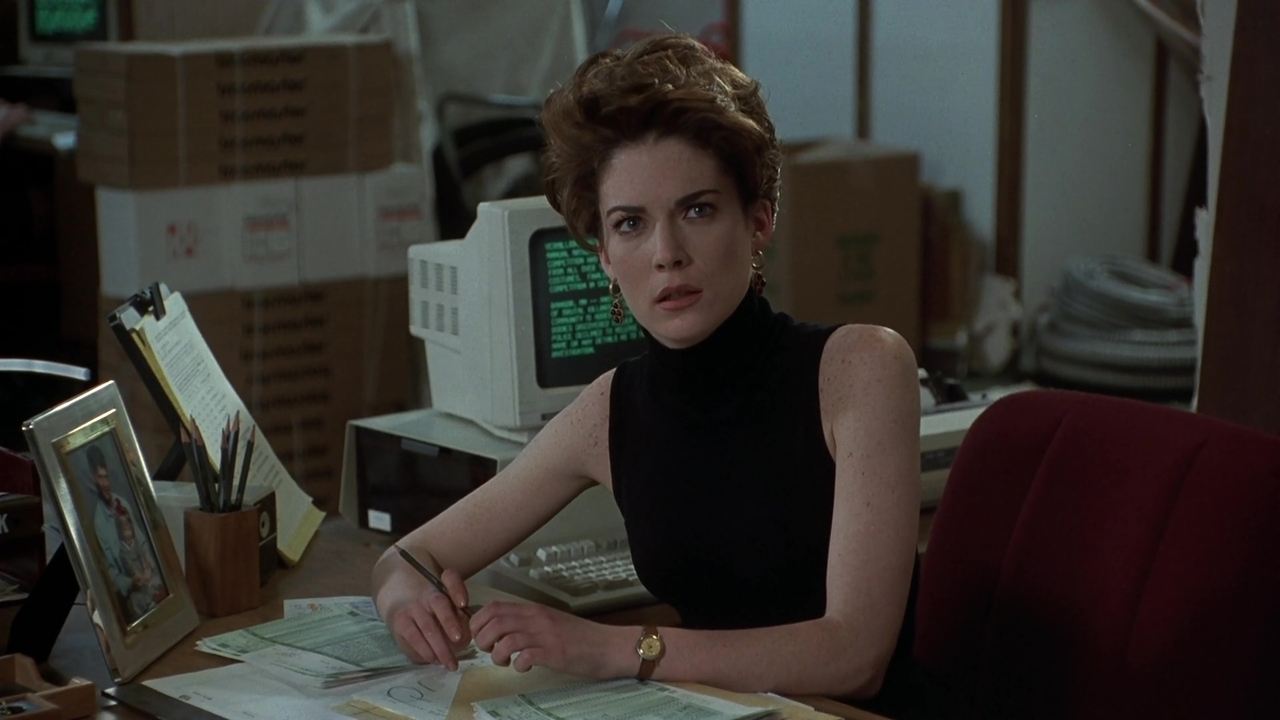
There's a particular kind of chill that settles in the air in certain early 90s thrillers – a blend of corporate sterility and creeping paranoia. It's a feeling perfectly encapsulated by the arrival of Kris Bolin, the eponymous temporary assistant in Tom Holland's 1993 film, The Temp. She walks into the drab offices of ApplePros, a struggling Oregon cookie company, radiating an almost unnerving competence. In an era grappling with recessionary anxieties and workplace uncertainty, the idea of someone seemingly perfect yet potentially predatory struck a chord, didn't it? It’s this premise, ripe with potential for suspense and commentary, that pulls you in.
The Perfect Hire?
Timothy Hutton plays Peter Derns, a mid-level executive whose life is fraying at the edges. He's recently separated, fighting for custody, and desperate for a promotion that seems perpetually out of reach. Hutton, who carried such quiet intensity in films like Ordinary People (1980), brings a believable weariness to Peter. He’s not a hero, nor entirely a victim; he’s stressed, susceptible, and perhaps a little too willing to overlook warning signs when Kris (Lara Flynn Boyle) starts expertly streamlining his chaotic work life. Boyle, fresh off the enigmatic wave of Twin Peaks, leans into Kris's ambiguity. Is she merely ambitious and hyper-efficient, or is there something calculating, even sinister, behind those watchful eyes and helpful suggestions? Her performance walks a tightrope, embodying the dangerous allure of competence mixed with just enough unsettling intensity to keep Peter – and us – guessing.
The supporting cast adds texture to the corporate fishbowl. Dwight Schultz (forever A-Team's "Howling Mad" Murdock to many of us) offers some welcome, albeit slightly neurotic, energy as Peter’s office confidant, Roger. And then there's the brief but commanding appearance by the legendary Faye Dunaway as the company's icy CEO, Charlene Towne. Her presence lends a touch of old-Hollywood gravitas, a reminder of the ruthless corporate ladder Kris seems determined to climb.
When Accidents Happen
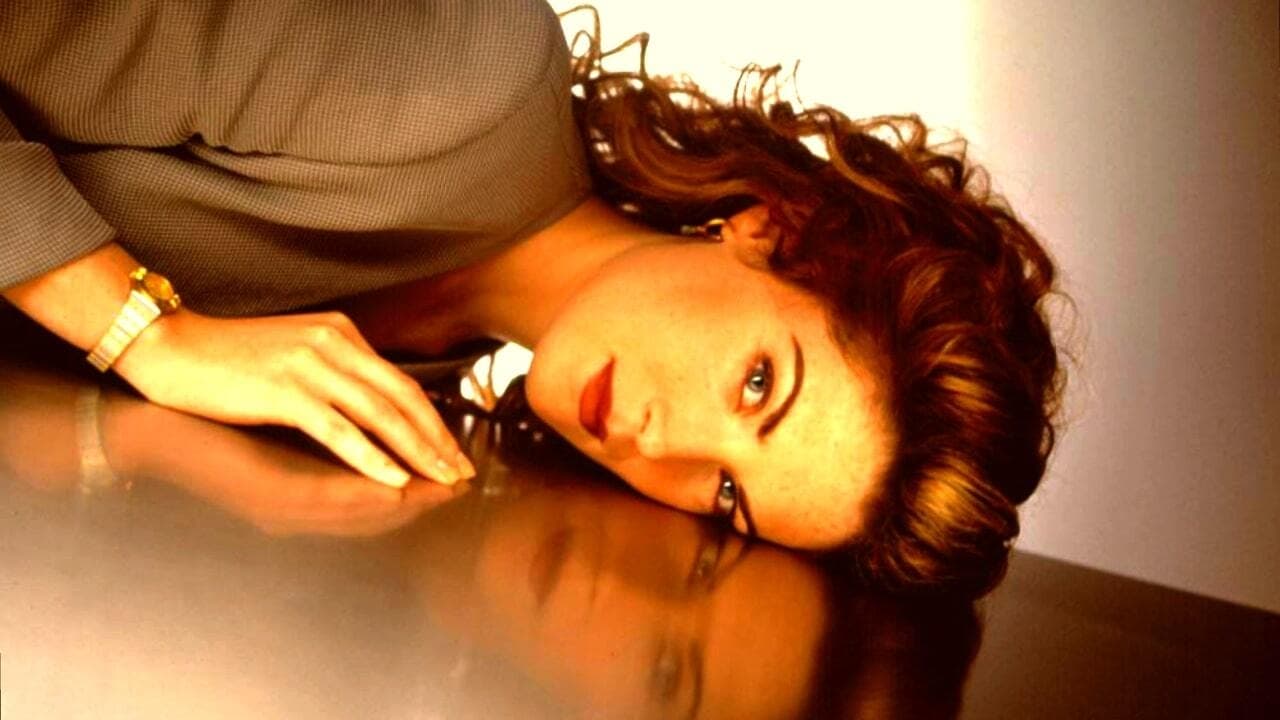
Director Tom Holland, certainly no stranger to suspense and scares having given us genre favourites like Fright Night (1985) and Child's Play (1988), attempts to infuse the corporate setting with a sense of menace. As Peter's rivals encounter increasingly bizarre and dangerous "accidents" – a swarm of bees, a malfunctioning paper shredder (a scene that likely made office workers everywhere flinch), a glass shard in a cookie – the film ratchets up the suspicion pointing towards Kris. The question becomes less if she's involved, and more how and why. Holland employs some classic thriller tropes, using shadows, suggestive framing, and a score that aims for unnerving, but the execution sometimes feels more workmanlike than truly inspired. The suspense sequences occasionally lack the genuine dread found in the best of the genre, feeling a bit predictable even by the standards of the day.
The Ending That Wasn't (And the One We Got)
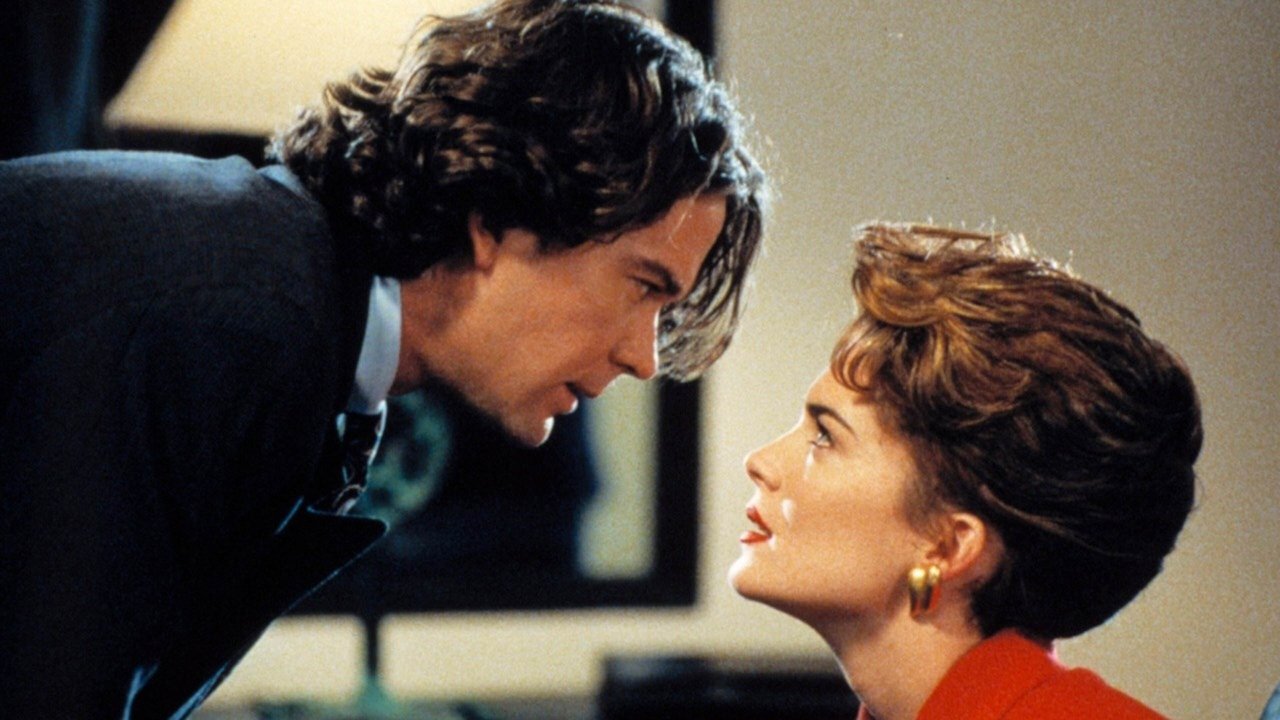

Now, we have to talk about the elephant in the room, the element that has defined The Temp's legacy perhaps more than anything else: the ending. It’s widely reported – and frankly, quite apparent when watching – that the film suffered from significant studio interference, particularly regarding its conclusion. Test audiences apparently reacted poorly to a darker, more ambiguous original ending, leading Paramount Pictures to demand reshoots for a more conventional, clear-cut finale. This decision hangs heavy over the film's third act. You can almost feel the gears grinding as the narrative shifts direction, jettisoning some of the built-up psychological tension for a more formulaic confrontation. Does this meddling completely derail the film? Perhaps not entirely, but it undeniably leaves a scar, making the resolution feel tacked-on and less satisfying than the setup promised. It’s a fascinating, if frustrating, example of how external pressures can alter a film’s DNA, a behind-the-scenes tidbit that feels quintessentially "Hollywood" in its own unfortunate way. Knowing this backstory adds a layer of metatextual intrigue when watching it now on a well-worn VHS copy – you're not just watching the film, you're watching the result of a compromise.
A Relic of the Video Store Aisle
Watching The Temp today feels like uncovering a specific kind of artifact from the video rental era. It arrived amidst a glut of similar psychological and erotic thrillers – films like Single White Female (1992), The Hand That Rocks the Cradle (1992), and Consenting Adults (1992) crowded the shelves, all exploring themes of domestic invasion, obsession, and hidden identities. While The Temp doesn't quite reach the heights (or notoriety) of some of its contemporaries, it remains a solid example of the formula. It captures that specific early 90s aesthetic – the oversized suits, the clunky computers, the palpable anxiety lurking beneath the surface of corporate ambition. I distinctly remember the cover art staring out from the "New Releases" wall at my local video store, Boyle's intense gaze promising thrills and chills. It might not have been the store's most rented tape, struggling to make back its budget with only $6.4 million at the domestic box office, but it was definitely there, part of the tapestry of readily available VHS thrillers.
Final Thoughts
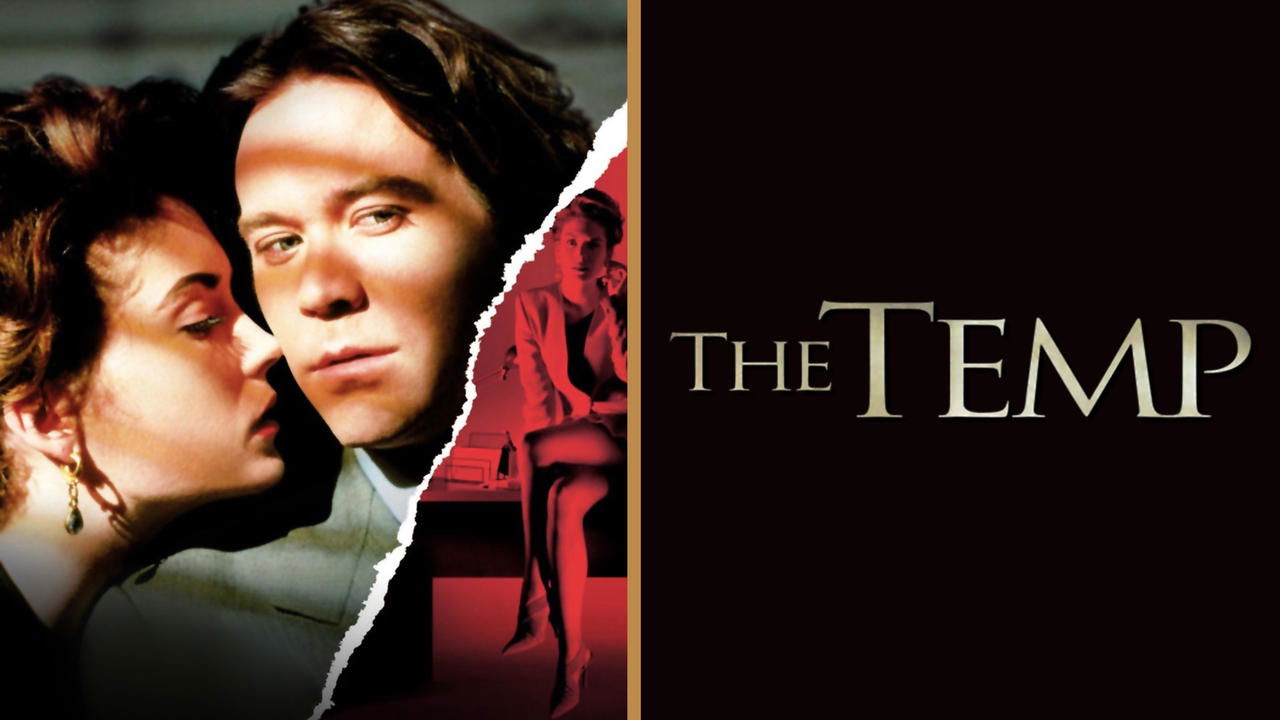
The Temp is ultimately a film hampered by its compromised ending, preventing it from fully realizing the potential of its premise and Lara Flynn Boyle's effectively chilly performance. Timothy Hutton provides a relatable anchor, and the direction from Tom Holland offers moments of workmanlike suspense. Yet, the shadow of what might have been looms large. It serves as a potent reminder of how studio notes can blunt a film's edge.
Rating: 5/10
The rating reflects a film that starts with a compelling setup and decent performances, particularly from Boyle, but is ultimately let down by predictability and a studio-mandated ending that feels discordant with the preceding tension. It's a curious watch for fans of 90s thrillers and those interested in the impact of production woes, but it falls short of being a true genre standout. It remains a fascinating case study, though – what happens when the perfect hire leads to an imperfect film?