Okay, fellow tapeheads, let's rewind to a truly unique slice of late-90s post-apocalyptic cool. Remember digging through the "Action" or maybe even the "Sci-Fi" aisles and stumbling upon a cover that just screamed different? That's the vibe of Lance Mungia's 1998 cult classic, Six-String Samurai. This wasn't your typical Van Damme high-kicker or Schwarzenegger explosion-fest. No, this was something weirder, something wonderful, something steeped in rockabilly rhythm and wasteland wandering. It felt like discovering a secret handshake on grainy magnetic tape.
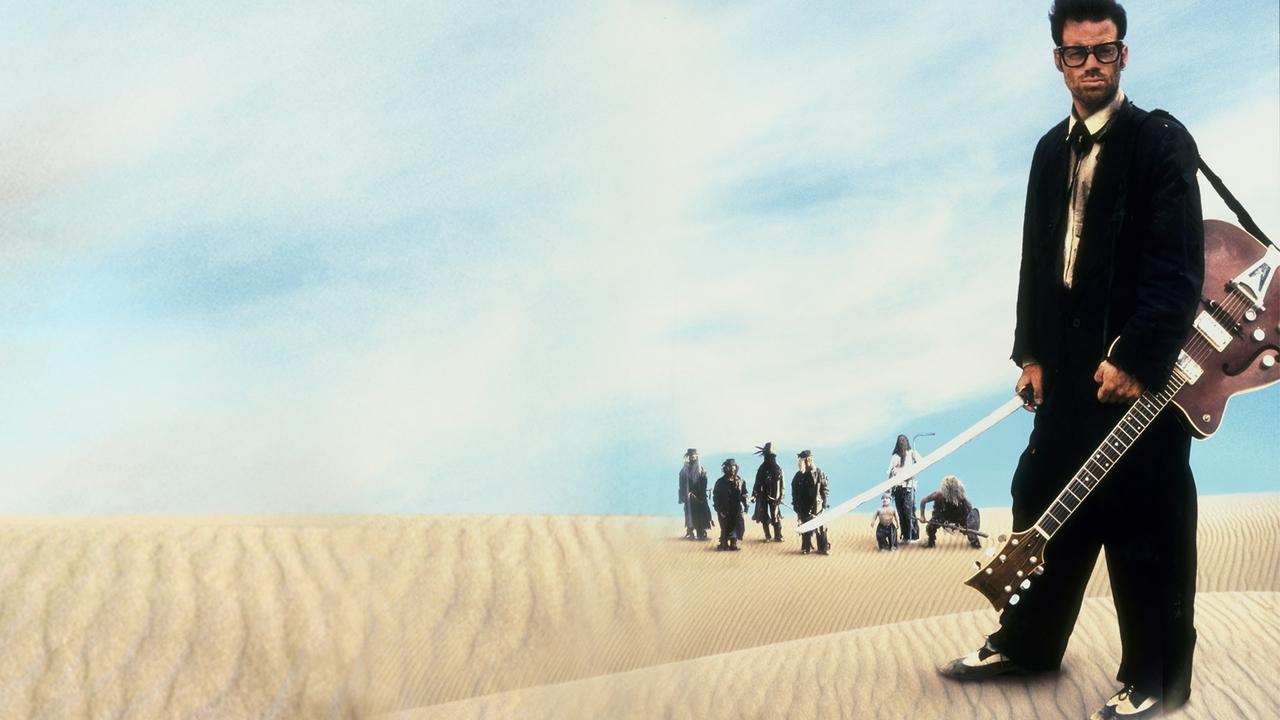
The premise alone is pure pulp poetry: In an alternate 1957, the Soviets nuked the US into oblivion. Forty years later, the ruins are lorded over by King Elvis in Lost Vegas, the last bastion of civilization. But the King is dead, and a call goes out across the wasteland for guitar-slinging warriors to make the perilous journey to Vegas and claim the throne. Enter Buddy (the enigmatic Jeffrey Falcon), a bespectacled, Buddy Holly-esque figure armed with a guitar and a samurai sword, cutting a swathe through mutants, bowling gangsters, and the relentless forces of Death himself.
Wasteland Waltz with a Katana
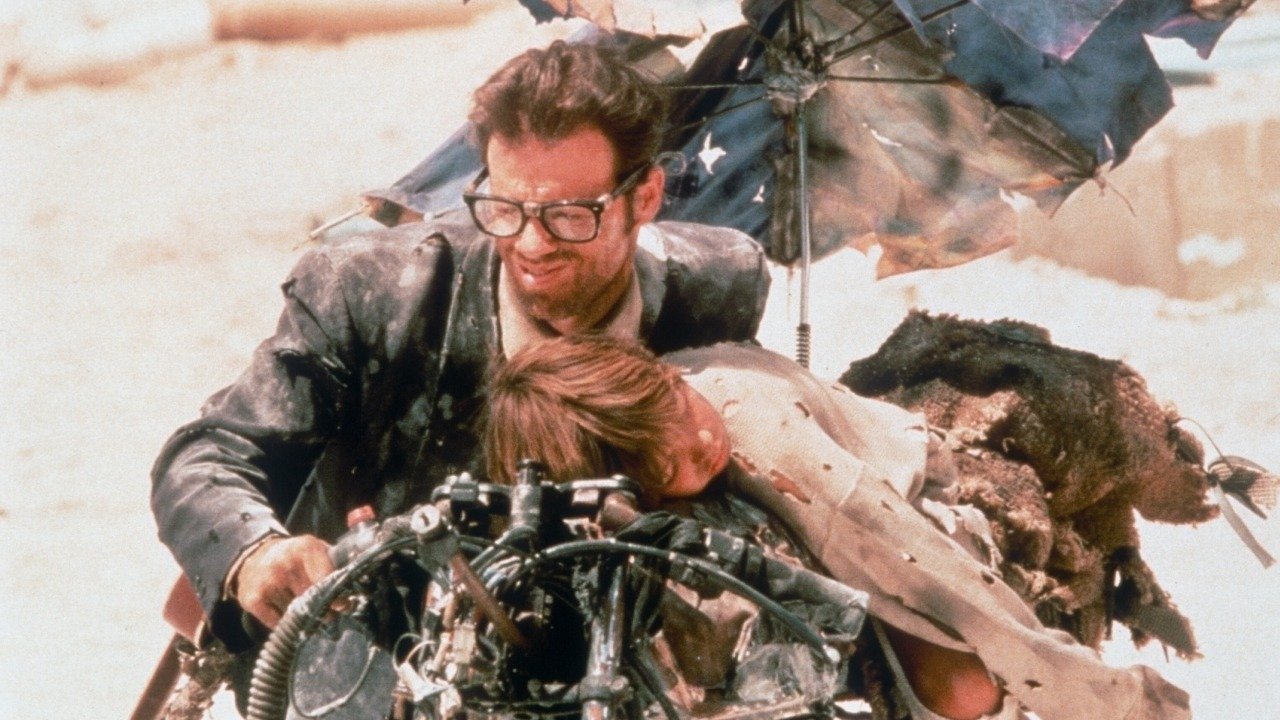
What immediately grabs you about Six-String Samurai is its sheer, unwavering commitment to its aesthetic. This isn't just Mad Max with a guitar; it's a fusion of Kurosawa samurai epics, Sergio Leone's dusty standoffs, 50s rock 'n' roll iconography, and even a touch of The Wizard of Oz (our hero picks up a lost kid sidekick, played earnestly by Justin McGuire, along his yellow brick road of radioactive dust). Falcon, who also co-wrote the script and choreographed the fights, is magnetic. His martial arts background, honed partly in the Hong Kong action scene, gives Buddy a quiet intensity and lethal grace. He moves with a dancer's precision, making the sword fights feel both stylized and surprisingly impactful for their time.
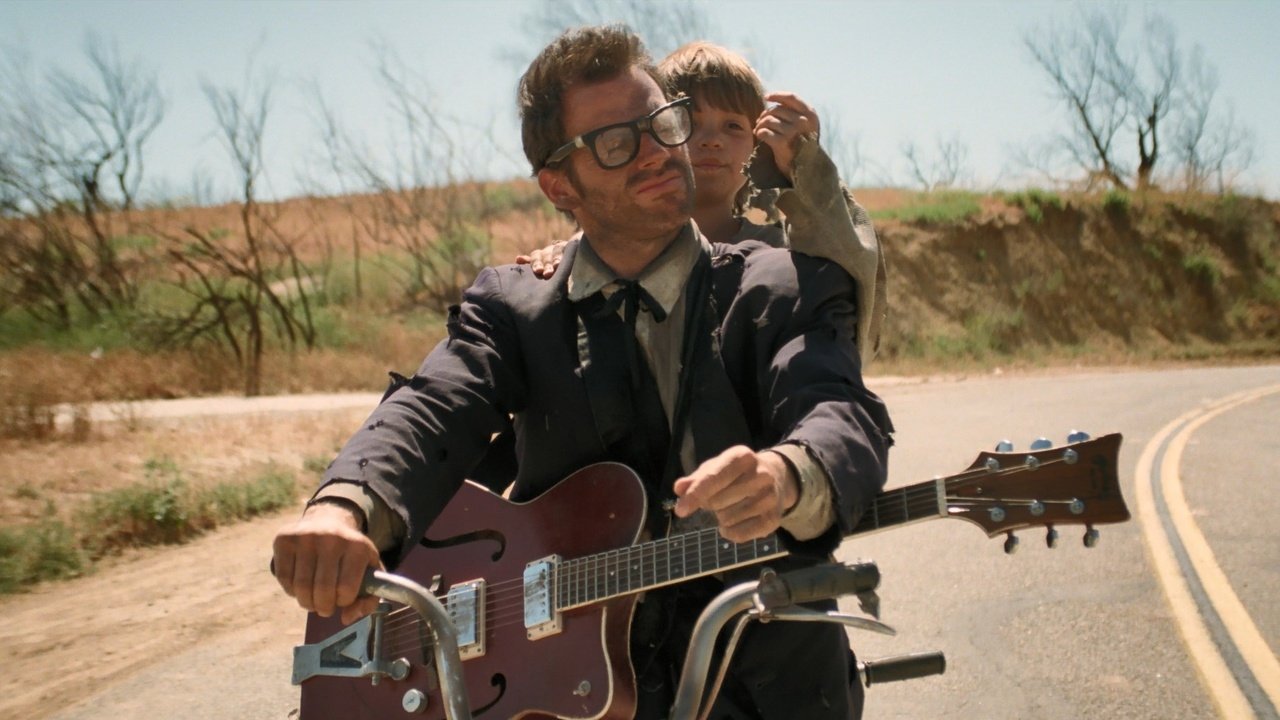
Let's talk about that action. Forget slick CGI – this was the era of grit and practical prowess. When Buddy faces off against the cadre of ridiculous-yet-menacing villains (like the Archer Spin Doctors or the Soviet remnants), the clangs of steel feel real. The swordplay isn't hyper-edited; you see the choreography, the near misses, the performers putting themselves out there. Remember how raw those sequences felt on a fuzzy CRT? There's a tactile quality to it, a weight that modern digital effects sometimes struggle to replicate. It’s not always perfect – the low budget occasionally shows – but the ambition and execution within those constraints are genuinely impressive. Filmed largely in Death Valley National Park, the desolate, sun-baked landscapes aren't just backdrops; they are the character of this broken America.
A Symphony of Surf Rock and Swordplay
You absolutely cannot discuss Six-String Samurai without mentioning the music. The soundtrack, largely provided by the Russian surf-rockabilly band The Red Elvises (who also appear in the film as one of the rival factions), is phenomenal. It's the pulse of the movie, driving the action, underscoring the loneliness of the wasteland, and perfectly capturing the film's quirky, anachronistic energy. It’s one of those soundtracks that instantly transports you back, inseparable from the visuals.
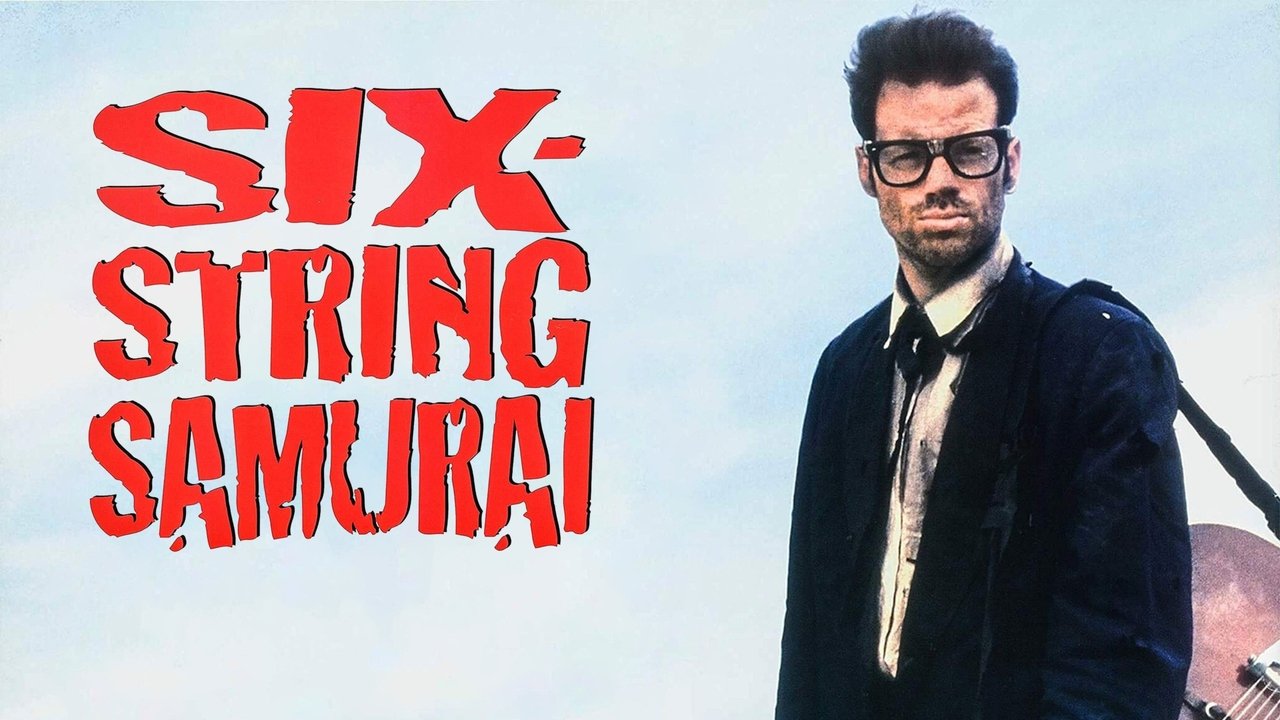
The film itself had a fascinating journey. Born from a student short film Mungia and Falcon made, it scraped together a reported budget of around $2 million – pocket change even back then. It became a sensation at the 1998 Slamdance Film Festival (Park City's rebellious indie cousin), winning awards for cinematography and editing, generating huge buzz. Sadly, distribution woes meant it never quite broke through commercially, becoming one of those beloved discoveries primarily made via video stores or late-night cable. I distinctly remember the worn rental copy at my local place, always seeming slightly out of place but irresistibly intriguing. It felt like our discovery, not something handed down by the multiplexes.
More Than Just Nostalgia Fodder?
Sure, the plot is essentially a linear journey – get to Vegas – punctuated by increasingly bizarre encounters. Some of the humor is definitely rooted in late-90s irony, and the pacing occasionally meanders like a tumbleweed. The supporting performances can be variable, though Falcon carries the film effortlessly with his minimalist cool and physical presence. Kim De Angelo also makes an impression as the imposing, silent figure of Death, trailing Buddy relentlessly.
But the sheer audacity of vision here is undeniable. Mungia crafts striking compositions, milking the desolate beauty of the locations and contrasting it with the bursts of surreal action and rock 'n' roll swagger. It’s a film overflowing with ideas, even if it doesn't always have the resources to fully realize them. It captures that pre-millennium indie spirit, a time when a truly unique, genre-bending vision could still emerge from the fringes and find its audience on VHS.
---

VHS Heaven Rating: 7.5 / 10
Justification: Six-String Samurai earns high marks for its incredible originality, unique genre fusion, killer soundtrack, and Jeffrey Falcon's iconic central performance. The practical action and stunning desolate visuals are major strengths, embodying late-90s indie ambition. It loses a few points for occasional pacing issues, some narrative thinness, and visible budget limitations that sometimes hamper its grand ideas, but its cult status is thoroughly deserved.
Final Word: This is pure, unadulterated VHS gold – a stylish, swaggering ode to rock 'n' roll, samurai flicks, and post-apocalyptic grit, crafted with palpable passion before digital smoothing ironed out all the glorious, weird edges. Crank up the Red Elvises and let Buddy shred.