Space Pirate Captain Harlock: Arcadia of My Youth
There's a certain kind of quiet grandeur, a melancholic romance woven into the very fabric of space opera created by the legendary Leiji Matsumoto. It’s a feeling distinct from the laser-blast excitement of Star Wars or the philosophical explorations of Star Trek. Instead, it's infused with a sense of honour, loss, and an almost elegiac beauty. If you stumbled upon Space Pirate Captain Harlock: Arcadia of My Youth (1982) in the sparsely populated anime section of your local video store back in the day, perhaps nestled between giant robot shows and magical girl tapes, you likely discovered something truly special – a gateway to a different kind of animated storytelling.
Forging a Legend in Occupied Territory
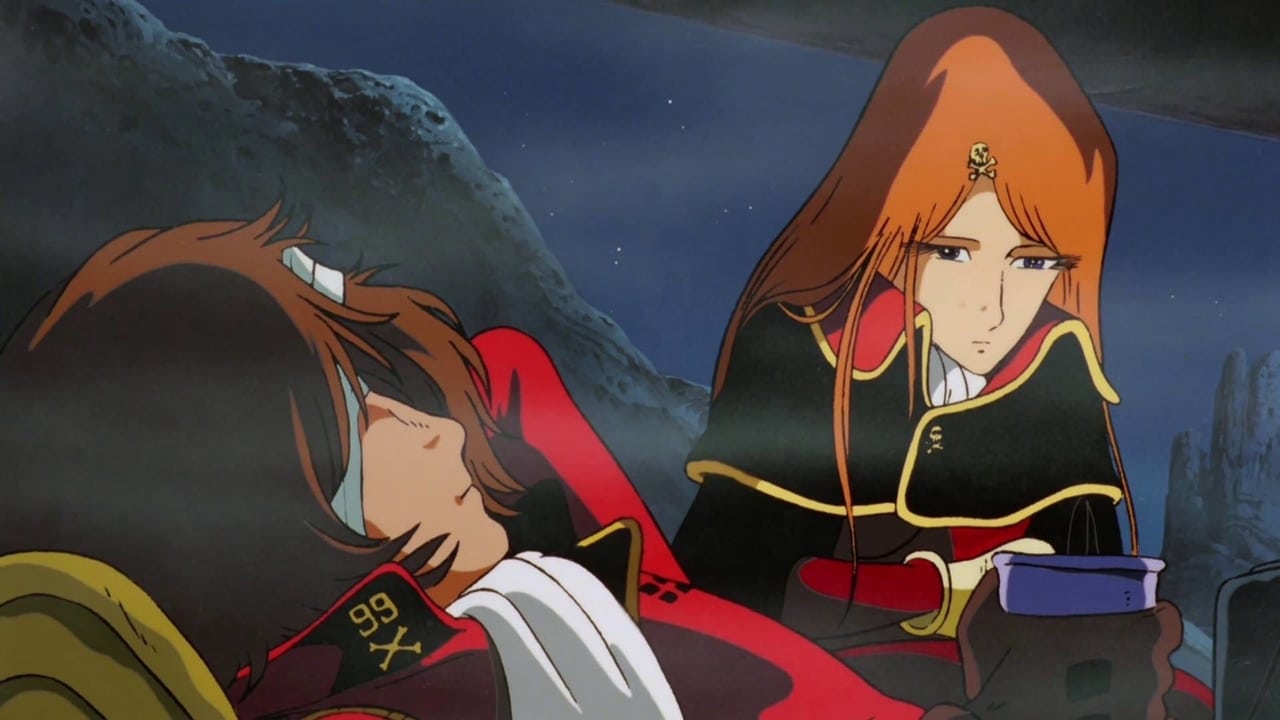
Directed by Tomoharu Katsumata, who helmed numerous classic Toei Animation projects including episodes of Mazinger Z and Devilman, Arcadia of My Youth isn't just another space adventure; it's an origin story soaked in disillusionment and simmering rebellion. Set against the backdrop of a defeated Earth occupied by the technologically superior Illumidus Empire, the film introduces us to Phantom F. Harlock, a decorated Solar Federation officer grappling with the humiliation of surrender and the crushing apathy of his superiors. This isn't the established, enigmatic space pirate many knew from the 1978 TV series; this is Harlock finding his cause, forging his identity in the crucible of occupation.
The narrative, penned by Matsumoto himself alongside Hiroyasu Yamaura (a writer with credits ranging from Lupin the 3rd to Kamen Rider), masterfully intertwines Harlock's burgeoning defiance with the fateful meeting of his lifelong friend and comrade, Tochiro Oyama. Played with gruff charm by the late, great Kei Tomiyama (voice of Susumu Kodai in Space Battleship Yamato), Tochiro is a brilliant engineer, equally ostracized and dreaming of freedom. Their bond, cemented by shared ideals and a mutual disdain for oppression, forms the emotional core of the film. We also meet the captivating Space Pirate Emeraldas, voiced with regal gravity by Reiko Tajima, another iconic figure from Matsumoto's interconnected "Leijiverse."
That Unmistakable Matsumoto Look and Feel
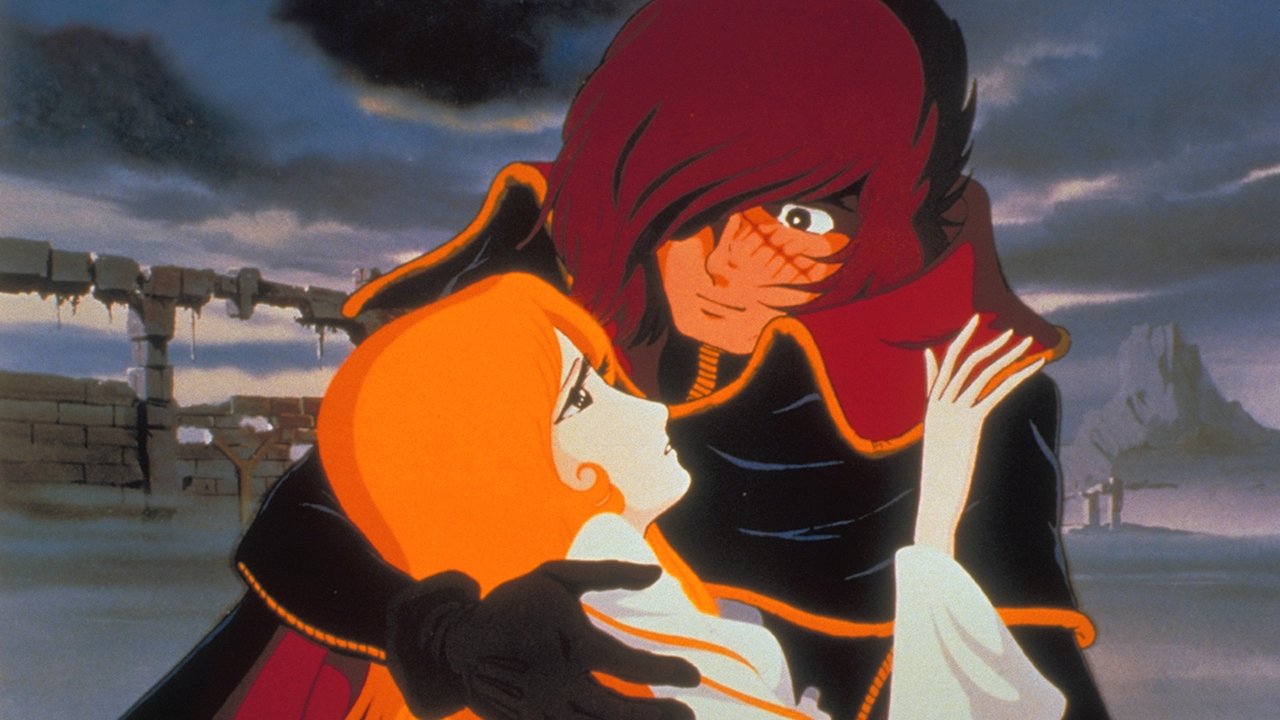
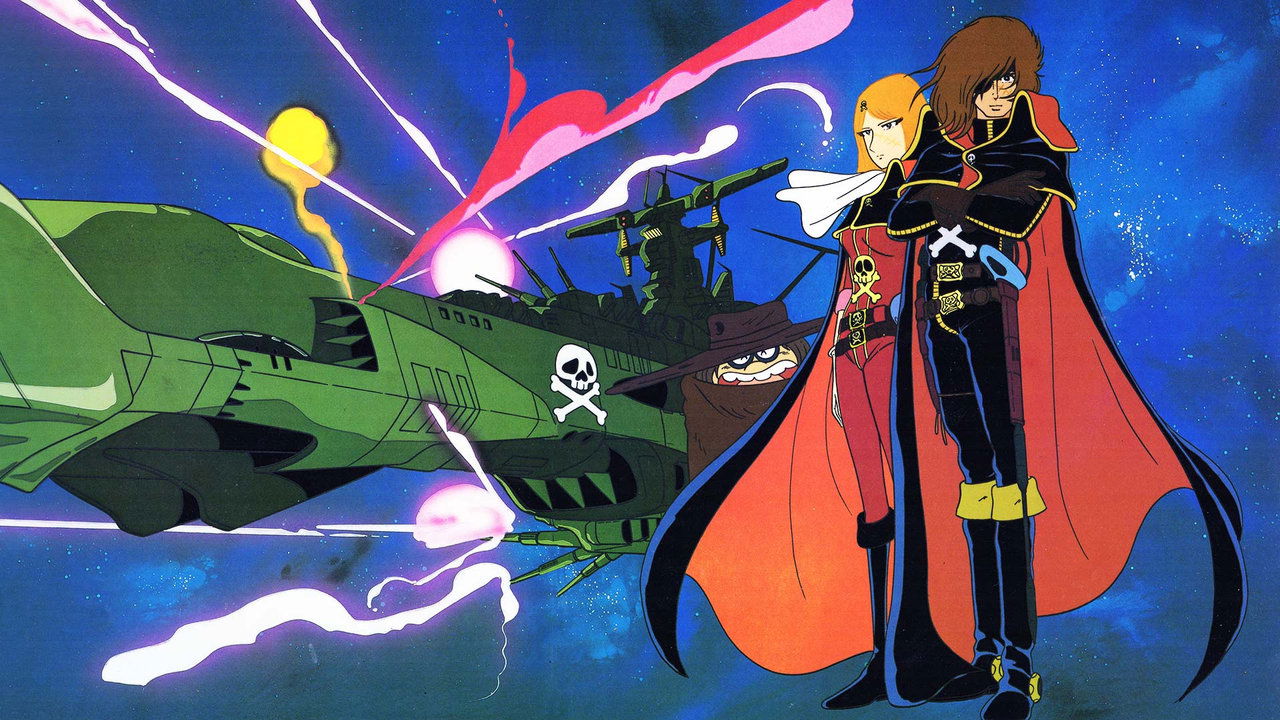
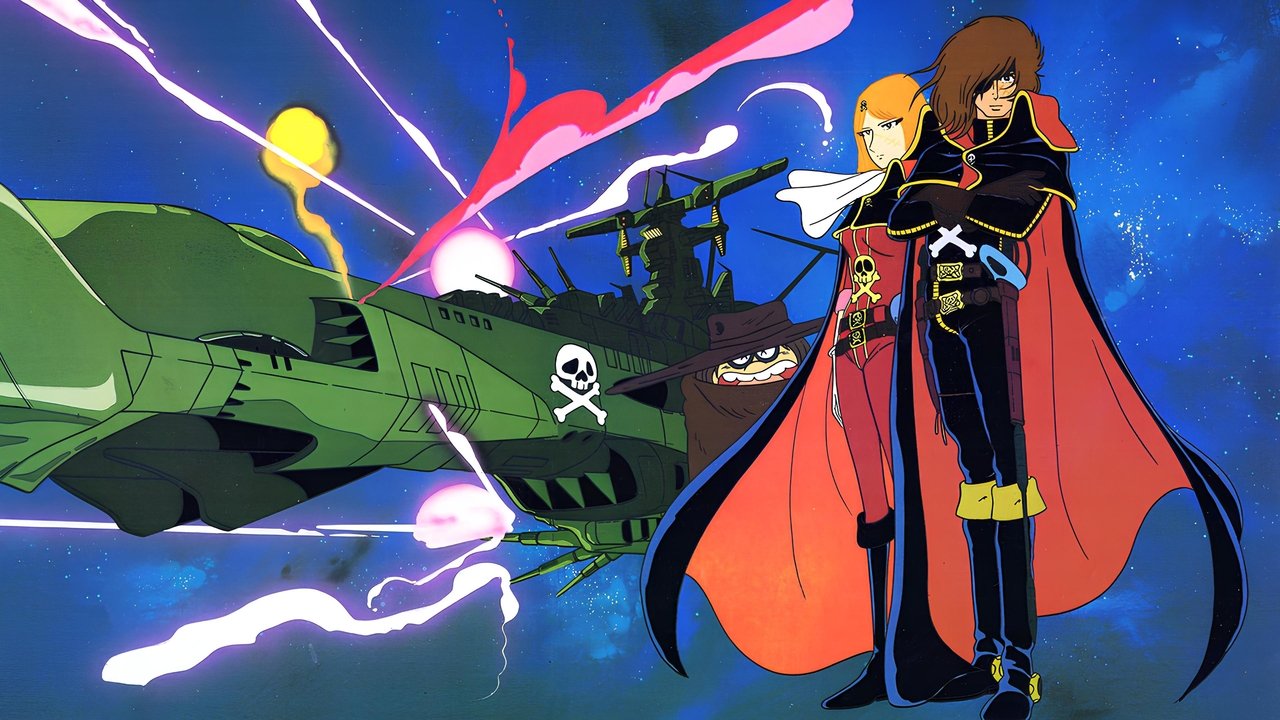
Visually, Arcadia of My Youth is pure, undiluted Leiji Matsumoto. His signature character designs – the impossibly slender figures, the expressive, often sorrowful eyes, the flowing hair – are instantly recognizable and possess a unique, romantic quality. Harlock, with his scarred face, eyepatch, and dramatic cape, is the archetypal tragic hero, a spacefaring ronin bound by a strict code of honour. The mechanical designs are equally distinctive, particularly the titular battleship, the Arcadia. Its skull-and-crossbones emblem isn't just decoration; it's a potent symbol of defiance against tyranny, a promise of freedom sailing through the sea of stars. Watching the Arcadia rise from the war-torn surface of Earth, ready to carve its own path, remains a truly stirring moment in anime history.
The animation, while undeniably a product of the early 80s, holds up remarkably well, especially in its depiction of space battles and the intricate details of the ships. There's a weight and grandeur to the visuals, enhanced by Toshiyuki Kimori's powerful, often melancholic score. It perfectly complements the film’s themes of sacrifice, lost causes, and the enduring search for one's own "Arcadia"—that ideal place or state of being worth fighting, and even dying, for.
Finding Your Crew, Finding Your Ship
What truly resonates, decades later, is the film's unwavering commitment to its themes. Harlock's journey isn't about simple heroism; it's about choosing integrity over compromise, freedom over subjugation, even when the odds seem insurmountable. Makio Inoue's voice performance as Harlock is legendary – deep, resolute, carrying the weight of past sorrows and future burdens. He embodies the captain's stoic determination perfectly. The interactions between Harlock, Tochiro, Emeraldas, and the gruff alien Zoll of Tokarga build a sense of camaraderie born from shared hardship.
Retro Fun Facts & Leijiverse Connections
- Prequel Power: While serving as an origin, Arcadia of My Youth actually presents a slightly different continuity than the original 1978 TV series. It directly leads into the 1982 TV series Endless Orbit SSX, which follows the film's timeline. Navigating the various Harlock continuities can be part of the fun for dedicated fans!
- Ancestral Echoes: The film incorporates flashbacks to Harlock and Tochiro's ancestors during World War II, pilots who shared a similar bond and faced their own impossible choices, adding a layer of historical resonance and destiny to their descendants' struggle. This was a recurring theme in Matsumoto's work, reflecting his own wartime experiences and fascination with aviation history.
- A Modest Success: While not a massive box office smash, the film was well-regarded and solidified Harlock's place as a major anime icon. Its later availability on VHS, often through dedicated (if sometimes questionably dubbed) distributors like Celebrity Home Entertainment's "Just For Kids" label (despite the mature themes!) or Harmony Gold, introduced Harlock's brand of space opera to a generation of Western fans.
- The Name Game: The Illumidus are known as the Humankind Empire in some translations/versions, adding another layer to the potential confusion when revisiting these classics!
A Melancholy Masterpiece of Space Opera
Arcadia of My Youth isn't always fast-paced; it takes its time establishing the mood, exploring the characters' motivations, and building its melancholic world. Some might find the pacing deliberate, especially compared to modern action anime. But its strength lies in its atmosphere, its thematic depth, and its unforgettable characters. It’s a film that treats its audience with intelligence, offering a more mature and philosophical take on space adventure than was common at the time, particularly in animation readily available in the West. It explores the cost of freedom and the burden of leadership with a poignancy that stays with you.
For fans of classic anime, Leiji Matsumoto's distinct artistry, or anyone who appreciates a space opera with soul, Arcadia of My Youth is essential viewing. It’s a beautiful, somber reminder of a time when anime was venturing into more complex narrative territory, delivering stories that resonated with depth and emotion.
Rating: 8.5/10
This rating reflects the film's powerful atmosphere, iconic character introductions, stunning Matsumoto design work, and thematic richness. While the pacing might feel slow to some modern viewers and its place in the Harlock continuity can be slightly confusing, its artistic merit and emotional impact are undeniable. It's a cornerstone of 80s anime features and a moving exploration of finding hope and purpose against overwhelming odds.
So, dust off that metaphorical tape – Arcadia of My Youth is more than just a space pirate story; it’s a timeless ode to the rebels, the dreamers, and those who dare to sail against the tide in search of their own patch of freedom among the stars.