The air in Hurlyburly hangs thick and heavy, like the stale cigarette smoke and desperation clinging to the Hollywood Hills house where much of its claustrophobic drama unfolds. Released in 1998, it wasn't exactly the feel-good hit of the year, arriving near the tail end of the VHS era like a final, ragged exhale of 90s cynicism. Watching it again now, it feels less like a time capsule and more like plunging back into a very specific kind of existential whirlpool, one fueled by cocaine, ambition soured into bile, and the corrosive loneliness that can fester even under the California sun. It's a film that doesn't ask for your affection, only your attention, demanding you bear witness to the spiritual decay of its characters.
Hollywood Wasteland
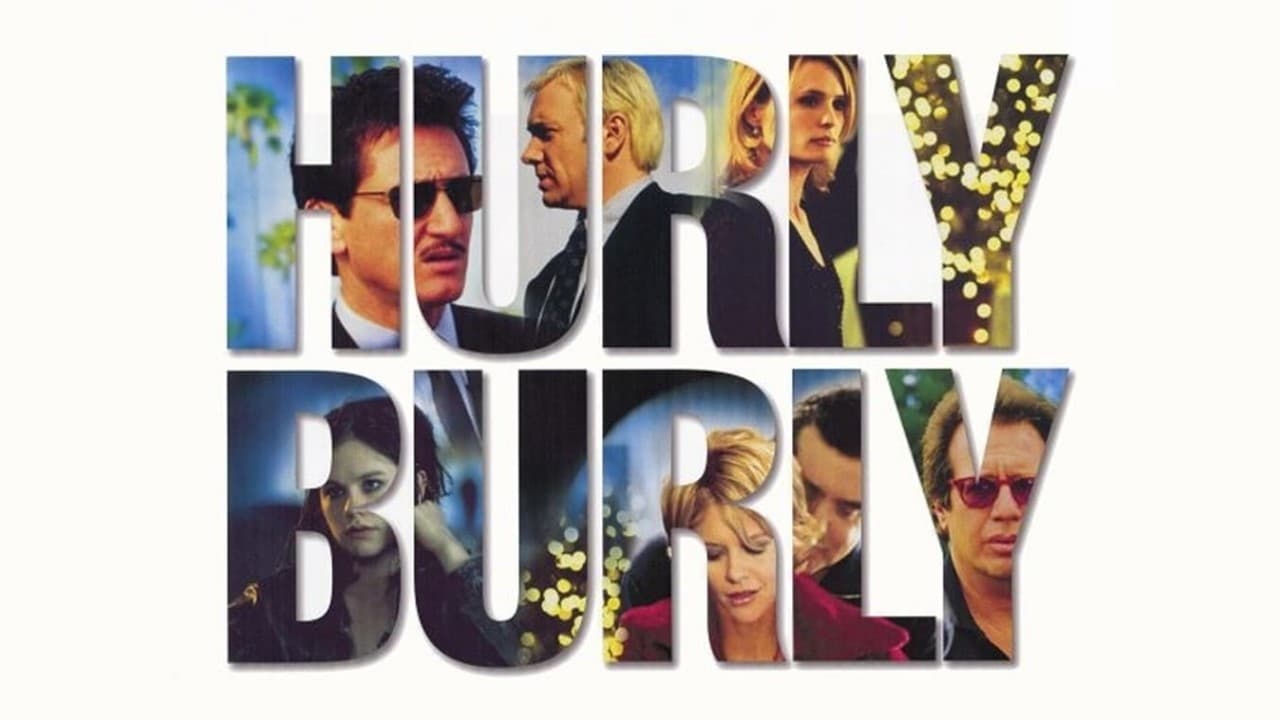
Adapted by David Rabe from his own acclaimed, talk-heavy 1984 play, Hurlyburly orbits around Eddie (Sean Penn) and Mickey (Kevin Spacey), two casting directors navigating the treacherous, ego-driven landscape of the film industry. Their shared house becomes a revolving door for other lost souls: the volatile, aspiring actor Phil (Chazz Palminteri), the pragmatic but weary Artie (Garry Shandling, in a chillingly understated performance far removed from his neurotic TV persona), and the women who drift into their orbit, often treated as little more than distractions or collateral damage – Donna (Anna Paquin), a young runaway offered up as a grotesque "gift"; Darlene (Robin Wright), a dancer searching for connection; and Bonnie (Meg Ryan, bravely playing against type), a dancer whose toughness masks deep vulnerability. Director Anthony Drazan, who had previously helmed the underrated teen drama Imaginary Crimes (1994), faced the considerable challenge of translating Rabe’s dense, often profane, and theatrical dialogue into something cinematic.
Raw Nerves and Shattered Masks

Where Hurlyburly truly ignites, and perhaps justifies its demanding nature, is in the performances. This is an actors' showcase, a brutal symphony of exposed nerves. Sean Penn, as Eddie, delivers a performance of staggering intensity. He’s a man dissolving in real-time, his paranoia fueled by mountains of cocaine, his philosophical ramblings curdling into misogynistic rants. It’s not a likable performance, nor is it meant to be, but it feels terrifyingly authentic – a portrait of self-destruction that’s hard to look away from. Penn had actually played this role on stage years earlier in Los Angeles, bringing a lived-in quality to Eddie's torment.
Counterbalancing Penn’s raw fury is Kevin Spacey’s Mickey. Cool, detached, and deeply cynical, Mickey observes the chaos with a calculating eye, his pronouncements often laced with a casual cruelty that’s arguably more chilling than Eddie’s overt volatility. Watching them spar, circle each other, and occasionally connect in moments of shared desperation is the film's dark heart. The supporting cast is equally committed. Palminteri, known for A Bronx Tale (1993), brings a dangerous physical energy to Phil, a man perpetually on the verge of exploding. Wright (then married to Penn) finds the wounded humanity beneath Darlene's guarded exterior, while Ryan sheds her romantic-comedy image to portray Bonnie’s weary resilience. And Anna Paquin, fresh off her Oscar win for The Piano (1993), is heartbreaking as the tragically exploited Donna.
From Stage to Screen: A Bruising Transition
The film’s stage origins are palpable. Rabe’s dialogue, while often brilliant and incisive, can feel overwhelming on screen. Long, winding conversations dominate, exploring themes of toxic masculinity, existential dread, the commodification of people in Hollywood, and the desperate, often pathetic, search for meaning in a seemingly meaningless world. Drazan attempts to open things up visually – glimpses of LA nightlife, drives through canyons – but the core remains intensely focused on these characters tearing each other, and themselves, apart within confined spaces. Reportedly, significant portions of the play's dialogue were trimmed for the film adaptation, yet it still retains that verbose, confrontational stage quality. This likely contributed to its polarizing reception; critics lauded the acting but were divided on the film's overall effectiveness and relentless bleakness. It struggled significantly at the box office, grossing under $2 million against a budget estimated around $15 million, proving too abrasive for mainstream audiences seeking lighter fare in the late 90s.
A Difficult Reflection
Does Hurlyburly hold up? It depends on what you seek from a film experience. If you're looking for easy entertainment or nostalgic comfort, this isn't the tape to pull off the shelf. Its depiction of male behavior is often ugly, its view of relationships cynical, and its atmosphere suffocating. I remember first renting this, likely drawn by the incredible cast list on the VHS box, and feeling somewhat shell-shocked afterwards. It wasn’t fun, but it was undeniably powerful. There’s a certain grim fascination in watching these incredibly talented actors commit so fully to such damaged characters. You don't root for them, but you can't entirely dismiss their pain, however self-inflicted it may be. It forces uncomfortable questions: about the nature of connection, the illusions we chase, and the ways we wound each other in our search for... something. Anything.
Rating and Final Thoughts
Rating: 7/10
This rating reflects the film's undeniable strengths – primarily the towering performances and the unflinching honesty of Rabe's writing – balanced against its challenging nature and occasional stagey feel. The acting ensemble alone makes it worth seeing for serious cinephiles, delivering raw, committed work across the board. However, its unrelenting bleakness and dialogue-heavy structure prevent it from being an easy recommendation. It’s a potent, if punishing, piece of late-90s drama that sticks with you, leaving a bitter taste and a lingering sense of unease. Hurlyburly remains a stark reminder that sometimes the brightest spotlight casts the darkest, most unsettling shadows.