There's a certain chill that lingers long after the credits roll on The Last Supper, a discomfort born not from gore or jump scares, but from the treacherous landscape of moral certainty. Released in 1995, it arrived like a dinner guest with deeply unsettling questions tucked beneath a deceptively simple premise, a perfect artifact for late-night VHS contemplation after the rental store lights dimmed. What happens when idealism curdles into extremism? And where, precisely, is the line drawn between righteous conviction and self-appointed executioner?
An Invitation to Darkness
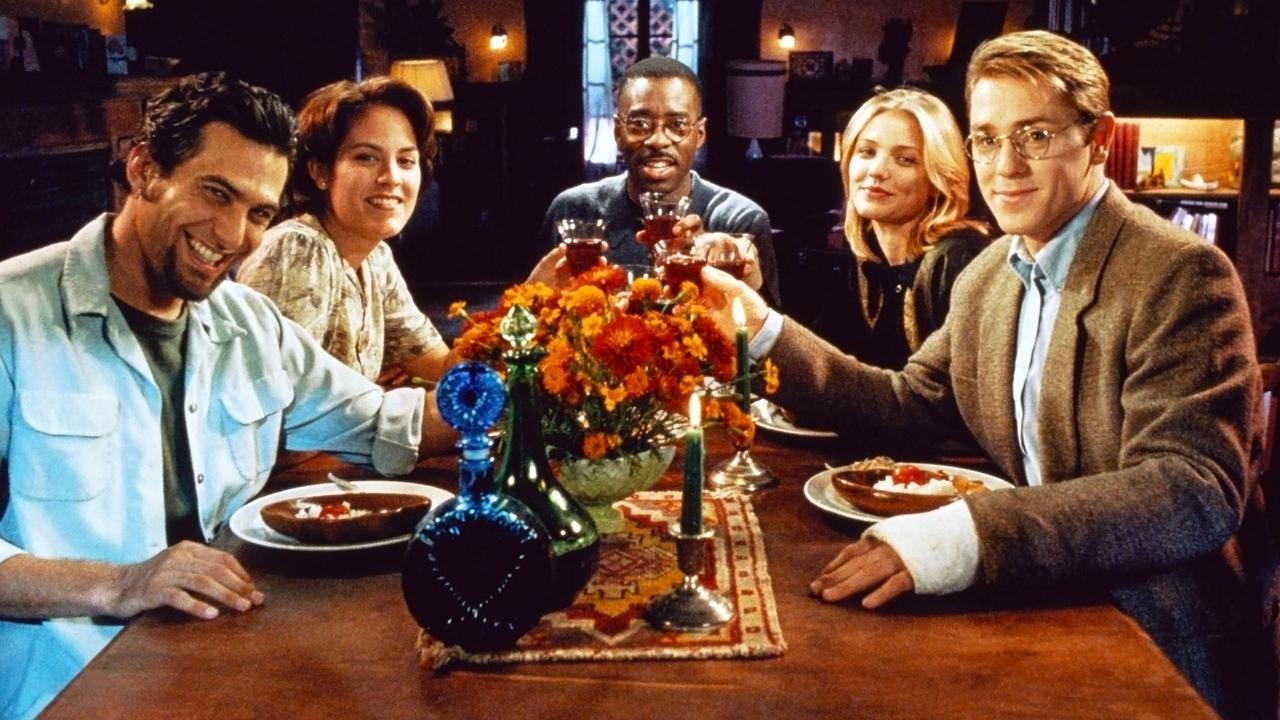
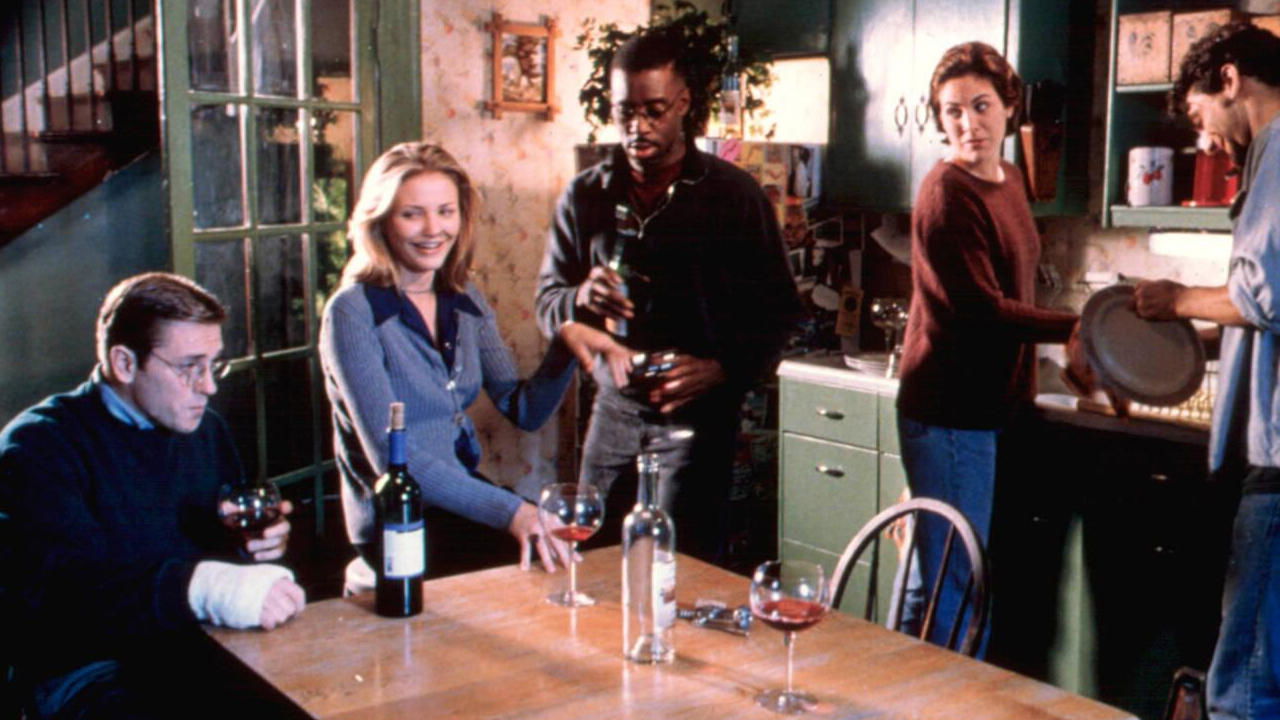
The setup, penned by Dan Rosen (reportedly as his MFA thesis screenplay at USC, a fascinating origin for such a dark tale), feels almost like a stage play. Five liberal grad students in Iowa – Jude (Cameron Diaz, in one of her early roles following her breakout in The Mask (1994)), Pete (Ron Eldard, known later for Black Hawk Down (2001)), Paulie (Annabeth Gish, who we knew from Mystic Pizza (1988)), Marc (Jonathan Penner), and Luke (Courtney B. Vance) – share a house, meals, and a passionate belief in their own progressive worldview. Their cozy intellectual bubble is violently popped when a dinner guest, a Desert Storm veteran named Zack (Bill Paxton, delivering a perfectly pitched cameo of virulent hatred), threatens one of them after spewing racist and anti-Semitic bile. In a scuffle, he's accidentally killed. The ensuing panic gives way to a chillingly rationalized decision: what if they could rid the world of society's "bad apples," one dinner party at a time?
This sparks their descent. They begin inviting conservative figures whose views they deem dangerous – a homophobic reverend, a misogynistic academic, an anti-environmentalist – drugging their wine, and offering them a final chance to recant. If they don't? A neat burial in the rapidly expanding tomato garden out back. It’s a concept both audacious and deeply disturbing, playing on the political polarization that felt particularly sharp even in the mid-90s. Doesn't the film tap into that unsettling fantasy of simply removing those whose opinions seem irredeemably toxic?
The Weight of Conviction
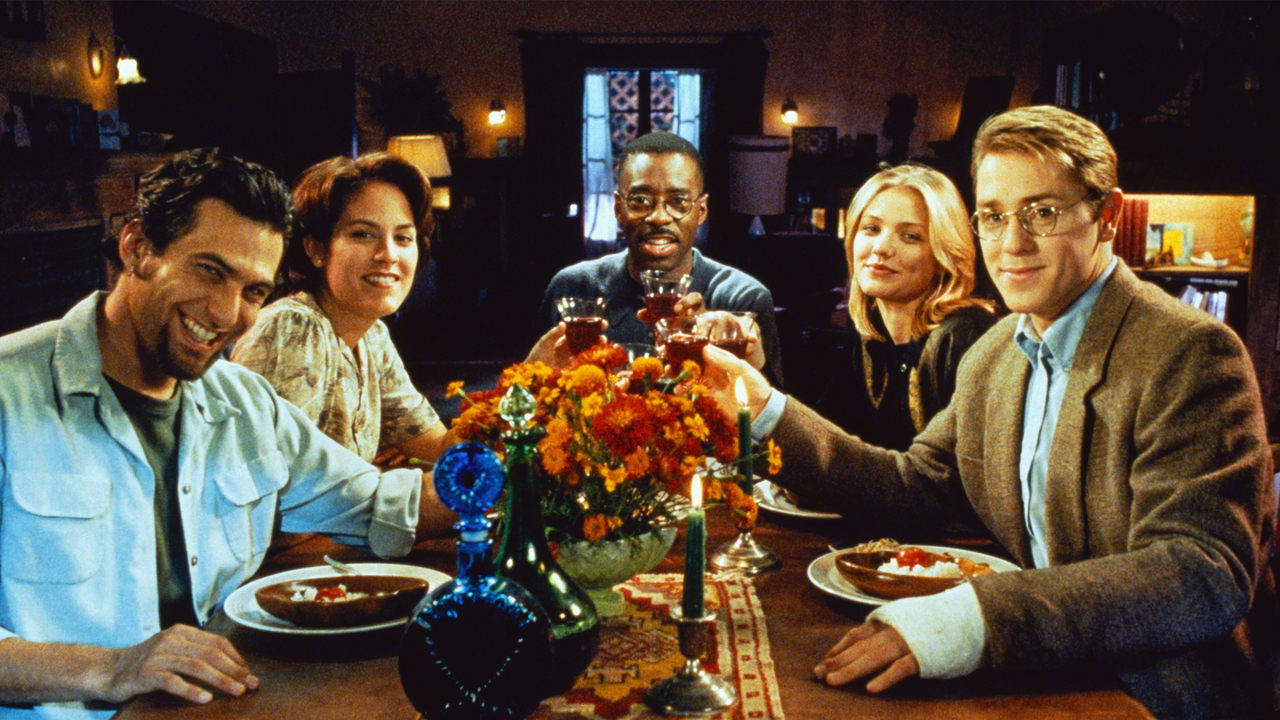
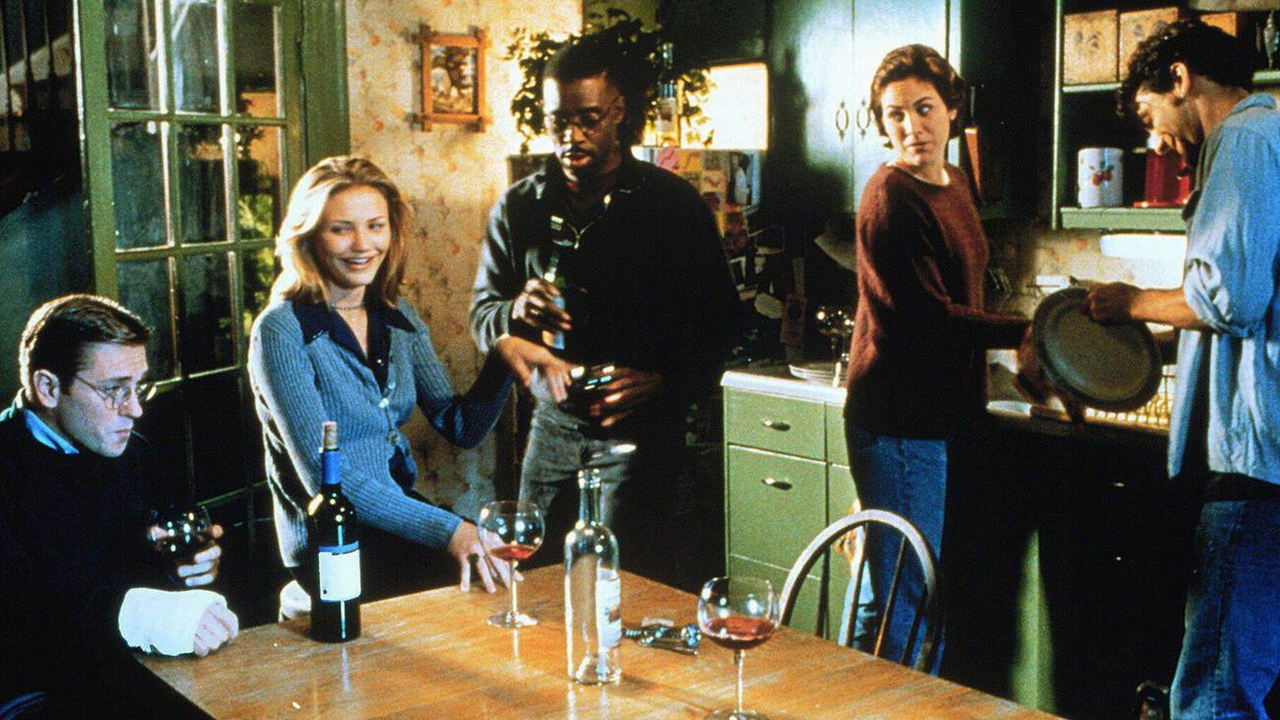
What elevates The Last Supper beyond a mere "issue" film is the commitment of its ensemble cast and the steady hand of director Stacy Title in her feature debut. Filmed primarily within the confines of the students' house – a practical necessity given its reported $1 million budget, but also a masterstroke that enhances the growing claustrophobia – the film hinges on the shifting dynamics within the group. We see their initial righteous fervor slowly eroded by paranoia, guilt, and infighting.
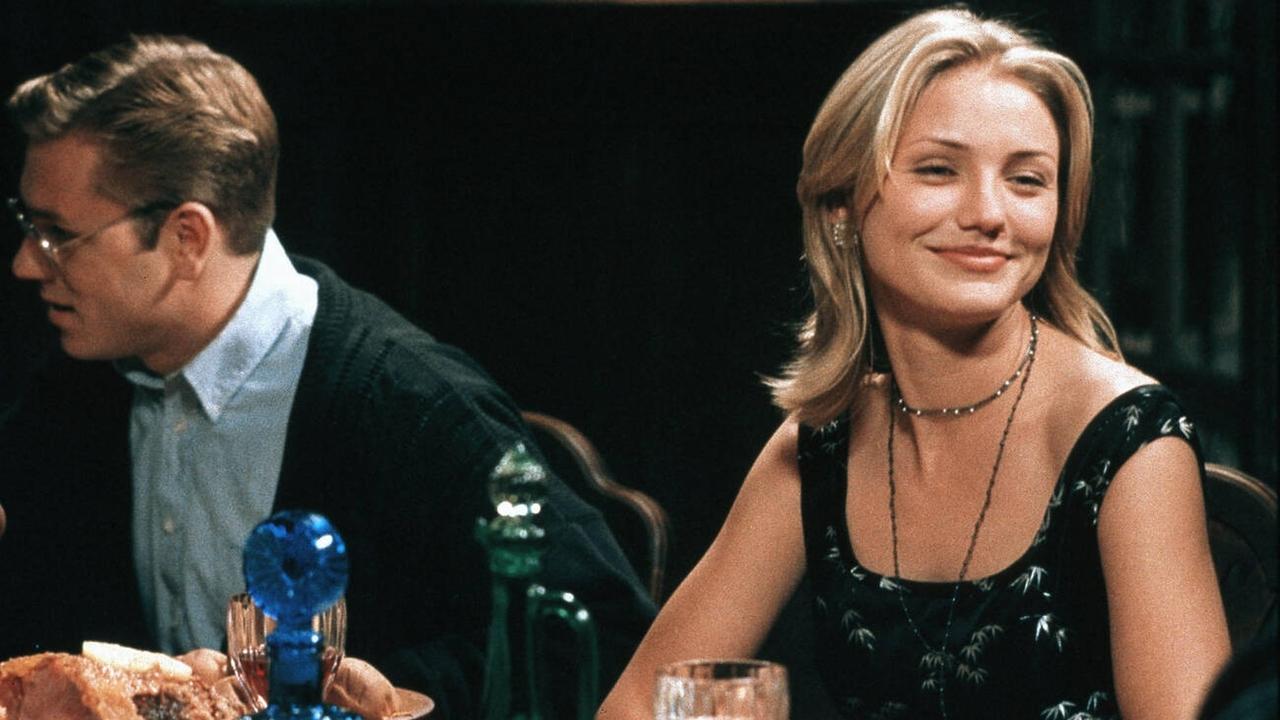
Cameron Diaz shows early flashes of the star power she'd soon command, portraying Jude's journey from enthusiastic participant to deeply conflicted soul. Ron Eldard captures the pragmatic darkness simmering beneath Pete's surface, while Annabeth Gish brings a fragile sensitivity to Paulie. Jonathan Penner and Courtney B. Vance round out the core group, each wrestling with the moral implications in distinct ways. Their interactions feel authentic; the initial camaraderie fraying under the immense psychological pressure of their lethal project is palpable. You can almost feel the air thicken with each successive dinner.
The film also benefits from a parade of memorable "guest stars" embodying various societal viewpoints, culminating in a truly unsettling final act featuring conservative pundit Norman Arbuthnot, played with unnerving charisma by Ron Perlman (Hellboy (2004)). His presence throws the students' entire worldview into sharp relief, forcing a confrontation that is both intellectual and terrifyingly final.
A Taste That Lingers
Make no mistake, The Last Supper isn't perfect. The dialogue occasionally veers into the didactic, spelling out the arguments a little too clearly. Some of the invited guests feel more like caricatures than fully fleshed-out antagonists, serving primarily as ideological punching bags before their inevitable fate. Yet, these flaws almost feel part of its scrappy, indie charm – a hallmark of many thoughtful, low-budget films from the era that prioritized ideas over polish.
One fascinating tidbit is how the film garnered buzz at the Sundance Film Festival but struggled to find wide distribution, perhaps reflecting discomfort with its politically charged, morally ambiguous narrative. It found its audience later, on home video, becoming something of a cult classic passed around among friends – the kind of movie you’d rent on a whim and then spend hours debating afterwards. I recall finding the tape tucked away in the "Drama/Thriller" section of my local video store, the simple cover art giving little hint of the provocative journey within.
The film doesn't offer easy answers. It presents the slippery slope argument with stark clarity: how actions born from seemingly noble intentions can lead to monstrous outcomes. It forces us to confront the uncomfortable notion that the line between "us" and "them" can blur dangerously when ideology trumps empathy. What truly stays with you is the chilling effectiveness of its central conceit and the questions it leaves simmering in its wake.
Rating: 7/10
The Last Supper earns its 7 primarily for its provocative and daring central premise, the strong ensemble acting that sells the group's descent, and its effectiveness as a claustrophobic moral thriller despite budgetary constraints. It’s a film that sparks debate and lingers in the mind, capturing a specific kind of 90s indie spirit – intelligent, confrontational, and unafraid to explore uncomfortable truths. While sometimes heavy-handed, its core dilemma remains potent.
It's a potent reminder from the VHS vaults: sometimes the most disturbing horrors aren't supernatural, but homegrown, sprouting right there in your own backyard garden, fertilized by conviction.