The number itself hits you first, stark and cold on the screen: 187. California Penal Code for homicide. Before a single character speaks, One Eight Seven (1997) signals that this isn't going to be another uplifting tale of a miracle worker teacher turning troubled teens around with inspirational speeches and a catchy soundtrack. No, this film plunges us headfirst into the deep end of systemic failure, burnout, and the unsettling question of what happens when a good man is pushed past his breaking point. It’s a film that stuck with me long after the VCR spit out the tape back in the day, and revisiting it now reveals a raw, uncomfortable power that hasn’t faded.

### A Teacher's Scars
The opening minutes are brutal. We meet Trevor Garfield, portrayed with simmering intensity by Samuel L. Jackson, a dedicated New York science teacher. He tries to connect, to teach, but the threat of violence hangs heavy in the air. When that threat explodes into reality, leaving him fighting for his life after a savage student attack, the film sets its grim trajectory. The physical scars heal, but the psychological ones fester. Garfield’s move to Los Angeles, taking a substitute position, isn't just a change of scenery; it’s a desperate grasp for a normalcy that the education system, at least as depicted here, seems incapable of providing.
What makes One Eight Seven feel particularly potent, even years later, is its grounding in harsh reality. The screenplay was penned by Scott Yagemann, who drew directly from his own seven years working as a substitute teacher in the very kind of volatile Los Angeles schools depicted. This isn't sensationalism for its own sake; it feels disturbingly authentic, capturing the daily siege mentality, the administrative indifference, and the soul-crushing weight carried by educators facing impossible circumstances. You can almost feel the chalk dust and desperation clinging to the screen.

### Jackson at Boiling Point
Samuel L. Jackson, then riding high on the wave of Pulp Fiction (1994), is the undeniable anchor. He brings a coiled, dangerous energy to Garfield. It's not just anger; it's a complex brew of trauma, disillusionment, and a terrifyingly logical slide towards vigilantism. Watch his eyes – the way hope flickers and dies, replaced by a calculated coldness. He doesn't chew the scenery; he internalizes the pressure until it threatens to crack him open. It's a performance that avoids easy answers, forcing us to confront the character's increasingly dark choices. Is he snapping, or is he adapting in the only way he knows how to survive? Jackson makes us believe in Garfield's pain, even as his actions become morally ambiguous.
Supporting players like John Heard, as the cynical, seen-it-all veteran teacher Dave Childress, and Kelly Rowan, as the well-meaning but somewhat naive colleague Ellen Henry, provide essential counterpoints. Heard, especially, embodies the weary resignation that Garfield initially fights against, offering a grim vision of what long-term survival in this environment looks like. Their interactions highlight the isolation and the different coping mechanisms – none of them particularly healthy – that emerge in such a broken system.

### Beyond the Chalkboard
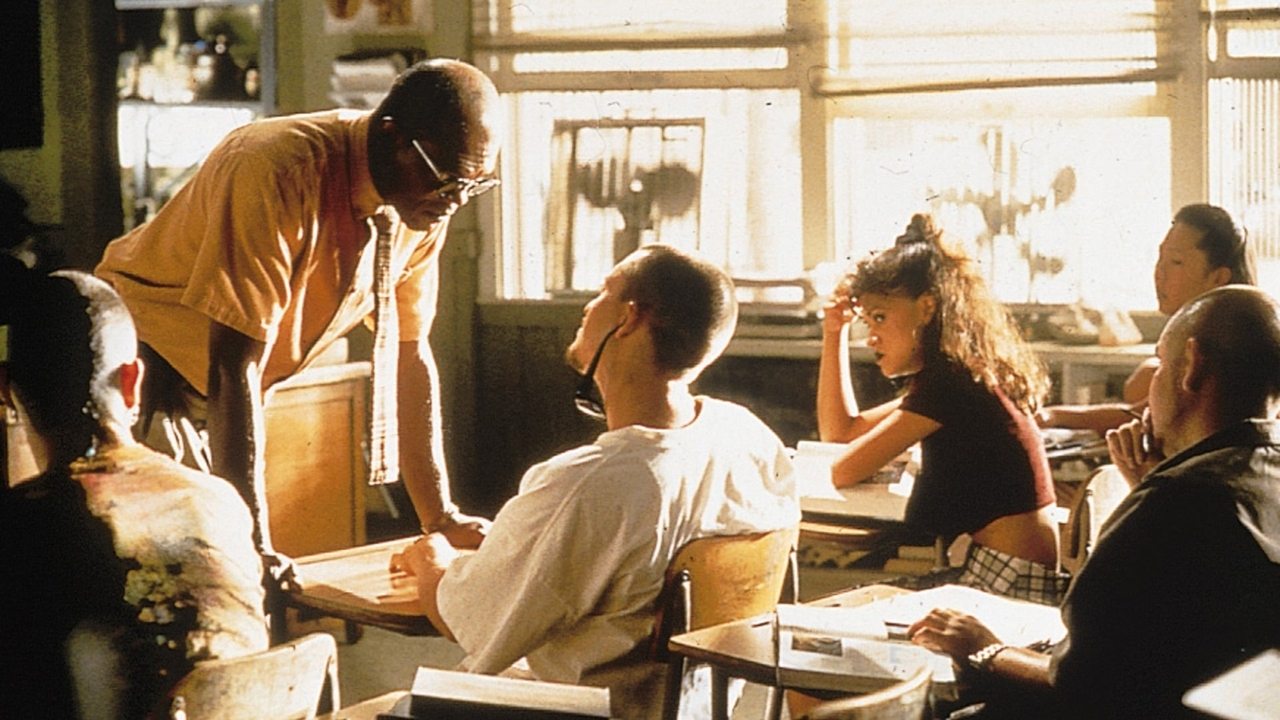
Director Kevin Reynolds, perhaps seeking a more intimate project after the notorious scale and difficulties of Waterworld (1995), crafts a film that feels claustrophobic and tense. He doesn’t shy away from the ugliness, using the sprawling, often sun-bleached yet decaying Los Angeles school locations (like Van Nuys High School) to underscore the feeling of being trapped. The film doesn't offer easy outs or moments of manufactured triumph. Instead, Reynolds leans into the grit, creating an atmosphere thick with unspoken threats and simmering resentment. The visual style often feels stripped down, functional, mirroring the bleakness of Garfield's new reality.
It's interesting to remember how One Eight Seven landed in the 90s landscape of teacher dramas. It stood in stark contrast to more hopeful films like Dangerous Minds (1995). Its unflinching portrayal of violence and systemic decay, coupled with its dark, ambiguous ending, certainly provoked discussion and likely alienated viewers seeking inspiration. Critically, it received a mixed reception, praised for Jackson's performance but sometimes criticized for perceived cynicism or one-sidedness. Yet, its refusal to offer simple solutions is precisely what makes it linger. It dared to suggest that some problems might be too broken to fix, a deeply uncomfortable thought then and now. The relatively modest budget (reportedly around $23 million) likely allowed Reynolds and Yagemann the freedom to maintain this uncompromising vision, even if it resulted in a modest box office return (around $5.7 million domestically).
### The Lingering Echo
One Eight Seven isn't a feel-good movie. It’s not designed to be. It’s a troubling, provocative film that forces you to consider the immense pressures placed on educators in underserved communities and the potential human cost when systems fail. Does Garfield's descent into violence offer any real solution, or is it merely a symptom of a larger societal illness? The film leaves that question hanging, heavy and unanswered.
The power of One Eight Seven lies in its refusal to flinch. It presents a nightmare scenario drawn from real experience, powered by a commanding central performance. It’s a film that asks difficult questions and has the courage not to provide comforting answers.

Rating: 7.5 / 10
Justification: While sometimes heavy-handed and undeniably bleak, One Eight Seven is anchored by a phenomenal performance from Samuel L. Jackson and benefits from the unsettling authenticity of its source material. Its uncompromising tone and challenging themes make it a standout, if difficult, entry in the 90s teacher drama subgenre, asking questions about desperation and morality that still resonate.
Final Thought: It’s the kind of film that doesn't easily fade after the credits roll, leaving you pondering the shadows that linger at the edges of even the most dedicated professions. What really happens when the bell rings, and the system keeps failing?