There’s a certain kind of film discovery that sticks with you, especially from the video store days. Not the big, shiny blockbuster you rented with your friends, but the slightly worn tape with the intriguing cover, maybe tucked away in the drama or thriller section, promising something... different. For me, and I suspect for many others browsing those aisles in the early 90s, Guncrazy (1992) was one of those discoveries. It didn’t arrive with fanfare; it felt almost smuggled onto the shelves, radiating a raw, desperate energy that stood in stark contrast to slicker Hollywood fare.

A Different Kind of Dangerous Love
At its heart, Guncrazy spins a tale as old as celluloid: doomed lovers on the run. But forget the romanticized glamour of Bonnie and Clyde. This is a story scraped from the bottom of the barrel, set against a backdrop of sun-bleached trailer parks, dead-end jobs, and simmering abuse. We meet Anita Minteer (Drew Barrymore), a teenage girl corresponding with inmates as part of a school project. When prisoner Howard Hickok (James LeGros) responds, mistaking her intentions, his release sets them on a collision course fueled by shared damage, alienation, and a disturbingly mutual fascination with firearms. It's less a whirlwind romance, more a slow slide into an abyss they mistake for freedom.
The Revelation of Drew Barrymore

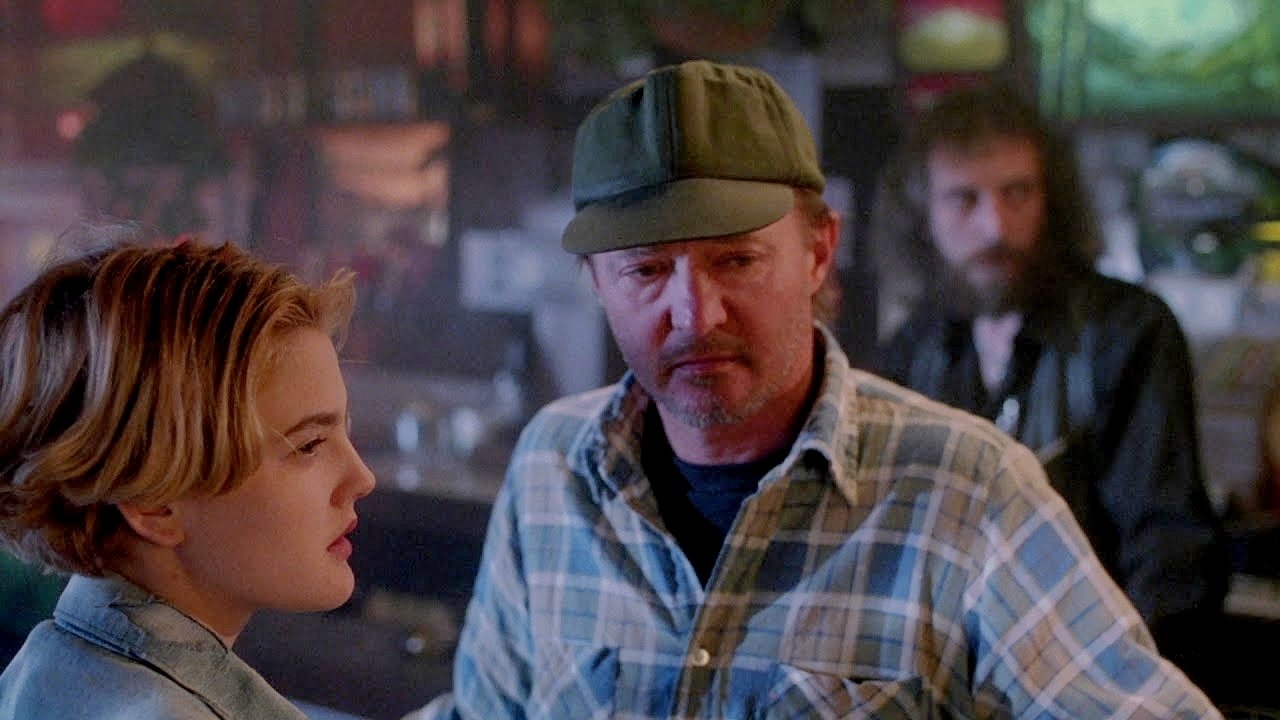
Let's be honest, the reason Guncrazy still resonates, the reason it clawed its way from a modest made-for-Showtime production (premiering there before gaining indie credibility) into the cult film consciousness, is Drew Barrymore. This wasn't the bubbly child star of E.T. the Extra-Terrestrial (1982) or the troubled teen struggling in the public eye. This was something else entirely. At just 17, Barrymore delivered a performance of startling vulnerability and ferocious intensity. Her Anita is damaged, yes, but also fiercely intelligent, manipulative, and heartbreakingly naive all at once. She conveys the character's profound loneliness and the desperate hunger for connection – a connection she tragically finds through violence. It’s a performance devoid of vanity, raw and unflinching, earning her a Golden Globe nomination and signaling a powerful return to serious acting. I remember watching it back then and feeling genuinely stunned; it felt like witnessing an artist truly finding her voice.
Partners in Crime and Desperation
Opposite Barrymore, James LeGros (who many might recognize from Point Break (1991) or later indie fare) holds his own as the equally wounded Howard. He’s not a charismatic outlaw; he’s awkward, emotionally stunted, a product of the prison system who finds a dangerous mirror in Anita. Their chemistry isn't explosive passion; it's the desperate clinging of two drowning souls who happen to be holding loaded weapons. And adding a layer of pure, distilled menace is the brief but unforgettable appearance by Billy Drago as Anita's predatory stepfather. Drago, a master of playing unsettling villains (like Frank Nitti in The Untouchables (1987)), needed only a few scenes to cast a long, chilling shadow over the narrative, providing a grim context for Anita's desperation.


Grit Forged by Constraint
Director Tamra Davis, who cut her teeth directing music videos for bands like Sonic Youth and the Beastie Boys, brings a fittingly unvarnished aesthetic to the film. Working with a reported budget under $1 million, Guncrazy embraces its limitations. There's no gloss here, just the harsh light of day on peeling paint and dusty roads. Davis doesn't shy away from the ugliness – of the poverty, the abuse, the casual cruelty – but she also finds moments of strange, unsettling beauty in the desolation. The film feels grounded, immediate, pulling you into Anita and Howard's increasingly claustrophobic world. This wasn't a story that needed sweeping crane shots; it needed intimacy and immediacy, which Davis delivered. The script, penned by Matthew Bright (known to some cult music fans for his ties to Oingo Boingo), drew inspiration from a disturbing real-life case, lending the narrative an uncomfortable edge of plausibility. Bright would later revisit similar themes of dark Americana with his even more controversial film Freeway (1996).
Echoes in the Dust
Watching Guncrazy today, it feels like a specific artifact of the early 90s – that moment when the gloss of the 80s was cracking, revealing something darker underneath. It taps into themes of economic anxiety, the cyclical nature of violence, and the American fetishization of guns with a directness that still feels potent. It’s not an easy watch, certainly not a feel-good movie night pick grabbed alongside the popcorn. It leaves you feeling a bit hollowed out, unsettled by the bleak trajectory of its characters. Did it try to say something profound about society? Perhaps. Or maybe it was simply a stark portrait of two lost kids finding solace in the worst possible place. What lingers most, perhaps, is the tragedy of potential squandered – not just by the characters, but by the circumstances that shaped them.
It never became a massive hit, its initial Showtime premiere meant many discovered it, like I did, through the magic of VHS rental or late-night cable broadcasts. Yet, its reputation has quietly endured, largely thanks to Barrymore's electrifying turn and its unwavering commitment to its grim vision. It’s a potent reminder that sometimes the most memorable films aren't the ones that shout the loudest, but the ones that whisper dark truths from the margins.
Rating: 7.5/10
This score reflects the film's undeniable power, driven by Barrymore's career-defining performance and Davis's gritty, effective direction. It’s a compelling, if deeply uncomfortable, piece of early 90s indie filmmaking that punches well above its weight. Its bleakness and low-budget origins might hold it back from universal acclaim, but its raw honesty justifies its cult status.
Guncrazy remains a stark, unsettling journey, a lovers-on-the-run story stripped bare of romance, leaving only desperation and the cold comfort of steel. A film that, once seen, isn't easily forgotten.