There's a certain hush that falls over some films, a quiet intensity that draws you in not with spectacle, but with the subtle shifts in a glance, the weight of unspoken words. Claude Sautet's final film, Nelly & Monsieur Arnaud (1995), is precisely that kind of experience. Watching it again recently, perhaps on a screen far removed from the CRT glow where I first encountered it, felt less like revisiting a movie and more like stepping back into a meticulously observed, bittersweet moment suspended in time. It doesn't shout; it murmurs, and its power lies entirely in that restraint.
A Proposition, A Portrait
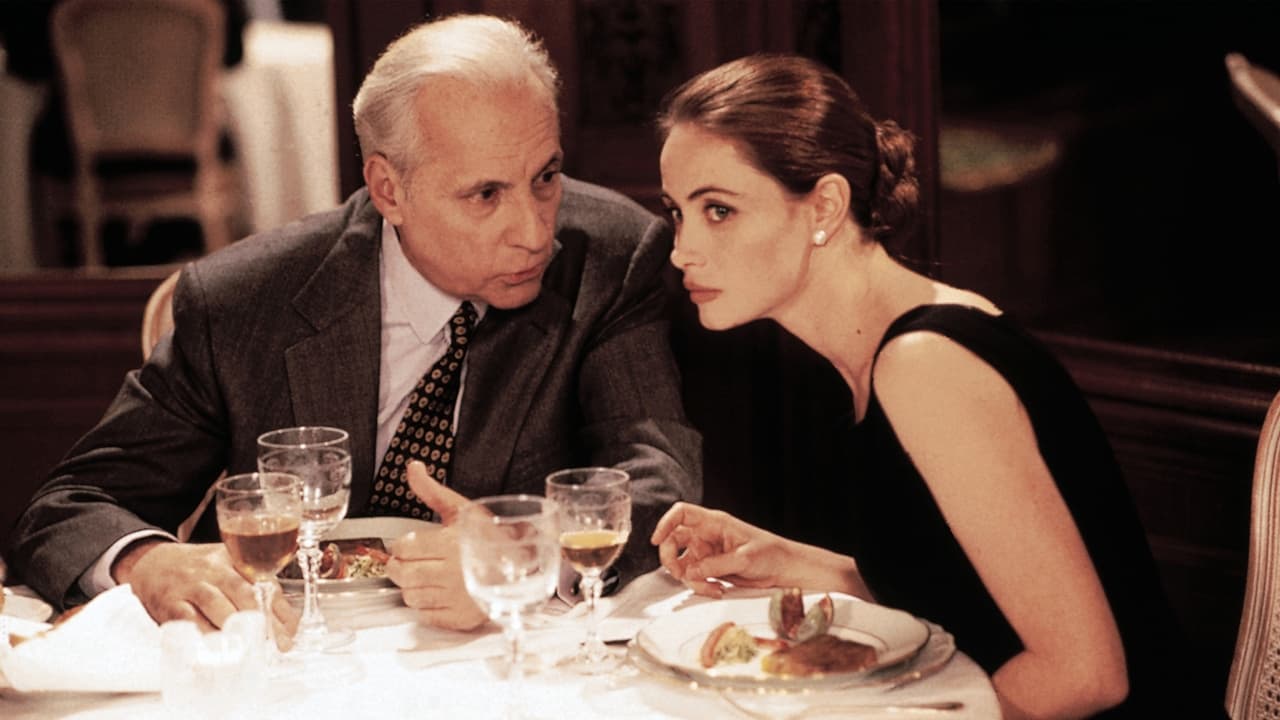
The premise is deceptively simple. Nelly (Emmanuelle Béart), young, intelligent, and financially strained in a listless marriage, encounters Pierre Arnaud (Michel Serrault), a wealthy, retired judge living a solitary, ordered existence. He makes her an offer: help him organize and type his memoirs. It’s a professional arrangement, yet from the outset, the air between them crackles with something more complex – a blend of intellectual curiosity, paternal interest, latent attraction, and profound loneliness on both sides. Their sparsely decorated apartments become stages for a delicate emotional dance, observed with the keen, empathetic eye that defined Sautet's later work, reminiscent of the nuanced relationships he explored in films like Un coeur en hiver (1992).
The Unspoken Dialogue
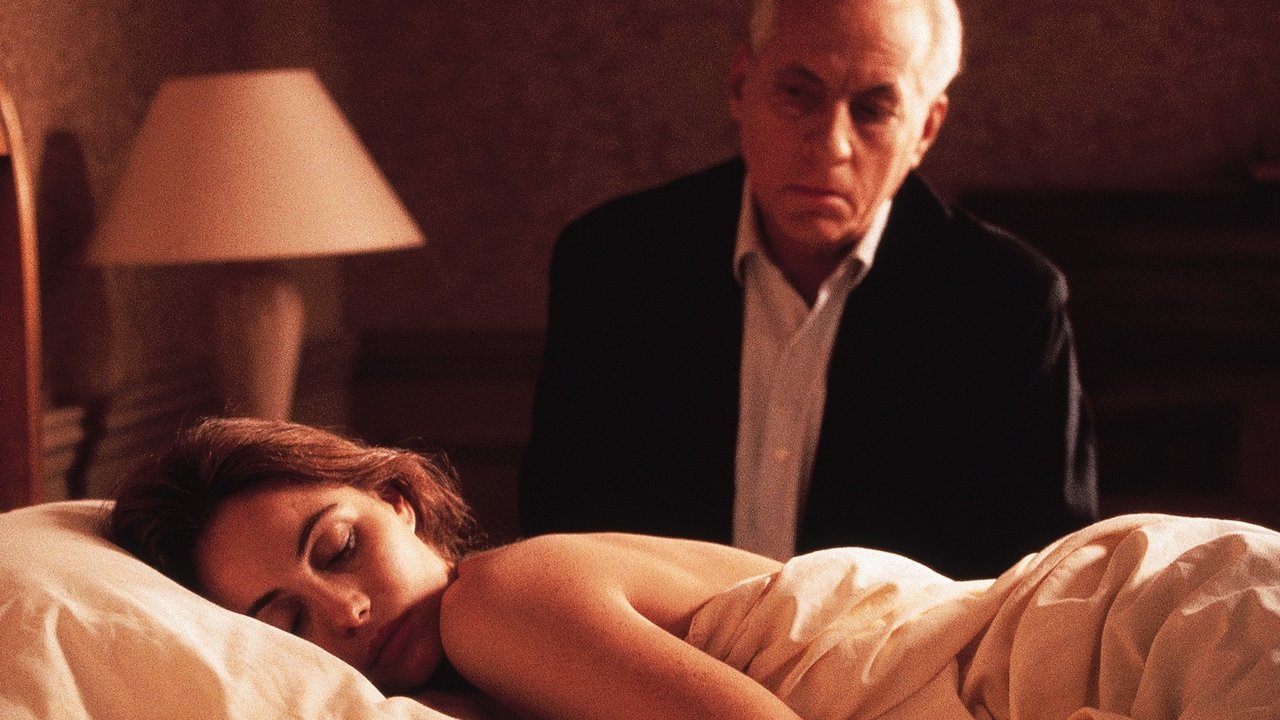
What elevates Nelly & Monsieur Arnaud beyond a simple May-December story is the extraordinary calibration of its central performances. Michel Serrault, shedding the more flamboyant comedic roles many might associate him with (like La Cage aux Folles), delivers a masterclass in subtlety. His Arnaud is a man of immense reserve, his past hinted at through anecdotes, his present defined by quiet routine. Yet, beneath the controlled surface, Serrault conveys flashes of vulnerability, possessiveness, and a deep yearning for connection, often with just a slight tightening of his jaw or a flicker in his eyes. It was a performance rightly awarded the César for Best Actor.
Opposite him, Emmanuelle Béart is luminous. Nelly is navigating a period of profound uncertainty, caught between a failing marriage, a restless lover (a perfectly cast Jean-Hugues Anglade as Vincent, Arnaud's younger, more volatile publisher), and the magnetic pull of Arnaud's stable, intellectual world. Béart embodies Nelly's intelligence and her quiet resilience, but also her ambiguity. Is she using Arnaud? Is she genuinely drawn to him? Or is she simply searching for a foothold in a life that feels adrift? Béart plays these notes with exquisite precision, never letting Nelly become merely a cipher or a victim. The chemistry between her and Serrault isn't explosive; it's a low, constant hum of mutual fascination and unspoken boundaries.
Sautet's Swan Song
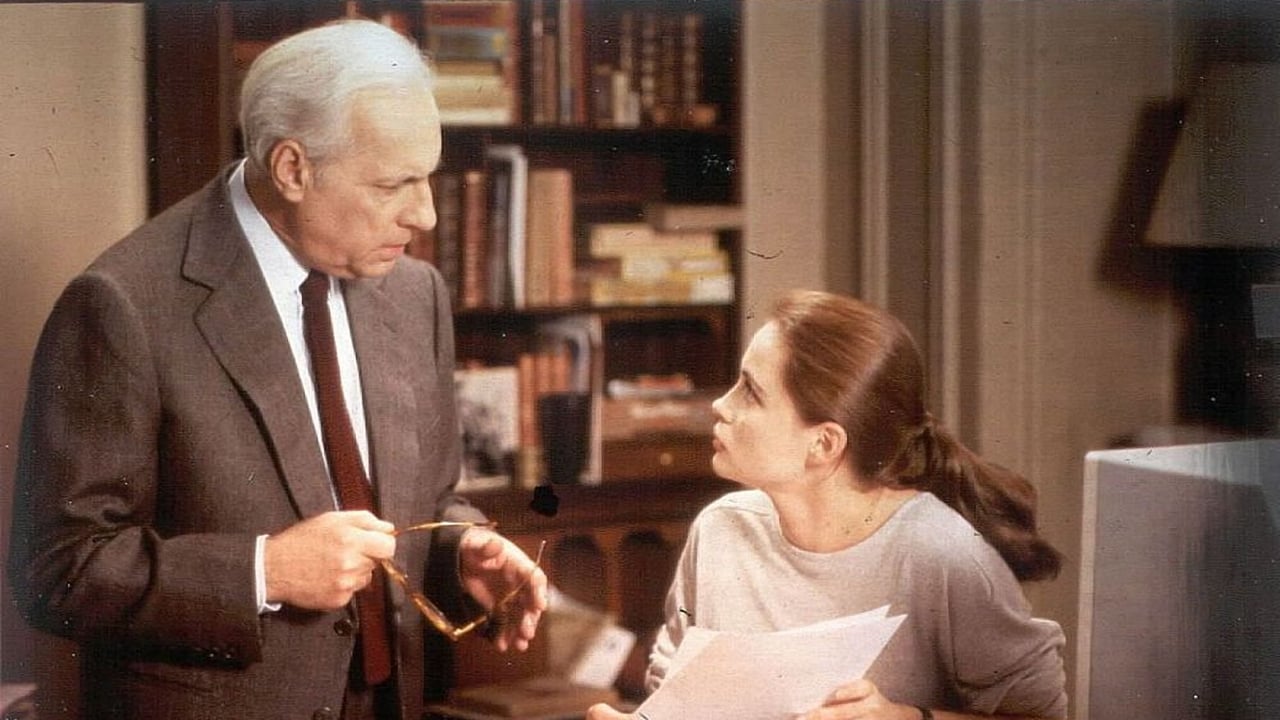
Knowing this was Claude Sautet's final film adds another layer of poignancy. He directs with the confidence of a master who has nothing left to prove, focusing entirely on character and atmosphere. The pacing is deliberate, allowing moments to breathe, letting silence speak volumes. The camera often holds on faces, capturing the minute calculations and emotional shifts. There's a palpable sense of autumnal melancholy, fitting for a story about missed connections and the passages of time. Sautet, who also picked up the Best Director César for this film, wasn't interested in easy resolutions. He understood that life, particularly the life of the heart, is often messy, inconclusive, and defined by the things left unsaid. It’s fascinating to learn that Sautet developed the script with his long-time collaborator Jacques Fieschi specifically with Serrault in mind, crafting the role of Arnaud to fit the actor's unique ability to convey complex inner lives.
The Quiet Resonance
This isn't a film you'd likely stumble upon sandwiched between action blockbusters at the local video store back in the day. It required a certain mood, perhaps a recommendation from a discerning clerk, or catching it on a specialty channel. It felt distinctly European, distinctly adult in a way that wasn't about sex or violence, but about emotional complexity. It doesn't offer easy answers about the nature of Nelly and Arnaud's bond. Is it love? Friendship? A mutually beneficial arrangement colored by projection and need? The film wisely leaves these questions lingering, trusting the audience to find their own interpretation in the spaces between the dialogue. What does Arnaud truly want from Nelly? And what does she ultimately take from their time together? The ambiguity is the point.
Rating: 9/10
This rating reflects the film's masterful subtlety, the powerhouse performances from Serrault and Béart, and Sautet's impeccable direction. It's a near-perfect execution of a deliberately quiet, character-focused drama. The pacing might test viewers accustomed to faster narratives, but its rewards are immense for those willing to settle into its rhythm. Nelly & Monsieur Arnaud doesn't fade easily after the credits roll; it lingers, like a half-remembered conversation filled with unspoken meaning, a testament to the quiet power of observation and the enduring complexity of the human heart. It remains a poignant farewell from a true cinematic craftsman.