It often starts with a moment of disruption, doesn't it? A spilled drink, a wrong turn, a bag of missing burgers. In Luis Mandoki's White Palace (1990), it's precisely that mundane inconvenience – six missing sliders from a bachelor party take-out order – that throws two vastly different lives onto a collision course. And what unfolds is far more potent and messier than your typical Hollywood romance, leaving a mark precisely because it dares to be uncomfortable.
### Worlds Colliding Over Burgers and Beer
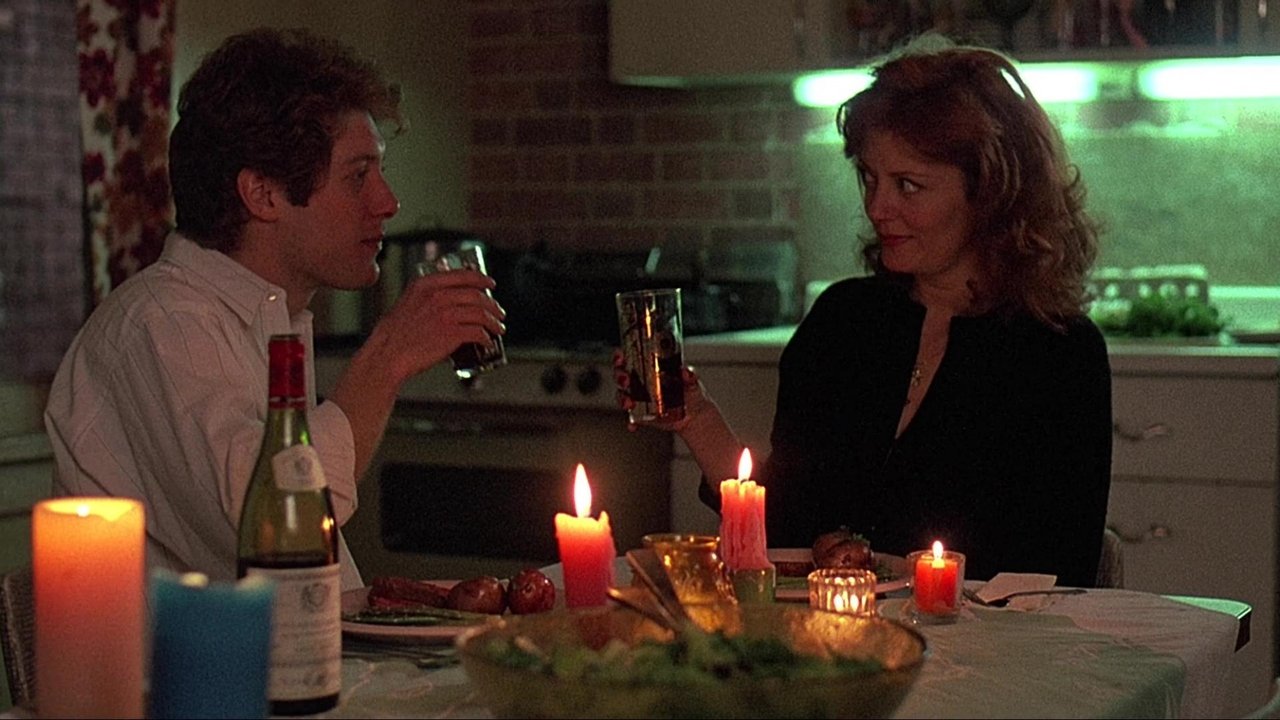
We meet Max Baron (James Spader), a young, successful, Jewish advertising executive in St. Louis. He's handsome, impeccably dressed, lives in a sterilely perfect condo, and is still deeply mourning the accidental death of his wife two years prior. His world is one of careful control, upper-middle-class expectations, and polite silences. Then there's Nora Baker (Susan Sarandon), a 43-year-old waitress at the titular White Palace hamburger joint. She's brash, unapologetically working-class, lives in a cluttered, lived-in house in a rougher part of town ("Dogtown"), drinks beer from the bottle, and seems to carry her own weary history like a second skin. When Max confronts her about the missing burgers, the initial friction is palpable – a clash not just of personalities, but of entire social strata.
What follows is less a meet-cute and more a slow-burn collision fueled by loneliness, grief, and a raw, almost desperate need for connection. There's an undeniable magnetic pull between them, born perhaps from the very things that should keep them apart. Max is drawn to Nora's earthy honesty and lack of pretense, a stark contrast to the suffocating politeness of his own circle. Nora finds in Max a vulnerability beneath the polished exterior, someone whose pain resonates with her own, albeit differently expressed. Their initial encounters are awkward, fueled by alcohol and misplaced anger, leading unexpectedly to a passionate, almost feral intimacy that feels miles away from the carefully curated romance often seen on screen.

### Unvarnished Truths and Towering Performances
The absolute heart of White Palace lies in the powerhouse performances of its leads. Susan Sarandon, who earned a deserved Golden Globe nomination (and many felt deserved an Oscar nod), is simply phenomenal as Nora. She embodies the character completely – the defensive pride, the simmering resentment at societal judgment, the deep well of warmth hidden beneath the hardened exterior, the quiet moments where loneliness flickers in her eyes. There's no vanity in her performance; it's raw, lived-in, and utterly captivating. She makes Nora flawed, sometimes frustrating, but fiercely human. I remember watching this on a slightly fuzzy VHS rental back in the day, and Sarandon’s performance cut right through the scan lines – it felt real in a way few screen portrayals did.
James Spader, often known for playing characters with a certain detached cool or eccentric intensity (think Sex, Lies, and Videotape (1989) or later Boston Legal), is perfectly cast as Max. He masterfully conveys the tightly wound grief and the suffocating weight of expectation. Watching him slowly unravel, allowing Nora to chip away at his defenses, is compelling. The chemistry between Spader and Sarandon is electric – volatile, tender, and believable precisely because it isn't easy. Their physicality feels authentic, reflecting the messy, urgent nature of their connection. Supporting roles, like Jason Alexander as Max's conflicted friend Neil, provide necessary grounding and highlight the societal pressures Max faces.
### More Than Just Romance: Class, Grief, and Authenticity
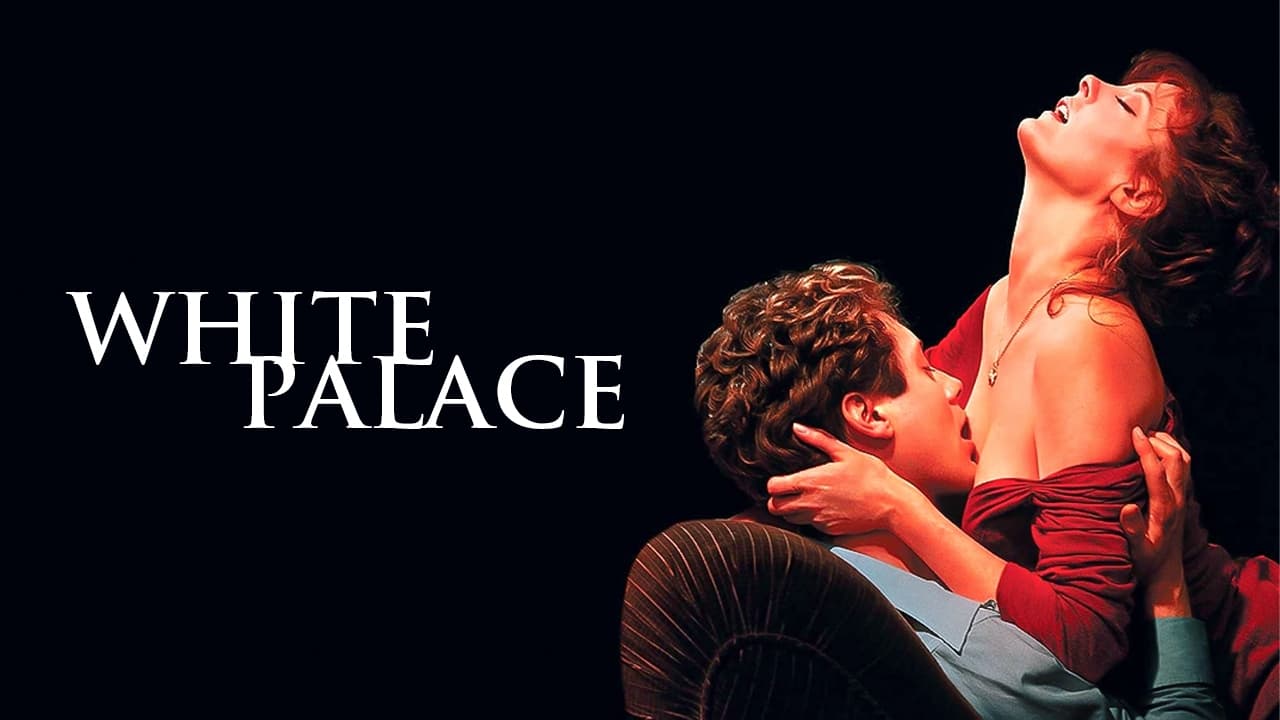
While marketed as a romance, White Palace digs deeper. It's a frank examination of class differences in America, not shying away from the snobbery and judgment Max encounters from his friends and family (a particularly excruciating Thanksgiving dinner scene comes to mind). How often do films truly confront this divide head-on, especially within a relationship? It also explores the complex ways people process grief – Max's repressed sorrow versus Nora's more overt, perhaps world-weary acceptance of life's hardships.
Director Luis Mandoki, working from a screenplay adapted by Ted Tally (who would win an Oscar the following year for The Silence of the Lambs) and the legendary Alvin Sargent (Ordinary People, Paper Moon), captures the atmosphere of St. Louis beautifully. The film uses its locations effectively, contrasting Max's sleek, modern world with the lived-in, slightly dilapidated charm of Nora's neighborhood and the titular burger joint (a real local chain, though a specific outlet served as the filming location). There’s an authenticity to the setting that grounds the story. Interestingly, the film's frank depiction of sexuality and its focus on an older woman/younger man relationship felt somewhat boundary-pushing for a mainstream studio release in 1990. It wasn't aiming for sanitized romance; it wanted to show something more complicated. It reportedly cost around $10 million and brought in about $17.5 million domestically – not a smash hit, but its presence lingered on video store shelves, finding an audience seeking more adult-oriented drama.
The film isn't perfect. Some might find the ending leans a touch conventional after the narrative's earlier rawness, and the exploration of class, while present, perhaps doesn't delve as deep as it could have. Yet, these are minor quibbles in the face of its strengths.
***
VHS Heaven Rating: 8/10
This score reflects the film's powerful, authentic lead performances, particularly Sarandon's unforgettable turn, and its willingness to tackle mature themes of grief, class, and unconventional love with honesty. The chemistry between the leads is palpable, and the film creates a distinct sense of place and atmosphere. While perhaps slightly softening its edge by the conclusion, it remains a compelling and emotionally resonant drama that stands out from the pack of early 90s cinema.
White Palace lingers because it feels truthful, capturing the awkward, sometimes painful, but ultimately human need to connect, even across the divides we build around ourselves. It's a reminder that sometimes, the most profound relationships are found where – and with whom – we least expect them.