The hum of the VCR swallowing the tape, the blue screen flicker giving way... Some films just felt different when watched late at night on a buzzing CRT. Sliver (1993) was definitely one of those. It wasn't just the steaminess promised by the cover art, featuring Sharon Stone at the absolute peak of her post-Basic Instinct fame; it was the unsettling chill that crept in alongside the seduction, the whisper of being watched. The film plunges you into the cold heart of a high-tech Manhattan high-rise, a place where privacy is just an illusion sold to the highest bidder.

### Welcome to the Panopticon
The premise, adapted from Ira Levin's novel (the man who gave us Rosemary's Baby and The Stepford Wives – pedigree matters), is immediately gripping. Carly Norris (Sharon Stone) moves into the exclusive, ultra-modern "sliver" building following the mysterious death of the previous tenant in her apartment. She soon finds herself entangled with two enigmatic neighbours: the charmingly intense video game designer Zeke Hawkins (William Baldwin) and the brooding novelist Jack Lansford (Tom Berenger). But the building holds a dark secret: someone has wired the entire structure with hidden cameras, observing the residents' most intimate moments. This wasn't just voyeurism; it was total, god-like surveillance, broadcast onto a wall of monitors like some perverse, private television network. Doesn't that core idea still send a shiver down your spine, especially now, living in our hyper-documented age?
Director Phillip Noyce, fresh off the Harrison Ford thriller Patriot Games, crafts a world that feels both alluring and deeply unnerving. The production design is key here – the titular building (Manhattan's Morgan Court condominum stood in for the exterior shots) is depicted as sleek, sterile, almost inhumanly perfect. It’s a character in itself, this vertical slice of glass and steel, promising luxury but delivering isolation and paranoia. The way Noyce uses reflections, sharp angles, and the ever-present blue glow of screens creates a palpable sense of unease. You feel watched, even before Carly truly understands the extent of the violation.

### The Heat and the Hype
Let's be honest, much of Sliver's initial buzz came from the promise of another boundary-pushing performance from Sharon Stone and the involvement of screenwriter Joe Eszterhas, who netted a reported $3 million for his script following the colossal success of Basic Instinct. The film certainly leans into the erotic thriller elements that were de rigueur in the early 90s. There are steamy encounters, charged glances, and a central mystery about who the voyeur – and potential killer – truly is.
However, behind the glossy surface, the production was notoriously troubled. Rumours swirled about friction between Stone and William Baldwin – one persistent story alleged she bit his tongue so hard during a kissing scene that he couldn't speak properly for days. Whether strictly true or exaggerated Hollywood legend, that palpable tension sometimes translates onto the screen, though perhaps not always in the way the filmmakers intended. The script itself reportedly underwent significant changes, deviating considerably from Levin's darker, more complex novel, particularly concerning the identity of the antagonist.

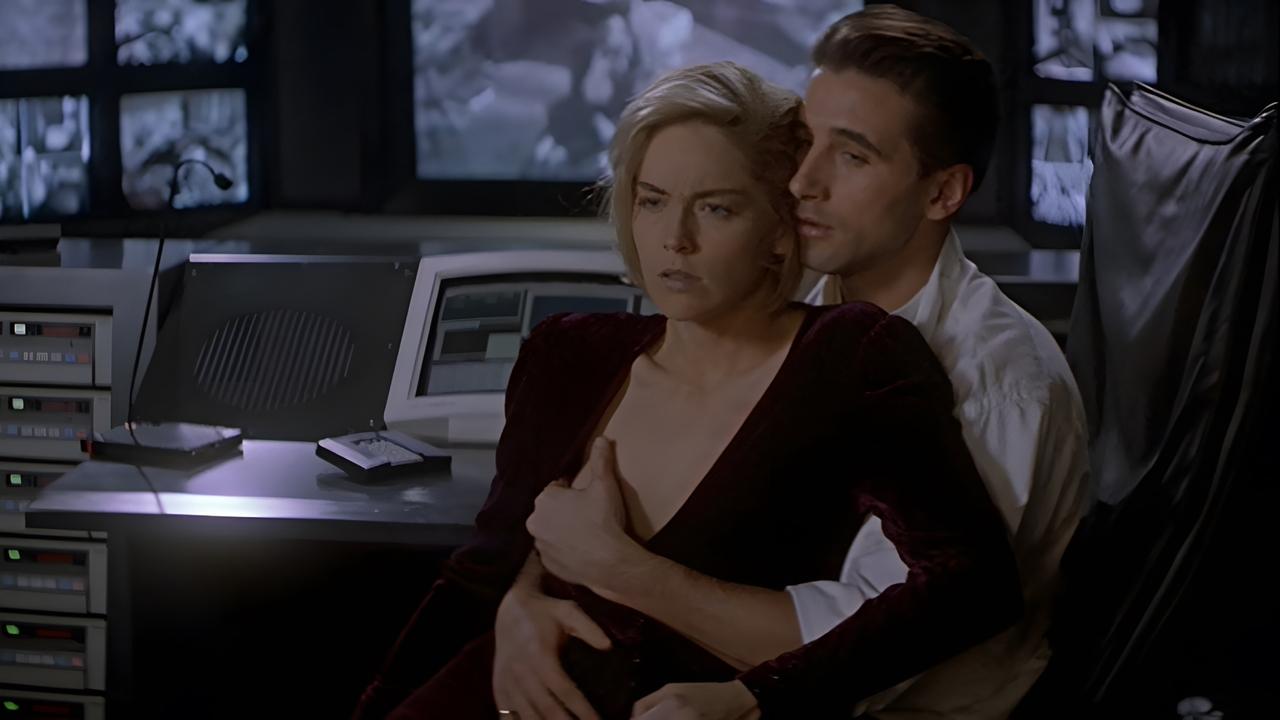
Furthermore, the film faced significant battles with the MPAA over its explicit content. Extensive cuts were made to secure an R rating for theatrical release, removing several minutes of intimate footage. Naturally, this only fuelled anticipation for the "Unrated Version" on VHS – the definitive home video experience that promised the real movie. Owning or renting that unrated tape felt like possessing forbidden knowledge, a quintessential part of the VHS era thrill. Remember the different colour clamshell case? It was practically a badge of honour.
### Watching the Watchers
While the erotic elements drew audiences in (grossing $116 million worldwide against a $40 million budget – adjusted for inflation, that's roughly $82 million budget yielding $240 million today!), the film's more lasting resonance comes from its exploration of voyeurism and technology. Zeke's surveillance system, presented as cutting-edge in 1993, feels almost quaint now, yet the underlying themes are more relevant than ever. The film taps into a primal fear of being exposed, of losing control over one's private life. It asks uncomfortable questions about the nature of watching and being watched, the allure of forbidden glimpses, and the potential for technology to isolate rather than connect. Howard Shore's score masterfully enhances this, often eschewing bombast for subtle, electronic pulses that mimic the hum of hidden electronics and the voyeur's steady gaze.
Baldwin plays Zeke with a dangerous ambiguity – is he a romantic protector or a possessive predator? Stone, burdened with carrying the film after her Basic Instinct breakthrough, conveys Carly's vulnerability and mounting dread effectively, even when the script sometimes lets her down. Tom Berenger, an always reliable screen presence, adds another layer of suspicion as the older, perhaps wiser, perhaps more sinister writer.
### Legacy in the Rearview Mirror
Sliver isn't a perfect film. The plot can feel contrived, character motivations occasionally murky, and the eventual reveal might not land with the impact intended, especially for those familiar with the novel. The central relationship sometimes feels more dictated by plot mechanics than genuine chemistry. Yet, despite its flaws, it remains a fascinating artifact of its time. It captured the anxieties and fascinations of the early 90s – the rise of technology, the blurring lines of privacy, and the public's appetite for slick, adult-oriented thrillers. It tried to replicate the Basic Instinct lightning strike but ended up being something else: a mood piece about paranoia disguised as an erotic potboiler.
Watching it today takes you right back to that specific feeling – the dimly lit living room, the slightly illicit thrill of the "Unrated" tape, the sense that you were seeing something polished, adult, and maybe just a little dangerous. It might not be the masterpiece some hoped for, but its atmosphere and central conceit linger.

Rating: 6/10
Justification: Sliver earns its score through its undeniable atmospheric strengths, Noyce's slick direction, Stone's committed performance, and its prescient (if somewhat superficially explored) themes of voyeurism and technology. The production design and Shore's score effectively create a chilling mood. However, it's held back by a sometimes clunky script, underdeveloped character motivations, pacing issues, and the feeling that it never quite lives up to the potential of its premise or the hype surrounding its creation. The notorious behind-the-scenes stories and censorship battles add a layer of intrigue, but don't entirely salvage the narrative shortcomings. It's a quintessential, flawed, yet fascinating piece of 90s cinema.
Final Thought: More than just a steamy thriller, Sliver remains a darkly hypnotic snapshot of pre-internet paranoia, a glossy nightmare about knowing you're on camera, even when you can't see the lens.