There’s a certain chill that settles in while watching True Colors, a feeling less about political intrigue and more about the slow, almost inevitable corrosion of something precious: friendship. Released in 1991, this isn't a film that necessarily screams for attention from the dusty VHS shelf, lacking the pyrotechnics of its action contemporaries or the easy comfort of a beloved comedy. Instead, it offers a more somber reflection, anchored by a compelling, if uncomfortable, dynamic between its two leads, John Cusack and James Spader. It’s a film that prompts you to consider the slippery slope of compromise, a theme that felt pertinent then and, perhaps unsettlingly, even more so now.
The Fork in the Road
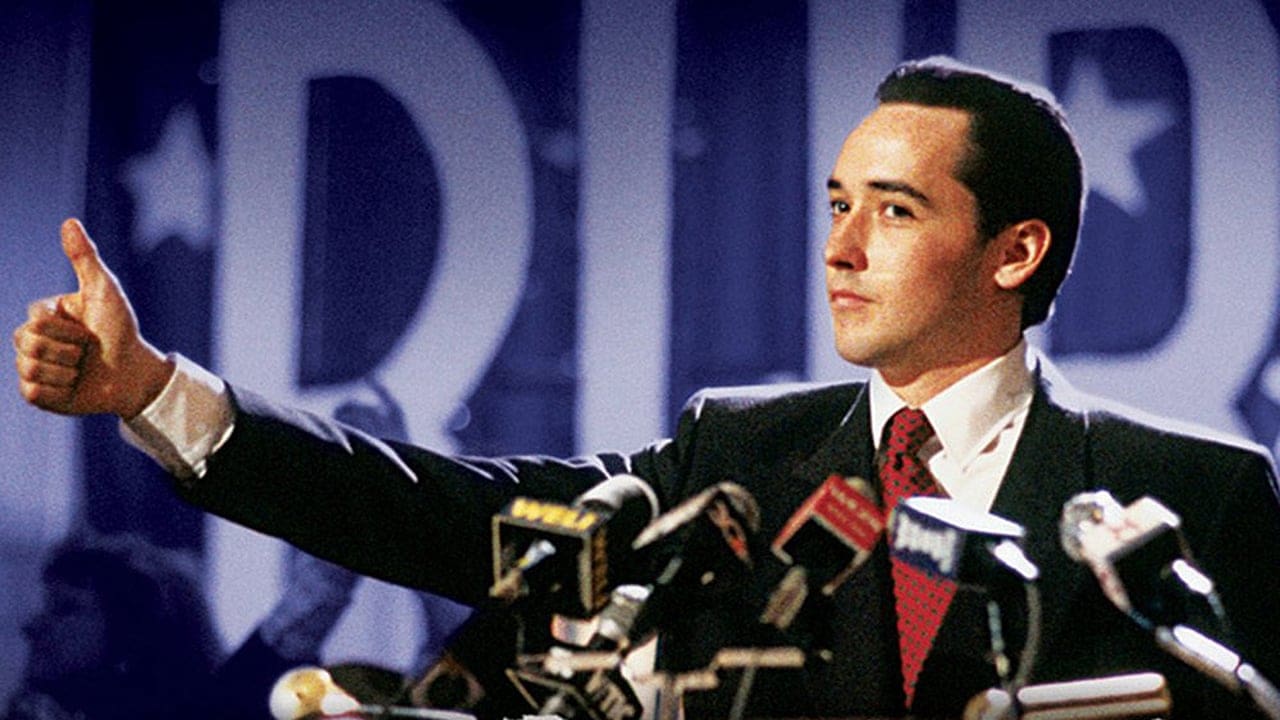
The premise, penned by Kevin Wade, who previously explored ambition in the corporate world with Working Girl (1988), is deceptively simple. We meet Peter Burton (Cusack) and Tim Gerrity (Spader) as idealistic law school buddies navigating their final year. An incident reveals Peter's latent ruthlessness – a willingness to bend the rules, even betray trust, to get ahead. Tim, possessing a stronger moral compass, is disturbed but ultimately looks the other way, perhaps blinded by loyalty. This initial fissure widens dramatically as their paths diverge post-graduation. Tim takes a principled job with the Department of Justice, while Peter attaches himself to the slick campaign of Senator Stiles (Richard Widmark), seeing politics as the fastest route to power and influence. Their differing philosophies inevitably put them on a collision course, particularly when Peter’s machinations draw in Tim and Diana Stiles (Imogen Stubbs), the Senator's daughter and Tim's girlfriend.
Ambition's Shadowy Side
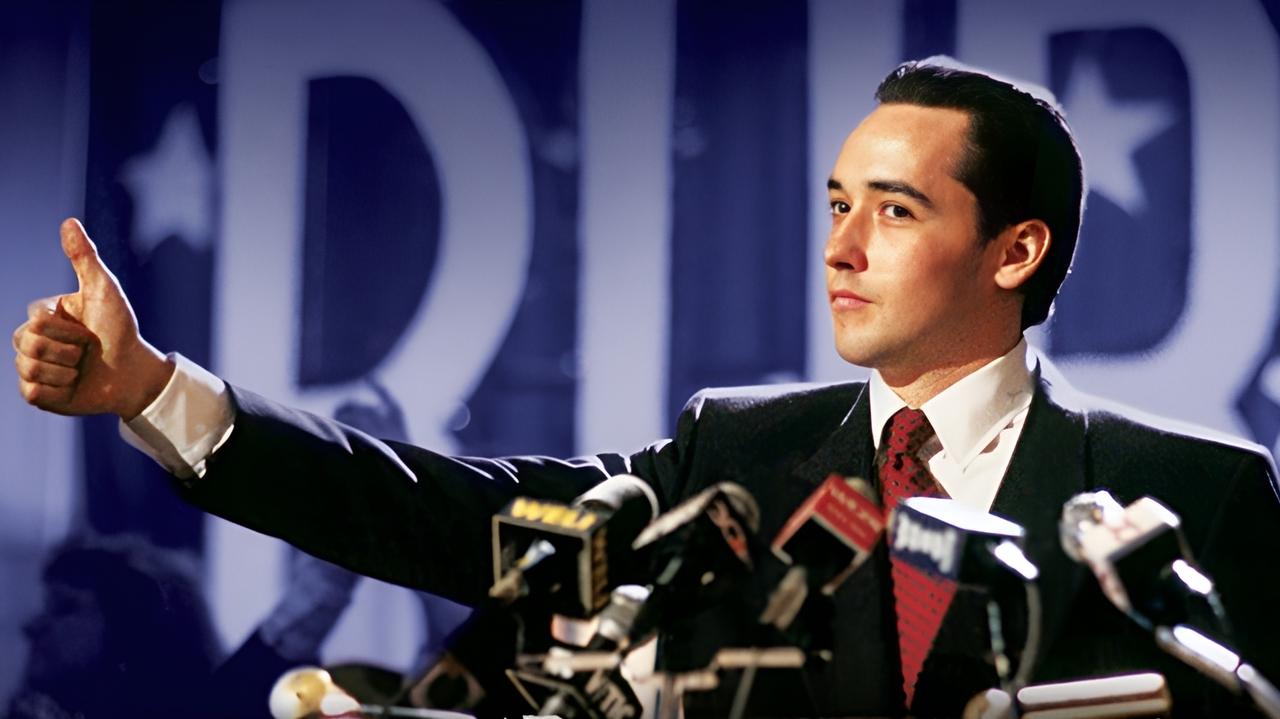
What makes True Colors linger isn't necessarily the intricacies of its political plot – which, admittedly, can feel a bit by-the-numbers at times – but the raw portrayal of how ambition twists character. It was a fascinating choice to cast John Cusack, then largely beloved for playing earnest, often endearingly awkward young men in films like Say Anything... (1989) and The Sure Thing (1985), as the morally compromised Peter. He sheds the familiar charm for a calculating coldness, revealing the character's emptiness layer by layer. It’s not always entirely convincing – moments exist where you see the Cusack charm flicker uneasily beneath the surface – but it's a brave performance that signals his transition into more complex adult roles. Watching him manipulate situations and people, you feel a genuine sense of loss for the idealistic student he presumably once was.
Opposite him, James Spader delivers exactly the kind of intense integrity we came to expect from him, especially after his breakout in sex, lies, and videotape (1989). As Tim, he embodies the film's conscience, his simmering frustration and eventual righteous anger providing the necessary counterweight to Peter's expediency. The scenes between Cusack and Spader crackle with the tension of their shared history and diverging paths. Their confrontation scenes are the film's strongest moments, laying bare the painful truths that ambition has forced upon their friendship. Doesn't the slow erosion of trust between people who were once close feel like one of life's more painful, universal dramas?
A Polished Surface, A Troubled Heart
Directed by Herbert Ross, a filmmaker more readily associated with musicals (Footloose, 1984) and character-driven dramas (Steel Magnolias, 1989; The Goodbye Girl, 1977), True Colors has a polished, professional sheen. The cinematography captures the sterile corridors of power and the comfortable privilege of the East Coast establishment effectively. However, some contemporary critics, like Roger Ebert who awarded it 2 stars, felt Ross's direction lacked the necessary grit or cynicism for a truly biting political thriller. The film sometimes feels a touch too restrained, too polite, when perhaps a sharper edge was needed to match the darkness of Peter's choices.
Despite this, the film benefits immensely from its supporting cast. Imogen Stubbs does well as Diana, caught between the two men and her father's political legacy, though the script doesn't always give her the depth she deserves. And it’s particularly poignant to see the legendary Richard Widmark as the pragmatic, weary Senator Stiles. His natural authority grounds the political milieu, and it adds a layer of melancholy knowing this was his final performance in a theatrical release. His presence alone feels like a throwback to a different era of filmmaking gravitas.
Retro Fun Facts & Lingering Questions
True Colors wasn't a box office sensation, earning a modest $14.1 million against its $19 million budget. Perhaps audiences in 1991 weren't quite in the mood for its brand of downbeat political realism. It landed in that slightly awkward pre-internet era where word-of-mouth travelled slower, and a film without major spectacle could easily slip through the cracks, ending up as a dependable, if not spectacular, video rental. I distinctly remember seeing that VHS box on the shelf, the stark image of Cusack and Spader hinting at the drama within. It often felt like a more "grown-up" choice amidst the action flicks and comedies.
The film’s straightforward style feels very much of its time – functional, clear, without excessive visual trickery. It’s the kind of filmmaking that relies heavily on script and performance, a quality common to many early 90s dramas we'd pick up on a Friday night. What lingers most after the credits roll? For me, it’s the unsettling portrait of how easily ideals can be compromised, one small step at a time, and the quiet tragedy of a friendship dismantled by ambition. It asks: what lines are you unwilling to cross, and what happens when someone you care about crosses them without looking back?
---
Rating: 6.5/10
True Colors earns its rating primarily through the strength of the central performances, particularly the compelling dynamic between Cusack and Spader, and its earnest exploration of timeless themes like ambition, morality, and betrayal. While the direction can feel a bit tame for the subject matter and the plot occasionally veers into predictability, the core conflict resonates. It may not be a forgotten masterpiece, but it’s a solid, thought-provoking early 90s drama that offers a worthwhile, if somber, look back – especially for fans of its lead actors pushing themselves in interesting directions.
It remains a quiet testament to the idea that sometimes, the most dangerous betrayals aren't grand political conspiracies, but the simple, heartbreaking ways we fail each other.