There's a particular kind of quiet that settles over certain films, a stillness that isn't empty but thick with unspoken questions and the weight of history. It's a feeling distinct from the explosive energy of so many beloved 80s and 90s staples, yet just as capable of lodging itself in your memory. Watching Theodoros Angelopoulos's The Suspended Step of the Stork (1991) again, perhaps decades after first encountering it on a well-worn tape likely tucked away in the "Foreign" section of the rental store, is to sink back into that profound quietude. It's a film that doesn't shout its themes but lets them seep into you through haunting imagery and the Bergman-esque silences between words.
Where Borders Blur
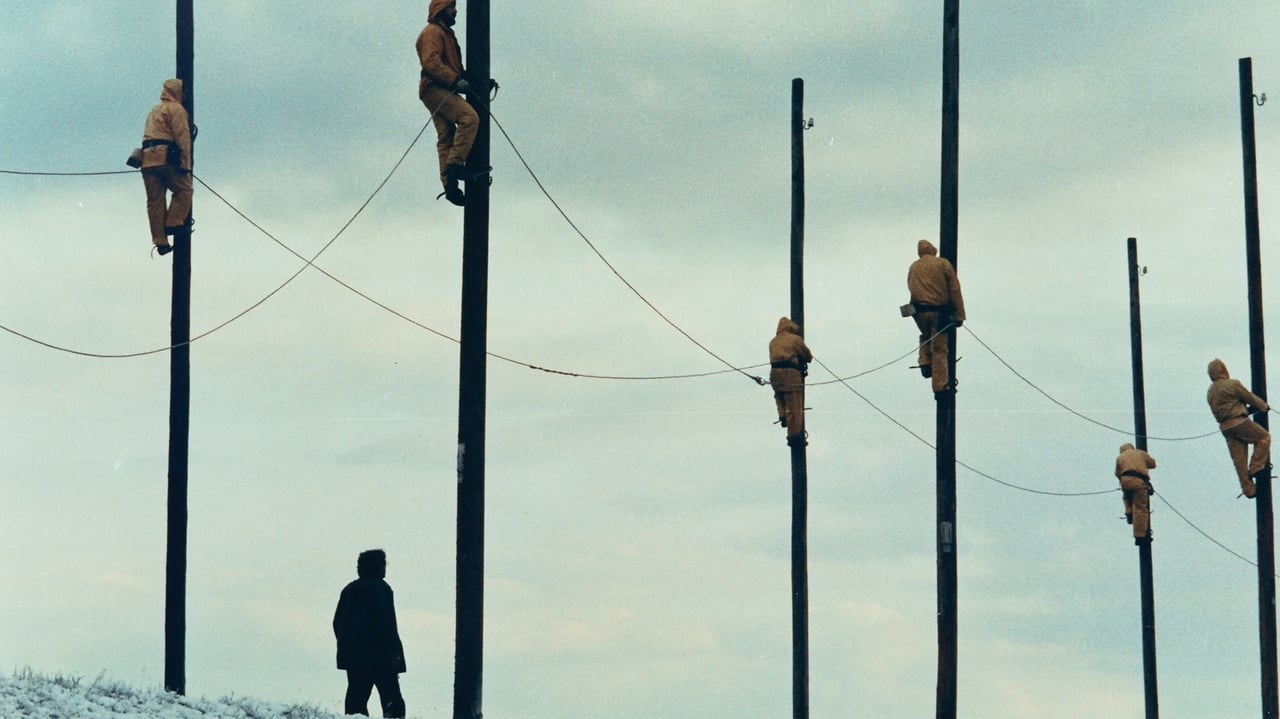
We find ourselves in a desolate, unnamed Greek town near the Albanian border, a place nicknamed "the waiting room," populated primarily by refugees and exiles existing in a state of limbo. A young TV journalist, Alexandre (Gregory Karr), arrives to film a report on this human tide. Amidst the faces etched with hardship and uncertainty, he becomes fixated on an elderly, solitary man (Marcello Mastroianni). Could this quiet figure, living out his days in near anonymity, actually be a prominent Greek politician who mysteriously vanished years before, abandoning his career and public life without a trace? This question becomes the film's narrative engine, but like much of Angelopoulos's work – think Landscape in the Mist (1988) or later, Ulysses' Gaze (1995) – the destination is less important than the journey through a landscape of profound melancholy and existential searching.
Titans in the Mist
What elevates The Suspended Step of the Stork beyond a simple mystery is the sheer gravity brought by its legendary leads. Seeing Marcello Mastroianni, late in his unparalleled career, embody this maybe-politician is extraordinary. He radiates a weariness that feels ancient, a sense of having shed identities like old skin. There's little dialogue for him, but his presence speaks volumes – a man adrift, perhaps by choice, perhaps by circumstance. Is he seeking oblivion or merely observing the world from its edge? Mastroianni makes every flicker of his eyes, every slight gesture, feel laden with unspoken history.
Then there is Jeanne Moreau. She plays the politician's estranged wife, summoned by the journalist to potentially identify the man. Moreau, another titan of European cinema, matches Mastroianni's quiet intensity. Their shared scenes are electric with suppressed emotion, the weight of a shared past hanging heavy in the air. Their interactions aren't about reconciliation but about acknowledging the vast, unbridgeable distances that time and choices create. Gregory Karr, as the reporter, serves effectively as our eyes and ears, his journalistic curiosity slowly giving way to a deeper, more philosophical engagement with the human condition he witnesses.
The Angelopoulos Tempo
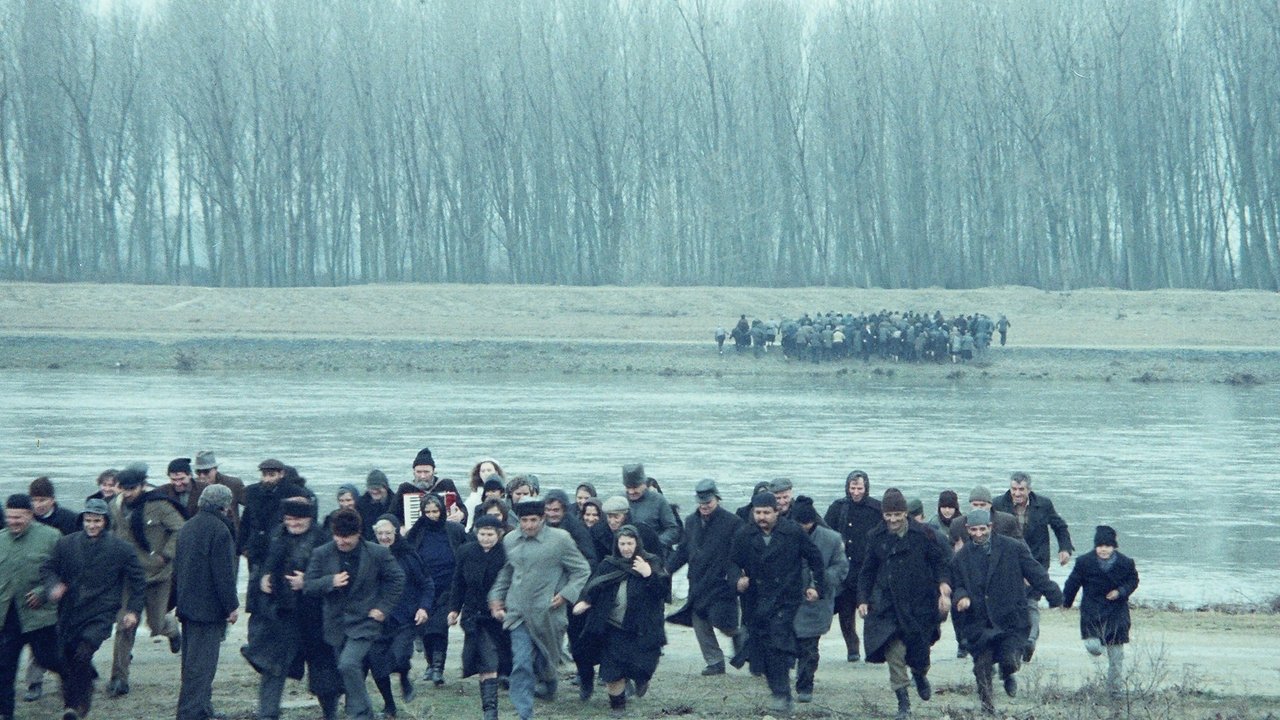
If you grabbed this tape expecting a political thriller, you'd be in for a surprise. Theodoros Angelopoulos, working with his frequent, masterful cinematographer Giorgos Arvanitis, crafts a film that moves at the pace of drifting clouds. His signature long takes are here in abundance – meticulously choreographed shots that often dwarf the characters against vast, bleakly beautiful landscapes or decaying urban environments. One particularly famous sequence involves a wedding ceremony taking place on opposite banks of the river that forms the border, the participants shouting their vows across the water. It’s a breathtaking visual metaphor for connection and separation, for the arbitrary lines that divide humanity.
This deliberate pacing isn't slowness for its own sake; it forces contemplation. It allows the atmosphere to saturate the viewer, mirroring the stagnation felt by the town's inhabitants. Angelopoulos, alongside co-writers including the great Tonino Guerra (a frequent collaborator with Antonioni and Fellini), isn't interested in easy answers. The film was shot near Florina, close to Greece's actual border, lending an undeniable authenticity to its depiction of displacement and the geopolitical anxieties simmering in the Balkans during the early 90s, just as the old world order was fracturing. It's said that Angelopoulos's shoots were demanding, requiring immense patience and precision from cast and crew to capture these complex, extended sequences – a testament to the artistic vision driving the film.
Echoes in the Waiting Room
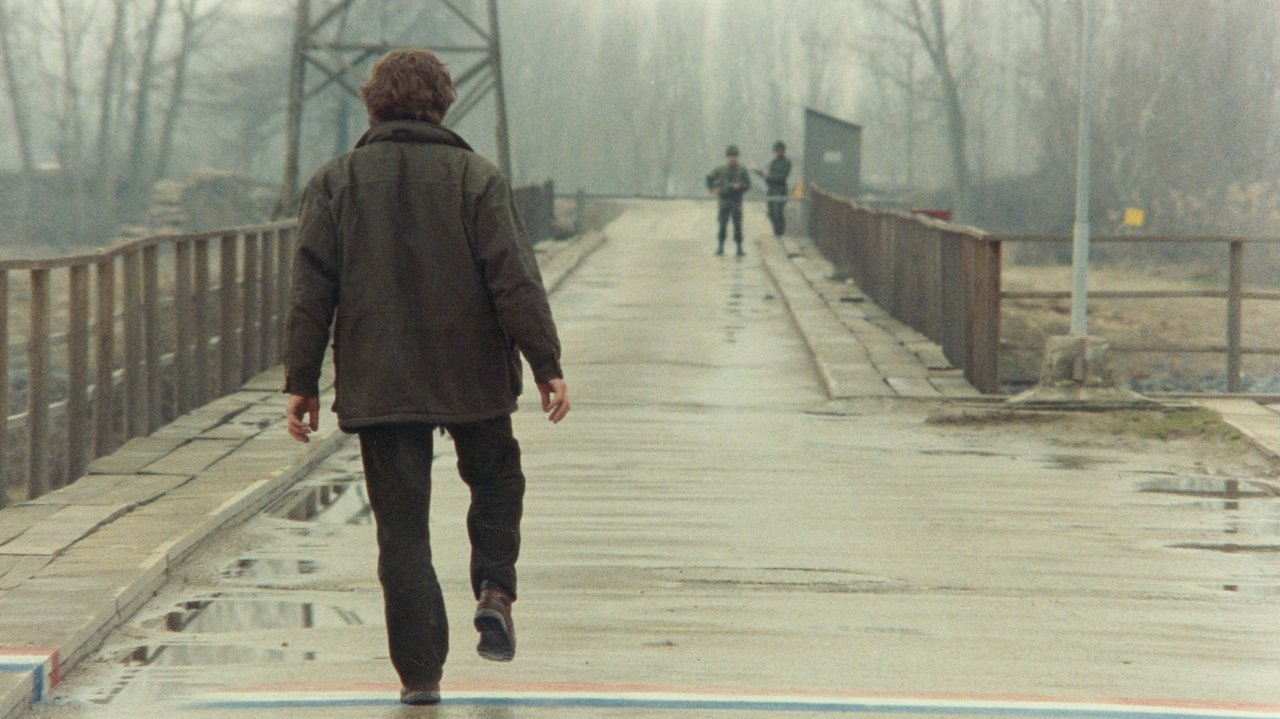
The film's title comes from a border guard's explanation: stand with one foot firmly planted in your country, lift the other – that suspended step hangs over the void, over the line. Take the next step, and you are elsewhere... or perhaps nowhere at all. This potent image resonates throughout the film. Who are we when stripped of our known identities, our familiar landscapes? What defines us when borders – national, personal, emotional – become porous or insurmountable? The film doesn't offer solutions but holds these questions up to the light, letting their facets gleam. It explores the breakdown of communication, not just between nations or political ideologies, but between individuals lost in their own internal exiles. Doesn't this sense of disconnect, of people talking past each other across divides, feel startlingly relevant even today?
Finding this film back in the VHS era often felt like unearthing a hidden treasure. It wasn't the colourful explosion of a blockbuster; it was something quieter, deeper, demanding more patience but offering a different kind of reward. It required adjusting your viewing rhythm, sinking into its melancholic beauty rather than letting it wash over you.
Rating: 8/10
The Suspended Step of the Stork is undeniably arthouse cinema, a challenging and meditative piece that won't appeal to everyone seeking straightforward entertainment. Its deliberate pacing and ambiguous narrative demand engagement. However, for viewers willing to meet it on its own terms, it offers a profoundly moving experience, powered by masterful direction, stunning cinematography, and unforgettable performances from Mastroianni and Moreau. The 8 rating reflects its artistic brilliance and thematic depth, acknowledging that its specific rhythm might be a barrier for some. It's a film that truly earns its place as a significant, if perhaps less-heralded, work from the early 90s European cinematic landscape.
What lingers most, long after the VCR whirred to a stop, isn't the resolution of the central mystery, but the haunting feeling of that suspended step – the precariousness of identity, the weight of borders, and the enduring human search for connection in a fragmented world.