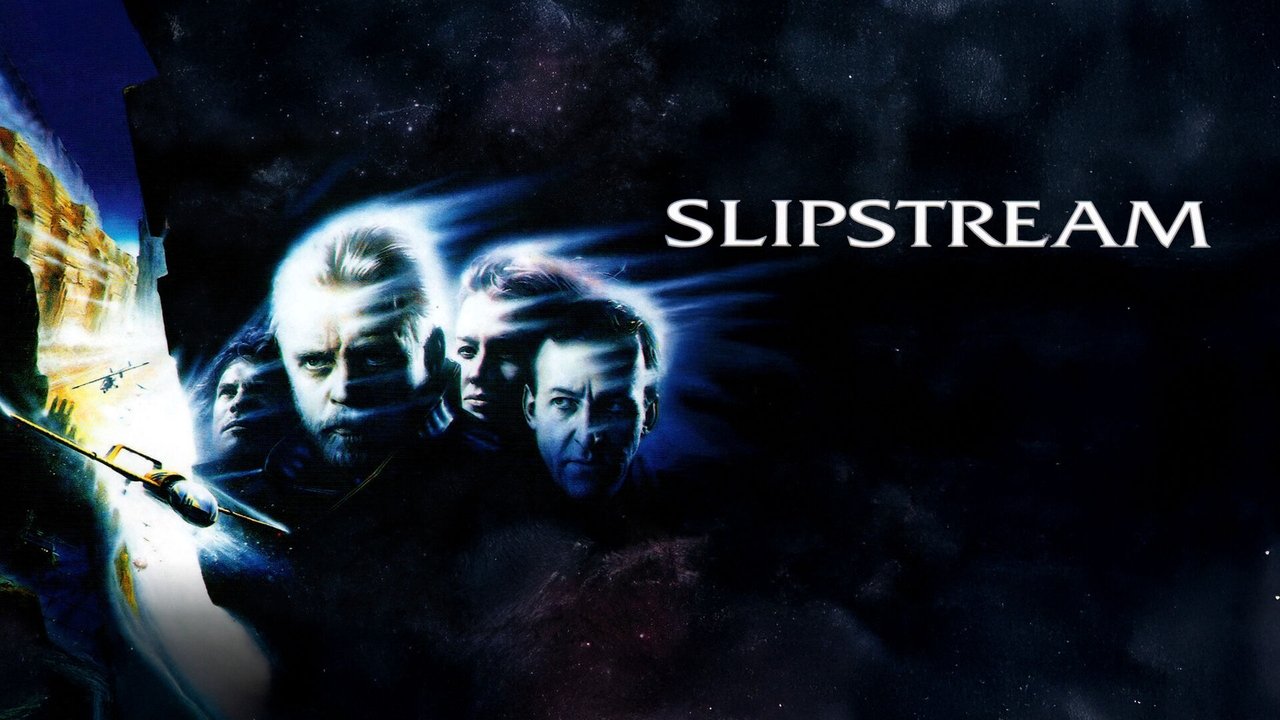
The wind never stops howling in Slipstream. Not really. It whips across desolate plains, carves canyons where cities might once have stood, and carries fragile aircraft through the turbulent atmospheric river that gives this strange 1989 sci-fi adventure its name. Forget gentle breezes; this is a world scoured clean by ecological collapse, leaving behind a raw, primal landscape and pockets of humanity clinging to existence. It's a future that feels less like gleaming chrome and more like rust, dust, and desperation – a perfect mood piece for a late-night VHS discovery.
A World Carried on the Wind
The premise itself is pure pulp poetry: after an environmental catastrophe creates the planet-circling wind current known as the Slipstream, civilization rebuilds around it. Travel means braving the gale in gliders and aircraft. Into this precarious existence steps Matt Owens (Bill Paxton), a hyperactive, almost feral bounty hunter obsessed with capturing Byron (Bob Peck), an enigmatic fugitive accused of murder. The twist? Owens’ pursuit inadvertently ropes in Will Tasker (Mark Hamill), a grizzled, cynical lawman initially transporting Byron. What follows is less a straightforward chase and more an episodic journey through this blighted, wind-swept world, exploring pockets of strange societies and philosophical questions about what it means to be human.
Directed by Steven Lisberger, who previously gifted us the neon-drenched digital frontier of Tron (1982), Slipstream feels like an entirely different beast. Where Tron was groundbreakingly synthetic, Slipstream is gritty and earthbound, despite its aerial focus. The vast, haunting landscapes, captured primarily on location in Turkey, are arguably the film's strongest asset. They lend the film an incredible sense of scale and isolation, perfectly visualizing the harsh beauty of this broken future. You can almost feel the grit in your teeth just watching it.

Ghosts in the Machine
The cast is fascinatingly eclectic. Mark Hamill, years after wielding a lightsaber, plays Tasker with a weary resignation that suits the character, a far cry from Luke Skywalker's farmboy earnestness. It’s a solid, grounded performance. But it’s Bill Paxton who steals the show as Owens. Twitchy, unpredictable, armed with outlandish weapons and fueled by a manic energy, Paxton leans hard into the character’s eccentricity. It’s a performance teetering on the edge of parody but ultimately landing as memorable and unsettlingly charismatic. Remember his iconic roles in James Cameron hits like Aliens (1986)? Owens feels like a distant, even more unhinged cousin to Hudson. Opposite them, Bob Peck (unforgettable in the BBC's Edge of Darkness) brings a quiet dignity and subtle depth to Byron, the character whose true nature drives much of the film's underlying mystery. Even F. Murray Abraham, fresh off his Oscar win for Amadeus (1984), shows up in a small but memorable role as a cult leader.
Ambition Blown Away
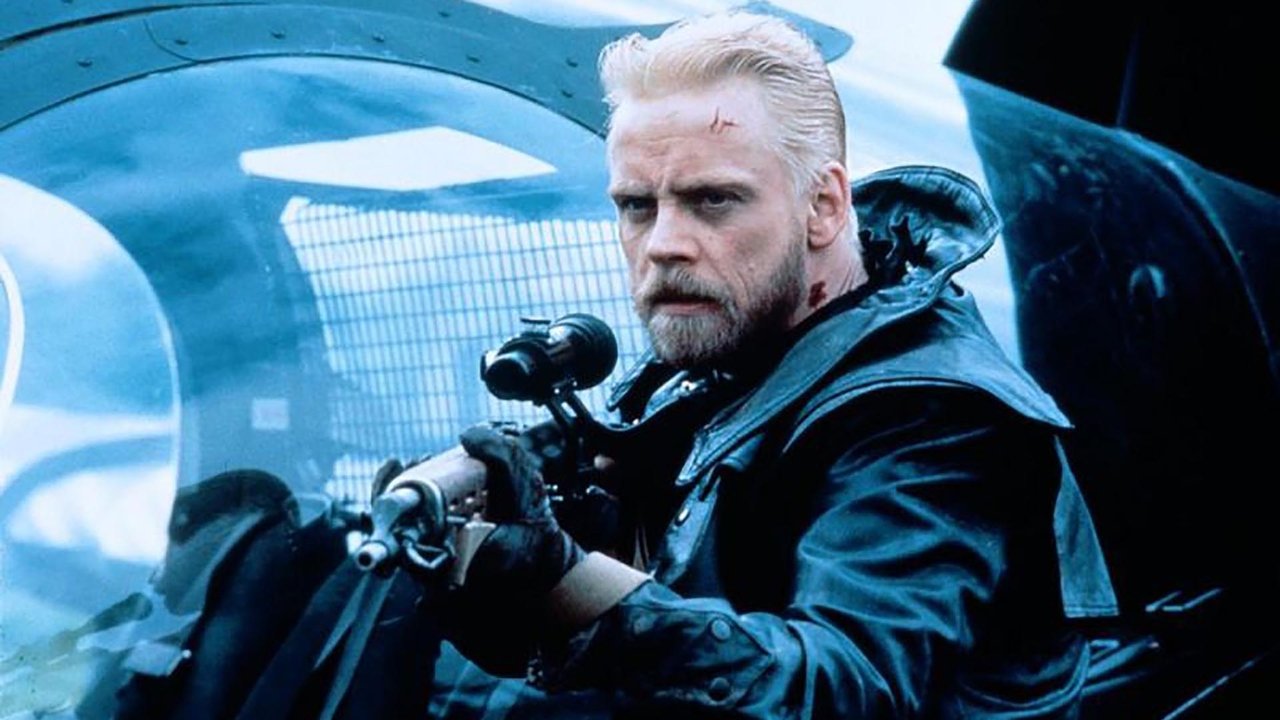
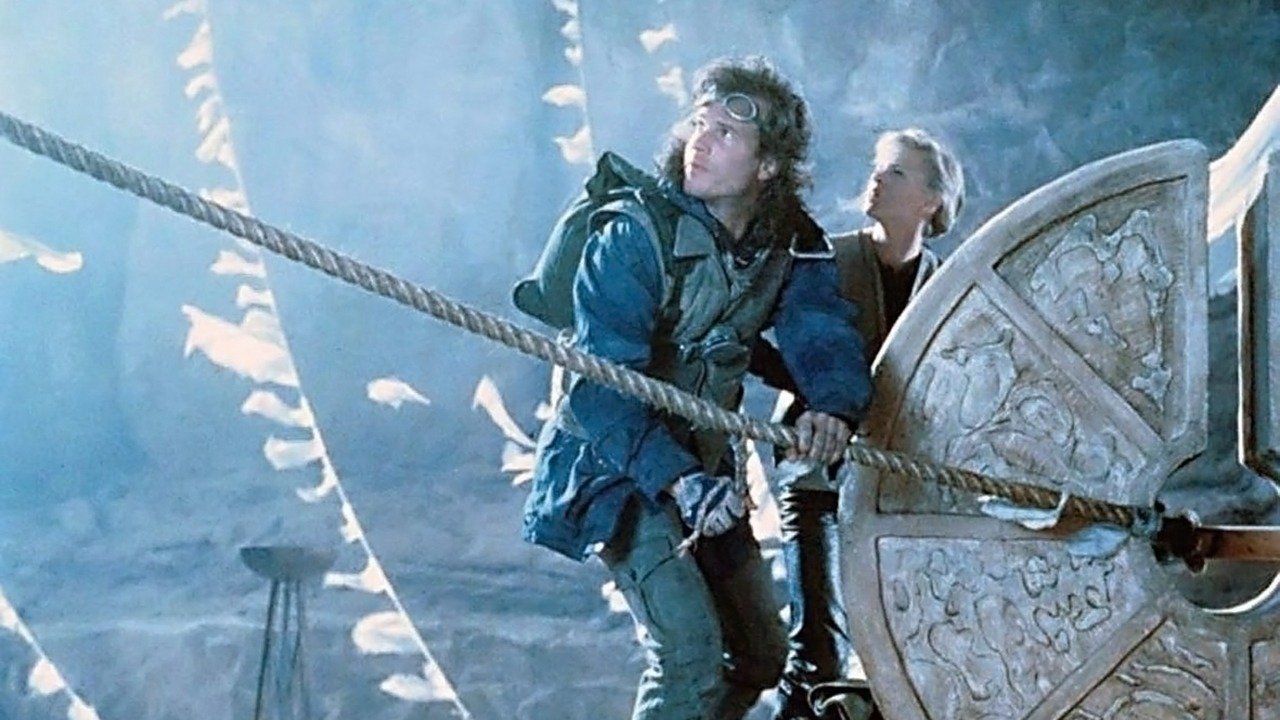
Slipstream was not a small undertaking. Backed by producer Gary Kurtz (who also produced Star Wars (1977) and The Empire Strikes Back (1980)), the film boasted a hefty budget reported around $44 million – an enormous sum for 1989, roughly equivalent to $108 million today. Much of this clearly went into the impressive location shooting and the practical effects, particularly the gliders. These aren't sleek starfighters; they look like patched-together contraptions, fitting the world's makeshift aesthetic perfectly. The dogfights and chases through the canyons have a tangible, visceral quality often missing in today's CGI-heavy spectacles. Adding to the atmosphere is a sweeping, often melancholic score by the legendary Elmer Bernstein.
Despite this pedigree and ambition, Slipstream was famously, catastrophically, ignored at the box office. Reports suggest it barely made a dent, perhaps grossing under $50,000 in its limited US release. It vanished almost as quickly as it appeared, destined for the relative obscurity of the video store shelves. Why the failure? Perhaps the episodic, almost wandering narrative lacked the tight plotting audiences expected. Maybe the tone – bleak, philosophical, occasionally violent – was too niche. Its environmental themes, while prescient, might not have resonated as strongly then. Whatever the reason, it became one of those fascinatingly expensive curiosities of the era.
Finding Shelter on the Shelf
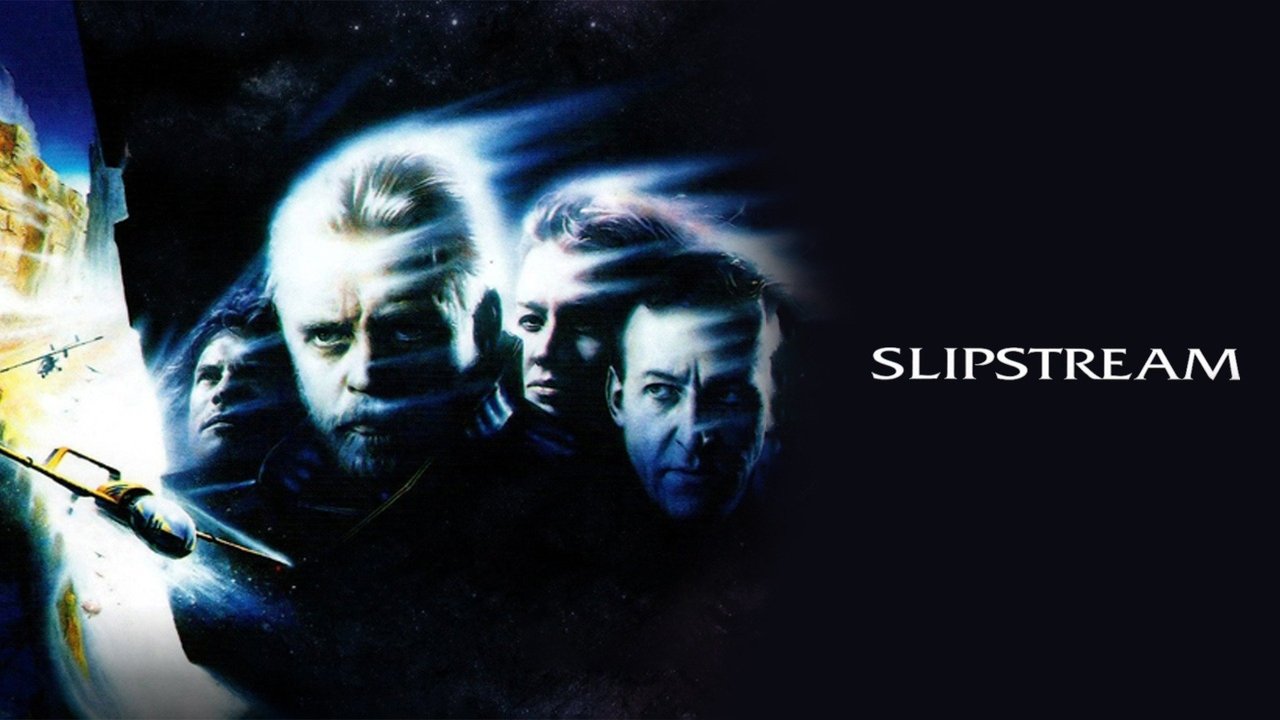
For many of us prowling the aisles of Blockbuster or the local mom-and-pop rental store, Slipstream likely existed only as intriguing cover art – perhaps featuring Hamill or the distinctive gliders – promising an epic sci-fi adventure. Renting it might have been a gamble. Did you find yourself captivated by its unique world and somber mood, or frustrated by its meandering pace? I remember being struck by the sheer difference of it; it didn't feel quite like anything else on the shelf, less concerned with easy thrills and more with building a specific, desolate feeling. It’s a film that rewards patience, asking you to soak in the atmosphere rather than just follow the plot beats.
Does it entirely succeed? Perhaps not. The script, credited to Tony Kayden (who also co-wrote the fantastic vampire western Near Dark (1987)), Charles Edward Pogue (writer of David Cronenberg's The Fly (1986)), and Bill Bauer, feels like it might have undergone significant changes, leaving some character motivations murky and the episodic structure occasionally disjointed. Yet, there's an undeniable haunting quality to it. The imagery lingers, as does the sense of a grand vision partially, but compellingly, realized.
Rating: 6/10
Slipstream earns a 6 not for flawless execution, but for its sheer audacity, its breathtaking visuals, Paxton's committedly weird performance, and its utterly unique, windswept atmosphere. The ambitious world-building and tangible practical effects evoke a specific kind of late-80s sci-fi that aimed high, even if it didn't quite reach the stratosphere. Its narrative flaws and pacing issues undoubtedly contributed to its commercial downfall, preventing it from being a true classic.
Ultimately, Slipstream remains a fascinating artifact – a high-budget, star-studded slice of philosophical sci-fi adventure that got lost in the currents of film history. It’s precisely the kind of forgotten oddity that makes digging through the virtual VHS crates so rewarding: flawed, perhaps, but brimming with a strange, melancholic beauty and a vision unlike much else from the era. A worthy discovery for the patient retro adventurer.