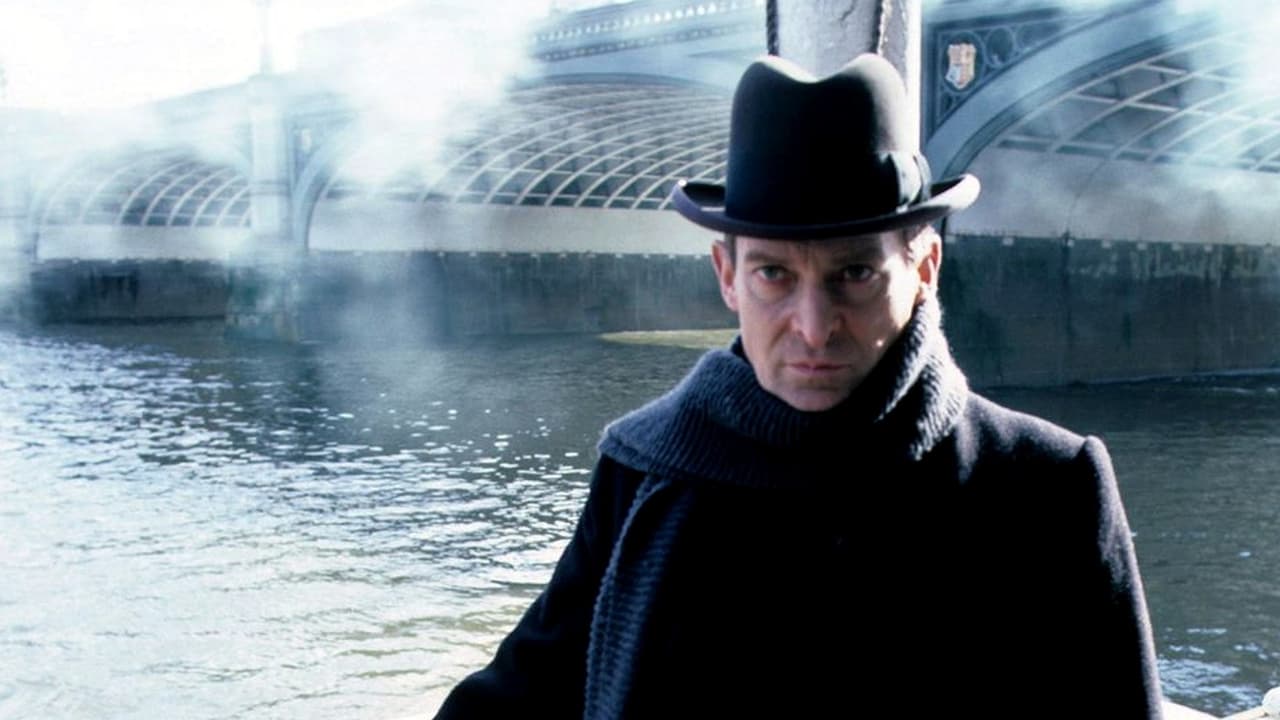
There's a particular quality to the fog in the Granada Television adaptations of Sherlock Holmes, isn't there? It isn't just weather; it's an atmosphere thick with secrets, clinging to the cobblestones and gas lamps of a meticulously recreated Victorian London (often ingeniously conjured from the streets of Manchester, a testament to the production team's resourcefulness). Watching their 1987 feature-length adaptation of The Sign of Four again, decades after its original broadcast, that atmosphere feels just as potent, drawing you back into a world of intrigue presided over by perhaps the most definitive screen Holmes, the incomparable Jeremy Brett.
A Tangled Web of Pearls and Promises
The story itself, faithfully adapted by John Hawkesworth (the guiding hand behind much of the Granada series), unfolds with the arrival of the enigmatic Miss Mary Morstan, portrayed with a quiet strength by Jenny Seagrove. Her tale is one of cryptic messages, mysteriously delivered pearls of great value, and the long shadow cast by her father's disappearance years prior. It’s classic Arthur Conan Doyle – a puzzle box wrapped in an enigma, leading Holmes and Watson down a path involving hidden treasure, old betrayals forged in the heat of India, and the looming figures of the vengeful Jonathan Small and his unnerving companion, Tonga. Director Peter Hammond, known for bringing a certain visual inventiveness even within television constraints, crafts scenes that linger – the tense meeting with Thaddeus Sholto amidst his exotic treasures, the eerie silence of Pondicherry Lodge, and of course, the thrilling boat chase along the Thames.
The Electric Mind of Baker Street
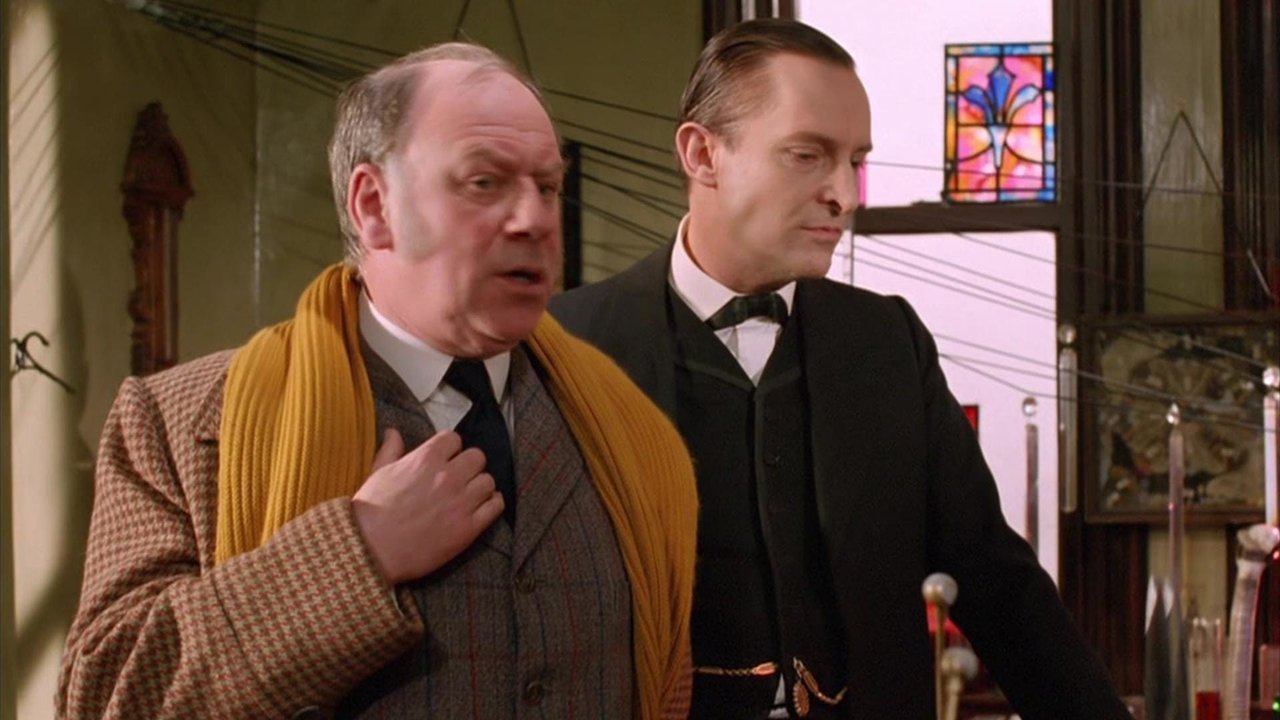
But let's be honest, the magnetic north of any Granada Holmes production is Jeremy Brett. Watching him here, you're reminded that this wasn't just acting; it was an immersion. Brett famously delved deep into Doyle's text, incorporating Holmes's described mannerisms, his sharp, bird-like movements, his sudden bursts of manic energy followed by periods of intense, almost unnerving stillness. There’s a fierce intelligence crackling behind his eyes, but also vulnerability, moments hinting at the complex, sometimes troubled man beneath the deductive genius. It's a performance that feels utterly authentic, a portrayal that, for many of us who grew up with these adaptations, simply is Sherlock Holmes. His dedication was legendary; stories abound of Brett keeping a copy of the Doyle canon on set, meticulously cross-referencing dialogue and character points, determined to embody the whole of Holmes, eccentricities and darkness included.
A New Companion, A Steady Hand
The Sign of Four also marks the second notable appearance (after The Solitary Cyclist case within the series) of Edward Hardwicke as Dr. John Watson. Taking over from the excellent David Burke, Hardwicke brings a different energy – perhaps a touch warmer, more grounded, an avuncular presence that provides the perfect counterpoint to Brett's often volatile brilliance. The easy camaraderie between this Holmes and Watson feels immediately comfortable, a partnership built on mutual respect and quiet understanding. Hardwicke’s Watson isn’t merely an observer; he’s an active participant, brave and loyal, and his steady presence allows Holmes's eccentricities to shine without overwhelming the narrative. It’s a subtle performance, but absolutely crucial to the dynamic that made the later Granada series so beloved.
Bringing Victorian London to the Screen
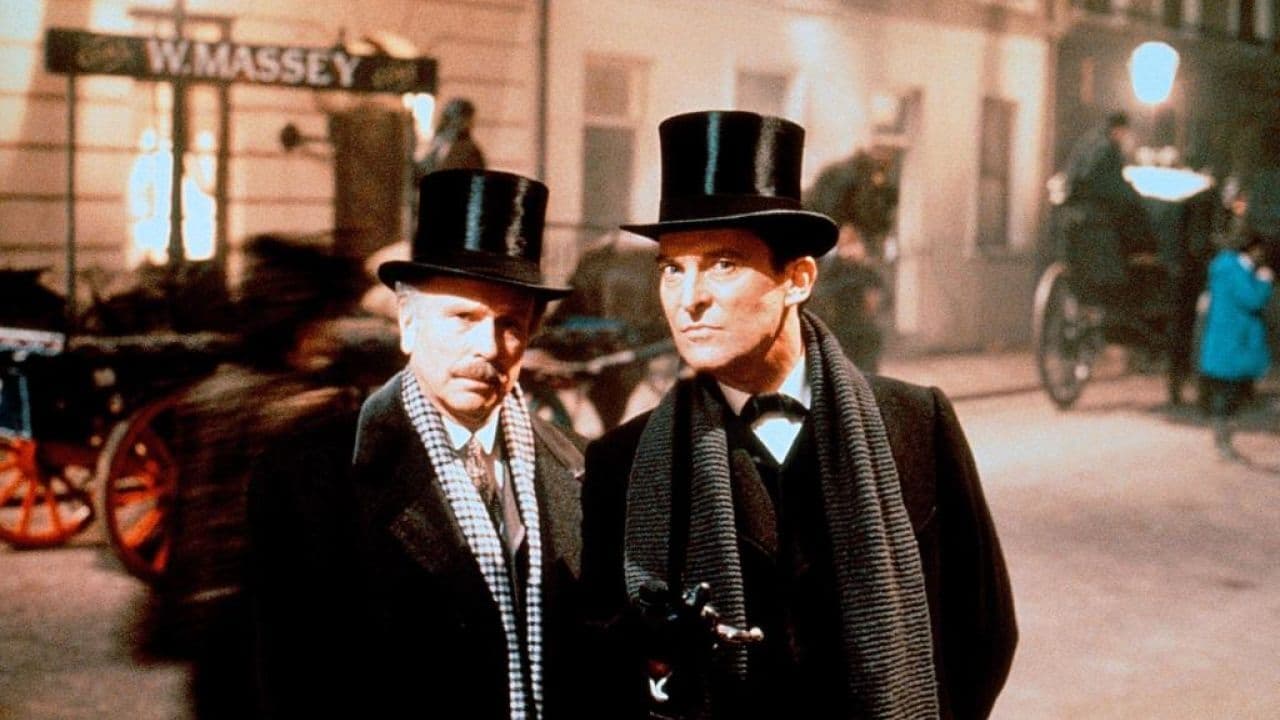
For a television production of its time, The Sign of Four boasts impressive production values. The attention to detail in the sets and costumes works hard to transport the viewer. You can almost smell the coal smoke and the damp Thames air. Filming the climactic boat chase – a sequence demanding speed and action – must have presented significant challenges on a television budget. While perhaps not possessing the slickness of a modern blockbuster equivalent, the sequence is remarkably effective, imbued with a sense of desperate pursuit that feels true to the source material. It's a reminder of the practical ingenuity often required in the era before ubiquitous CGI, relying on skillful camerawork, editing, and well-executed physical action (often performed under less-than-ideal conditions) to create excitement. Even the slightly dated quality of some effects, viewed through a nostalgic lens, adds a certain charm, like revisiting a favourite well-worn book.
Enduring Mysteries
Does The Sign of Four hold up? Absolutely. While paced more deliberately than contemporary thrillers, its strength lies in its atmosphere, its faithfulness to Doyle, and above all, the towering central performance. It captures the essence of the novel – the blend of intricate mystery, colonial legacy, and human drama. Watching it again isn't just about solving the puzzle alongside Holmes; it’s about revisiting a specific, cherished interpretation of his world. It reminds you of settling down, perhaps on a rainy evening, the glow of the CRT reflecting the foggy London streets, ready to be captivated once more.
Rating: 8/10
This rating reflects the film's success as a faithful and atmospheric Doyle adaptation, anchored by Jeremy Brett's definitive performance and the solid debut of Edward Hardwicke's beloved Watson. While constrained somewhat by its television origins, the direction, production design, and storytelling are remarkably strong, capturing the spirit of the source material beautifully. It remains a high point in the Granada series and a truly satisfying slice of Holmesian mystery.
What endures most, perhaps, is the sheer intellectual force combined with a deep, almost melancholic humanity that Brett brought to Holmes – a portrayal that continues to cast a long shadow over all subsequent interpretations.