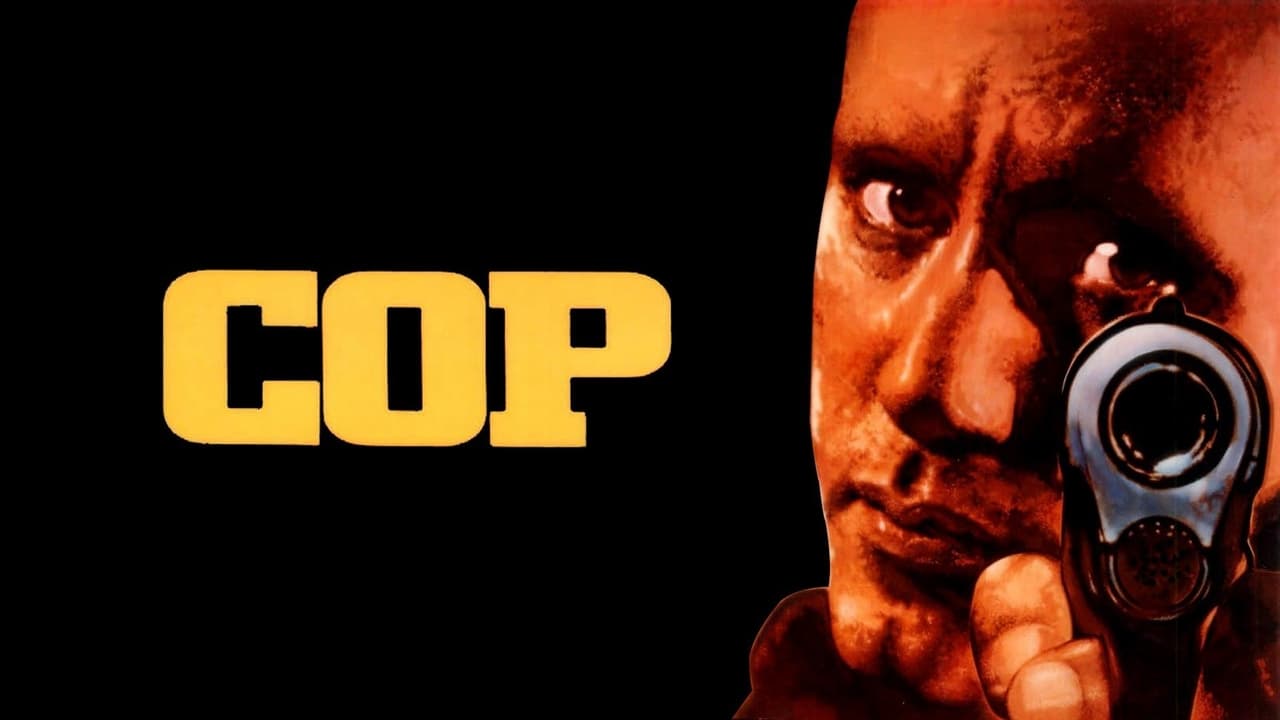
Okay, fellow travelers down the magnetic tape memory lane, let's dim the lights and slide another well-worn cassette into the VCR. Tonight, we're revisiting a film that doesn't offer easy comforts or clear-cut heroes. Instead, it plunges us headfirst into the grimy, morally ambiguous world of 1988's Cop. This isn't your standard beat-walking procedural; it’s a raw nerve exposed, a film that lingers long after the static fills the screen.

### A Descent into Darkness
What immediately strikes you about Cop isn't necessarily the plot – a twisted serial killer investigation – but the suffocating atmosphere it conjures. Forget the slick, heroic cops often seen in 80s cinema; Detective Lloyd Hopkins is something else entirely. He operates in a Los Angeles stripped of its glamour, rendered in shades of noirish decay and illuminated by flickering neon that seems to highlight desperation rather than promise. Director James B. Harris, perhaps better known for his crucial producing role on early Stanley Kubrick masterpieces like The Killing and Paths of Glory, crafts a world here that feels perpetually on edge, mirroring the frayed psyche of its protagonist.
### The Unforgettable Intensity of James Woods

At the heart of this darkness beats the frantic, almost terrifying energy of James Woods as Lloyd Hopkins. This isn't just a performance; it's a full-body immersion into obsession. Woods, who already unnerved and captivated audiences in films like Videodrome and Salvador, delivers arguably one of his most defining, if deeply unsettling, roles. Hopkins isn't merely dedicated; he's consumed. He bulldozes through regulations, personal boundaries, and basic decency with a single-minded focus that borders on the pathological. What makes it so compelling, and frankly disturbing, is the way Woods portrays this not as heroic determination, but as a manifestation of deep-seated damage. You see the intelligence flicker in his eyes, but it's constantly battling a volatile impulsiveness. There's a genuine sense of danger whenever he's on screen – you truly don't know what he'll do next. It's a performance that feels utterly authentic to the character's brokenness, even when his actions are repellent. Is he a good cop doing bad things, or something far more complex and troubling? The film forces us to sit with that discomfort.
### Ellroy's Shadow, Harris's Vision
The film is adapted from the novel Blood on the Moon by the master of modern L.A. noir, James Ellroy. Knowing this adds another layer of appreciation, and perhaps controversy. Ellroy, famous for his dense, brutal prose and unflinching explorations of corruption (L.A. Confidential, The Black Dahlia), famously wasn't keen on this adaptation. While Harris streamlines the intricate plotting typical of Ellroy, he undeniably captures the spirit of that bleak worldview. The film shares Ellroy's fascination with the corrosive nature of power, the pervasive misogyny within certain structures, and the thin, often non-existent line separating the enforcers from the predators. It might lack the labyrinthine complexity of Ellroy's best work on the page, but it translates the suffocating moral rot effectively to the screen, largely thanks to Woods' central performance. It’s a fascinating contrast to the later, more celebrated adaptation of L.A. Confidential, showcasing a rawer, perhaps less polished, but equally potent take on similar thematic territory.


### Grit Over Glamour
There’s a certain unvarnished quality to Cop that feels very much of its time, yet also timeless in its depiction of urban decay. The production design avoids flash, opting for locations that feel lived-in and worn down. The violence, when it comes, is often sudden and brutal, lacking the stylization found in many contemporary action thrillers. It feels grounded in a grim reality, which makes Hopkins' increasingly unhinged behaviour all the more jarring. Supporting players like Lesley Ann Warren, as a feminist writer drawn into Hopkins' vortex, and the always reliable Charles Durning, as his weary, seen-it-all superior, provide necessary counterpoints to Woods' intensity. Warren, in particular, navigates a difficult role, representing a perspective utterly alien to Hopkins' worldview, highlighting the casual disregard and danger women face in this predatory environment.
Interestingly, despite Woods' magnetic performance, the film wasn't a box office success, pulling in just over $4.6 million in the US against its production budget. Critically, it was divisive, with many praising Woods while finding the overall tone too nihilistic or the narrative perhaps too focused on its abrasive protagonist. Yet, for those of us haunting the thriller aisles of the video store back then, Cop stood out. It didn’t offer easy answers or catharsis. It offered a glimpse into an abyss, guided by one of the most intensely committed performances of the decade.
### Lasting Resonance
Does Cop still hold up? I’d argue yes, perhaps even more so now. In an era saturated with more sanitized portrayals of law enforcement, its willingness to portray its central figure as deeply flawed, obsessive, and operating in a morally grey (at best) zone feels bracingly honest, if uncomfortable. It’s not an easy watch, nor should it be. It’s a film that asks difficult questions about the price of dedication when it curdles into obsession, and the darkness that can reside within those sworn to protect. What truly stays with you is the unsettling feeling it leaves behind – a sense of unease perfectly embodied by James Woods' unforgettable, nerve-shredding performance.
---
Rating: 7.5/10
Justification: While undeniably bleak and featuring a protagonist whose methods are often reprehensible, Cop earns its score through the sheer force of James Woods' electrifying performance and James B. Harris' commitment to a gritty, uncompromising vision. It successfully captures the nihilistic spirit of its James Ellroy source material, even if streamlining the plot. Its flaws lie perhaps in its overwhelming grimness, which can be alienating, and some dated elements in its portrayal of certain dynamics. However, as a potent slice of 80s neo-noir and a showcase for a truly fearless central performance, it remains a compelling, if challenging, watch from the VHS era.
Final Thought: Some films entertain, others provoke. Cop definitely belongs in the latter category, leaving you to ponder the shadows long after the tape ejects.