That pervasive sense of dread, thick and clinging as the moorland fog itself... Few adaptations capture the chilling atmosphere of Sir Arthur Conan Doyle's most famous Sherlock Holmes adventure quite like the 1988 Granada Television production of The Hound of the Baskervilles. For many of us who huddled around the glow of a CRT screen, renting this feature-length special on VHS felt like an event. It wasn't just another mystery; it was the mystery, brought to life by the actor many consider the definitive Holmes: the electrifying Jeremy Brett.
Stepping onto Sacred Ground
Adapting Hound is a formidable task. The story is so iconic, its imagery – the spectral hound, the desolate moor, the Grimpen Mire – etched into our collective consciousness. Screenwriter John Hawkesworth, a steady hand who guided much of the Granada Sherlock Holmes series (and known for Upstairs, Downstairs), understood the weight of expectation. Directed by Brian Mills, a frequent collaborator on the series, this adaptation doesn't radically reinvent the wheel. Instead, it leans into the inherent strengths of the source material and the established power of its lead actors. It was presented as a two-hour special, a significant undertaking within the acclaimed series' run, filmed with a cinematic scope intended to do justice to Conan Doyle's gothic masterpiece.
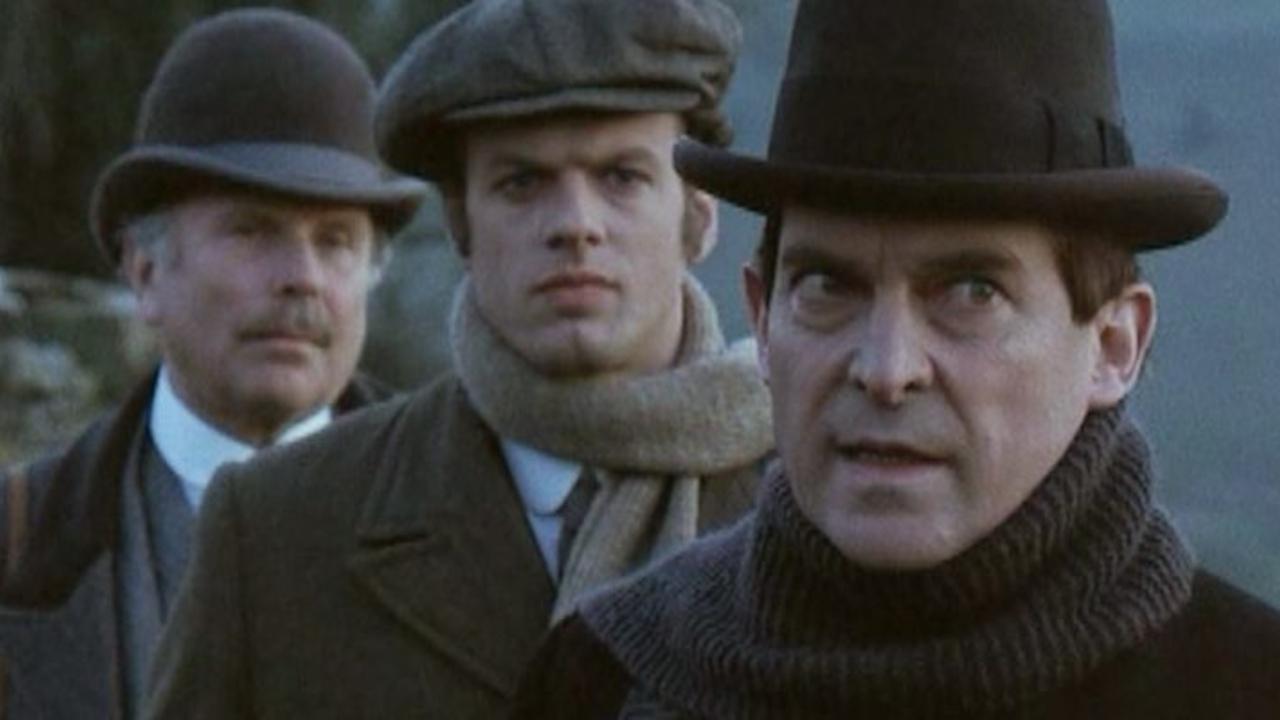
The plot, familiar to legions of fans, sees Holmes and Watson investigating the ancient curse plaguing the Baskerville family in Devonshire. The latest heir, Sir Henry Baskerville (a suitably earnest and increasingly frayed Kristoffer Tabori), arrives from Canada, seemingly marked for death by a monstrous, spectral hound. What elevates this version is its commitment to the story's pervasive sense of isolation and creeping fear.
Watson Takes the Lead
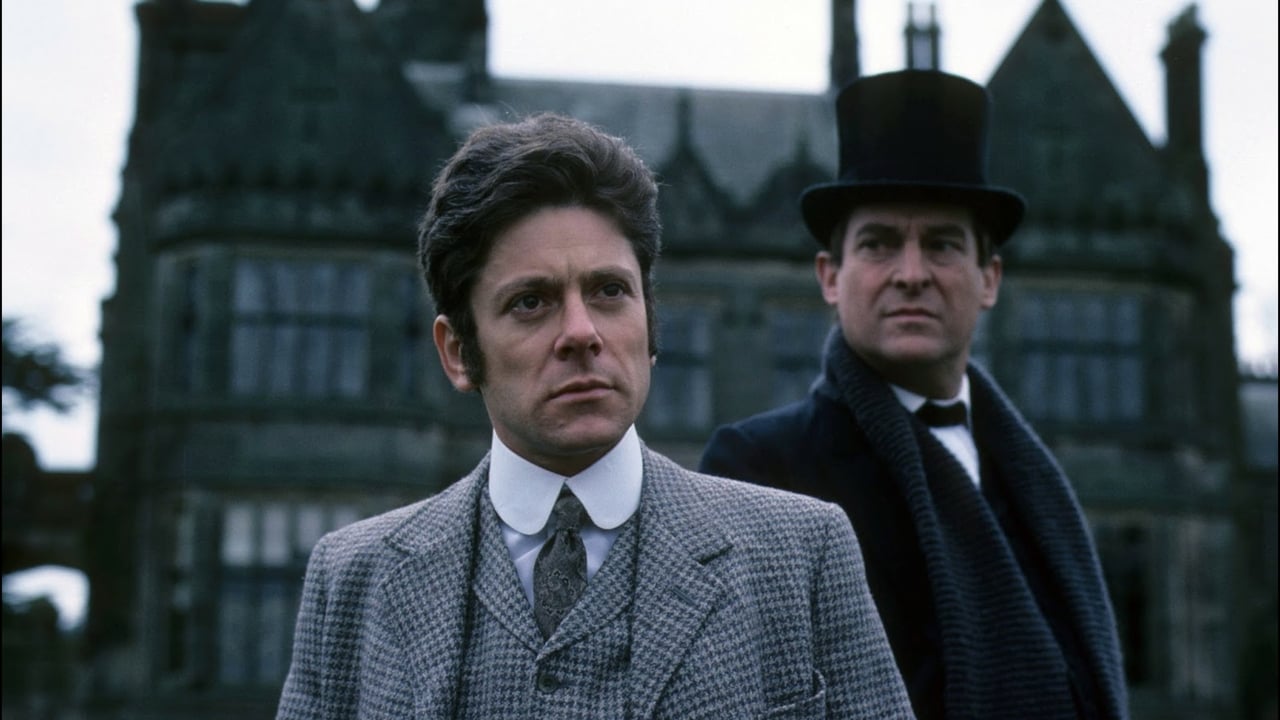
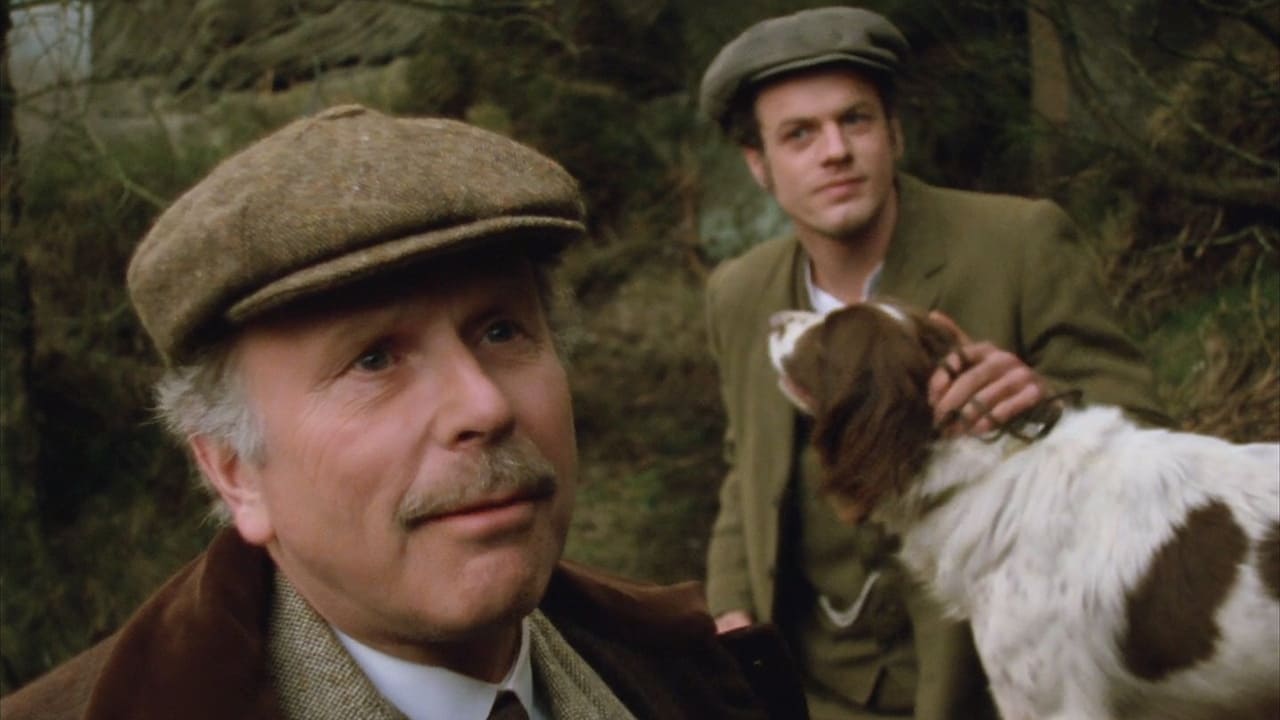
One of the narrative quirks of Hound is Holmes' deliberate absence for a large chunk of the investigation, sending Watson to Baskerville Hall as his eyes and ears. This allows Edward Hardwicke, in his second season as Dr. Watson (having taken over from David Burke), to truly shine. Hardwicke’s portrayal is pitch-perfect: intelligent, observant, loyal, and deeply human. He isn't merely a foil or narrator; he's the audience's anchor in this unsettling landscape, grappling with strange neighbours, cryptic warnings, and the ever-present howl echoing across the moors. His quiet determination and grounded presence provide a vital counterpoint to the story's more baroque elements. We feel Sir Henry's vulnerability through Watson's concerned gaze, and we piece together the puzzle alongside him. It's a performance that underscores Watson's crucial role in the partnership, something often overlooked.
The Unmistakable Holmes
When Jeremy Brett’s Holmes is on screen, he commands it utterly. Brett’s Holmes was never just an impersonation; it was a full-bodied inhabitation. His sharp, bird-like movements, the sudden flashes of intense concentration, the precisely clipped diction – it all contributed to a portrayal that felt both eccentric and utterly brilliant. In Hound, we see his keen intellect piercing through the superstition, but also his genuine concern for his friend Watson, placed in palpable danger. There's a memorable moment involving Holmes disguised on the moor; the reveal is pure Brett, a spark of theatricality amidst the grim proceedings. While some found Brett's later performances perhaps too intense as his health declined, here he strikes a powerful balance, capturing the character's energy and formidable presence. It's worth noting that filming on location often presented challenges for the series; capturing the bleak beauty of Dartmoor (or convincing stand-ins) required considerable effort, adding to the authentic, windswept feel.
Crafting the Atmosphere
The production design and cinematography work hard to evoke the gothic dread. Baskerville Hall feels suitably imposing and shadowed, while the exterior shots capture the stark, unforgiving beauty of the moor. The use of light and shadow is effective, building suspense in scenes like Stapleton's pursuit across the mire. Yes, perhaps the ultimate appearance of the hound itself, constrained by the television budget and practical effects capabilities of the late 80s, might not terrify a modern audience accustomed to CGI monstrosities. Some contemporary reviews even noted this limitation. However, the idea of the hound, the legend built around it, and the fear it instills in the characters remain potent, largely thanks to the strength of the performances and direction. The score, too, plays a crucial role, underscoring the mystery and the moments of sudden peril.
A Definitive Take?
Within the pantheon of Holmes adaptations, the Granada series holds a special place, and their Hound of the Baskervilles is often cited as a high point. Its faithfulness to the spirit, if not always the letter, of Conan Doyle's text, combined with the powerhouse performances of Brett and Hardwicke, makes it deeply compelling. It respects the intelligence of its audience, focusing on character, atmosphere, and the intricate plotting rather than relying on cheap scares. Watching it again on a worn VHS tape (or a modern equivalent!) evokes that feeling of settling in for a quality piece of television, a proper story well told. It captured the public imagination, drawing strong viewing figures for ITV and reinforcing the series' reputation for excellence.
Does it capture every nuance perfectly? Perhaps not. The pacing occasionally flags slightly during Watson's solo investigation, a challenge inherent in the source material's structure. But these are minor quibbles in what is otherwise a masterclass in adaptation.
Rating: 9/10
This score reflects its standing as a truly exceptional television adaptation, anchored by career-defining performances and a palpable, chilling atmosphere. It’s a near-perfect rendition of Conan Doyle's most famous work, capturing the gothic horror and intellectual rigor that make the story timeless. While the physical hound might feel dated, the psychological dread it represents remains remarkably effective.
For fans of Sherlock Holmes, or just expertly crafted period drama, this Hound remains essential viewing – a reminder of a time when television specials felt truly special. It lingers, much like the eerie howl on the wind across the dark and lonely moor.