It’s a peculiar sort of time capsule, isn't it? Watching Peter Ustinov embody Hercule Poirot in one of his 1980s television outings always feels slightly different from his grander cinematic turns. And with Thirteen at Dinner (1985), there’s an added layer of almost uncanny foreshadowing watching him share the screen with a certain Inspector Japp, played by none other than David Suchet. Seeing the future definitive Poirot playing Watson, essentially, to Ustinov’s Holmes provides a fascinating meta-textual wrinkle right from the start.
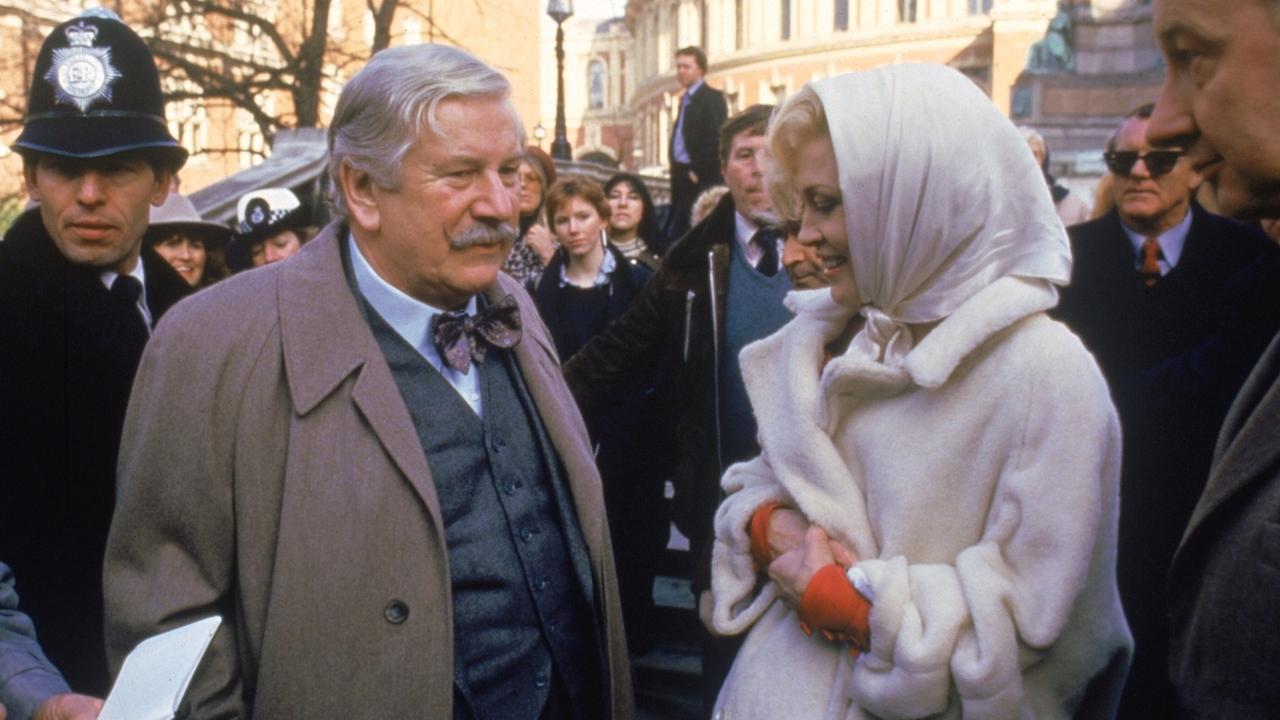
A Familiar Recipe, TV Dinner Style
Based on Agatha Christie's novel Lord Edgware Dies, this adaptation, penned by Rod Browning and directed by TV veteran Lou Antonio, serves up a classic Christie setup. The acerbic Lord Edgware is murdered shortly after refusing to grant his actress wife, Jane Wilkinson (Faye Dunaway), a divorce. Poirot and Captain Hastings (here played serviceably by Jonathan Cecil) are drawn in, especially since Jane was seen dining with thirteen guests – including a talented mimic named Carlotta Adams (also Faye Dunaway) – on the night of the crime. Witnesses claim Jane visited her husband that evening, but she has an airtight alibi. Could the mimic have been involved?
It’s standard Christie fare, deftly plotted as always by the Dame herself. This TV movie version, however, feels distinctly like a product of its time. Produced for CBS, it has that comfortable, slightly less ambitious feel compared to the glossy feature films like Death on the Nile (1978) or Evil Under the Sun (1982) where Ustinov had previously donned the mustache. The pacing is brisk, perhaps sometimes sacrificing atmosphere for expediency, tailored for commercial breaks and holding attention spans presumed shorter by network executives. I remember catching these Ustinov TV Poirots intermittently back in the day; they were reliable, slightly cozy mysteries beamed right into the living room, a different sort of event than a trip to the cinema or even the video store blockbuster aisle.
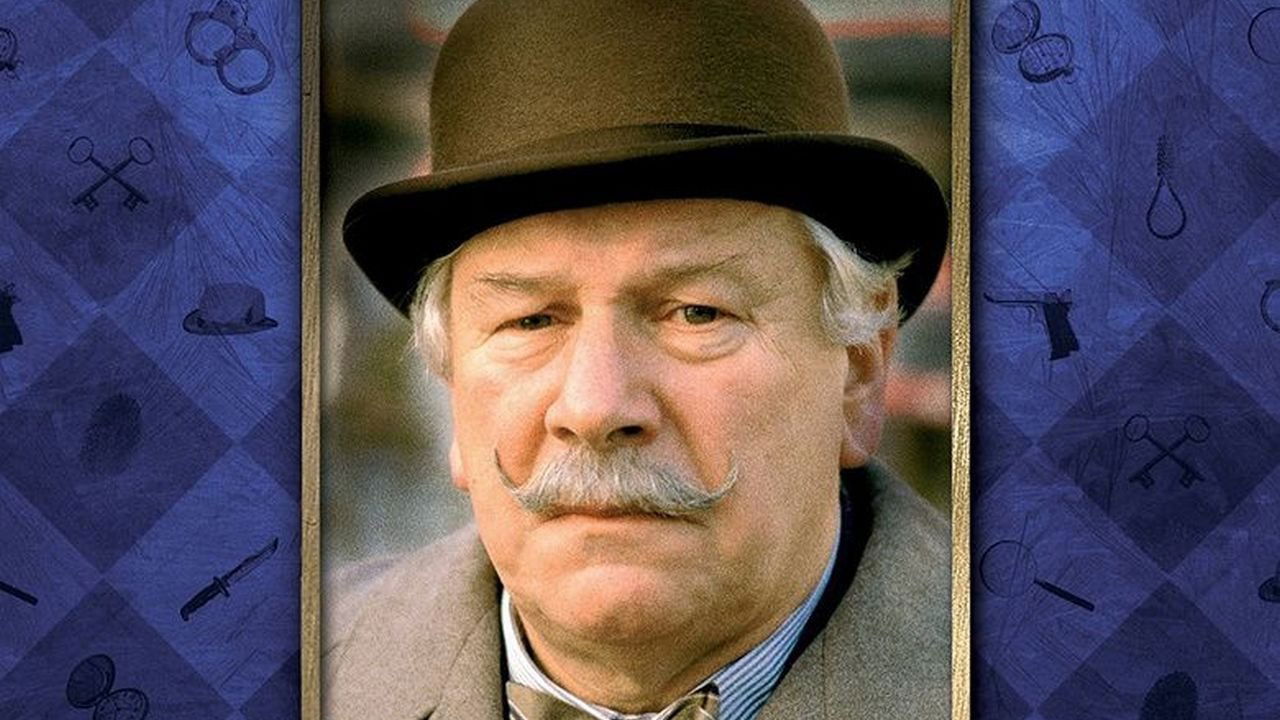
Ustinov and Dunaway Take Center Stage
Ustinov remains the main draw, of course. His Poirot is less fastidious, perhaps more outwardly avuncular and rumpled than Christie purists might prefer, but he possesses an undeniable charm and intelligence. He ambles through the mystery with a twinkle in his eye, a world-weary investigator who's seen it all but still finds humanity endlessly fascinating (and baffling). It's a performance built on charisma, even if it deviates from the literary source.
Counterbalancing him is Faye Dunaway, pulling double duty as the ambitious, somewhat abrasive American actress Jane Wilkinson and the skilled, more vulnerable impersonator Carlotta Adams. It’s a casting choice that demands attention. Dunaway, a screen powerhouse (Network (1976), Chinatown (1974)), certainly commits. She differentiates the two women effectively – Jane’s sharper edges and overt theatricality contrasting with Carlotta’s quieter intensity and underlying anxiety. Does the dual performance entirely convince within the confines of the plot's mechanics? Perhaps not perfectly, but watching Dunaway navigate the roles is undeniably one of the film's chief pleasures.
That Curious Case of Inspector Japp
And then there’s David Suchet. Seeing him here as Inspector Japp, Poirot’s stalwart but often slightly exasperated Scotland Yard associate, is truly something special for fans of the later, long-running Poirot series (which began in 1989). Suchet is excellent as Japp – grounded, professional, a perfect foil to Ustinov’s more eccentric detective. Yet, knowing the precise, almost definitive portrayal of Poirot he would later craft makes watching his interactions here almost surreal.
There’s a fascinating bit of behind-the-scenes lore here, too. Reports suggest that Suchet, known for his meticulous preparation, found Ustinov’s looser, more improvisational approach to dialogue somewhat challenging on set. It highlights the contrasting styles these two great actors brought to the same character universe, years apart. This detail alone makes Thirteen at Dinner a unique curio in the vast library of Christie adaptations, a must-see for anyone tracing the lineage of Poirot on screen.
The Verdict: A Pleasant, If Unremarkable, Mystery Meal
Thirteen at Dinner doesn't aim for the cinematic grandeur of its big-screen cousins, nor the meticulous period detail and psychological depth of the subsequent Suchet series. Director Lou Antonio delivers a competent, straightforward television mystery. Shot mainly on location in London, it offers decent production values for its time and medium, though it undeniably carries that specific mid-80s TV movie aesthetic – functional, sometimes a little flat, but comfortable, like a well-worn armchair. It moves along efficiently, hits the key plot points, and allows its stars to shine within those parameters.
It’s the kind of film that likely filled a pleasant evening slot back in '85, and watching it now evokes a certain nostalgia for that era of television production. It’s not aiming to redefine the genre, but rather to provide a satisfying slice of familiar comfort food.
Rating: 6/10
The score reflects a perfectly serviceable, enjoyable Agatha Christie adaptation elevated by Peter Ustinov's reliable charm and Faye Dunaway's intriguing dual performance. Its primary historical interest, however, lies in the fascinating casting of David Suchet as Japp, offering a glimpse of the actor just a few years before he would inherit Poirot's mantle and make it definitively his own. For Christie completists and fans curious about that unique overlap of Poirot portrayals, Thirteen at Dinner is a worthwhile watch, a pleasant echo from the video shelves of yesterday. It leaves you wondering, though: did Suchet, playing Japp, ever look across at Ustinov's Poirot and think, "One day..."?