It arrives like a whisper from another time, doesn't it? Amidst the neon glow and explosive spectacle that defined so much of 80s cinema, finding John Huston's The Dead (1987) on a video store shelf felt like uncovering a hidden chamber. There were no high-concept hooks, no booming synth scores, just the promise of something quieter, something drawn from the deep well of James Joyce's famously poignant short story. To watch it then, and perhaps even more so now, is to step outside of time, invited into a Dublin evening thick with memory, unspoken regrets, and the gentle fall of snow.
An Evening's Unfolding Grace
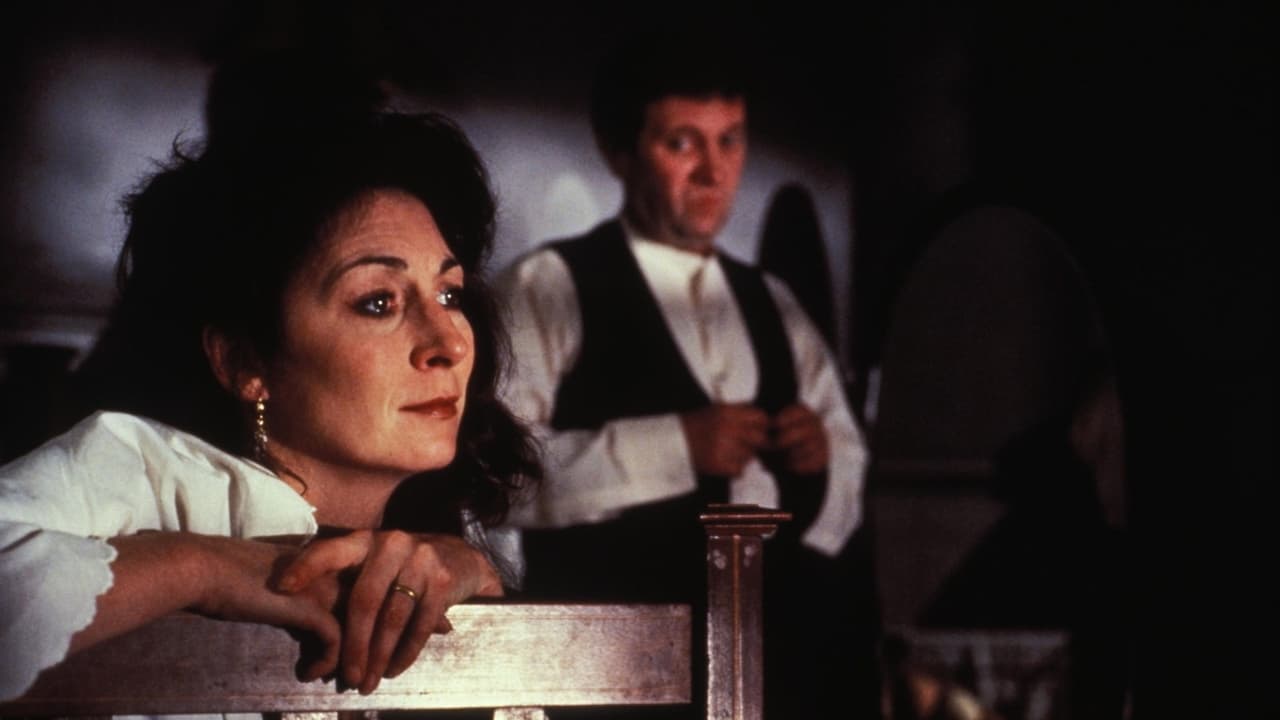
The film, adapted with extraordinary fidelity and sensitivity by Huston's son, Tony Huston (who rightfully earned an Oscar nomination for his screenplay), unfolds during the Feast of the Epiphany, circa 1904. We are guests alongside Gabriel Conroy (Donal McCann) and his wife Gretta (Anjelica Huston) at the annual dinner party hosted by his elderly aunts, Kate (Helena Carroll) and Julia Morkan (Cathleen Delany), and their niece Mary Jane (Ingrid Craigie). What follows isn't driven by plot in the conventional sense, but by the ebb and flow of conversation, music, shared memories, and the subtle currents of emotion that pass between the guests. It’s a film built on atmosphere, on the warmth of flickering gaslight, the clinking of glasses, the shared laughter, and the inevitable undercurrent of melancholy that surfaces as the night wears on.
Huston's Poignant Farewell

Knowing the circumstances of its creation adds an almost unbearable poignancy to The Dead. This was John Huston's final film, directed with unwavering vision despite his rapidly failing health. Confined to a wheelchair and often reliant on an oxygen tank, the legendary director, known for rugged classics like The Maltese Falcon (1941) and The Treasure of the Sierra Madre (1948), poured his remaining energy into this delicate, deeply felt adaptation. Much of the film had to be shot in California, meticulously recreating early 20th-century Dublin interiors, a testament to the crew's dedication under challenging conditions. There's a sense that Huston, facing his own mortality, connected profoundly with Joyce's themes of life, loss, and the weight of the past. Does this knowledge colour our perception? Perhaps. But the mastery on display – the patient observation, the perfectly modulated performances, the precise capturing of mood – stands entirely on its own.
Echoes in Performance
The ensemble cast is uniformly excellent, embodying the various shades of Irish hospitality, pride, and underlying anxieties. Donal McCann as Gabriel is masterful. He carries the weight of intellectual confidence, perhaps a touch of social awkwardness, and the slow-dawning realization that his understanding of his own life, and particularly his wife, is incomplete. His journey through the evening, culminating in his devastating final monologue, is a study in subtle shifts of expression and contained emotion.
And then there is Anjelica Huston. Working under her father's direction for the last time, she delivers a performance of breathtaking interiority as Gretta. For much of the party, she is a gracious, somewhat reserved presence. But the moment arrives, late in the evening, when the tenor Bartell D'Arcy (Frank Patterson) sings the old Irish air, "The Lass of Aughrim." The camera holds on Gretta's face as she listens on the stairs, lost in a memory triggered by the melody. It's a moment of pure cinematic grace, conveying volumes without a word. The subsequent scene in the hotel room, where Gretta reveals the story of Michael Furey, a young man who loved her and died tragically in his youth, is simply shattering. Her quiet confession, imbued with a sorrow that transcends time, feels utterly authentic, laying bare the hidden landscapes of the heart. It's arguably one of the finest moments in her distinguished career.
The Weight of What Lingers
The Dead isn't concerned with narrative twists, but with the profound resonance of small moments – a shared dance, an awkward exchange, a nostalgic anecdote, a sudden flare of political argument, the haunting melody of a song. Huston allows these moments to breathe, trusting the audience to absorb the intricate tapestry of relationships and histories. The film culminates in Gabriel's famous internal reflection, gazing out the hotel window at the falling snow, contemplating his wife's secret sorrow and his own place among the living and the dead. Joyce's prose is rendered visually and emotionally, creating an ending that is both melancholic and strangely peaceful.
It’s a film that requires patience, a willingness to settle into its rhythms and observe its characters closely. It offers no easy answers, only complex questions about connection, mortality, and the ghosts we carry. What does it mean to truly know another person? How do the memories of the departed continue to shape the lives of the living? The film leaves these thoughts swirling, much like the snow falling softly over Ireland.
Rating: 9/10
This score reflects the film's status as a near-perfect adaptation, a masterclass in atmospheric direction, and a showcase for incredibly nuanced performances, particularly from Anjelica Huston and Donal McCann. It's a deeply moving, intelligent, and beautifully crafted piece of cinema, representing a poignant final statement from one of Hollywood's great directors. Its deliberate pace might not suit all tastes accustomed to faster 80s fare, but its emotional depth and artistry are undeniable.
The Dead remains a unique treasure from the VHS era – a quiet, profound film that lingers long after the credits roll, reminding us of the enduring power of memory and the intricate, often unseen, connections between past and present. It’s a film that feels less watched and more experienced, an invitation into a specific time and place that ultimately speaks to universal human truths.