There's a curtain, isn't there? Not always a literal one, but a veil between the audience and the performance, between the life presented and the reality underneath. Few films pull back that curtain with such deliberate, almost unnerving grace as Alain Resnais's 1986 chamber piece, Mélo. Watching it again after all these years, likely on a format far removed from its intended theatrical glow, feels like uncovering a hidden jewel box – ornate, perhaps a touch fragile, but holding something undeniably precious and deeply felt within. It wasn't the tape likely flying off the rental shelves next to the latest action blockbuster, but finding it felt like a discovery, a secret shared.
### The Stage Within the Frame
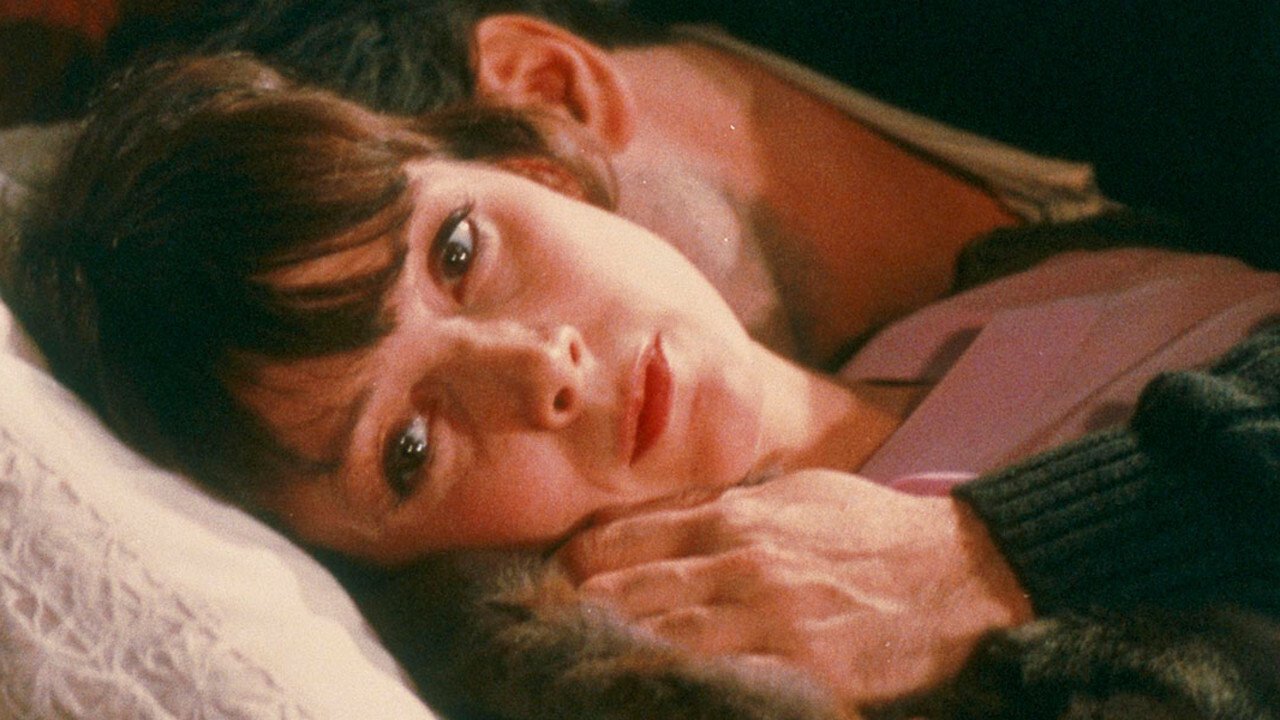
Mélo announces its intentions from the start. Adapted with meticulous fidelity by Alain Resnais from Henri Bernstein's 1929 stage play, the film doesn't try to disguise its theatrical origins; it embraces them. We are immediately plunged into a world constructed on soundstages, with opulent, almost painterly sets representing the Parisian apartments and salons where passions simmer and boil over. This isn't the gritty realism that often defined 80s cinema; it's a heightened reality, one where dialogue flows in long, elegant sentences and emotions are performed as much as felt. Resnais, a master craftsman known for dissecting time and memory in films like Hiroshima Mon Amour (1959) and Last Year at Marienbad (1961), uses this deliberate artificiality not to create distance, but to focus our attention intensely on the human drama unfolding. The long takes, the proscenium-like framing – it all compels us to watch, truly watch, the actors.
### An Ache at the Heart
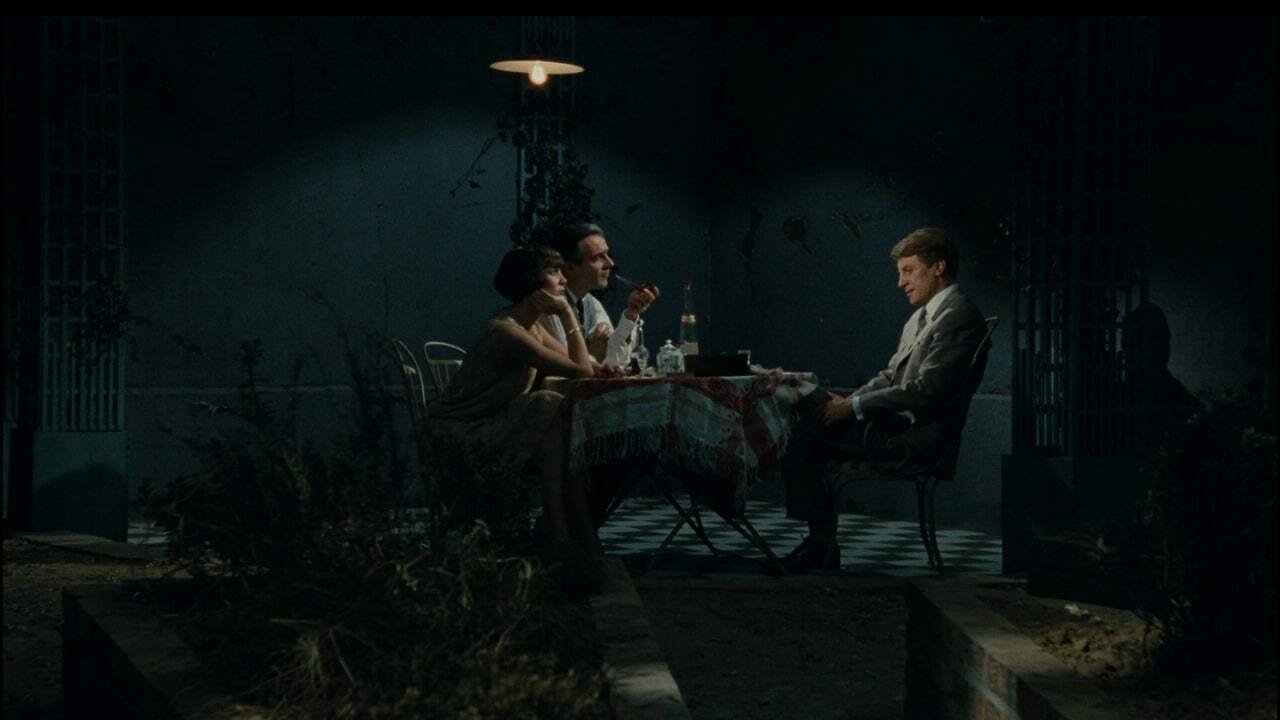
The story itself is timeless, almost archetypal: two old friends, both talented violinists, reunite. Pierre (Pierre Arditi) is amiable, settled, perhaps a little complacent, married to the captivating and mercurial Romaine (Sabine Azéma). Marcel (Fanny Ardant) is the more celebrated concert virtuoso, worldly and charismatic. A glance, a shared musical passion, a clandestine meeting – soon, Romaine and Marcel are entangled in a passionate affair, setting in motion a chain of events that spirals towards tragedy. It sounds like pure melodrama – the title Mélo even embraces the term – but Resnais elevates it beyond simple theatrics. He uses the structure to explore the nuances of love, the bitterness of betrayal, the lies we tell others and ourselves, and the inescapable consequences of our choices. What does it mean to truly love someone? And how easily can that love curdle into something destructive?
### A Masterclass in Performance
If the sets provide the stage, it's the actors who breathe devastating life into Mélo. This film rests entirely on the shoulders of its central trio, all frequent Resnais collaborators, and they deliver performances of staggering power and complexity. Sabine Azéma, who won a richly deserved César Award for Best Actress, is simply extraordinary as Romaine. She navigates the character's shifting tides – flirtatious charm, desperate longing, calculated manipulation, profound vulnerability – with astonishing precision. Is she a victim of her own passions, or a calculating femme fatale? Azéma makes her infuriatingly, heartbreakingly both.
Pierre Arditi, who also took home a César for Best Supporting Actor, perfectly embodies the decent, trusting husband whose world slowly unravels. His dawning awareness, the subtle shifts from cheerful bonhomie to quiet devastation, is deeply affecting. And Fanny Ardant, as the catalyst Marcel, brings a magnetic presence – the successful artist swept up in a love that offers both ecstasy and ruin. The chemistry between Azéma and Ardant is electric, making their illicit connection utterly believable, while the shifting dynamic between Arditi and Azéma forms the film's tragic spine. Watching them inhabit these roles, navigating Resnais's long takes and Bernstein's rich dialogue, feels less like watching acting and more like witnessing souls laid bare.
### Resnais's Delicate Touch
While embracing the play's structure, Resnais subtly weaves in his own cinematic signatures. The editing, though less fragmented than in some of his earlier works, still plays with rhythm and emphasis. The camera movements, often deliberate and gliding, draw us into the psychological space of the characters. He doesn't shy away from the heightened emotion inherent in the material; instead, he refines it, finding the truth within the artifice. It's fascinating to note that Resnais considered this one of his most "classical" films, yet it still feels distinctly his – a controlled experiment in form and feeling. The very deliberate pacing, the refusal to rush emotional beats, forces a contemplation rare in cinema then and now. It asks for patience, but the reward is immersion in a deeply human story told with uncommon artistry.
It's also a small window into the dedication behind the scenes; Resnais's insistence on maintaining the play's three-act structure and linguistic style wasn't about ease, but about honouring the source while exploring its cinematic potential. This commitment resulted in a film that feels both timeless, thanks to its universal themes, and uniquely of its creator's vision.
Rating: 8.5/10
This score reflects Mélo's status as a masterfully acted and directed piece of art-house cinema. The performances by Sabine Azéma, Pierre Arditi, and Fanny Ardant are exceptional, forming the luminous core of the film. Alain Resnais's direction is precise and intelligent, using theatrical conventions to heighten, rather than diminish, the emotional impact. It loses a point and a half perhaps only because its deliberate theatricality and pacing might prove demanding for viewers seeking conventional cinematic realism, making it less immediately accessible than some other classics. However, for those willing to engage with its unique style, Mélo offers profound rewards.
It’s a film that lingers, not through flashy effects or shocking twists, but through the resonance of its performances and the quiet weight of its emotional truths. Finding this tape felt like stumbling upon a sophisticated European import tucked away in the rental store – a reminder that even amidst the action and horror VHS boom, quieter, more introspective cinematic treasures were waiting to be discovered. What remains most powerfully is the echo of Azéma’s portrayal – the haunting question of how much of Romaine’s life, like the film itself, was a performance?