There's a certain kind of unease that lingers long after the VCR clicks off, a disquiet born not of jump scares or monstrous threats, but from the mirror Marco Bellocchio holds up to the feverish, often destructive nature of human obsession. Watching Devil in the Flesh (Il diavolo in corpo) again, decades after its notorious arrival on video store shelves, that feeling remains potent. This isn't a comfortable film; it wasn’t meant to be. It aims directly for the turbulent space where adolescent awakening crashes against adult disillusionment and mental fragility.
An Adaptation Ignited
Many knew the title originated with Raymond Radiguet's scandalous 1923 novel, a tale of illicit love during WWI. But Bellocchio, never one to shy away from thorny political and psychological territory (as fans of his earlier, incendiary Fists in the Pocket know well), transplants the core dynamic to contemporary 1980s Rome. The backdrop isn't war, but a different kind of societal tension – the lingering shadows of the Red Brigades, the trial of Giulia's terrorist fiancé, the pervasive sense of a world teetering on edge. This wasn't just an update; Bellocchio significantly reworked the narrative, infusing it with his distinct preoccupations. Radiguet's tale of tragic young love becomes something far more ambiguous and psychologically volatile in Bellocchio's hands. Reportedly, Bellocchio felt the original novel was too romanticized and wanted to explore the darker, more purely physical and psychological aspects of such an affair.
A Moth to the Flame

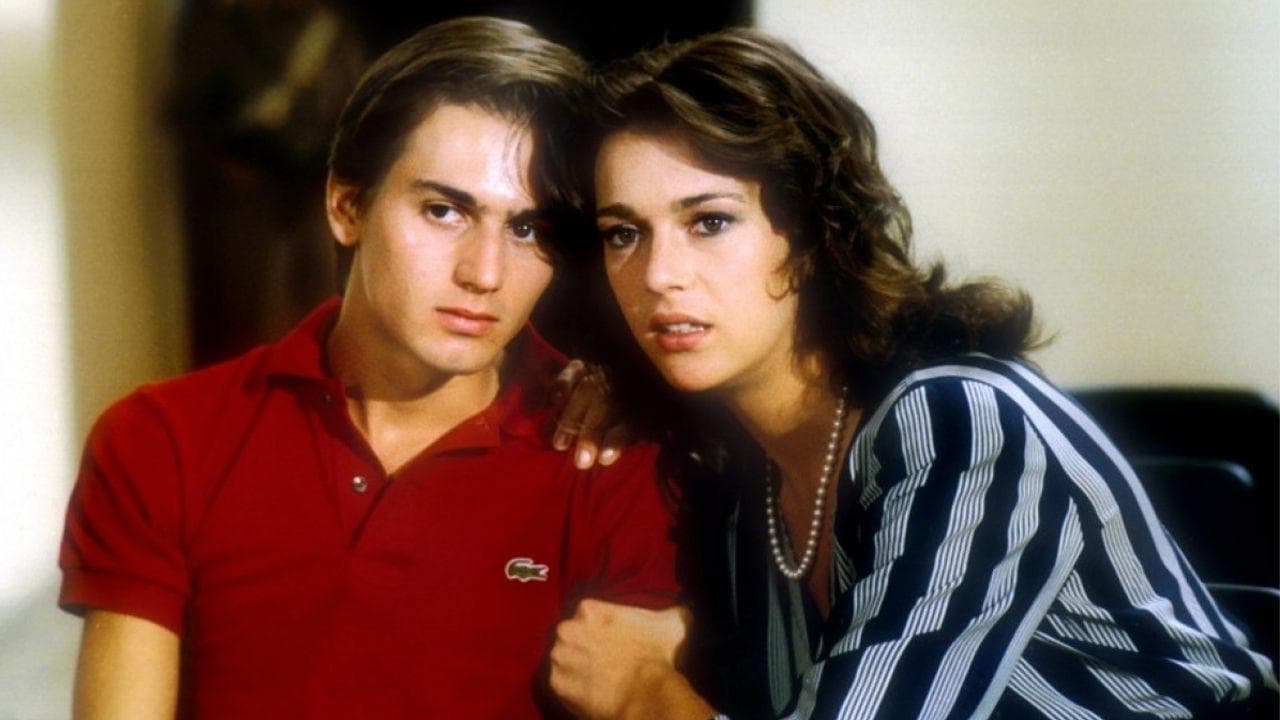
At the heart of the film is the consuming relationship between Andrea (Federico Pitzalis), a high school student, and Giulia (Maruschka Detmers), a beautiful, disturbed young woman engaged to a man imprisoned for political crimes. Pitzalis, remarkably a non-professional actor chosen by Bellocchio for his authentic adolescent intensity, embodies Andrea's initial wide-eyed fascination curdling into something desperate and possessive. His performance feels raw, unvarnished – you see the boy grappling with forces far beyond his comprehension. It's a fascinating casting choice; Bellocchio apparently wanted someone who genuinely seemed overwhelmed by the situation, and Pitzalis delivers that vulnerability.
Opposite him, Maruschka Detmers delivers a performance of magnetic volatility. Giulia is enigmatic, seductive, deeply troubled, and terrifyingly unpredictable. Detmers navigates these shifts with a compelling physicality, embodying a woman both trapped by circumstance and dangerously liberated by her own impulses. There's a fragility beneath her provocations, a sense of profound psychological distress that the film doesn't shy away from, even if it sometimes feels Andrea (and perhaps the viewer) is more captivated by the surface chaos than the underlying pain. Their connection isn't romantic; it's carnal, obsessive, a folie à deux played out against the backdrop of Giulia's crumbling mental state and Andrea's reckless abandon.
The Elephant in the Room


Of course, it’s impossible to discuss Devil in the Flesh without acknowledging the scene that dominated headlines and sparked censorship battles across the globe: the moment of unsimulated fellatio performed by Detmers on Pitzalis. Its inclusion was, and remains, deeply controversial. Bellocchio defended it as essential to depicting the raw, transgressive nature of Giulia and Andrea's bond, a breaking of cinematic taboos mirroring the characters' own disregard for convention. Detmers herself has spoken about the scene over the years, sometimes defending it as part of the character's truth, other times expressing reservations about its execution and impact.
Did it need to be explicit? Viewing it now, the scene feels less shocking in its act than in its context – a moment of desperate intimacy intertwined with Giulia's manipulation and Andrea's naive surrender. Whether it truly deepens the psychological portrait or simply serves as a succès de scandale is a debate that continues. Certainly, its notoriety often overshadowed the film's other ambitions, reducing complex themes to a single explicit act. Its premiere at the 1986 Cannes Film Festival was met with gasps and walkouts, cementing its reputation long before it hit VHS. I recall seeing the tape on the "Adult Drama" shelf at the local rental place, its very presence feeling illicit, whispering of boundaries crossed.
Beyond the Controversy
Looking past the explicit content, Bellocchio crafts a film steeped in atmosphere. The Rome presented here isn't the picturesque city of postcards; it's often claustrophobic, mirroring the characters' intense, inwardly-focused relationship. Bellocchio uses enclosed spaces – apartments, classrooms, courtrooms – to heighten the sense of entrapment. The narrative deliberately avoids easy answers or moral judgments. Is Giulia a victim of her fiancé's actions and her own mental state? Is she a manipulative predator? Is Andrea a naive boy corrupted, or a willing participant eager to shed his innocence? The film leaves these questions open, forcing the viewer to wrestle with the unsettling ambiguities of the characters' motivations. It doesn't offer the catharsis of traditional drama, but rather the lingering discomfort of unresolved psychological tension.
The film's exploration of transgression, challenging societal norms, and the often-blurred line between passion and pathology feels characteristically Bellocchio. While perhaps not reaching the searing heights of his best work, it remains a potent, provocative piece of 80s European arthouse cinema. It dared to tread where few mainstream films would, asking uncomfortable questions about desire, sanity, and the consuming nature of obsession.
Rating: 7/10
Devil in the Flesh is undeniably a product of its time, forever linked to the controversy surrounding its explicit content. However, beneath the notoriety lies a challenging, psychologically complex drama anchored by committed performances, particularly from the magnetic Maruschka Detmers and the raw Federico Pitzalis. Marco Bellocchio's confrontational style creates an unsettling atmosphere that lingers. While the infamous scene risks overshadowing the film's thematic explorations of obsession and mental fragility, it remains a significant, if uncomfortable, piece of 80s cinema. It’s a film that demands discussion, pushing boundaries in ways that few VHS tapes on the rental shelf ever dared.
It leaves you questioning not just the characters' choices, but the very nature of watching – are we observers, or somehow complicit in the uncomfortable intimacy unfolding on screen?