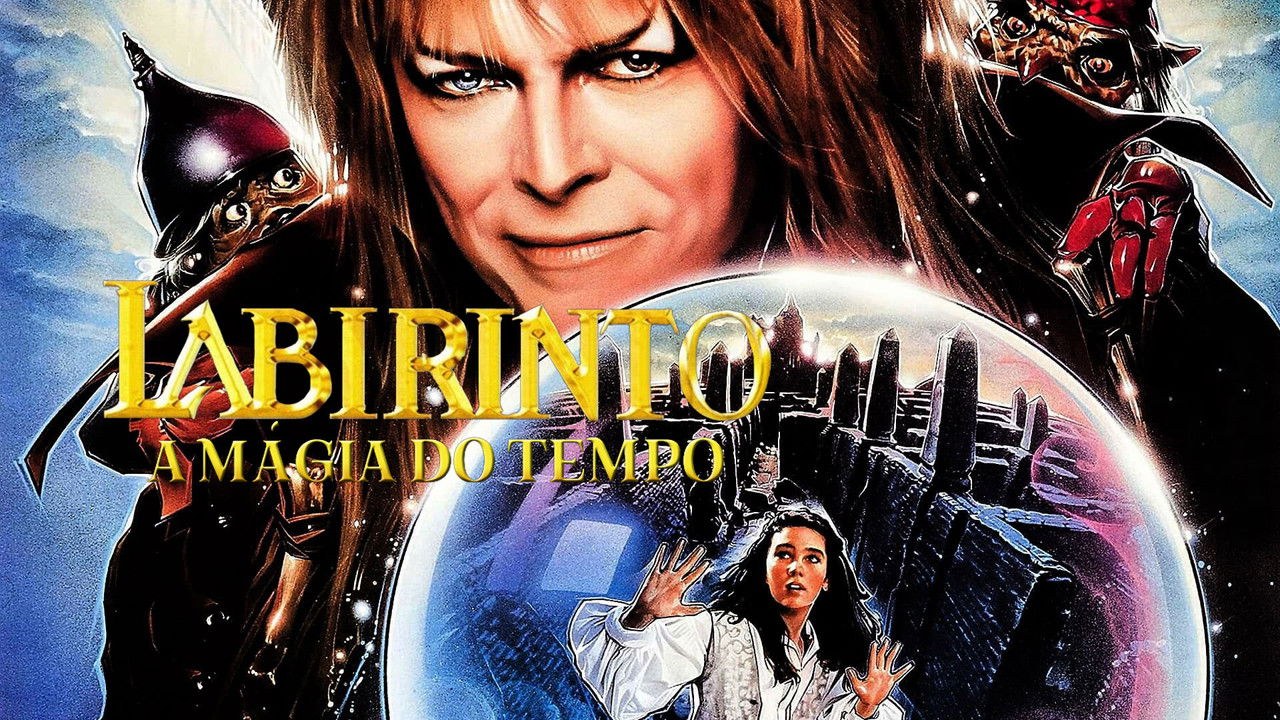
Step into a world where goblins dance, riddles twist reality, and a Goblin King with rockstar charisma holds court. I'm talking, of course, about Labyrinth (1986), a film that arrived like a fantastical fever dream on our flickering CRT screens. It wasn’t just a movie; for many of us clutching worn-out VHS tapes, it felt like stepping through a portal ourselves, right alongside young Sarah. Directed by the legendary Jim Henson, this journey into a bewildering maze remains a singular piece of 80s fantasy, a testament to the power of practical effects and pure, unadulterated imagination.

### Through Dangers Untold
The premise is elegantly simple yet ripe for adventure: teenager Sarah (Jennifer Connelly), frustrated with babysitting her infant brother Toby (Toby Froud), carelessly wishes him away to the goblins. To her horror, the wish is granted by Jareth, the enigmatic Goblin King (played with magnetic allure by the one and only David Bowie). He gives Sarah thirteen hours to solve his labyrinth and rescue Toby, or the baby will become a goblin forever. What follows is less a straightforward quest and more a tumble down a rabbit hole filled with bizarre creatures, shifting landscapes, and logic-defying puzzles. It tapped directly into that teenage angst of wanting freedom, only to be confronted with the terrifying weight of responsibility.
### Henson's Creature Comforts
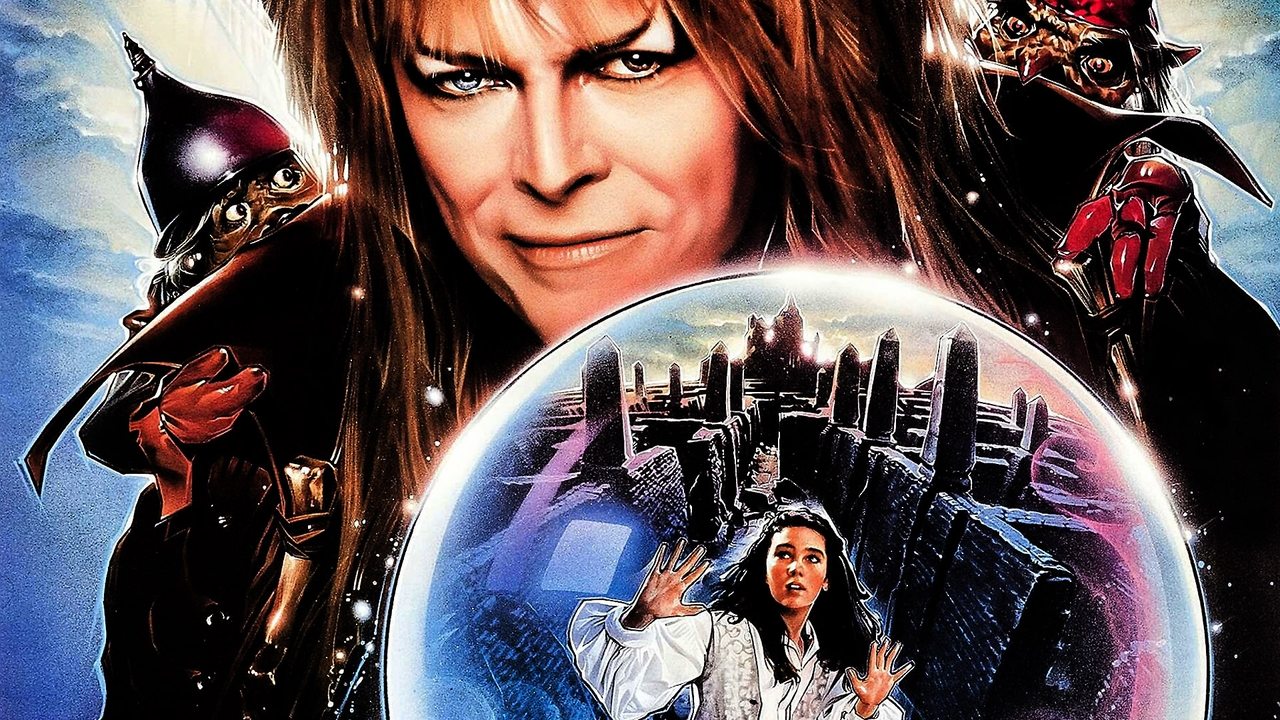
You simply can't talk about Labyrinth without bowing down to the genius of Jim Henson and his Creature Shop. Fresh off the darker, more complex world of The Dark Crystal (1982), Henson brought a slightly lighter, though still wonderfully strange, touch here. The sheer variety and personality of the puppets are staggering. From the grumpy but ultimately good-hearted Hoggle, the gentle giant Ludo who can summon rocks with his call, to the chivalrous, fox-like Sir Didymus atop his trusty sheepdog steed Ambrosius – these weren't just effects; they were characters. I remember being completely mesmerized by the physicality of it all, the way these creations moved and interacted. Seeing the intricate mechanics behind the Four Guards, each requiring multiple puppeteers, or the sheer scale of Ludo, really hammers home the artistry involved in a pre-CGI era. It's that tactile quality, that sense of realness, that makes the fantasy so immersive, even today.
### The Goblin King and The Girl
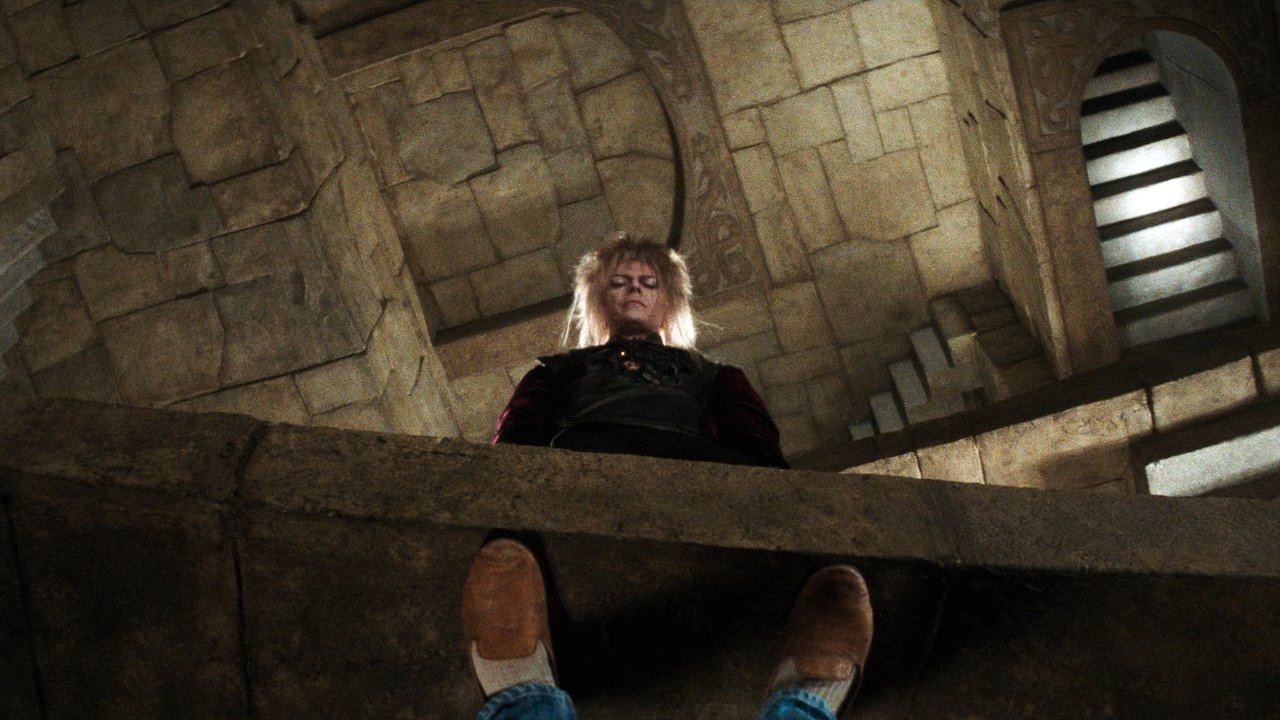
And then there's David Bowie. Casting the rock icon as Jareth was a stroke of genius. He’s not just a villain; he’s captivating, menacing, strangely alluring, and delivers some killer musical numbers penned by Bowie himself, working alongside composer Trevor Jones. Songs like "Magic Dance" and "As the World Falls Down" (that ballroom scene!) are etched into the memory of anyone who grew up with this film. Bowie fully commits, bringing a theatricality that perfectly suits the heightened reality of the Labyrinth. It’s a performance that transcends camp, becoming genuinely iconic.
Opposite him, a young Jennifer Connelly carries the emotional weight of the film remarkably well. It was a star-making turn, showcasing her ability to convey frustration, fear, determination, and wonder, often all within the same scene. She’s our anchor in this bizarre world, and her journey from petulant teen to courageous young woman feels earned. It’s worth remembering Toby Froud, the baby brother at the center of it all, is actually the son of Brian Froud, the film's conceptual designer whose distinctive, earthy fae aesthetic defined the look of both Labyrinth and The Dark Crystal. Talk about keeping it in the family!
### Retro Fun Facts & Fuzzy Reception
Interestingly, Labyrinth wasn't the instant smash hit we might remember it as. With a hefty $25 million budget, its initial domestic box office return was a somewhat disappointing $12.9 million. Critics were mixed, perhaps unsure what to make of its unique blend of fairy tale, musical, and Henson's signature puppetry, layered with a script co-written by Terry Jones of Monty Python fame (which explains some of the delightful absurdity). Yet, like so many films from the era, it found its true audience on home video. VHS rentals and subsequent TV airings turned it into the beloved cult classic it is today, evidenced by its much stronger audience scores (currently 86% on Rotten Tomatoes) compared to its initial critical reception (72%).
The film pushed technical boundaries, too. That mind-bending M.C. Escher-inspired staircase sequence towards the climax? It was a logistical nightmare achieved through a complex combination of intricate set design, clever camera angles, wire work, and even some early bluescreen effects (though Henson preferred practical whenever possible). And who could forget the slightly unnerving 'Firey' sequence ("Chilly Down"), with its detachable body parts? It perfectly encapsulates the film's willingness to be both playful and a little bit dangerous.
### Still Holding the Power
Decades later, Labyrinth endures because it captures something fundamental about growing up – the struggle between fantasy and reality, selfishness and responsibility, fear and courage. Its world feels handcrafted, infused with a personality and charm that CGI often struggles to replicate. The slight datedness of certain elements only adds to its nostalgic appeal, like rediscovering a favorite worn-out book. It’s a film that celebrates imagination, warts (or should I say, goblins?) and all. It reminds us that sometimes, the only way out is through, and that even the most daunting challenges can be faced with a bit of bravery and a few loyal, if peculiar, friends.

VHS Heaven Rating: 8/10
Justification: While the plot meanders occasionally and some tonal shifts might feel jarring, Labyrinth scores high for its sheer creative audacity, groundbreaking practical effects, David Bowie's unforgettable performance, and Jim Henson's visionary direction. It’s a film overflowing with imagination and heart, whose initial lukewarm reception belies its enduring power as a cult classic that continues to enchant new generations.
It’s more than just a movie; it’s an invitation to get lost, reminding us that even within the most confusing maze, there's magic to be found. Now, where did I put my crystal ball...?