Prepare to dust off a tape that might have felt jarringly different from its famous namesake, yet holds a strange, dark magic all its own. We're venturing back not just to Oz, but to a version few expected – 1985's Return to Oz. This wasn't your ruby-slippered, Technicolor dream; it was a journey into a more somber, dilapidated, and frankly, often unsettling corner of L. Frank Baum's universe, brought to life with astonishing, sometimes nightmare-inducing, practical craft. If the original Wizard of Oz (1939) was a comforting bedtime story, this felt more like something whispered in the dark, full of shadows and genuine peril.

Directed by the legendary film editor and sound designer Walter Murch (known for his Oscar-winning work on Apocalypse Now and The English Patient) in his directorial debut, Return to Oz bravely decided not to be a musical sequel. Instead, Murch and co-writer Gill Dennis drew inspiration directly from L. Frank Baum's later books, primarily The Marvelous Land of Oz and Ozma of Oz. The result is a film that often feels more like a dark European fairytale than a Hollywood fantasy, a tone that reportedly caused considerable nervousness at Disney during its troubled production.
### Not Quite Kansas Anymore
The film picks up months after Dorothy Gale's first trip. Plagued by insomnia and tales of a magical land, she's deemed melancholic by Aunt Em and Uncle Henry. Their solution? A trip to a chillingly sterile clinic for pioneering electro-shock therapy. Yes, you read that right. It's a startlingly grim opening that immediately signals this Oz adventure will tread a different path. Young Fairuza Balk, in her first major film role, carries an incredible weight here. She portrays Dorothy not as the wide-eyed innocent of Judy Garland, but as a more somber, resilient child haunted by her memories and facing very real, very adult threats. Her performance is remarkably grounded amidst the surrounding fantasy, providing the essential emotional anchor.
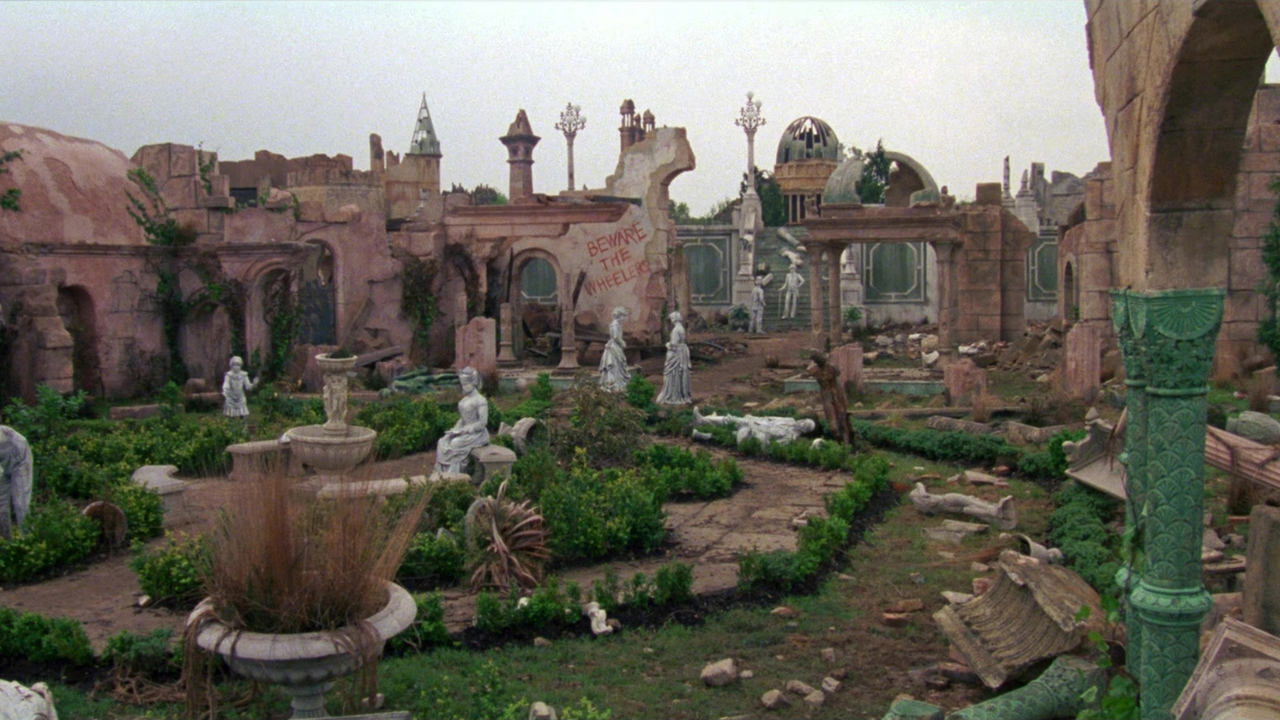
A power outage and a mysterious girl help Dorothy escape the clinic during a storm, only to find herself washed back to Oz… but it's not the vibrant land she remembers. The Yellow Brick Road is shattered, the Emerald City lies in ruins, its citizens turned to stone, and menacing figures called Wheelers – unnerving humanoids with wheels for hands and feet – patrol the streets. It’s a desolate, almost post-apocalyptic vision of Oz, brilliantly realized through detailed production design that emphasizes decay and loss.
### A Clockwork Friend and Heads Aplenty
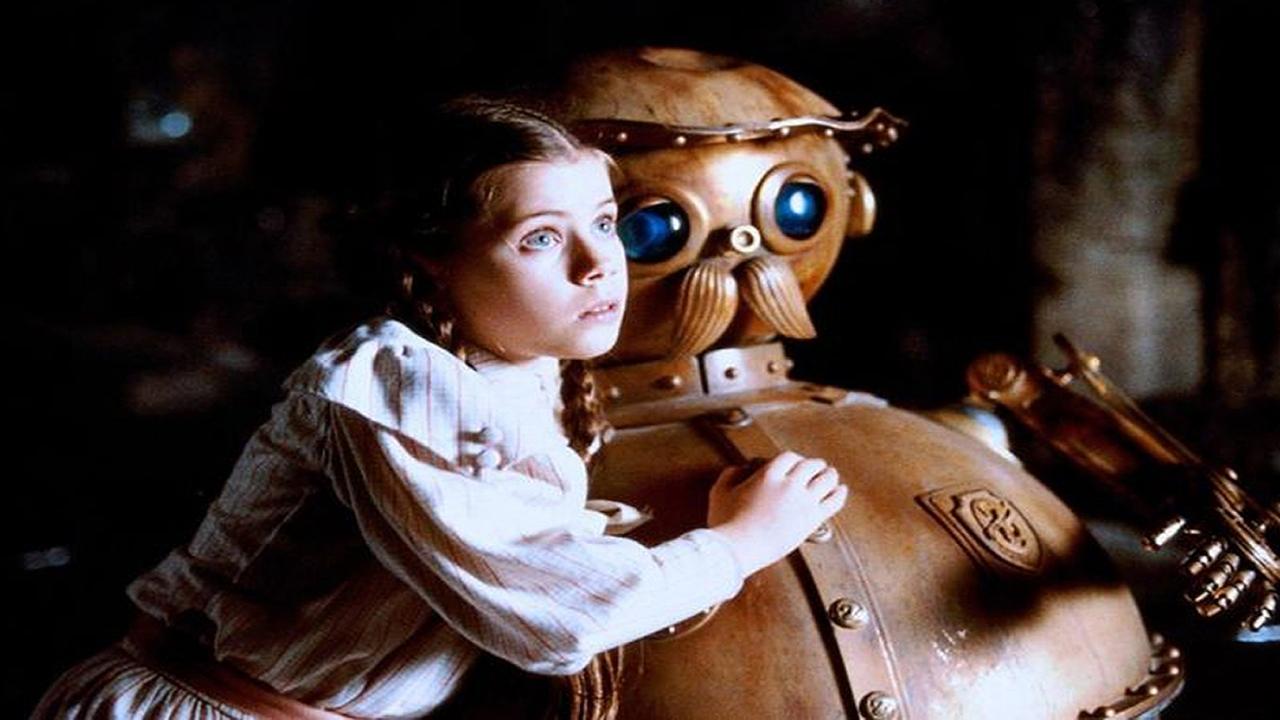
Dorothy isn't alone for long. She soon winds up Tik-Tok (voiced by Sean Barrett, physically performed by Michael Sundin crouched inside the intricate costume), a mechanical man who needs constant winding. Tik-Tok wasn't just CGI painted gold; he was a complex piece of mechanical puppetry, heavy and cumbersome for Sundin, who apparently needed cooling fans piped into the suit between takes. He’s a wonderfully realized character, loyal and endearingly formal. Along with Billina, a talking hen who somehow survived the journey from Kansas, they form Dorothy's new band of companions.
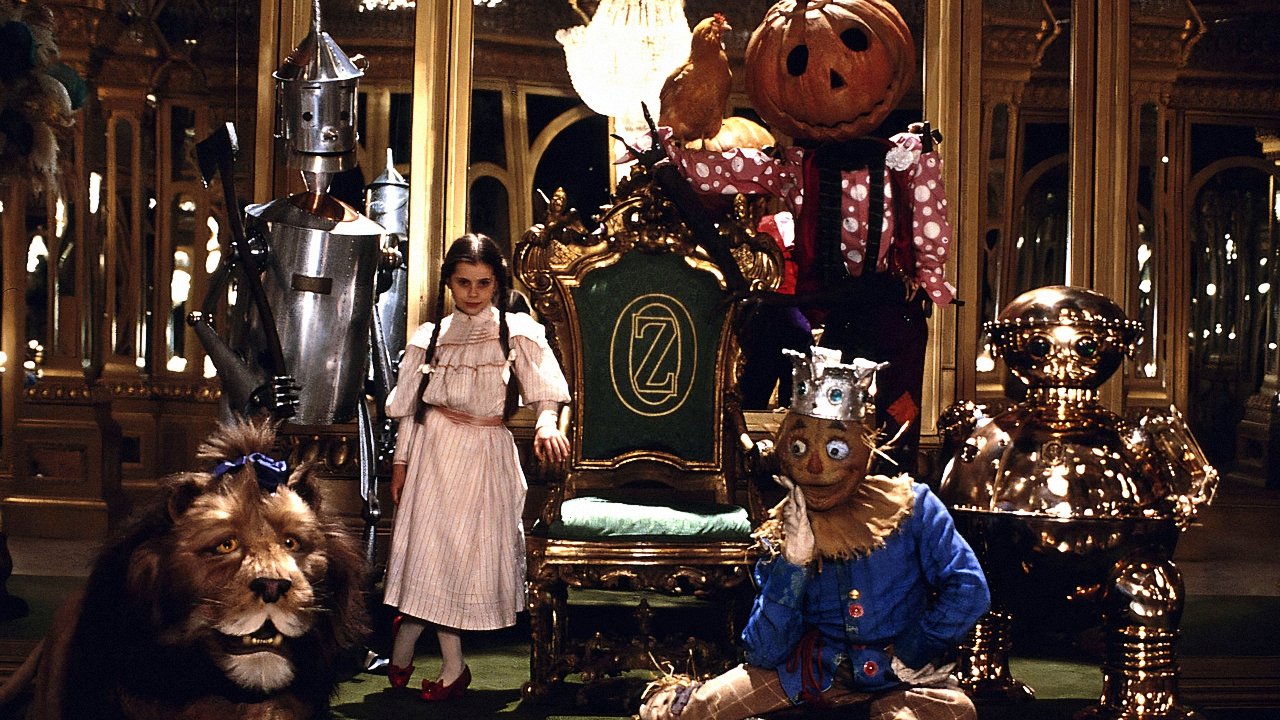
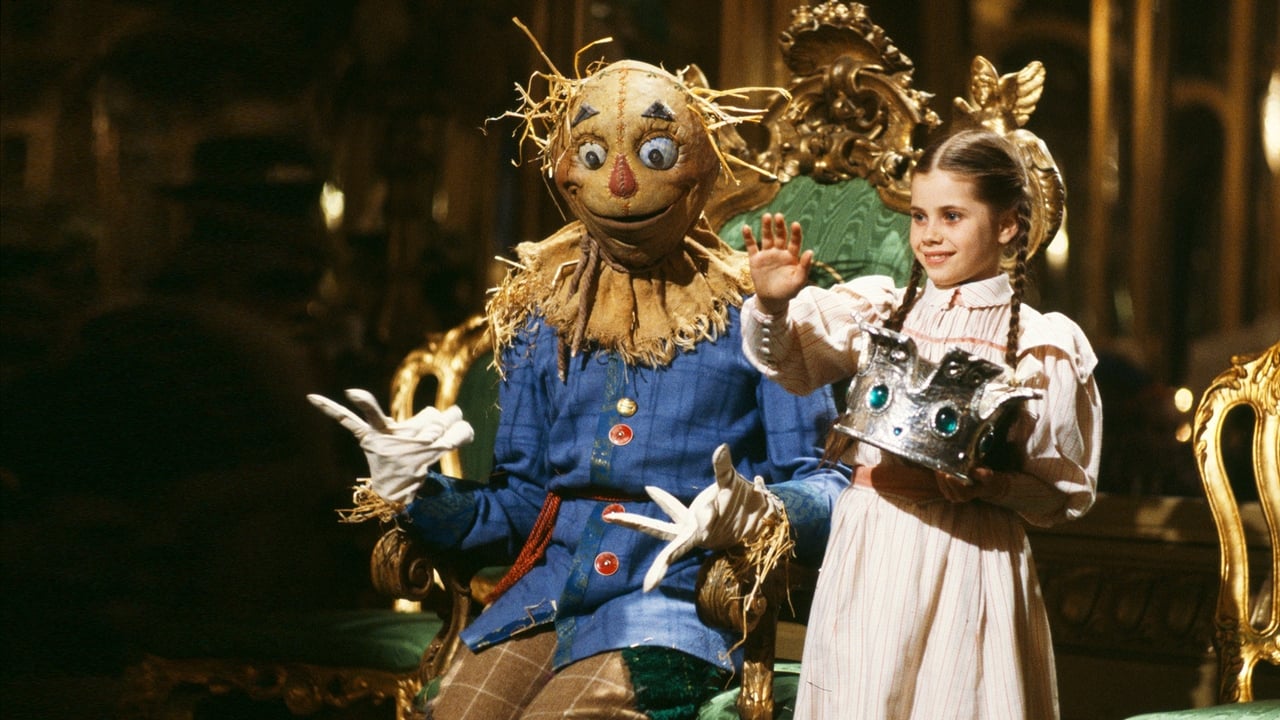
Their journey leads them to the captive Princess Mombi, chillingly portrayed by Jean Marsh (who also plays the stern Nurse Wilson back in Kansas – a classic Oz parallel). Mombi’s palace is home to perhaps the film's most visually arresting and genuinely creepy sequence: her collection of detachable heads, displayed in glass cabinets, which she swaps according to her mood. The practical effects work here, involving clever editing, body doubles, and Marsh’s unnerving performance, is pure, nightmarish artistry. It’s a scene that likely burned itself into the memory of many young viewers back in the day – I know it stuck with me!
### The Earth King's Challenge
The true architect of Oz's downfall is the malevolent Nome King, brought to life through impressive stop-motion animation (a medium Murch specifically wanted) and voiced with gravelly menace by the great Nicol Williamson. Hiding deep within his mountain, the Nome King delights in transforming living beings into ornaments for his collection. The sequence where Dorothy and her friends must navigate his guessing game, trying to identify transformed Oz inhabitants amidst countless objets d'art, is filled with palpable tension. The stop-motion, while perhaps looking dated to modern eyes accustomed to seamless CGI, possesses a tangible, almost earthy quality that perfectly suits the character.
It’s worth noting that Return to Oz had a famously difficult production. Walter Murch, despite his editing pedigree, struggled initially with the pace of directing, leading Disney executives to reportedly halt production temporarily and consider replacing him. Thankfully, friends like George Lucas and Francis Ford Coppola vouched for Murch, allowing him to complete his unique vision. This struggle, however, perhaps contributed to the film's somewhat uneven tone and its ultimate box office disappointment – it grossed just over $11 million in the US against a substantial $25 million budget. Critics at the time were divided, many finding it too scary and bleak for children compared to the 1939 classic. IMDb users currently rate it a 6.7/10, while Rotten Tomatoes reflects this split with a 58% critics score but a more favorable 65% audience score, hinting at its eventual cult appreciation.
### A Cult Classic Unearthed
Despite its initial reception, Return to Oz has endured. It’s found a devoted audience that appreciates its darker themes, its faithfulness to Baum’s later, less-sunny books, and its incredible commitment to practical effects and imaginative creature design. It stands alongside films like Labyrinth (1986) and The Dark Crystal (1982) as part of a wave of 80s fantasy films that weren't afraid to be genuinely weird and occasionally frightening. It didn't try to recapture the magic of 1939; it dared to create its own, more melancholic spell.
For those of us who rented it on VHS, maybe expecting another sing-along down the Yellow Brick Road, it was certainly a surprise. It might have been unsettling, even confusing, but its imagery was unforgettable. The Wheelers screeching through ruined streets, Mombi’s vacant stares from multiple heads, the earthy menace of the Nome King – these weren’t easily shaken. It was a fantasy film that felt tangible, handcrafted, and unafraid of the shadows.
Rating: 8/10
This score reflects Return to Oz's unique artistic achievement, its stunning practical effects and production design, and its brave, if initially divisive, vision. While perhaps too intense for very young viewers expecting Judy Garland, and occasionally uneven in pacing, its haunting atmosphere, memorable characters, and fidelity to Baum's darker sequels make it a fascinating and rewarding watch. It’s a testament to a time when mainstream fantasy could still feel genuinely strange and dangerous.
Return to Oz remains a truly curious artifact of 80s fantasy filmmaking – a dark gem that proves sometimes, the most memorable journeys are the ones that take you somewhere completely unexpected, even a little scary.