## The Last Unicorn (1982)

There’s a certain kind of magic woven into the very celluloid (or, let's be honest, the magnetic tape) of The Last Unicorn. Watching it again transports you not just to a mythical forest where unicorns dwell, but perhaps to a slightly fuzzy memory of a dimly lit living room, the whir of a VCR, and the dawning realization that cartoons could be… well, more. This wasn't the bright, primary-colored fare dominating Saturday mornings; this 1982 animated feature, born from the beloved novel by Peter S. Beagle himself (who also penned the screenplay, ensuring a rare faithfulness), felt different. It possessed a haunting beauty, a melancholic grace, and a storyline laced with bittersweet truths about loss, regret, and the nature of humanity.
Whispers in a Fading Forest
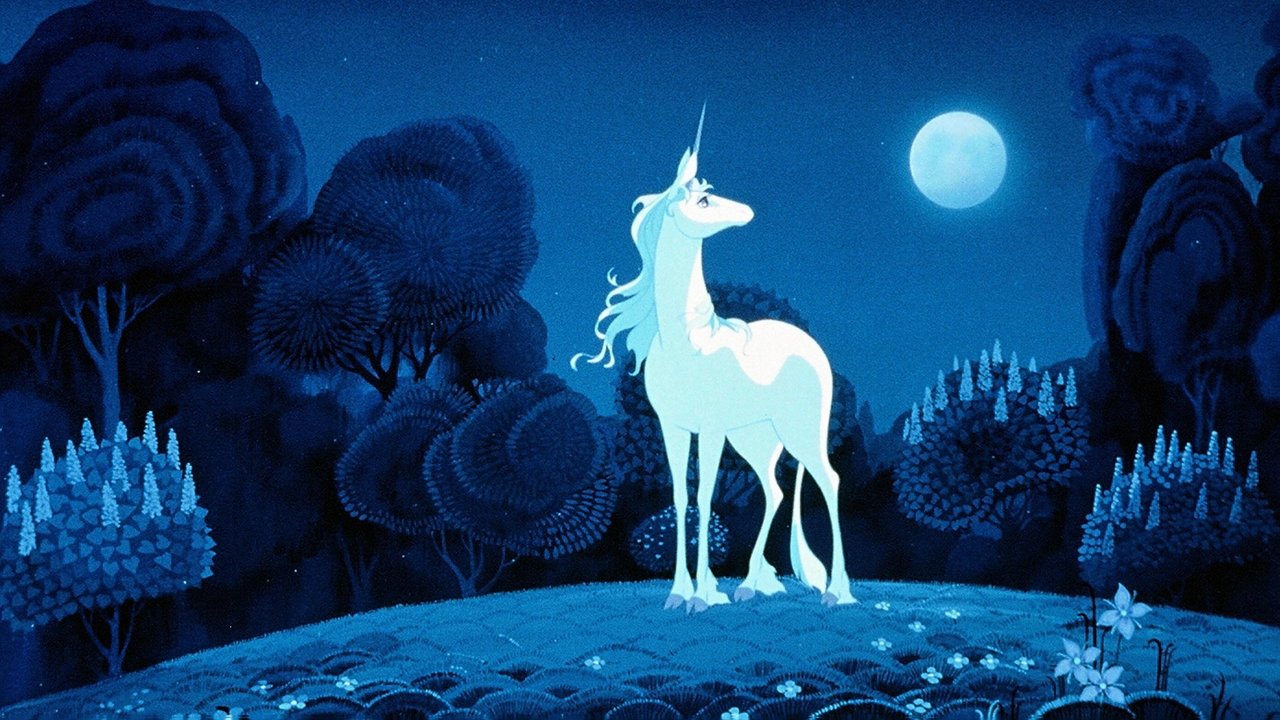
The premise is deceptively simple: a lone Unicorn (Mia Farrow, capturing both ethereal detachment and poignant vulnerability) overhears hunters lamenting her solitude – she might be the very last of her kind. Driven by a quiet determination, she leaves her timeless forest sanctuary to discover the fate of the others, rumored to be held captive by the fearsome Red Bull under the command of the desolate King Haggard (Christopher Lee, whose voice drips with chilling weariness). It’s a classic quest narrative, but infused with a lyrical quality that elevates it beyond mere adventure. The world she enters is one of fading magic, cynical charlatans, and people who have forgotten how to truly see wonder, even when it stands right before them.
Voices of Myth and Mortal
Her journey introduces her to a gallery of unforgettable characters, brought to life by a truly astonishing voice cast. There’s Schmendrick the Magician (Alan Arkin), more clumsy apprentice than master sorcerer, whose fumbling attempts at magic often yield unexpected, sometimes tragic, results. His loyalty and burgeoning courage provide much of the film's heart. Then there’s Molly Grue (Tammy Grimes), a world-weary camp follower whose initial bitterness upon meeting the Unicorn melts into fierce devotion and one of the film's most emotionally resonant moments. Her line, "Where were you when I was young?" still lands with incredible impact. And we can't forget Prince Lír (Jeff Bridges), Haggard’s adopted son, initially presented as a somewhat standard heroic figure, but whose earnest love for the magically humanized unicorn (Lady Amalthea) adds layers of complex emotion. Even the supporting roles boast incredible talent, like Angela Lansbury’s gleefully sinister Mommy Fortuna, proprietor of a cage-filled carnival showcasing illusions rather than true magic.
A Tapestry Woven in Sight and Sound
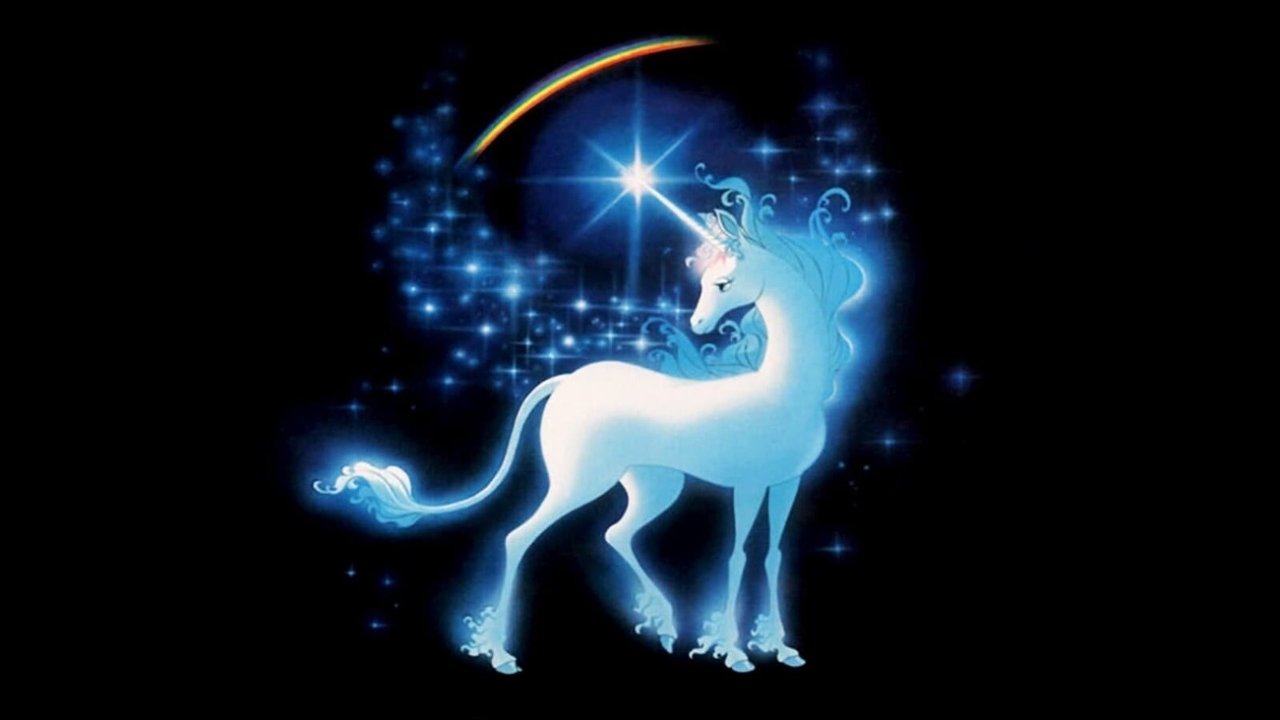
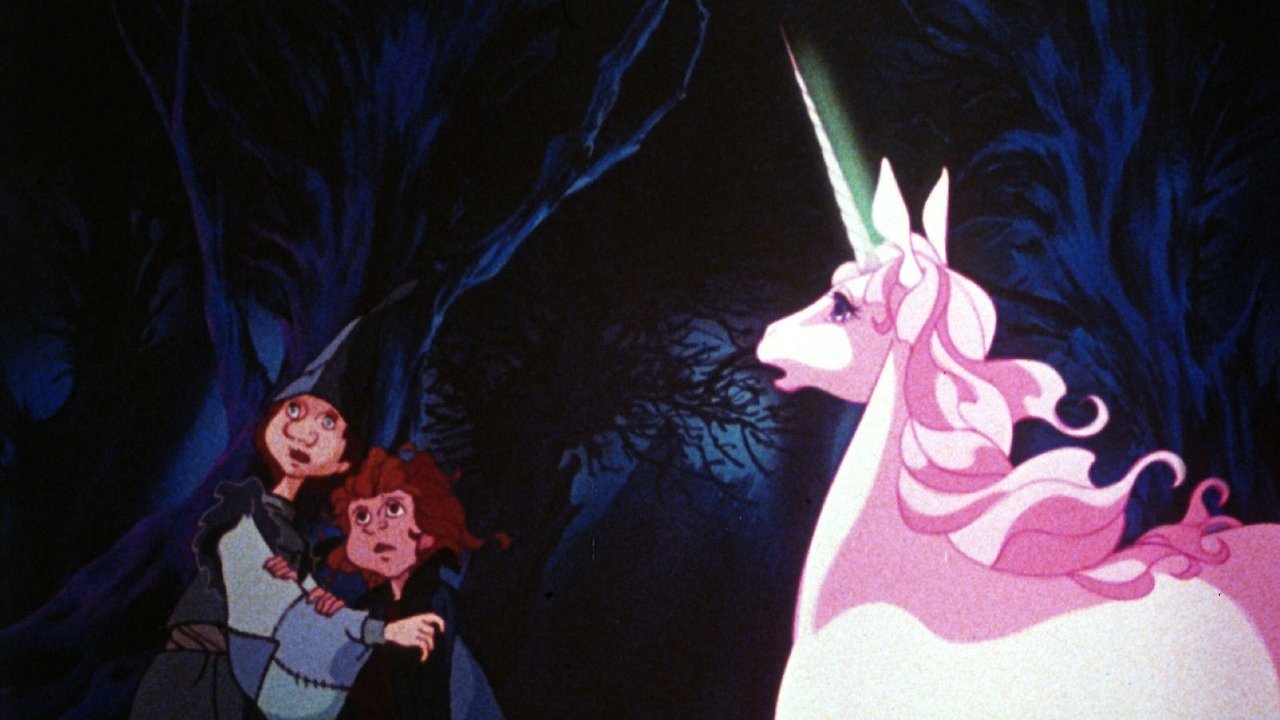
Visually, The Last Unicorn stands apart. Produced by the famed Arthur Rankin, Jr. and Jules Bass – names synonymous with classic stop-motion holiday specials like Rudolph the Red-Nosed Reindeer (1964) – this project ventured into traditional animation, largely handled by the Japanese studio Topcraft. Why does that name sound familiar? Because key members of Topcraft, including Hayao Miyazaki and Isao Takahata, would later form the legendary Studio Ghibli. You can see echoes of that future artistry here: the delicate character designs, the painterly backgrounds, the slightly eerie, graceful movement of the Unicorn herself. It doesn't look quite like American animation of the era, nor entirely like typical anime, occupying a unique, mesmerizing space between.
Adding immeasurably to the film's distinct atmosphere is the soundtrack. The score was composed by the legendary Jimmy Webb, but it’s the titular theme song and several others performed by the soft-rock band America that instantly date the film yet somehow feel absolutely perfect. Their gentle melodies and slightly wistful lyrics weave seamlessly into the film's emotional landscape, becoming as inseparable from the experience as the animation itself. It’s a sound that feels intrinsically tied to the late 70s/early 80s, anchoring the fantasy in a specific, nostalgic sonic space.
Retro Fun Facts: More Than Just Sparkles
- Peter S. Beagle’s fight to retain creative control and fair compensation for his work, both the novel and the film, is a long and complex story, highlighting the often difficult relationship between creators and adaptations.
- While Rankin/Bass are legends, The Last Unicorn was a gamble. Its budget was around $3.5 million, and while it turned a profit with an initial box office of about $6.5 million, its true success bloomed on home video, solidifying its cult classic status across generations.
- The distinctive design of the Red Bull, all fiery power and terrifying presence, remains a striking piece of creature animation that likely fueled a few childhood nightmares.
- Christopher Lee, already a horror icon, considered King Haggard one of his favourite roles, appreciating the character's tragic depth beyond simple villainy.
Why It Still Gallops Through Our Memories
The Last Unicorn endures because it dares to be different. It embraces melancholy alongside magic, questioning the cost of immortality and the pain of fleeting human experience. The transformation sequence, where Schmendrick reluctantly turns the Unicorn human to save her from the Red Bull, is heartbreaking – a loss of self for survival. The film doesn't shy away from darker themes or complex emotions, trusting its audience, even young ones, to grapple with them. It’s a story that respects the power of myth while acknowledging the harsh realities of the world. It treats its audience with intelligence, weaving a fable that resonates long after the credits roll and the VCR clicks off.
For those of us who first encountered it on a worn VHS tape, perhaps rented from a corner store smelling faintly of popcorn and plastic cases, The Last Unicorn wasn't just another cartoon. It felt important, beautiful, and a little bit sad – an early lesson in the complex beauty of storytelling.

Rating: 9/10
This film earns its high score through its stunningly unique animation style influenced by future Ghibli masters, its stellar and perfectly cast voice performances (Farrow, Arkin, Lee, Lansbury, Bridges), its enduringly faithful adaptation of a beloved fantasy novel, and its courage to explore mature themes of loss, regret, and beauty within an animated format. The slightly dated (yet perfectly fitting) America soundtrack and the sometimes leisurely pacing might be minor quibbles for some, but they barely detract from the overall artistic achievement and emotional resonance.
The Last Unicorn remains a singular, shimmering piece of fantasy animation – a bittersweet fairy tale that continues to enchant, proving that some magic truly is timeless.