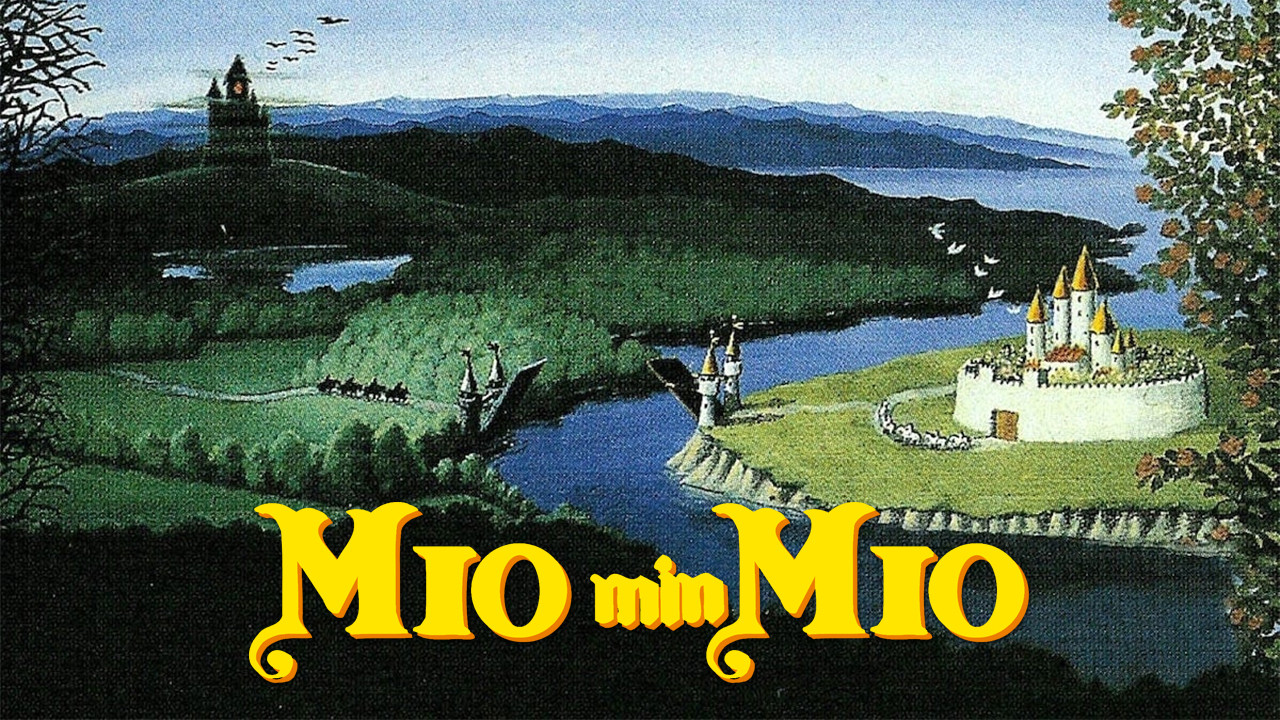
It’s funny how some cinematic journeys lodge themselves deep in your memory, maybe not with the bombastic clarity of a Star Wars trench run, but with a quieter, more ethereal glow. Think back to the fantasy aisle of your local video store, past the gleaming swords and fire-breathing dragons, and you might just recall a slightly more wistful cover, promising a different kind of magic. That’s where Mio in the Land of Faraway (1987) often resided, a curious artifact of international filmmaking that blended melancholy yearning with fairytale wonder. Based on the beloved 1954 novel Mio, My Son by Pippi Longstocking creator Astrid Lindgren, this film wasn't your typical high-octane fantasy romp, but it possessed a unique, haunting charm that still resonates.
### From Stockholm Streets to a Distant Shore
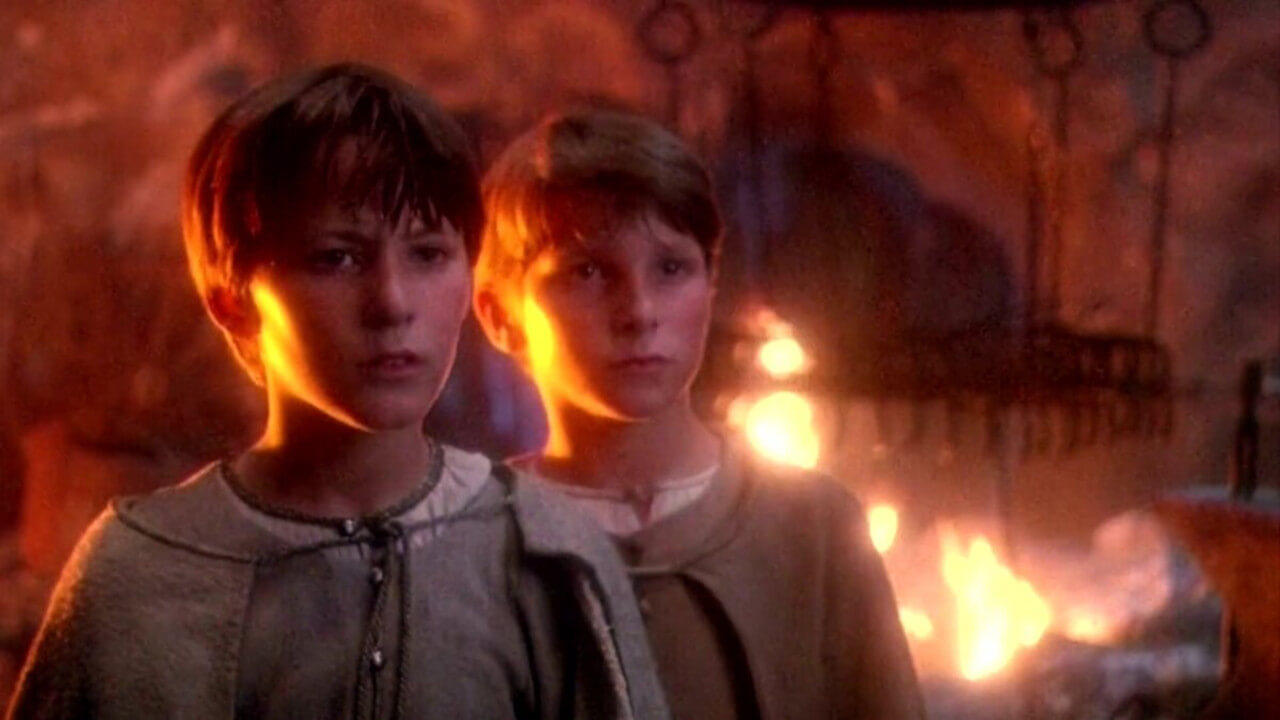
The film opens not with soaring castles, but with the rather grey reality of Bosse (Nicholas Pickard), a lonely orphan living with adoptive parents who clearly don't cherish him. His only real friend is Benke (Christian Bale). This initial grounding in loneliness is key; it makes the sudden arrival of a genie in a bottle (yes, really!) and the subsequent flight to the titular Land of Faraway feel less like a random plot device and more like a desperate wish fulfilled. There, Bosse discovers he is actually Prince Mio, son of the benevolent King (Timothy Bottoms), whisked away as an infant. It’s a classic fairytale setup, but tinged with Lindgren’s characteristic understanding of childhood sadness and the deep need for belonging. Reunited with his father and finding a new best friend in the remarkably familiar-looking Jum-Jum (also played by Christian Bale), Mio's joy is short-lived as he learns of the land's plight under the iron fist – quite literally – of the evil Knight Kato (Christopher Lee).
### An Unlikely Alliance: Building Faraway

One of the most fascinating aspects of Mio in the Land of Faraway is its production story. This wasn't just a Hollywood venture; it was a truly ambitious co-production between Sweden, Norway, and, remarkably for the era, the Soviet Union via Gorky Film Studio. Directed by Soviet filmmaker Vladimir Grammatikov, the film reportedly boasted the highest budget ever for a Swedish film at the time, around SEK 50 million (roughly $7-8 million USD back then – a hefty sum!). This international effort is visible on screen, with filming taking place across diverse locations like Stockholm, Moscow, the stunning landscapes of Crimea (then part of Ukrainian SSR), and even using Scotland's iconic Eilean Donan Castle as the imposing fortress for Knight Kato. This blend of locales contributes to the film's unique, slightly otherworldly aesthetic – it doesn't quite look like any other fantasy film of the period.
### Young Heroes and a Legendary Villain
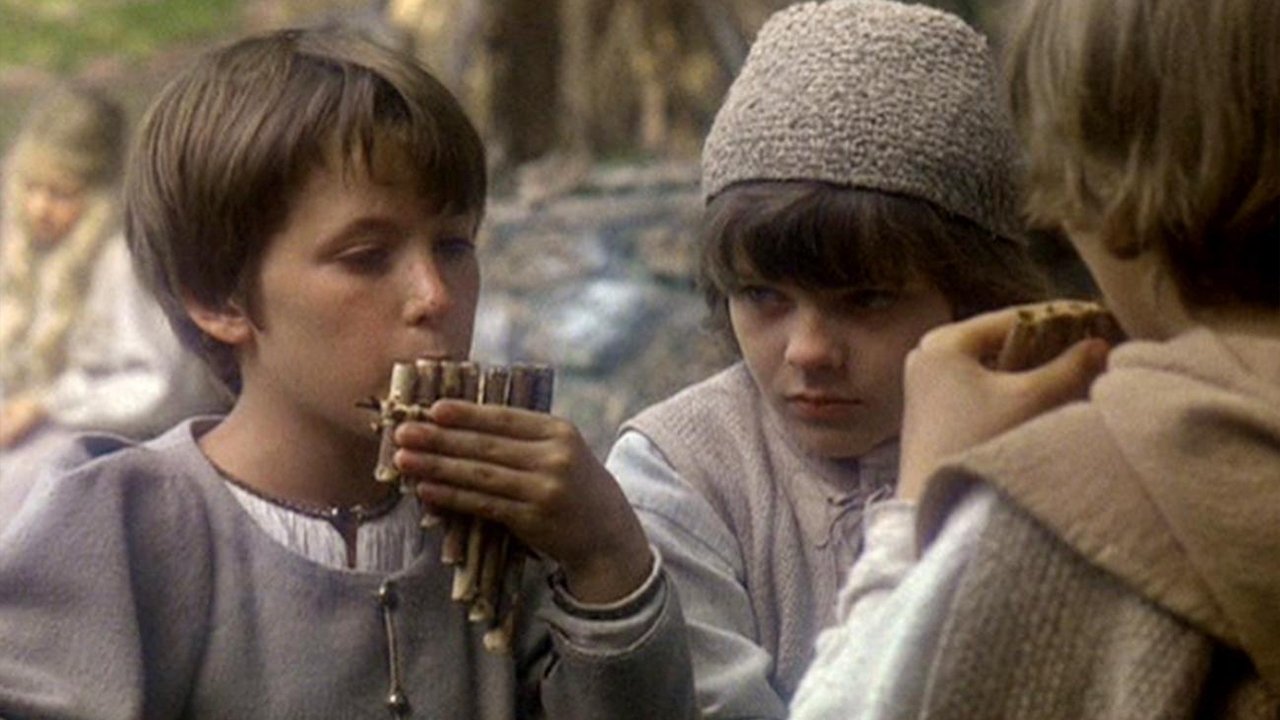
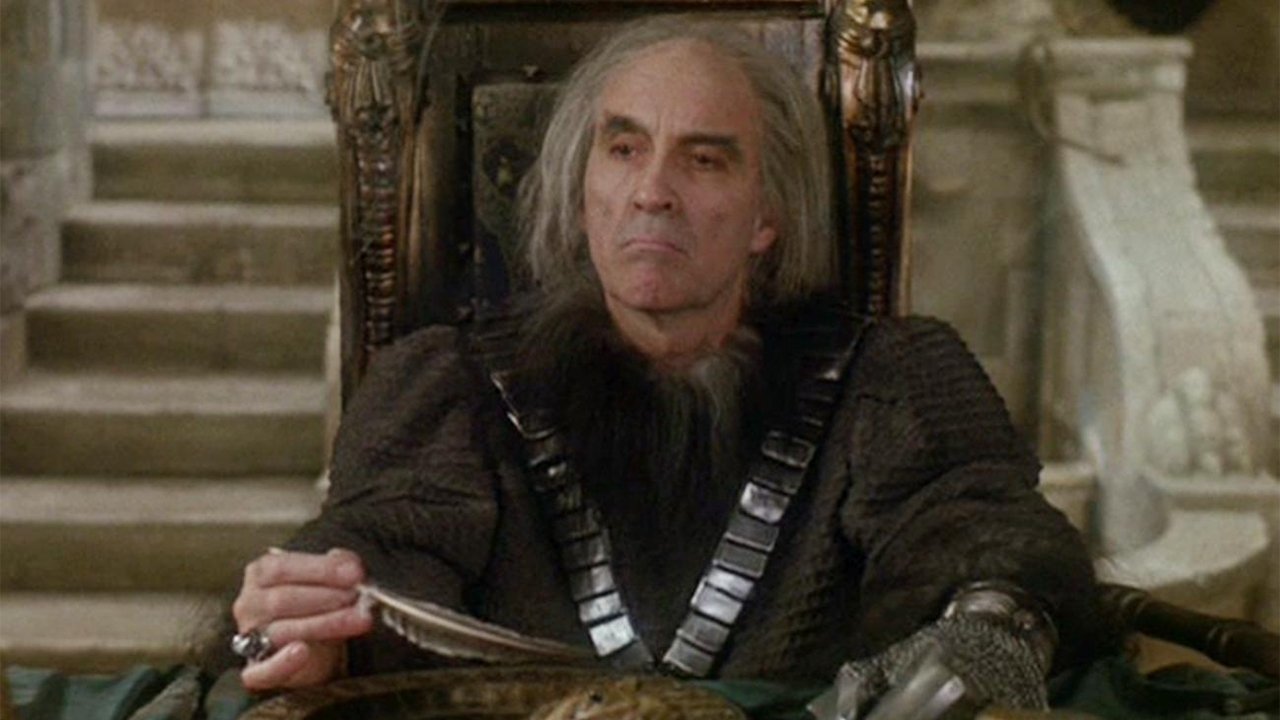
While Nicholas Pickard (now a UK television stalwart on Hollyoaks) carries the film with wide-eyed earnestness as Mio, the presence of a young Christian Bale is undeniably a major point of interest for retro film fans today. Appearing the same year as his breakout role in Spielberg's Empire of the Sun (1987), Bale plays both the earthly friend Benke and the loyal Faraway companion Jum-Jum. You can already see flashes of the intensity and commitment that would define his later career, even in this more straightforward fantasy role. Providing regal warmth is Timothy Bottoms (The Last Picture Show), but the real scene-stealer amongst the adults is, unsurprisingly, the legendary Christopher Lee. As the menacing Knight Kato, shrouded in darkness and sporting a terrifying metal heart and razor-sharp iron claw, Lee brings immediate gravitas and genuine threat to the proceedings. His presence elevates the film significantly, reminding us why he was the go-to actor for sophisticated villainy for decades. Susannah York (Superman) also lends her grace to the role of the Weaver Woman.
### Heartfelt Fantasy with Rough Edges
Let's be honest, Mio in the Land of Faraway isn't perfect. The pacing can feel somewhat languid compared to its contemporaries, and some of the special effects, while charmingly practical for the era, might elicit a nostalgic chuckle today. William Aldridge's screenplay streamlines Lindgren's arguably darker, more introspective novel, sometimes losing a bit of the original's depth. It’s known that Astrid Lindgren herself wasn't entirely pleased with the adaptation, feeling it missed some of the book's core essence. Yet, despite these flaws, the film succeeds through its palpable sincerity and atmosphere. There's a dreamlike, almost melancholic quality to Mio's adventure, beautifully underscored by a lovely, slightly wistful score co-composed by Benny Andersson of ABBA fame, with Anders Eljas. The memorable theme song, "Mio My Mio," performed by Swedish pop duo Gemini (produced and co-written by Andersson and Björn Ulvaeus), perfectly captures this blend of hope and sadness. It’s a fantasy film that feels less about epic battles (though there is a climax) and more about a child's quest for love, acceptance, and the courage to face overwhelming darkness.
### A VHS Gem Unearthed
Mio in the Land of Faraway wasn't a box office smash, particularly in the US, likely overshadowed by flashier fantasy fare. Its unique international DNA and slightly more measured pace perhaps made it a harder sell. But for those of us who stumbled upon it on a dusty video store shelf, it offered something different. It felt like discovering a secret – a European fairytale brought to life with familiar faces (Lee, Bale) and a distinct, evocative mood. It’s a film that reminds you of rainy afternoons spent lost in another world, even if that world felt a little sad sometimes. Its earnest heart, the striking villainy of Christopher Lee, and the curiosity factor of seeing Christian Bale so young make it a fascinating piece of 80s fantasy filmmaking.
Rating: 6.5/10
Justification: While hampered by pacing issues and some dated effects, Mio in the Land of Faraway earns points for its heartfelt sincerity, unique international production history, strong villainous turn from Christopher Lee, and the nostalgic appeal of its slightly melancholic fairytale atmosphere. It captures a specific, gentler kind of 80s fantasy, and the early presence of Christian Bale adds significant retrospective interest. It's a flawed gem, but a gem nonetheless for those who appreciate earnest storytelling and unique cinematic footnotes.
Final Thought: Not the flashiest quest on the VHS shelf, but Mio's quiet journey to find belonging still echoes with a particular, gentle magic – a reminder that sometimes the bravest adventures are the ones fought within the heart.