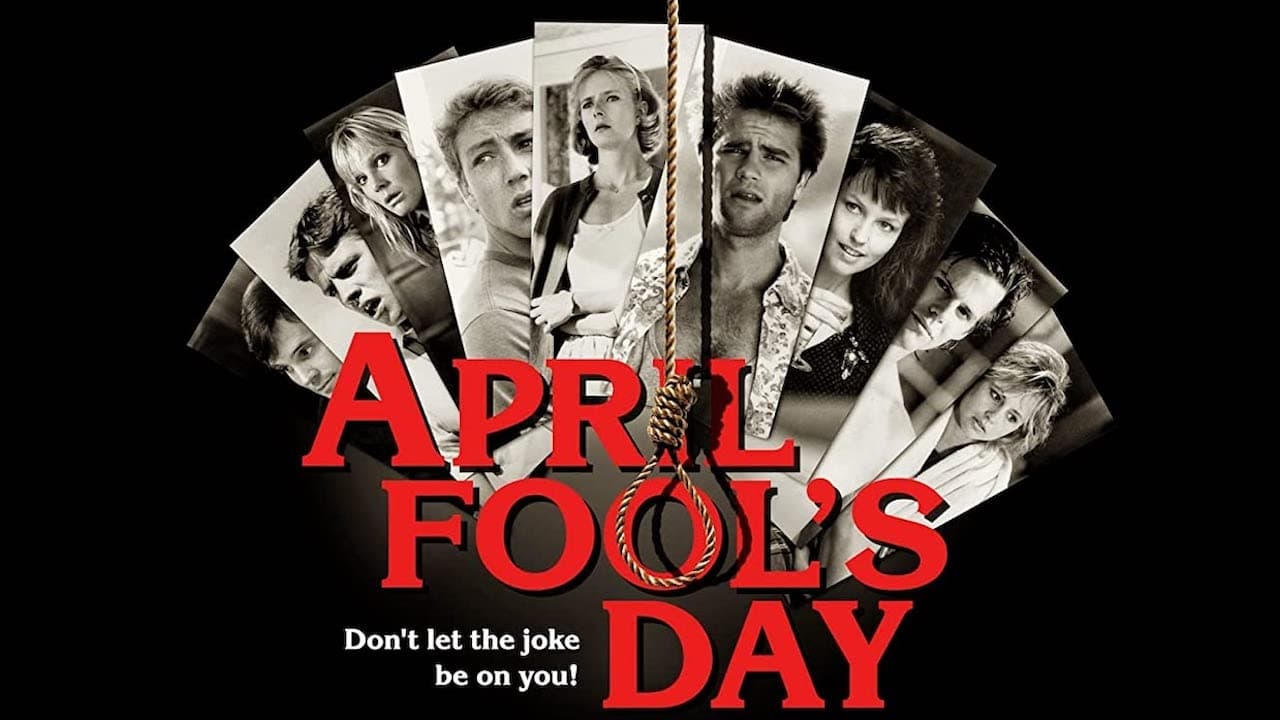
Okay, fellow tapeheads, dim the lights, maybe crack open a Tab if you can find one, and let’s talk about a little slice of mid-80s mischief that probably graced more than a few VCRs back in the day: 1986’s April Fool's Day. You remember the box art, right? Often featuring that eerie jester figure or maybe hinting at something far bloodier than what awaited inside. This wasn't just another slasher clone tossed onto the rental shelves; popping this tape in expecting Jason Voorhees’ second cousin was the first prank the movie played on you.
Welcome to the Island
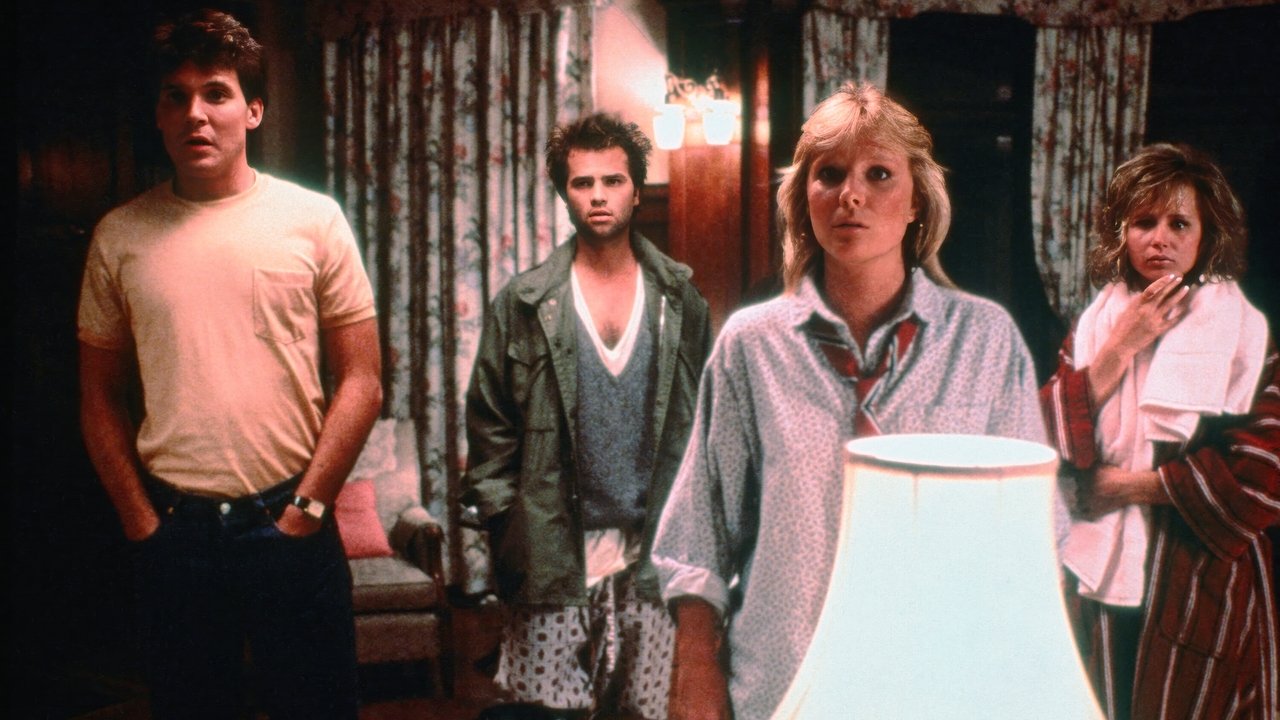
The setup is pure Reagan-era horror comfort food: a gaggle of privileged college friends gathers for a weekend bash at the sprawling island estate of their impossibly wealthy and effervescent friend, Muffy St. John (Deborah Foreman, radiating charm just a couple of years after Valley Girl). Muffy, ever the playful host, has planned a weekend full of practical jokes and surprises. The guests are a familiar gallery of 80s archetypes – the jock, the brain, the aspiring actress, the sensitive guy, and even Biff Tannen himself, Thomas F. Wilson, playing the resident jerk, Arch. We also get Amy Steel, a familiar face to slasher fans from her terrific turn in Friday the 13th Part 2 (1981), adding another layer of expectation.
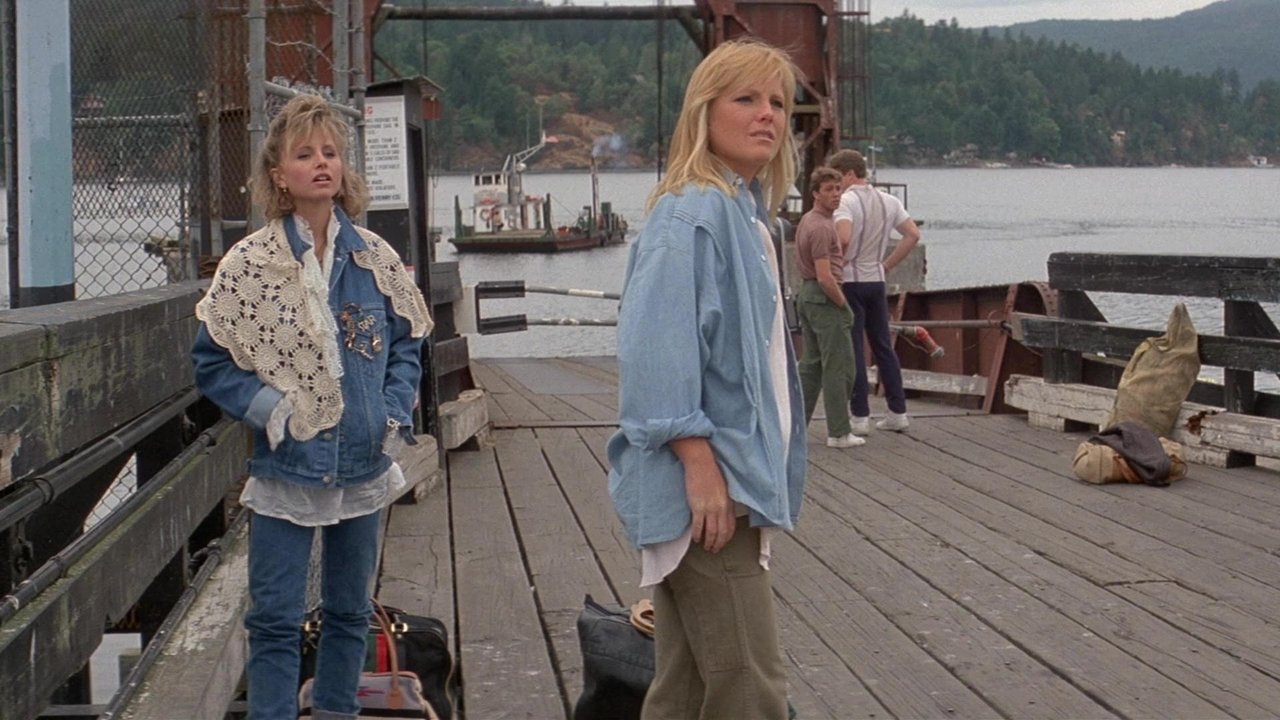
The atmosphere builds beautifully. Director Fred Walton, who chilled audiences to the bone with the minimalist terror of When a Stranger Calls (1979), knows how to use isolation and suggestion. That ferry ride over, cutting them off from the mainland? Classic. The sprawling, slightly creepy mansion becomes a character itself – incidentally, much of the film was shot on location around Victoria, British Columbia, using the very real and very atmospheric Fiscalgard mansion. Walton lets the tension simmer, focusing on character interactions and Muffy’s increasingly elaborate (and sometimes mean-spirited) pranks before the real trouble seems to start.
Not Your Average Body Count
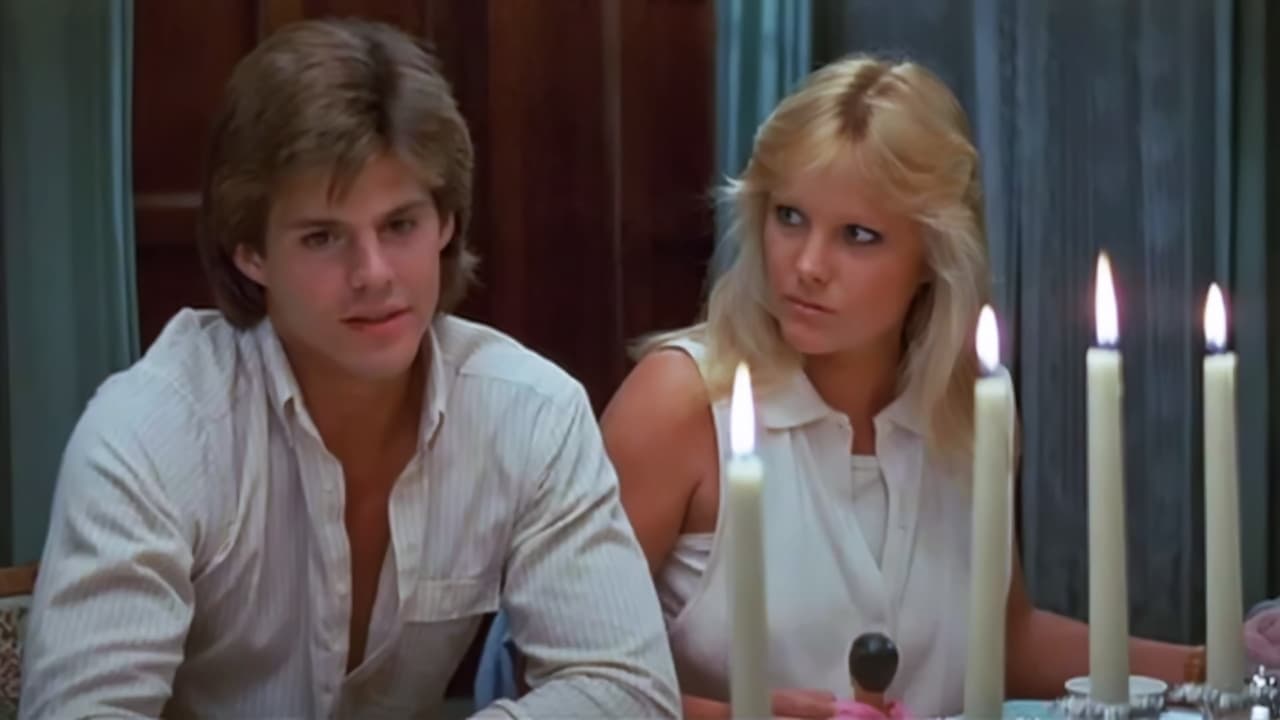
As the weekend progresses, things take a darker turn. One by one, the guests start meeting grisly ends, or so it appears. A drowning here, a supposed hanging there… each "death" feels abrupt and unsettling. Now, let's talk effects. This wasn't a Savini gore-fest. The apparent demises rely more on suggestion, quick cuts, and the horrified reactions of the remaining cast. Remember how effective that could be back then, before CGI smoothed everything over? There’s a certain raw impact to seeing practical gags – a well-placed dummy, some clever staging – that felt genuinely shocking on a fuzzy CRT screen late at night. You believed it because it looked tangible, even if it wasn't overly explicit.
But something feels… off. The tone flickers between suspense and an almost playful quality, underlined by Charles Bernstein's (composer for A Nightmare on Elm Street) jaunty yet sinister score. This is where the film starts cleverly messing with the audience. Paramount Pictures actually bankrolled April Fool's Day hoping for a slasher franchise to compete with their own Friday the 13th behemoth. Writer Danilo Bach delivered something far more meta and mischievous. It’s said the studio encouraged leaning into the humor and prank elements, perhaps softening an initially darker concept, but the result is a fascinating tightrope walk.
The Ultimate Prank (Spoiler Alert!)
Okay, let’s address the twist that defines April Fool's Day. If you haven't seen it, maybe skip this paragraph, rewind the tape, and come back later. Ready? Nobody actually dies. The entire weekend, including the gruesome "murders," is revealed to be an elaborate, high-concept prank orchestrated by Muffy. She's planning to turn the mansion into a murder-mystery resort, and this was a dress rehearsal, testing out scares and scenarios on her unsuspecting friends using fake blood, props, and hidden actors.
This ending was, and sometimes still is, incredibly divisive. Audiences in 1986, lured in by marketing that screamed "slasher" (think taglines like "Some invitations should be RSVP'd... R.I.P."), felt cheated by the lack of genuine carnage. Critics were lukewarm, often dismissing it as a gimmick. Yet, viewed decades later, especially through the lens of post-Scream meta-horror, the twist feels remarkably clever and ahead of its time. It subverts the entire genre it pretends to inhabit, turning the viewer's expectations into the punchline. The title wasn't just a setting; it was a mission statement.
Legacy of a Laugh Riot… or a Letdown?
Despite not becoming the next Friday the 13th, April Fool's Day performed reasonably well on its estimated $5 million budget, pulling in nearly $13 million domestically. More importantly, it carved out a unique niche. It found its audience on VHS and cable, becoming a beloved cult classic precisely because it dared to be different. It’s a whodunit wrapped in slasher clothing, ultimately revealing itself as a playful, if slightly mean-spirited, comedy of errors.
The ensemble cast does a great job selling both the terror and the eventual relief/annoyance. Foreman is particularly good as the orchestrator, balancing sweetness with a hint of mania. And seeing future stars like Wilson in these early roles is always a treat for retro fans.
Rating: 8/10
The score reflects the film's cleverness, its well-crafted suspense (even knowing the outcome), its perfect capture of mid-80s horror tropes before playfully dismantling them, and its sheer audacity. It loses a couple of points because, let's be honest, that twist can feel like a rug-pull if you were genuinely invested in the slasher element, and some character arcs feel a bit thin. But the ingenuity and atmosphere more than compensate.
Final Take: April Fool's Day is the cinematic equivalent of finding a gag can of peanut brittle among the serious horror offerings at the video store. It might not deliver the bloody payoff some craved, but its clever construction and perfectly executed central conceit make it a standout horror-comedy experiment from the VHS golden age – a prank well worth falling for, even today.