The air crackles with static electricity, not just from the CRT screen, but from the very fabric of the film itself. A birthday gift, innocent enough. A Ouija board, meant for teenage kicks, instead becomes a conduit, spitting out names whispered from some unseen, malevolent dimension. This isn't just any slumber party gone wrong; this is the singularly strange frequency of 1989's Don't Panic (also known as Dimensiones Ocultas), a film that feels less like a carefully constructed nightmare and more like a fever dream someone actually committed to celluloid.
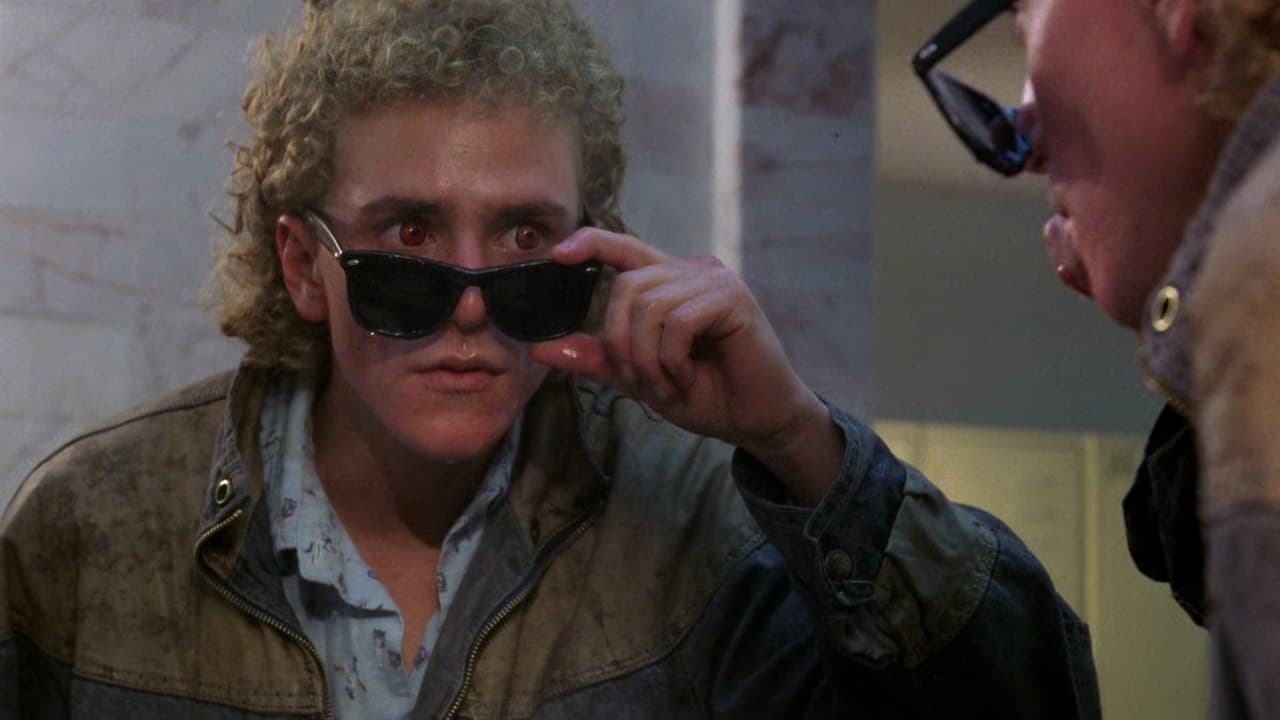
Directed by Rubén Galindo Jr., a name familiar to aficionados of Mexican genre cinema thanks to efforts like Cemetery of Terror (1985), Don't Panic occupies a peculiar space. Filmed primarily in English despite its Mexican production origins – a bid, perhaps, for wider appeal in the booming video market – it brings a distinct flavour to the late-80s horror landscape. It follows Michael (Jon Michael Bischof), a teenager gifted the fateful Ouija board, who starts receiving terrifying psychic flashes predicting the gruesome deaths of his friends. Each vision is punctuated by the chilling appearance of a shadowy figure wielding a dagger, leaving Michael desperately trying to convince anyone – his friends, his skeptical girlfriend Alexandra (Gabriela Hassel), even the seasoned paranormal investigator played with gravitas by Helena Rojo – that the danger is horrifyingly real.
### Whispers from the Board
The central premise taps directly into that primal fear of unseen forces, the Ouija board acting as the ultimate random dial-a-demon device. Galindo Jr. attempts to build suspense around Michael's visions and the subsequent, often brutal, dispatching of his pals. There are moments where the tension genuinely lands – the feeling of inevitability, the powerlessness of knowing what's coming but being unable to stop it. The film leans heavily into the Nightmare on Elm Street playbook, blending dream logic (or nightmare logic, rather) with waking reality, leaving both Michael and the audience questioning what's truly happening. Was that sequence where Michael seems possessed, scrawling demonic symbols, genuinely unsettling, or just part of the film’s charmingly rough-around-the-edges appeal? I suspect it’s a bit of both.
The film's atmosphere is thick, not always with intentional dread, but certainly with a unique, almost bewildering energy. The score pulses with synth urgency typical of the era, occasionally effective, sometimes overwhelming. The visuals swing wildly from competently staged stalking sequences to moments of pure, unadulterated weirdness that have cemented its cult status. It’s a film operating on its own bizarre wavelength, a product of its time and place that feels both derivative and startlingly original in its execution.
### Dinosaur Dreams and Demonic Designs
Let’s address the stegosaurus in the room: Michael’s infamous dinosaur pajamas. Yes, our terrified protagonist spends a significant portion of the film facing down demonic forces and gruesome premonitions while clad in bright green PJs adorned with cartoon dinosaurs. It’s a costume choice so bafflingly incongruous with the attempted horror that it transcends mere oddity to become legendary. I distinctly remember renting this from a local mom-and-pop video store, lured by the vaguely threatening cover art, only to be utterly perplexed and strangely charmed by this sartorial decision. It's a detail that perfectly encapsulates Don't Panic's unique appeal – a film striving for scares but achieving a level of endearing quirkiness few horror films manage, intentionally or otherwise. This wasn't a low-budget constraint; it feels like a genuine, albeit baffling, creative choice, contributing to the film's dreamlike, almost surreal quality.
Beyond the PJs, the film is littered with moments that feel slightly off-kilter. The dialogue occasionally dips into stilted territory, a possible byproduct of the English-language script being delivered by a primarily Mexican cast, though Jon Michael Bischof throws himself into the role with earnest conviction. His performance, while perhaps not traditionally polished, carries the film’s frantic energy. The practical effects, particularly the appearances of the demonic entity "Virgil," have that distinct late-80s VHS feel – tangible, sometimes rubbery, but possessing a physical presence that modern CGI often lacks. You can almost feel the sticky texture of the makeup effects through the screen glow.
### A Relic of the Rental Era
Don't Panic wasn't a blockbuster, nor was it critically lauded upon release. Its estimated budget was modest, and its success was primarily found in the burgeoning home video market, where its weirdness could find an audience browsing the horror aisles late on a Friday night. This is precisely the kind of film that thrived in the VHS era – the unexpected discovery, the film you rented on a whim and talked about with your friends the next day, precisely because it was so strange. Did it perfectly execute its slasher/paranormal hybrid premise? Not quite. Did it leave a lasting impression? Absolutely.
The production itself has its share of minor legends, mostly centered around the challenges of achieving its more ambitious effects sequences on a limited budget. Rubén Galindo Jr. was working within the Mexican film industry's genre framework, often characterized by resourcefulness and a willingness to embrace the outlandish. Don't Panic feels like a passionate attempt to emulate popular American horror tropes while injecting its own peculiar sensibilities. It’s a film that feels handmade, flaws and all, which is part of its enduring charm for retro enthusiasts.
***
VHS Heaven Rating: 6/10
Justification: Don't Panic earns a solid 6 primarily for its sheer, unadulterated weirdness and undeniable cult appeal. It’s technically flawed, with uneven pacing and acting, and the infamous dinosaur pajamas undercut the horror as often as they enhance the bizarre atmosphere. However, it boasts genuinely effective creepy moments, a killer premise rooted in occult anxieties, and a unique energy born from its cross-cultural production. It’s a film that perfectly embodies the joy of discovering hidden gems (or at least hidden oddities) on dusty rental shelves – memorable not always for the right reasons, but undeniably memorable nonetheless.
Final Thought: More than just a horror flick, Don't Panic is a time capsule – a wonderfully strange artifact from the late VHS era that continues to baffle and entertain in equal measure. Those dinosaur pajamas alone ensure its place in the cult movie pantheon.