Sometimes, a film lodges itself in your memory not through explosions or punchlines, but through a quiet, persistent hum – a question that echoes long after the static fills the screen. For me, Werner Herzog's 1984 vision, Where the Green Ants Dream (Original German: Wo die grünen Ameisen träumen), is precisely that kind of film. Encountering this on a worn VHS tape, perhaps nestled between more conventional fare at the local rental store, felt like discovering a portal to another reality – one both alien and deeply resonant, set against the vast, sun-scorched canvas of the Australian outback.
The Unmovable Object, The Irresistible Force
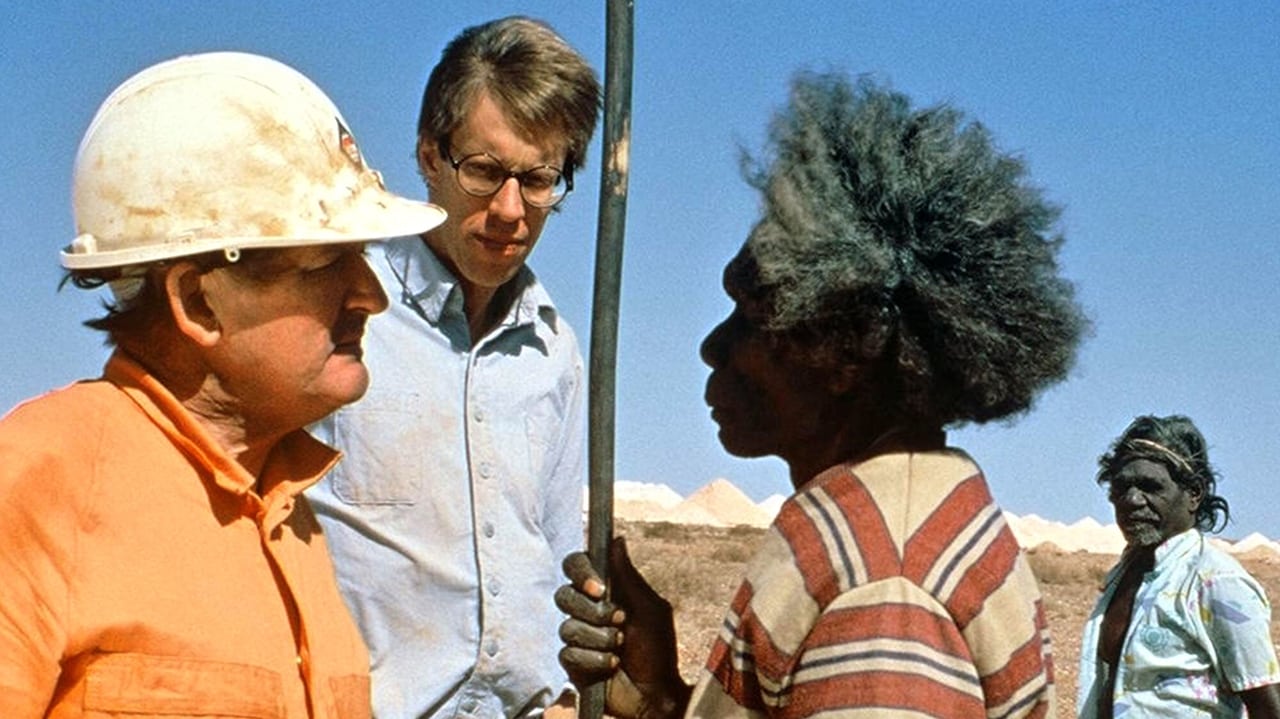
The premise is stark, almost mythic: a monolithic mining company, Ayers Mining, arrives in the remote Australian desert, ready to carve into the earth for uranium. Their state-of-the-art machinery, however, grinds to an immediate halt. Not due to mechanical failure, but because they’ve encroached upon sacred ground – a place where, according to local Aboriginal belief, the green ants dream, sustaining the world. To disturb their slumber, the elders explain with unwavering conviction, is to court global destruction. Into this impasse steps Lance Hackett, a geologist played with bewildered earnestness by the ever-distinctive Bruce Spence (perhaps best known to genre fans as the Gyro Captain from Mad Max 2: The Road Warrior). Hackett becomes the reluctant intermediary, caught between corporate pragmatism and millennia-old spirituality.
What unfolds isn't a conventional narrative of heroes and villains, but a meditation on an irresolvable conflict. Herzog, never one for easy answers, presents the clash not just as legal or environmental, but profoundly existential. He was reportedly inspired by the landmark Aboriginal land rights case Milirrpum v Nabalco Pty Ltd (the Gove land rights case) from the early 70s, though the film fictionalizes the specifics, particularly the green ant mythology itself – a typically Herzogian blend of fact and poetic invention.
Herzog's Outback: Landscape as Character
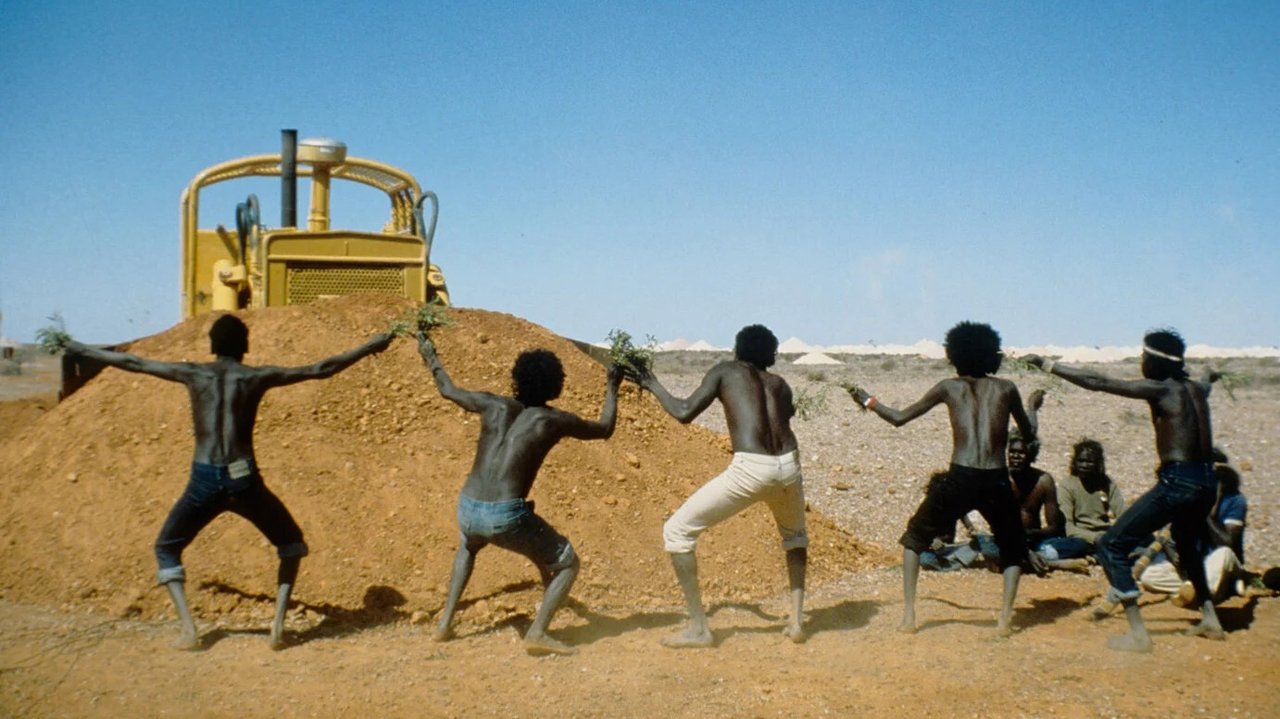
True to Herzog's inimitable style, the landscape itself becomes a central character. The vast, shimmering emptiness of the Coober Pedy region, where much of the film was shot under challenging, arid conditions, isn't just backdrop; it's the physical manifestation of the ancient, enduring power the Aboriginal characters seek to protect. Herzog, who also penned the screenplay, uses his quasi-documentary approach, blurring the lines between staged scenes and observed reality. This lends an incredible authenticity, particularly in the portrayal of the Aboriginal community.
A key element here was the casting of prominent Aboriginal figures like Wandjuk Marika, a respected artist, musician, and elder of the Rirratjingu clan of Northeast Arnhem Land, along with his brother Roy Marika. Their presence isn't mere acting; it's bearing witness. Wandjuk Marika, in particular, exudes a quiet dignity and unshakable certainty that anchors the film's spiritual core. There's a weight to their words, a connection to the land that feels utterly genuine, transcending simple performance. Herzog famously seeks out these unique individuals for his films, individuals whose lived experiences bleed into their roles, creating moments of profound truth.
When Worlds Collide
Spence's Hackett serves as our surrogate – the rational, modern man trying to comprehend a worldview utterly alien to his own. His growing frustration and eventual empathy form the film's emotional arc. We see the corporate executives, not as mustache-twirling villains, but as men trapped within their own logic, utterly incapable of understanding, let alone valuing, what the Aboriginal people hold sacred. Their attempts at compromise – offering money, houses, even a plane painted with green ants – highlight the chasm between material wealth and spiritual significance. It’s a poignant, almost absurd illustration of fundamentally different ways of perceiving reality. Doesn't this disconnect still echo in countless cultural and environmental conflicts today?
The film isn't without its quirks. Some moments, like the inexplicable appearance of a preacher seemingly lost in the desert, feel distinctly Herzogian – strange, symbolic detours that defy easy interpretation but add to the film's dreamlike, unsettling atmosphere. It demands patience, asking the viewer to sit with ambiguity and contemplate the questions raised rather than expecting neat resolutions. This wasn't a film designed for multiplex consumption; finding it on VHS felt like accessing something rarer, more thoughtful. I remember the quiet hum of the VCR seemed to blend with the film's own subtle soundscape, enhancing that feeling of being transported.
The Dream Lingers
Where the Green Ants Dream doesn’t offer easy answers about progress, tradition, or belief. It presents the collision with a kind of stark poetry, leaving the viewer to grapple with the implications. The performances, particularly from Wandjuk Marika and the Aboriginal cast, feel profound and deeply authentic, while Bruce Spence provides a relatable human anchor in a bewildering situation. Herzog’s direction captures both the immense beauty and the harsh indifference of the landscape, using it to underscore the deep, ancient connection the Aboriginal people have with it. While perhaps less visceral than some of Herzog's other explorations of obsession and extremity (like Aguirre, the Wrath of God or Fitzcarraldo), its quiet power and unsettling questions resonate deeply.
Rating: 8/10
Justification: This score reflects the film's unique artistic vision, its powerful and timely themes, the authentic portrayal of the Aboriginal perspective (especially remarkable for its time), and Herzog's masterful use of landscape. It avoids a higher score only because its meditative pace and ambiguous nature might not resonate with all viewers expecting a more conventional narrative structure. However, for those willing to engage with its philosophical depth and stark beauty, it's a deeply rewarding and haunting experience.
Final Thought: Decades after its release, the dream of the green ants feels less like a fictional conceit and more like a potent metaphor for the fragile ecosystems and ancient cultures threatened by relentless modernity. What are we losing when we pave over the places where dreams reside?