It begins not with music, but with a confession whispered into the cold night air – a cry of anguish that cuts deeper than any blade. "Mozart! Forgive your assassin!" This shriek, ripped from the soul of Antonio Salieri, isn't just the opening of Amadeus (1984); it's the aching heart of the entire film. Here is a story less about Wolfgang Amadeus Mozart himself, and more about the torment of witnessing divine genius through the eyes of bitter, pious mediocrity. What does it do to a man to recognize God's voice, only to realize it speaks through an obscene child-man, and not through him, the devoted servant?
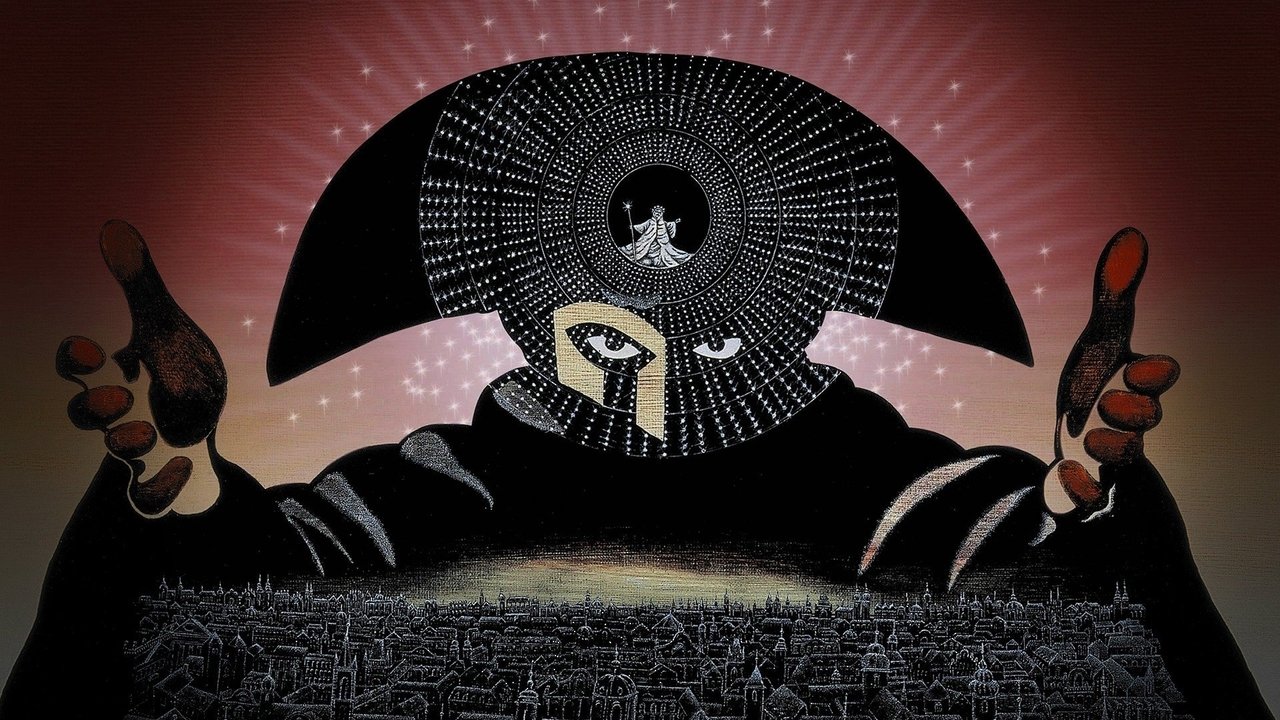
A Symphony of Envy
Director Miloš Forman, who had already explored rebellion against conformity in One Flew Over the Cuckoo's Nest (1975), crafts something truly operatic here. Working from Peter Shaffer's adaptation of his own triumphant stage play, Forman gives us a Vienna teeming with life, intrigue, and the most glorious music ever composed. Yet, amidst the powdered wigs and flickering candlelight, the film's power resides in the internal landscape of Antonio Salieri. F. Murray Abraham, in a performance that rightly earned him an Academy Award (one of the film's staggering eight wins), is Salieri. He embodies the composer's curdled ambition, his initial awe turning to corrosive jealousy. We see the universe through his eyes – the injustice of it all. He is devout, hardworking, politically astute, yet his music is merely competent. And then arrives Mozart.
The Giggling God
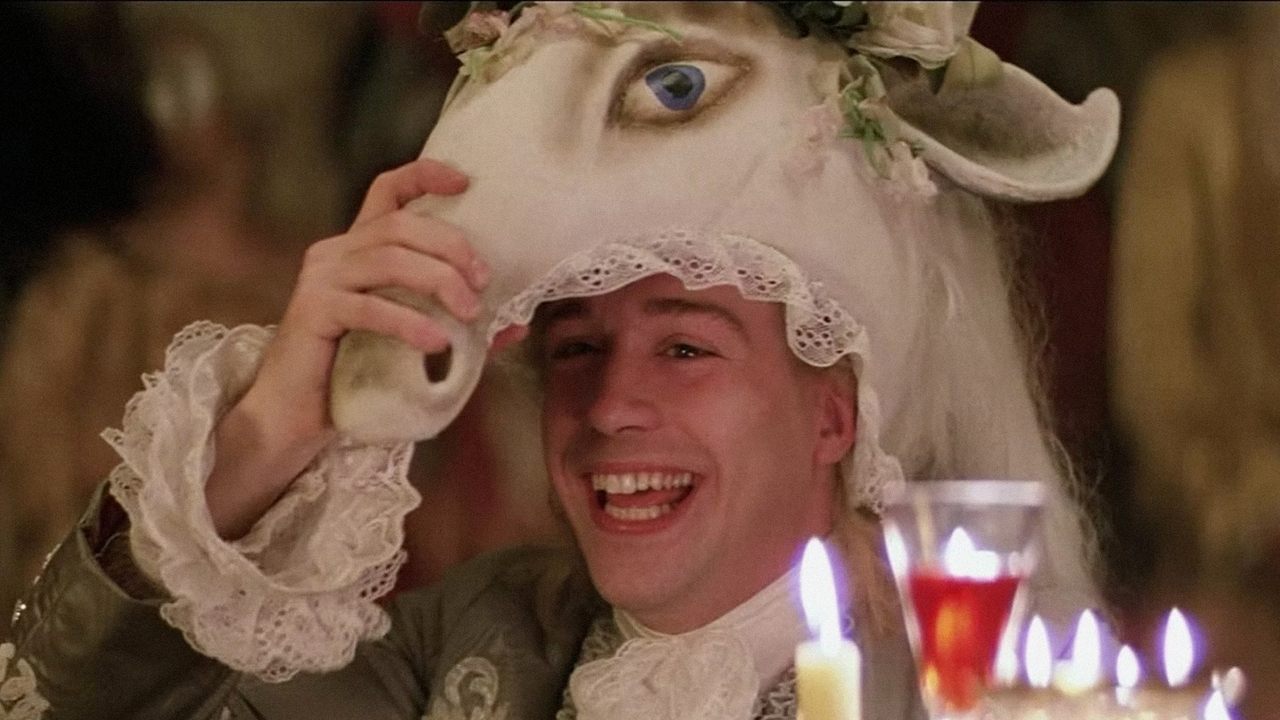
Tom Hulce's portrayal of Mozart remains utterly indelible. That high-pitched, infectious giggle – reportedly inspired by descriptions of the real Mozart's laugh – becomes a symbol of the composer's shocking earthiness. Hulce doesn't give us a plaster saint; he gives us a flawed, often vulgar, insecure prodigy whose genius flows as naturally and uncontrollably as breath. He chases skirts, cracks crude jokes, and chafes against the constraints of court life, yet when he sits at the keyboard or conducts an orchestra, something transcendent occurs. This contrast is the film's masterstroke. How could this vessel contain such heavenly fire? It's the question that haunts Salieri, the question he flings at the silent God he feels has betrayed him.
Crafting an Era
Filming Amadeus wasn't simply a matter of period costumes and sets, though Theodor Pištěk's costumes and Patrizia von Brandenstein's production design are breathtakingly authentic. Forman, returning to his native Czechoslovakia, utilized the largely untouched historical architecture of Prague to stand in for 18th-century Vienna, lending the film an unparalleled sense of time and place. This was no easy feat in the communist era, requiring delicate negotiation, but the result is a film that feels steeped in its period. Cinematographer Miroslav Ondříček captures it all with painterly beauty, shifting from the gilded grandeur of the opera house to the shadowy intimacy of Salieri's despair.
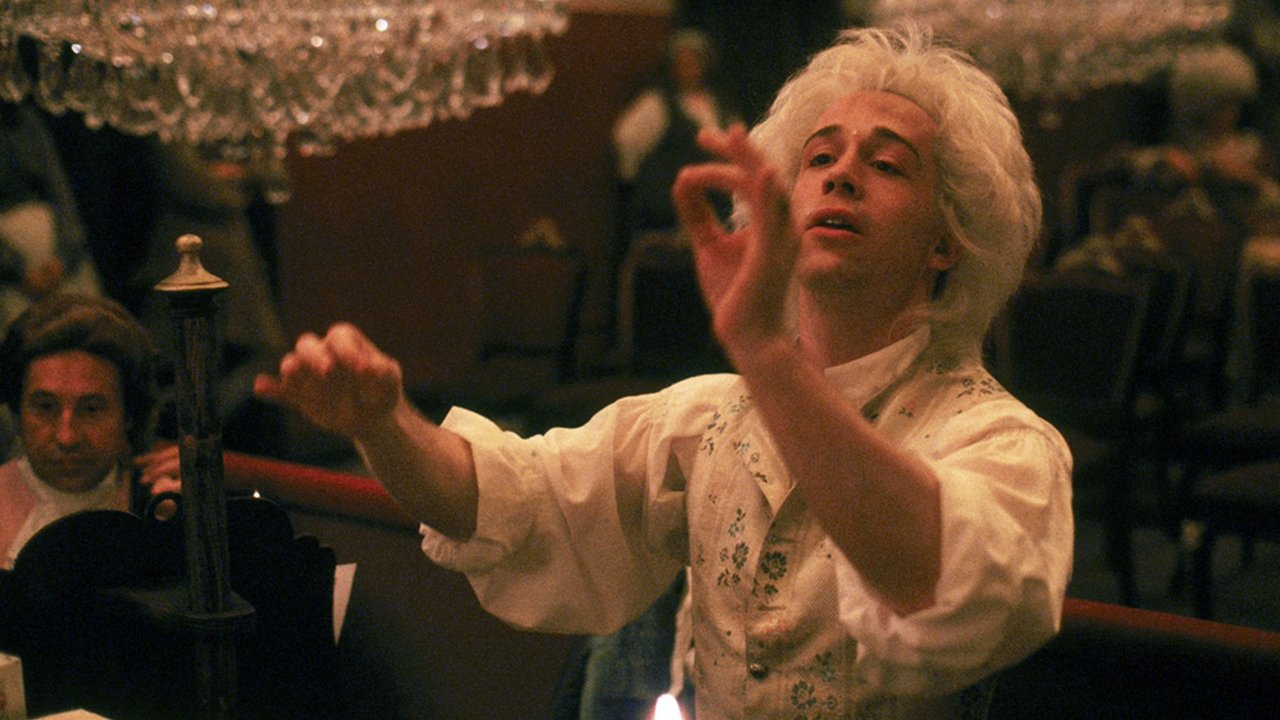
One fascinating aspect was the music itself. Rather than using existing recordings, Sir Neville Marriner and the Academy of St Martin in the Fields recorded Mozart's pieces specifically for the film, often before scenes were shot, allowing Forman to synchronize the action perfectly to the score. The music isn't just accompaniment; it's a character, driving the narrative, reflecting emotional states, and providing moments of pure, unadulterated ecstasy that contrast sharply with Salieri's inner turmoil. Remember the scene where Salieri first encounters Mozart's handwritten scores? Abraham's face, a mask of stunned reverence slowly crumbling into agonized envy as he reads the perfect, uncorrected notation, is acting of the highest order, perfectly underscored by the music itself.
The Weight of Genius and Mediocrity
Did Mozart really die penniless and forgotten in a pauper's grave because Salieri schemed against him? Historically, it's far more complex, bordering on fabrication. Shaffer himself called the play a "fantasia on the theme of Mozart and Salieri." But historical accuracy isn't the point. Amadeus uses this framework to explore profound themes: the consuming nature of jealousy, the mysterious spark of genius, the complex relationship between faith and art, and the quiet desperation of knowing your own limits. Salieri isn't merely a villain; he's a tragic figure, the self-proclaimed "patron saint of mediocrity," whose war isn't truly with Mozart, but with God.
Finding the right actors was a monumental task. Reports circulated that names like Mel Gibson and even Mick Jagger (who apparently visited the set) were floated for Mozart before the relatively unknown Hulce landed the part. Both Hulce and Abraham were nominated for Best Actor, a testament to their symbiotic performances, with Abraham ultimately taking home the statue. It’s hard to imagine the film working nearly as well with different leads; their specific chemistry feels essential. The film initially received an R rating in the US, later trimmed slightly for a PG rating (though the superb 2002 Director's Cut restores footage and the R rating), perhaps reflecting the era's evolving sensibilities about adult themes in prestigious historical dramas.
Lasting Resonance
Watching Amadeus again on VHS, perhaps late at night as I might have done after renting it from the corner store back in the day, its power hasn't diminished. If anything, the themes resonate more deeply with age. It’s a film that luxuriates in its nearly three-hour runtime (even longer in the Director's Cut), allowing its characters and Mozart's sublime music to breathe. It makes you ponder the nature of talent, the bitterness of unrealized potential, and the ways we grapple with perceived cosmic unfairness.

Rating: 10/10
This score feels almost preordained. Amadeus is a triumph of filmmaking on every level. Forman's masterful direction, Shaffer's intelligent script, the career-defining performances from Abraham and Hulce, the sumptuous production values, and the divine music of Mozart woven seamlessly into the narrative create an experience that is both intellectually stimulating and profoundly moving. It avoids the staid reverence of many historical biopics, instead offering a vibrant, passionate, and ultimately tragic exploration of human frailty set against the backdrop of immortal genius.
What lingers most, perhaps, isn't just the soaring music, but Salieri's final, chilling whisper from the asylum: "Mediocrities everywhere... I absolve you." A haunting benediction from a man broken by genius, leaving us to ponder the echoes of envy and awe in our own lives.