Alright, fellow travelers of the magnetic tape highways, let's dim the lights, maybe pop a cold one, and settle in for a flick that wasn't quite like anything else flickering on our CRTs back in the day: Ralph Bakshi's American Pop from 1981. This wasn't your Saturday morning cartoon fare; catching this one felt like stumbling onto something grown-up, something ambitious, maybe even a little dangerous, beamed directly into your living room via that chunky plastic cassette. It wasn't just a movie; it felt like a sprawling, messy, vibrant tapestry of American history told through the lens of music and the lives intertwined with it.
### A Century Through a Sketchpad
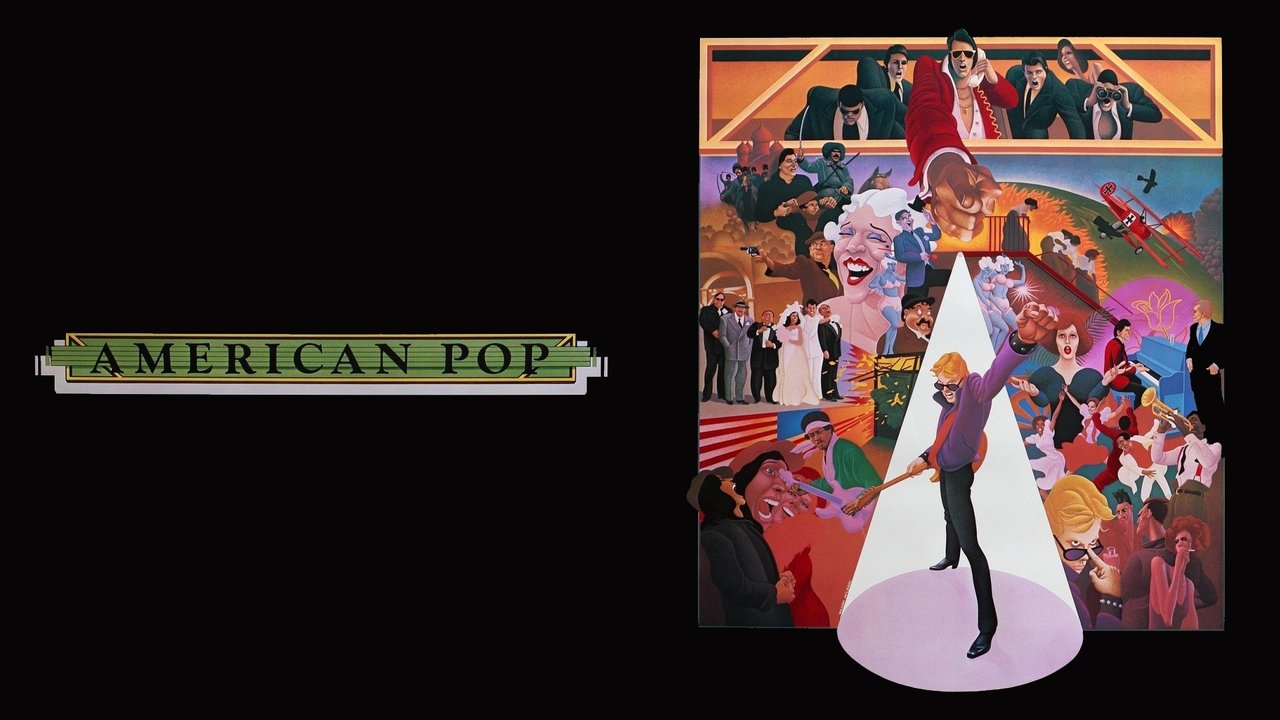
Forget simple narratives. American Pop throws you headfirst into a generational saga, following a family of Russian Jewish immigrants – Zalmie, Benny, Tony, and Pete – across nearly a hundred years of American popular music and culture. From the Vaudeville stages of the early 20th century, through the smoky jazz clubs of the 40s, the beatnik poetry slams of the 50s, the psychedelic rock haze of the 60s, right up to the burgeoning punk and new wave scene of the late 70s/early 80s, the film uses the family's struggles, triumphs, and heartbreaks as a vehicle to explore the evolution of American sound. Written by Ronni Kern, the script doesn't shy away from the darker sides of the pursuit of fame and the American dream – addiction, war, betrayal, compromise – it’s all woven into this epic animated journey.
### That Unmistakable Bakshi Look
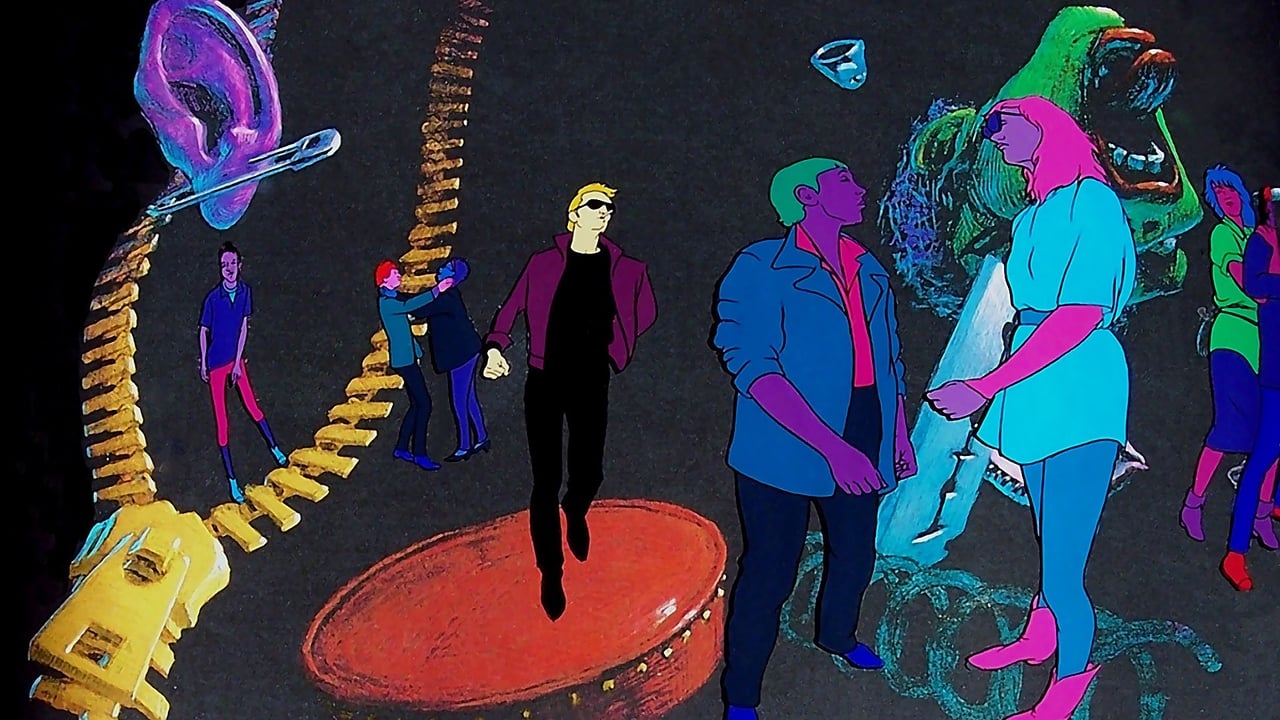
Of course, the first thing that grabs you – then and now – is the look. Ralph Bakshi, already known for pushing boundaries with films like Fritz the Cat and Wizards, employed rotoscoping extensively here. For those unfamiliar, this meant filming live actors (Ron Thompson notably voices both Tony and Pete, providing a crucial anchor across generations) and then tracing over the footage frame by frame to create the animation. The result is this incredibly fluid, uniquely realistic movement married to Bakshi's signature expressive, sometimes gritty, character designs. It gives the musical performances, in particular, an electrifying energy. Seeing animated figures move with the distinct physicality of Bob Dylan or Jimi Hendrix (whose likenesses and music are featured) was, and still is, pretty mind-blowing. It wasn't always smooth – sometimes the blend of techniques could be jarring – but its ambition was undeniable. This technique wasn't just a gimmick; it grounded the often-harsh realities of the story with a visual style that felt equally raw and unfiltered.
Retro Fun Facts: Achieving this look was a painstaking process. Imagine the sheer manpower involved in tracing thousands upon thousands of frames! Securing the rights for the incredible soundtrack – featuring everyone from George Gershwin and Louis Armstrong to The Doors, Janis Joplin, and Lou Reed – was apparently a Herculean task in itself, consuming a significant chunk of the film's estimated $1.5 million budget. Bakshi reportedly fought tooth and nail to get the music he wanted, understanding it was the lifeblood of the story. And thank goodness he did, because the soundtrack isn't just background noise; it is the narrative engine.
### More Than Just a Cartoon
What makes American Pop resonate, especially looking back through the lens of nostalgia, is its sheer audacity. Animation in the West was largely perceived as kids' stuff, but Bakshi consistently used it to tackle mature themes. This film deals with the immigrant experience, the cost of war (Benny's journey through WWII is particularly harrowing), the destructive nature of the music industry, and the search for identity across generations. It’s a deeply melancholic film in many ways, showing how dreams curdle and talent gets squandered. Yet, there's also a persistent pulse of hope, carried by the music itself – the constant reinvention, the next generation picking up the torch, even if scarred by the past.
The voice work, particularly from Ron Thompson as the central figures of the latter generations, carries a genuine weight. You feel the weariness in Tony's voice, the desperate ambition in Pete's. Though the characters are animated, the performances feel grounded and real, thanks in large part to that rotoscoping base and committed voice acting (Marya Small as Frankie and Jerry Holland as Louie also make strong impressions).
### Does it Hold Up?
Watching American Pop today is a fascinating experience. Yes, some of the dialogue feels dated, and the episodic nature means certain storylines feel rushed or less developed than others. The ending, set against the backdrop of the burgeoning corporate rock/new wave era, might feel a little abrupt to some, a sudden pivot after decades of struggle. But the film's power remains. The animation, while perhaps not as polished as modern techniques, possesses a unique, handcrafted energy that's captivating. The way Bakshi uses existing songs to score scenes, often letting the music tell the story without dialogue, is masterful. That sequence set to Bob Seger's "Night Moves"? Pure cinematic magic, capturing a specific kind of American melancholy perfectly.
It wasn’t a massive box office smash initially, likely hampered by its 'unrated' status and challenging themes, but like so many unique visions from the era, it found its devoted audience on home video. Renting American Pop felt like discovering a secret history, an alternative cartoon universe where animation could be as complex and gritty as any live-action drama.
Rating: 8/10
This score reflects the film's incredible ambition, its groundbreaking use of rotoscoping for its time, the phenomenal soundtrack integration, and its willingness to tackle mature themes within animation. It loses a couple of points for occasional narrative unevenness and some elements that haven't aged quite as gracefully. However, the sheer artistic vision and emotional impact far outweigh the flaws.
American Pop remains a singular achievement, a sprawling, flawed, beautiful ode to the music that shaped a century and the lives caught in its rhythm. It’s a potent reminder from the VHS vaults that animation could be – and still can be – so much more than meets the eye. A true cult classic worth rediscovering.