There’s a particular kind of dread that festers when the sanctuary becomes the battleground. Not some spectral haunting, but something smaller, scuttling, relentlessly present. Something gnawing not just at the foundations of your meticulously renovated home, but at the very foundations of your sanity. This is the insidious territory mined by 1983’s Of Unknown Origin, a film that weaponizes the mundane and transforms a common pest into an avatar of primal terror.
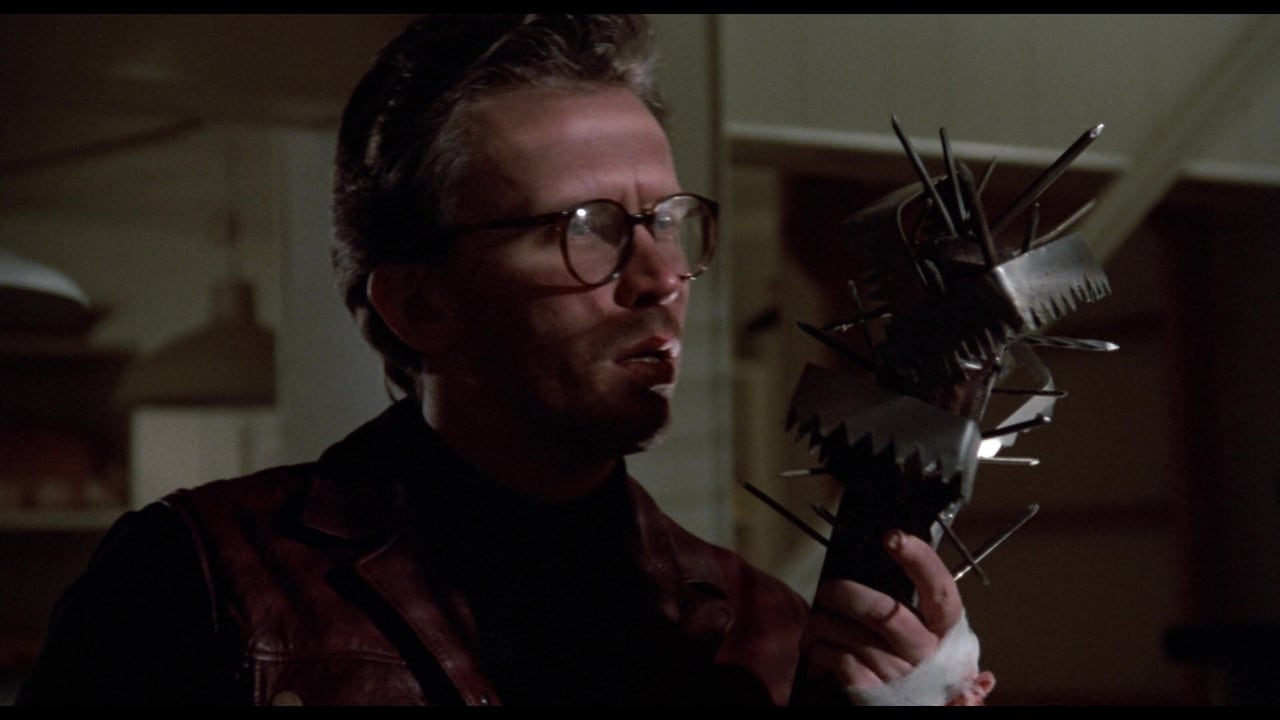
Forget sweeping vistas or complex conspiracies; the genius, and indeed the horror, of this film lies in its claustrophobic focus. We meet Bart Hughes, played with riveting intensity by a pre-RoboCop (1987) Peter Weller, an ambitious executive living the yuppie dream in a gorgeous New York brownstone. When his wife and son leave for vacation, Bart stays behind to work, seemingly master of his domain. But his castle, painstakingly restored, is about to become his dungeon, thanks to an unseen, uninvited guest scurrying within the walls.
The Brownstone Battleground
Director George P. Cosmatos, who would later helm massive action spectacles like Rambo: First Blood Part II (1985) and Tombstone (1993), demonstrates a surprisingly deft hand here at building slow-burn tension within confined spaces. The brownstone itself becomes a character – initially a symbol of Bart's success and control, it gradually decays into a booby-trapped warzone. The production design brilliantly charts this descent, each broken pipe, torn cushion, and shattered piece of furniture reflecting Bart's own mental unraveling. Funnily enough, while the film bleeds NYC authenticity, much of it was actually shot on location in Montreal, a classic piece of movie magic necessitated by budget constraints – reportedly around $4.5 million, a modest sum even then – that somehow underscores the film's theme of carefully constructed facades hiding something more chaotic beneath.
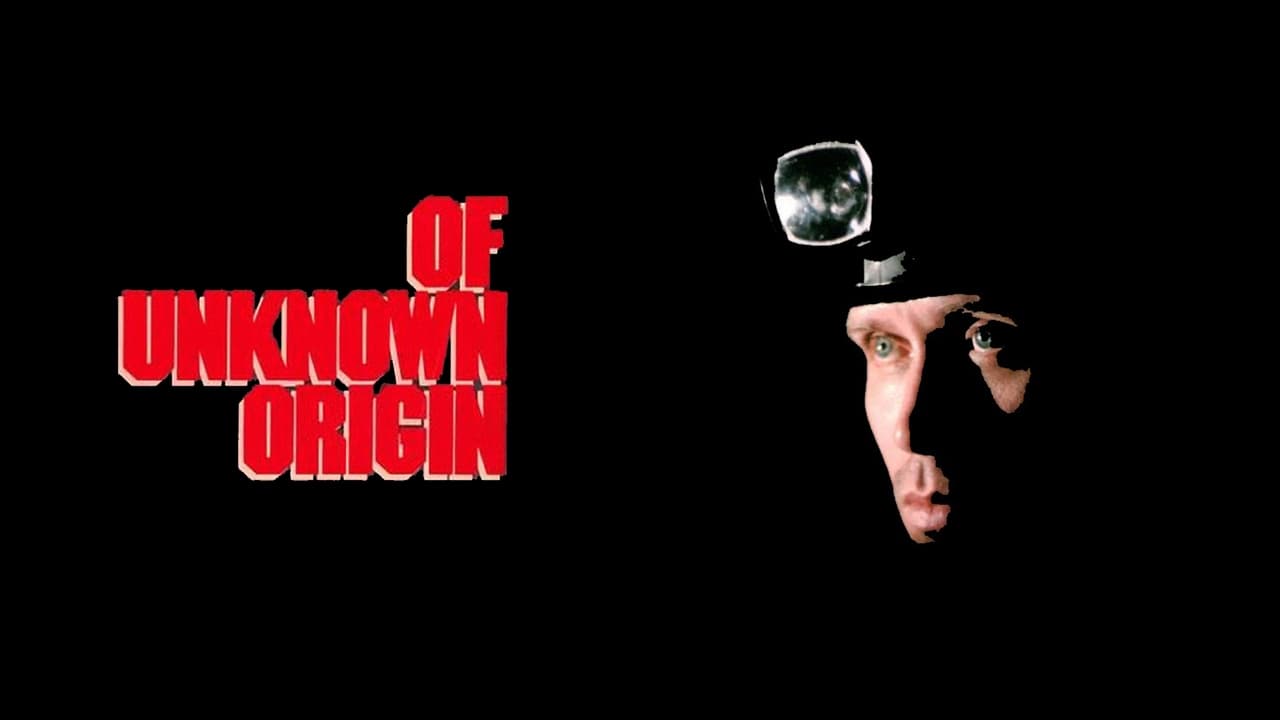
What starts as annoyance – a flooded basement, chewed wires – rapidly escalates into obsession. Bart, the modern man defined by his intellect and status, finds himself locked in a primitive, escalating conflict with... a rat. But this isn't just any rodent; it's depicted as cunning, resilient, almost preternaturally intelligent. It anticipates his traps, evades his attacks, and seems driven by a malevolent purpose. Doesn't that elevate the stakes beyond mere pest control, turning it into something far more unsettling?
Weller vs. Vermin: A Primal Duel
This film truly belongs to Peter Weller. His performance is a masterclass in controlled descent. He captures Bart's initial smug confidence, the mounting frustration, the disbelief curdling into rage, and finally, the feral determination of a man pushed past his breaking point. Weller sells the absurdity of the situation with dead seriousness, making Bart's increasingly unhinged methods feel like a desperate, almost logical progression. There’s a scene involving a makeshift suit of armor and a nail-studded bat that is both terrifying and darkly comic, perfectly encapsulating the film's unique tone. Rumor has it Weller fully committed, embracing the physicality demanded by Bart’s obsessive war, turning in a performance that felt raw and genuinely stressed.
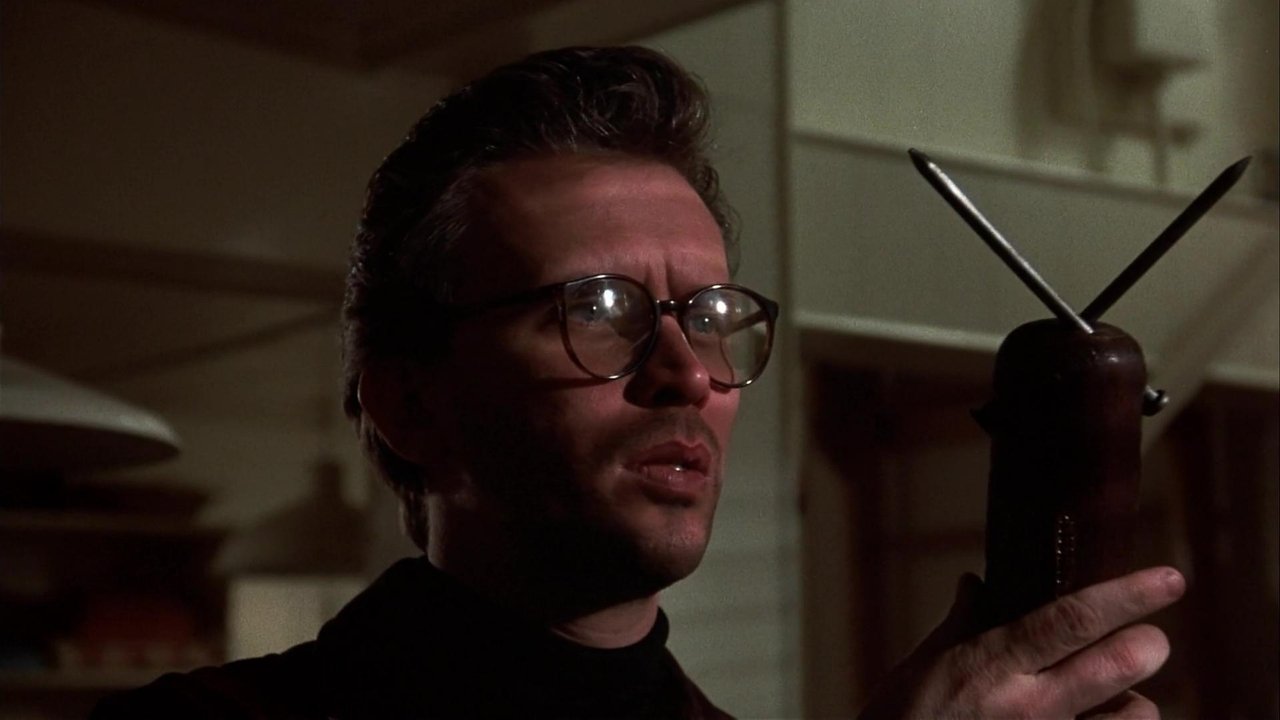
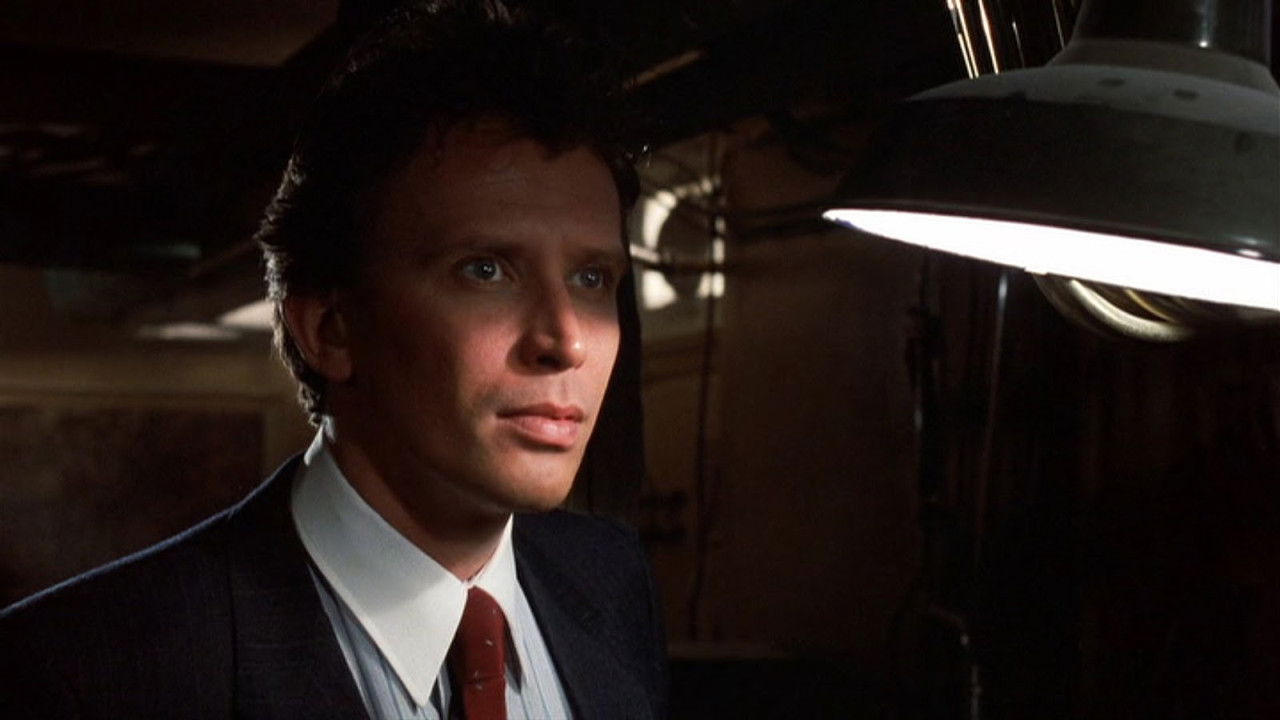
The effectiveness of the rat itself is crucial. Relying on a combination of animatronics, puppets, and yes, trained live rats (a notoriously difficult element for any film crew), the creature effects manage to be surprisingly menacing. While some of the close-ups might look a bit rubbery to modern eyes accustomed to CGI perfection, there's a tactile reality to the practical effects that often feels more disturbing. The sheer physicality of the threat – the gnawing, the scratching, the sudden appearances – taps into a visceral disgust and fear that pixels often struggle to replicate. Remember how convincing those practical creature effects could feel back in the day, especially viewed on a grainy VHS tape late at night?
Beyond the Gnawing: Themes and Trivia
Based on Chauncey G. Parker III's novel "The Visitor," the script (credited to Brian Taggert) smartly uses the central conflict to explore themes of masculinity under pressure, the fragility of civilization, and the beast lurking beneath urban sophistication. Bart’s meticulous world is invaded by chaos, forcing him to shed his civilized veneer and embrace his own primal instincts. It’s a surprisingly thoughtful core for what could easily have been a simple creature feature. The film's tagline, "Man's home is his castle. But his castle can become his dungeon," perfectly captures this siege mentality.
Interestingly, the film’s reception was somewhat mixed upon release, perhaps struggling to find its audience amidst the louder horror offerings of the era, ultimately pulling in just over $1 million domestically. Yet, it developed a sturdy cult following on VHS, precisely because of its unique blend of psychological thriller and creature horror. It wasn't easily categorized, which might have hurt it initially but arguably contributes to its enduring strangeness.
The Final Verdict
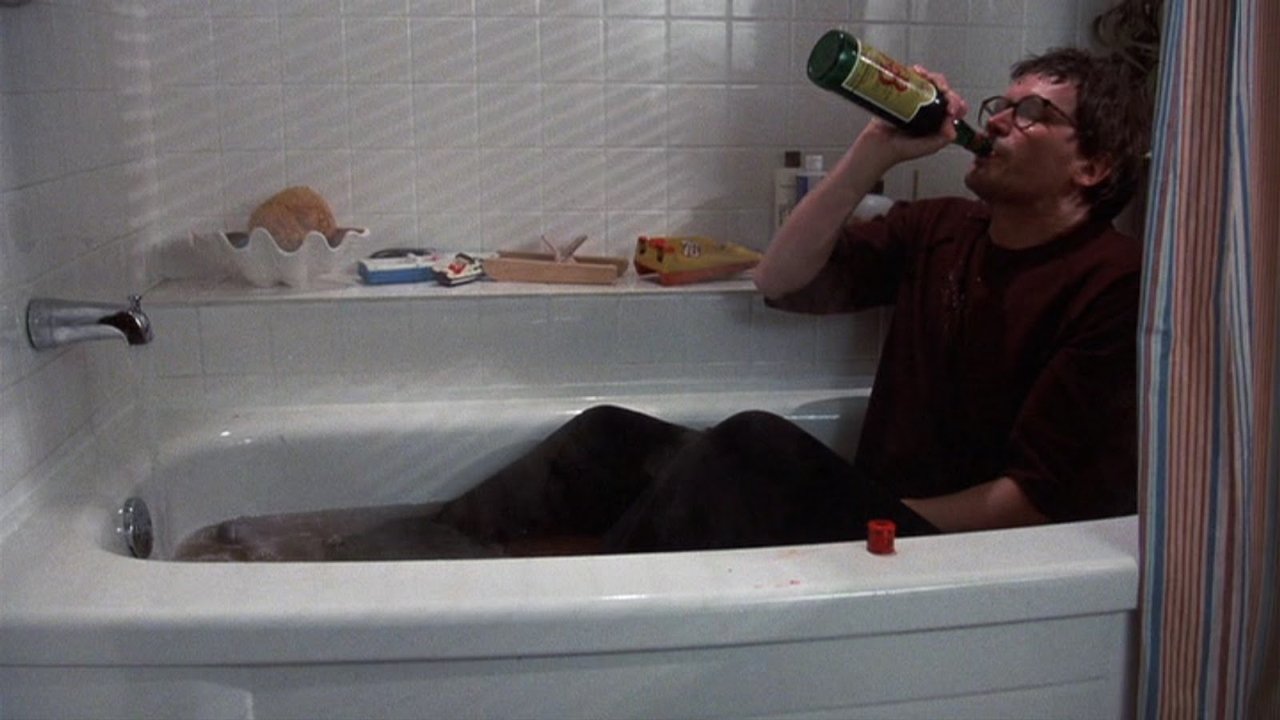
Of Unknown Origin remains a fascinating, often deeply unsettling curio from the 80s horror landscape. It's a testament to Peter Weller's committed performance, George P. Cosmatos' skillful tension-building within a limited setting, and the enduring power of a simple, primal conflict. While the single-minded focus might test the patience of some, and certain moments undeniably flirt with absurdity, the overwhelming atmosphere of claustrophobic dread and psychological decay is remarkably effective. It taps into that specific fear of infestation, of losing control within your own sanctuary, that lingers long after the credits roll.
Rating: 7.5/10
This score reflects the film's powerful central performance and suffocating atmosphere, slightly tempered by moments where the man-vs-rat battle occasionally stretches credulity. However, its strength lies in its commitment to its unsettling premise. For fans of slow-burn psychological thrillers with a creature-feature twist, Of Unknown Origin is a grimy, intense little gem from the VHS era that proves sometimes the most terrifying monsters are the ones scuttling just out of sight. It’s a stark reminder that sometimes, the deepest rot isn't in the walls, but within ourselves.