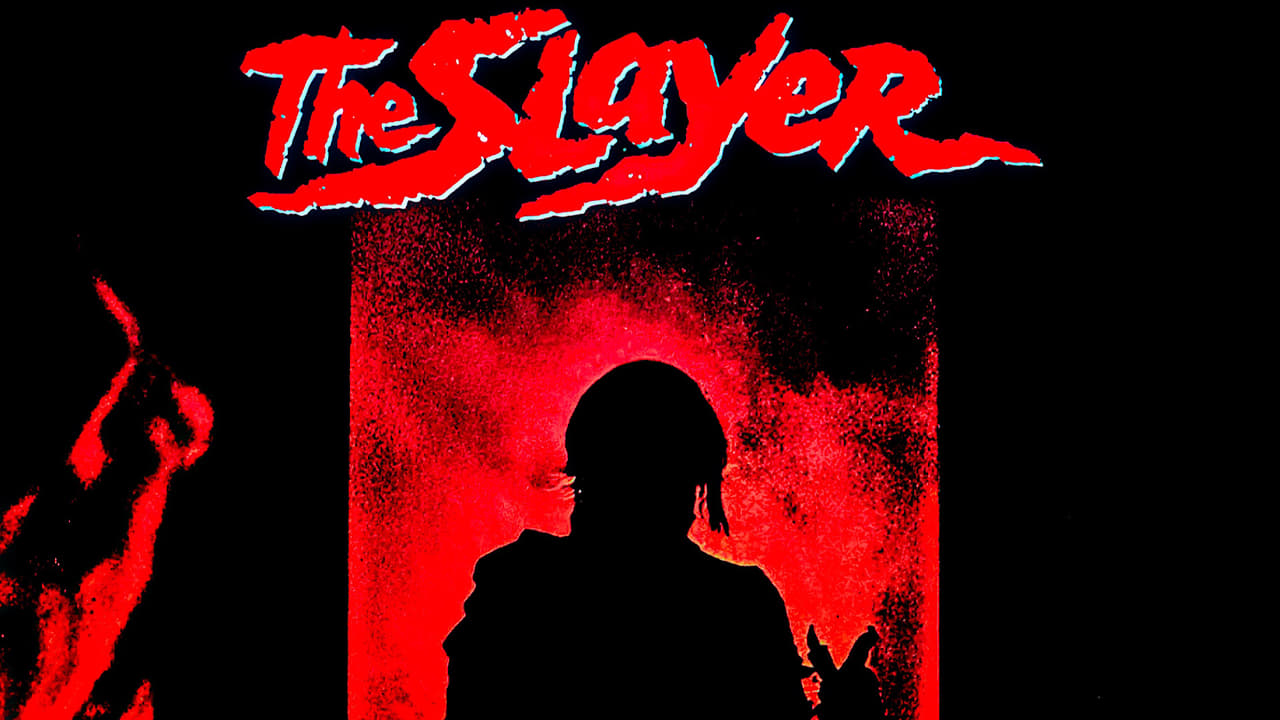
There's a certain grainy dread that clings to some forgotten VHS tapes, a feeling that you've unearthed something not meant for wide release, something slightly... off. The Slayer (1982) embodies that feeling perfectly. For years, this was a phantom film, whispered about by hardcore horror hounds, notoriously difficult to see thanks to its inclusion on the UK's infamous "Video Nasty" list and a subsequent lack of official release that stretched into decades. Finding a copy felt like uncovering forbidden knowledge, and pressing play plunged you into a humid, inescapable nightmare rendered in cheap film stock and unsettling ambiguity.
Island of Bad Dreams
The premise, conceived by writer-director J.S. Cardone and co-writer Bill Ewing, taps into a primal fear: what if your nightmares could bleed into reality and kill? Artist Kay (a genuinely affecting Sarah Kendall) is plagued by terrifying visions that seem to manifest physically. Seeking respite, her husband David (Frederick Flynn), her brother Eric (Alan McRae), and his wife Brooke (Carol Kottenbrook) whisk her away to a remote, storm-lashed island off the coast of Georgia. The isolation is meant to be therapeutic, but it quickly becomes a trap. As the storm cuts them off, Kay's nightmares intensify, and soon, a grotesque, unseen force – the titular Slayer – begins picking them off, blurring the lines between Kay's horrifying dreams and a waking, deadly reality. Does the island itself harbor this evil, or has Kay brought it with her? The film thrives on this suffocating uncertainty.
Atmosphere Over Action
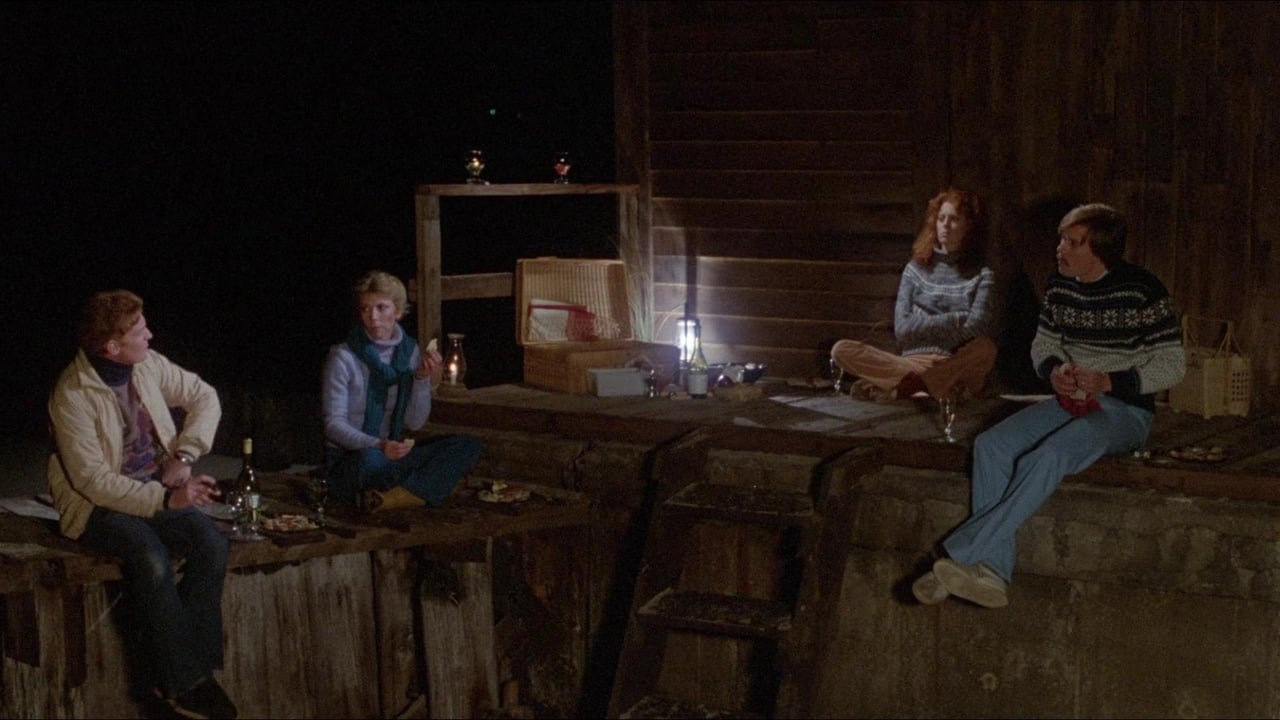
Forget the relentless pace of later slashers. The Slayer is a slow burn, prioritizing oppressive atmosphere over a high body count. Cardone uses the Tybee Island locations – the windswept beaches, the decaying theatre, the isolated vacation house – to masterful effect. Cinematographer Karen Grossman captures a sense of damp decay and encroaching darkness, enhanced by a pervasive feeling of helplessness. You feel the humidity, the isolation, the creeping paranoia alongside the characters. This isn't a film about jump scares; it's about the slow, agonizing realization that there might be no escape, not even in waking life. Reportedly, the shoot itself was grueling, battling actual inclement weather which, while challenging for the crew, undoubtedly contributed to the film's authentically grim and waterlogged aesthetic.
A Monster Lurking in the Periphery
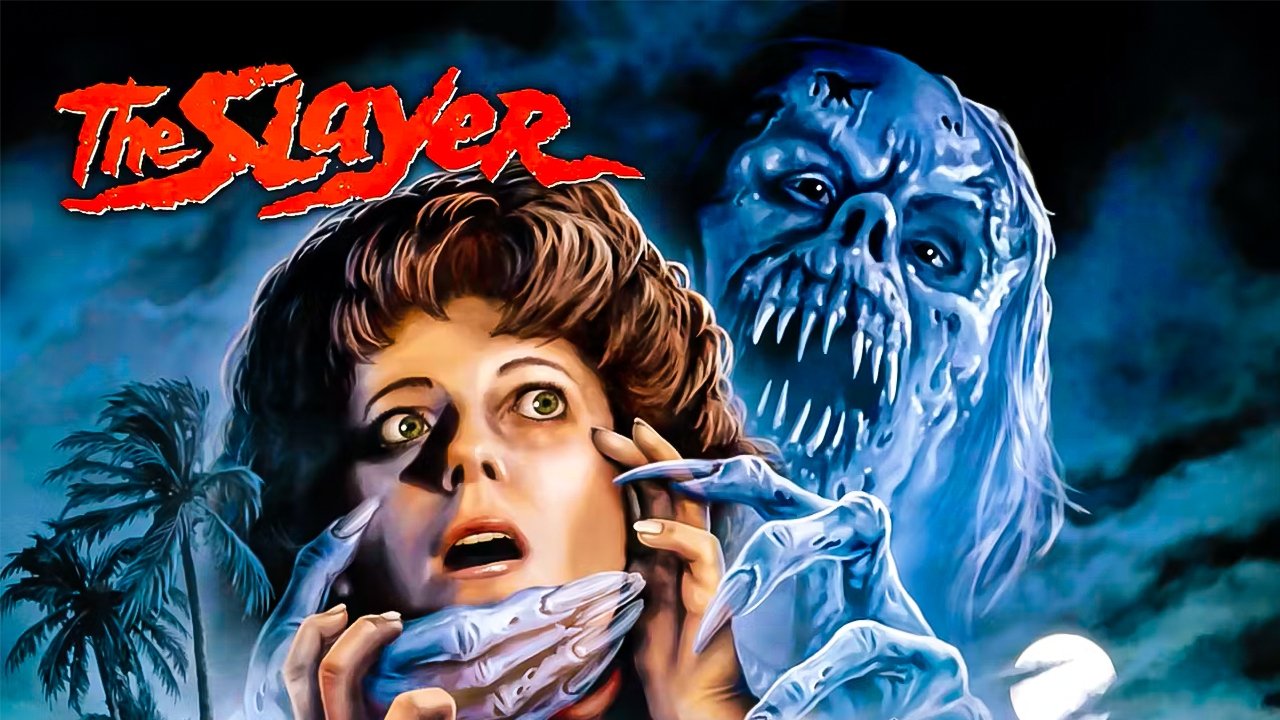
The creature itself, when finally glimpsed, is a triumph of low-budget practical effects. It’s a grotesque, vaguely reptilian humanoid figure, glimpsed in flashes and shadows for much of the runtime. Its design feels genuinely nightmarish and organic, less a man-in-a-suit and more a primal manifestation of fear. The effects team, working with limited resources, crafted something memorable and disturbing. There's a raw, unpleasant quality to the gore effects too – particularly a pitchfork impalement – that likely sealed its fate with the British censors. The film's power lies in suggestion, keeping the Slayer elusive, making its brief appearances all the more shocking.
Retro Fun Facts: The Slayer's Troubled Path
- The Slayer's journey to screens was almost as tortured as its protagonist's psyche. Filmed in 1981, it struggled to find distribution, eventually premiering in Europe in 1982 but not securing a proper US release until later. This delay, combined with its UK ban as a "Video Nasty" (despite relatively moderate gore compared to others on the list), cemented its underground reputation.
- That unsettling, almost mournful score? That’s the work of composer Robert Folk, who would later score comedies like Police Academy (1984) and family films like The NeverEnding Story II (1990). His contribution here is crucial, adding layers of melancholy dread that elevate the film beyond typical slasher fare.
- The obvious pre-dating of A Nightmare on Elm Street (1984) is fascinating. While Wes Craven's film explored dream-killers with more iconic flair and commercial success, The Slayer undeniably tapped into a similar vein of subconscious terror first, albeit with a far murkier, art-house sensibility. It remains a curious "what if?" – had it received a proper, timely release, would its impact have been different?
Dream Logic and Its Discontents
While the atmosphere is thick enough to cut with a rusty knife, the film isn't without its flaws. The pacing can feel glacial at times, particularly in the first half, and character development beyond Kay is minimal. The supporting cast often feels like standard slasher fodder waiting for their turn. The plot occasionally drifts into incoherence, embracing a dreamlike logic that can be as frustrating as it is intriguing. Yet, Sarah Kendall's central performance holds it together. Her portrayal of a woman unraveling under the weight of her own terrifying subconscious is convincing and sympathetic, grounding the film's more ambiguous elements. You truly feel her exhaustion and terror.
Rating and Final Descent
The Slayer is a difficult film to pin down, existing somewhere between a proto-slasher, a psychological horror film, and an atmospheric creature feature. It’s flawed, slow, and sometimes obtuse. But its oppressive mood, unsettling ambiguity, effective practical creature effects (for their time), and Kendall’s committed performance create a uniquely disturbing experience that lingers long after the credits roll. Its troubled history and subsequent obscurity only add to its mystique.
Rating: 6.5/10
Justification: The score reflects a film that excels in atmosphere (8/10 potential) and unsettling concept (7/10), bolstered by decent practical effects for the budget (7/10) and a strong lead performance (7/10). However, it's pulled down by uneven pacing (5/10), underdeveloped supporting characters (4/10), and plot points that sometimes favour ambiguity over coherence (5/10). It's a significant work for its mood and pre-Elm Street ideas, but its execution keeps it from being a true classic, landing it firmly in "fascinating cult curio" territory.
For the dedicated 80s horror fan, especially those who appreciate slow-burn dread over relentless action, The Slayer remains essential viewing. It's a hazy, waterlogged nightmare caught on film, a relic from a time when horror could be strange, patient, and deeply unnerving without feeling the need to explain everything away. Doesn't that ambiguity still feel potent today?